


Manual vacuuming can take up a surprising amount of pool-care time, especially after leaves, sand, or pollen collect across the floor. The answer to which type of pool cleaner is best depends on what your pool needs cleaned and how much equipment you already have. A robotic cleaner works independently of the pool’s suction plumbing, while a suction-side unit relies on the circulation system. A manual stone or waterline cleaner handles localized stains, but it is not an automatic floor vacuum.
Pool size, pool surface, debris, and desired coverage all matter. Some cordless robots in the products listed are designed to clean pool floors, while others list wall and waterline coverage; a suction-side model connects to an existing filtration system and has a stated pump requirement. Separate filter cleaners, algaecide, and tile products support pool maintenance but do not replace a pool vacuum. The guide below explains those differences so you can match a cleaner to the job rather than expect one tool to solve every pool-care problem.
Top Products





Which Pool Cleaner Type Fits the Job?
There is no single best pool cleaner for every swimming pool. For routine floor debris, an automatic vacuum can reduce manual work, but the right category depends on whether you want an independent electric robot, a unit powered by pool circulation, or a hands-on tool for spot cleaning. The products listed also include chemical and filter-maintenance supplies, which address different problems and should not be mistaken for automatic cleaners.
Robotic cleaners suit owners who want independent operation
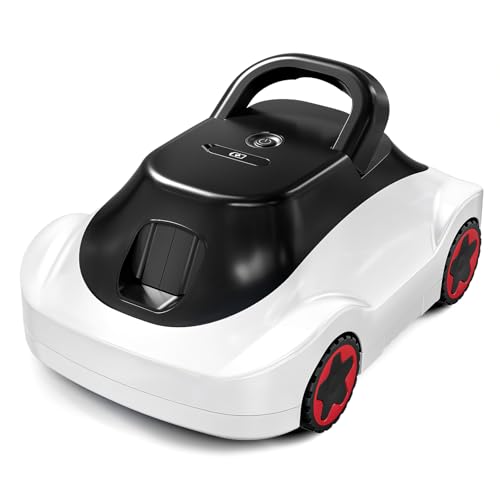
A robotic pool cleaner moves and collects debris using its own cleaning system rather than relying on a pool’s suction line. The cordless models described here use rechargeable batteries, so they avoid a floating power cable and do not attach to the pool’s circulation plumbing. That convenience comes with a runtime and charging limitation: the supplied descriptions list runtimes up to 160 minutes for the WYBOT C1 and up to 180 minutes for the Letexpool C1 and OUCAXIA C5, with different charging times. Treat those figures as manufacturer-listed specifications, not a guarantee that every pool will be cleaned in one cycle.
Coverage differs by model. The Letexpool C1 is described as cleaning floors, walls, and waterlines and offers multiple modes, while the WYBOT C1 lists floor, wall, waterline, and step coverage. The OUCAXIA C5 is specified for full-floor cleaning in flat-bottom pools and is listed for above-ground and inground use. That distinction matters: a floor-focused unit may suit routine debris on a relatively simple pool bottom, but it is not the same choice as a model whose description includes wall and waterline cleaning.
Pool dimensions and shape still need checking against the product’s instructions. The supplied descriptions list surface-area limits for these models, but they do not establish suitability for every deep-end transition, ladder, drain cover, tanning ledge, or narrow step. A robot may pause, miss a tight corner, or have trouble with an obstacle even if the pool falls within its stated area. Confirm the cleaner’s intended pool type, surfaces, dimensions, and operating instructions before buying.
Suction-side cleaners depend on pool circulation
A suction-side cleaner connects to the existing filtration system and uses its water flow to move and collect debris. The XtremepowerUS automatic cleaner is listed for inground pools, includes a 30-foot hose set, and attaches to the existing filtration system. Its product information specifies a minimum 1 HP pool pump or a flow rate of 1,600 gallons per hour for optimal performance. Those are model-specific listed requirements, not a general rule for all suction cleaners.
This category may appeal to owners who prefer a simpler automatic setup and already have compatible circulation equipment. However, the cleaner’s operation is tied to that system, so pump performance and the filter’s condition matter. A variable-speed pump running at a low setting may not provide the flow this particular product calls for; check the product requirements and your equipment documentation rather than guessing. For connections, suction safety, and plumbing configuration, follow the cleaner and pool-system manufacturers’ instructions.
A suction cleaner also adds debris to the pool’s filtration path, so a full skimmer basket, pump basket, or dirty filter can interfere with circulation. Keep an eye on the cleaner’s movement and whether it is collecting debris, but do not bypass suction safety devices or make unapproved plumbing changes to force more flow. A cleaner that stalls or moves inconsistently may need a compatibility check, equipment inspection, or assistance from a qualified pool professional.
Manual tools and maintenance products solve narrower problems
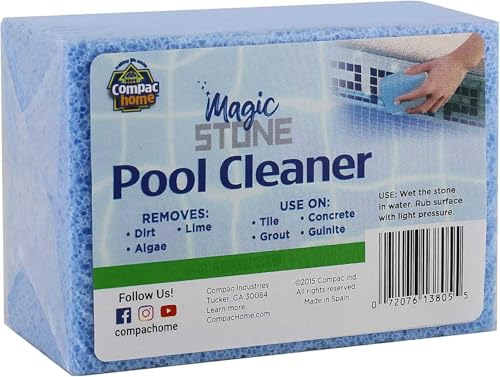
A manual pool tool makes sense when the job is localized rather than a full-pool cleaning cycle. The COMPAC HOME recycled-glass stone is described for removing dirt, algae, and lime with light pressure from pool and spa surfaces. It is a hand-applied stain tool, not an automatic vacuum, and it should only be used as directed for the pool’s finish. For a stubborn waterline scum line, the STAR BRITE product is described as a spray-and-wipe cleaner for several pool surfaces, but its manufacturer warns against use on printed or painted surfaces and says it does not remove calcium deposits.
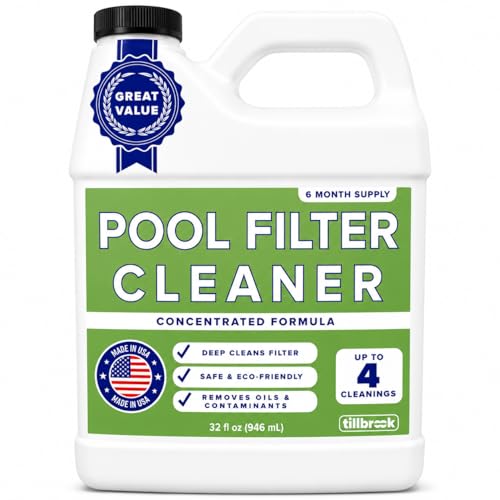
Filter-cleaning concentrates serve a different purpose again: they help clean filter media rather than travel around the pool collecting debris. Tillbrook lists directions for a soak or spray approach and compatibility with cartridge, sand, and DE filters; ADIOS! lists a soaking treatment for those filter types. Follow each label, rinse thoroughly as directed, and do not mix products unless their instructions explicitly allow it. A cleaner’s filter basket and the pool’s main filter are separate components with separate maintenance needs.
Water treatment products are not substitutes for physical cleaning. The Clorox Pool&Spa algaecide is described as an algae treatment, while the OCEANCARE calcium releaser is a tile-cleaning product for calcium and efflorescence on listed tile surfaces. Neither product is an automatic pool vacuum. Use chemicals according to their labels, maintain appropriate water balance, and check equipment instructions before exposing a cleaner to chemical treatments.
Match Cleaning Coverage to Debris and Pool Layout
Leaves, pine needles, and larger pieces of yard debris create a different cleaning demand from fine sand, dust, or silt. The supplied product descriptions do not provide directly comparable filtration micron ratings, so it would be misleading to claim that one option captures finer particles than another based on this information alone. Look for the manufacturer’s stated filter type and debris capacity, and consider how often you are willing to empty and rinse the cleaner. A debris basket that is full can limit collection, regardless of the cleaner category.
For fine particles, do not assume that a pool robot will capture every speck simply because it has a filter. Check whether the specific model identifies a fine-particle filter or offers a compatible filtration upgrade. The supplied descriptions mention dual-layer filtration for the Letexpool C1 and a 180-micron mesh filter for the OUCAXIA C5, but those details should not be generalized to other products. If fine sediment is the main concern, verify the model’s filtration details and consider whether your pool’s main filtration system also needs attention.
Pool architecture can be just as important as debris. A flat-bottom above-ground pool presents a different route from an inground pool with a deep hopper, rounded corners, raised main drain cover, steps, and a waterline ledge. The OUCAXIA C5 is listed for flat-bottom pools and inclined surfaces up to 10 degrees, while the WYBOT C1 description lists climbing slopes up to 45 degrees. These are distinct manufacturer specifications, not a promise that either cleaner will navigate every profile or obstacle in a particular pool.
Steps, ladders, and drain covers deserve particular attention because cleaner movement can be interrupted by physical obstacles. Product descriptions do not guarantee that a model will avoid getting stuck on a raised drain or clean every narrow step. Before choosing, compare the pool’s layout with the model’s stated coverage and any exclusions. If a cleaner repeatedly stalls at one location, stop relying on it for unattended coverage and consult the product instructions about obstacles and placement.
Surface Compatibility and Waterline Work
Pool finishes vary in texture and sensitivity, so compatibility should come from the manufacturer rather than assumption. The OUCAXIA C5 description lists vinyl liner, concrete, fiberglass, and mosaic tile surfaces. That stated compatibility is useful, but it does not establish that every brush or cleaning method is appropriate for every condition or finish. For other models in this group, the supplied information does not provide a complete surface list, so check their current documentation before use.
Manual scrubbing products need their own surface checks. STAR BRITE lists tile, vinyl, plaster, fiberglass, plastic, and other surfaces, but expressly excludes printed or painted surfaces because designs may be damaged or removed. It also distinguishes oily waterline residue from calcium deposits, which require a different cleaner. Test any surface-care product in an inconspicuous area when the label advises it, and follow pool-liner care guidance if the finish is uncertain.
Waterline cleaning is not automatically included in every robot’s job. A model that cleans the floor can still leave a scum line, while a robot listed for wall and waterline cleaning may not remove mineral scale or stubborn deposits. Match the task to the tool: use an automatic cleaner for the debris and surfaces it is designed to handle, and a compatible manual surface cleaner for localized buildup. Chemical balance and regular circulation can affect how quickly deposits return, but no cleaning product should be treated as a replacement for pool-water maintenance.
Ownership Tradeoffs: Charging, Retrieval, and Upkeep
Cordless operation avoids a cleaner power cable in the water, but it shifts attention to charging, battery runtime, and retrieving the unit. The supplied descriptions list fast charging and up to 180 minutes of runtime for the Letexpool C1, and up to 160 minutes after a four-hour charge for the WYBOT C1. Actual cycle completion can depend on pool conditions and the selected mode, so use the specifications as a planning reference rather than a promise. Choose a model whose listed runtime and charging routine suit the pool and the frequency of cleaning you expect.
Retrieval is worth considering before a cordless robot reaches the deep end. The OUCAXIA C5 description says the cleaner parks near a pool wall when its cycle ends or its battery runs low and includes a retrieval hook. That feature may make lifting more manageable, but the supplied descriptions do not provide comparable weights for all units. Follow the manual for retrieval, avoid pulling a unit by any cable or part not designed for lifting, and use safe lifting technique when handling a waterlogged cleaner.
Maintenance differs between cleaner types. A robotic unit needs its own debris collection system emptied and rinsed according to its instructions; a suction-side cleaner relies on the pool’s circulation and filtration path, so baskets and filters also affect the setup. The product descriptions do not specify replacement-part availability or long-term component costs, so check those details with the seller or manufacturer before making a purchase. Disconnect power as directed before servicing any powered equipment, and maintain the electrical protection specified by the manufacturer.
Water chemistry and storage also affect equipment care. Avoid exposing cleaner plastics, seals, or other components to chemical conditions beyond manufacturer limits, and check product directions before running equipment during or after a shock treatment. Keep cordless units and charging equipment stored as instructed, and protect equipment from weather or freezing conditions where the manufacturer advises. These precautions are especially relevant when a pool is closed for the season or when equipment will sit unused for an extended period.
A Practical Match for Common Pool-Care Needs
For routine floor cleaning in a flat pool, a cordless floor-focused robot may be a reasonable fit if its stated pool type, area, and surface coverage match the installation. For inground owners who want wall and waterline coverage, compare models whose specifications actually list those functions, and verify pool dimensions and obstacles. A suction-side cleaner may suit a pool with compatible circulation equipment, provided the pump meets that particular cleaner’s stated requirements. A manual stone or waterline spray is better treated as a spot-cleaning aid than as a replacement for automatic debris collection.
Separate the purchase decision from the pool’s other maintenance needs. A pool vacuum does not clean a cartridge filter, prevent algae through circulation alone, or remove every mineral deposit from tile. Filter cleaners, algaecides, and calcium products can support those jobs when their labels and surface compatibility fit the pool, but they perform different functions. This distinction prevents a common mismatch: buying a product for water clarity when the underlying issue is floor debris, or expecting a floor robot to resolve waterline scale.
Before ordering, write down the pool type, approximate surface area, interior finish, deepest and shallowest areas, and the debris that appears most often. Then compare those facts with the cleaner’s listed coverage, pool-size limits, runtime or pump requirement, filtration details, and maintenance instructions. Give extra scrutiny to steps, raised drains, and tight ledges because product descriptions rarely guarantee access to every feature. If the manufacturer does not clearly list compatibility with your pool or finish, ask before buying rather than relying on a broad category label.
For this range of options, the best match is the cleaner type whose documented coverage and power source fit the pool, with manual and chemical products reserved for their specific maintenance roles. A robotic cleaner offers an independent cleaning path, a suction-side unit depends on compatible pool flow, and a hand tool addresses localized buildup. Confirm specifications and safety instructions for the exact model and surface. That check is more useful than choosing by category name alone.


Write Your Review
No reviews yet. Be the first to share your experience!