

Setting your spa to the ideal heat level balances physical relaxation, bather safety, and monthly electric utility consumption. Understanding what temperature is hot tub water meant to be kept at prevents accidental overheating while maximizing the muscle-soothing benefits of hydrotherapy. Factory thermostat limiters cap residential spas at a maximum of 104 degrees Fahrenheit (40 degrees Celsius) to prevent heat-related health risks. Pairing proper heat management with durable outdoor spa covers prevents thermal dissipation and keeps operating costs predictable across fluctuating outdoor seasons.
Topside digital controllers display water temperature, but sensor drift or poor circulation around heater tubes can lead to inaccurate readouts. Using a dedicated floating thermometer provides an independent secondary reading to verify that your water remains within a safe, comfortable zone. Whether you prefer a vigorous post-workout soak or a gentle, warm soak for younger family members, dialing in the right baseline setting protects your equipment and enhances every soak. Maintaining consistent water warmth also prevents unnecessary heating cycles that can strain mechanical components over time.



Essential Guidelines on Hot Tub Water Temperature and Thermal Management
Establishing the correct heat level is one of the most critical aspects of hot tub ownership. While personal comfort plays a role, understanding what temperature is hot tub water supposed to maintain involves strict physical safety limits, chemical stability, and power efficiency. A well-regulated spa ensures maximum muscular relaxation without putting excessive strain on your cardiovascular system or your electric meter. Balancing these variables helps you maintain clean water and protect sensitive spa components over years of use.
The 104-Degree Ceiling and Ideal Soaking Ranges
Residential hot tubs manufactured today are engineered with factory high-limit cutoff switches that restrict water temperature to a maximum of 104 degrees Fahrenheit (40 degrees Celsius). This upper ceiling is a recognized safety threshold established by industry safety organizations and consumer safety commissions. Immersion in water exceeding this limit can rapidly raise your core body temperature to hazardous levels, potentially causing dizziness, heat exhaustion, or hyperthermia. Operating at the absolute threshold also significantly accelerates water evaporation and stresses electronic control pack components.
Most regular bathers find that setting the thermostat between 100 degrees Fahrenheit and 102 degrees Fahrenheit (37.8 to 38.9 degrees Celsius) delivers the ideal balance of warmth and physical comfort. At this moderate level, muscles unwind, blood vessels dilate to ease joint tension, and bathers can comfortably soak for twenty to thirty minutes without feeling lightheaded. In contrast, soaking at 104 degrees Fahrenheit often forces bathers to step out after only ten or fifteen minutes due to intense thermal buildup. Adjusting your target temperature down by even one or two degrees can prolong your soaking sessions while keeping your cardiovascular system relaxed.
Bather Safety and Temperature Considerations for Special Groups
Water temperature settings must be tailored to the health and age of everyone entering the spa. Expectant mothers should exercise extreme caution, as elevated core temperatures during pregnancy can pose developmental risks. Health practitioners generally advise pregnant individuals to avoid water above 100 degrees Fahrenheit and limit immersion times to ten minutes or less, or avoid soaking altogether without medical clearance. Similarly, individuals with cardiovascular conditions, high blood pressure, or circulatory concerns should consult a physician before using hot tubs, as hot water causes blood pressure drops and elevated pulse rates.
Children require lower water temperatures because their smaller body mass and less developed thermoregulatory systems make them prone to rapid overheating. When younger family members are using the spa, lowering the thermostat to 98 degrees Fahrenheit (36.7 degrees Celsius) or turning the tub into a lukewarm soak creates a much safer recreational environment. Even at lower temperatures, active supervision is mandatory, and soaking durations for young bathers should not exceed fifteen minutes. Establishing firm temperature and time limits ensures that hot tub gatherings remain therapeutic and hazard-free for all age groups.
Seasonal Temperature Strategies: Balancing Comfort and Standby Power
Outdoor weather patterns dictate how you should manage your hot tub thermostat between seasons. During sub-zero winter months, maintaining a steady baseline temperature between 98 degrees Fahrenheit and 100 degrees Fahrenheit prevents internal plumbing manifolds from freezing during sudden power fluctuations. Turning the temperature down substantially between winter soaks is actually counterproductive because electric heaters take considerable time and energy to reheat hundreds of gallons of cold water. An insulated tub with high-density polyurethane cabinet insulation holds heat efficiently, making continuous baseline warmth more cost-effective than drastic temperature swings.
In the peak of summer, many hot tub owners choose to drop their thermostat down to 90 degrees Fahrenheit or lower to transform the spa into a refreshing plunge pool. High ambient summer temperatures mean the spa heater rarely needs to engage, allowing you to enjoy hydrotherapy jets without feeling overwhelmed by heavy heat. If your spa is equipped with an economy or sleep mode, activating it during hot weather prevents unnecessary heating filtration cycles during the hottest hours of the day. Transitioning between seasonal temperature targets helps you adapt your backyard spa to changing weather while keeping your overall energy consumption under tight control.
Verifying Water Temperature with Secondary Sensors and Floating Thermometers
Relying solely on your spa topside digital control panel can occasionally produce misleading results. Built-in thermistors are typically installed inside the heater housing manifold or near the circulation pump intake, measuring water as it flows through internal pipework rather than the surface temperature where bathers sit. If scale accumulates on the internal sensor probes or if water flow drops due to a dirty filter cartridge, the topside reading can easily deviate from the true water temperature. Utilizing a reliable floating water thermometer allows you to double-check real conditions inside the soaking vessel before stepping in.
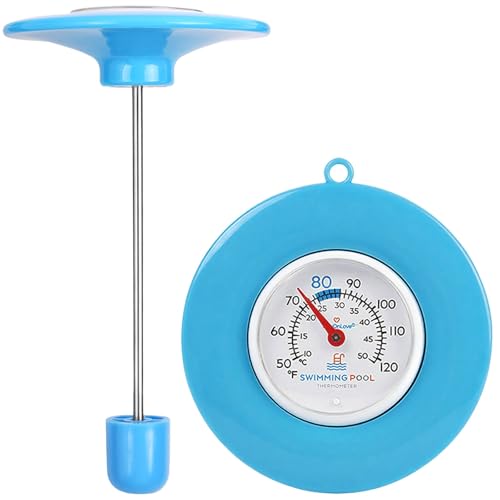
Modern temperature sensors offer diverse designs to suit different monitoring preferences and backyard layouts. High-visibility solar units, such as the BaldrTherm Pool Thermometer Digital Floating, feature double-sided display screens and integrated solar panels backed by internal batteries for continuous operation without manual battery swaps. Mechanical floaters, including the TurnOnLove Floating Pool Thermometer, utilize reinforced shatter-proof PVC discs and dual-scale dials that resist harsh outdoor exposure without needing any battery power. Simple whimsical devices like the XY-WQ Turtle Floating Pool Thermometer use glycerol-filled glass tubes and secure rope tethers to keep basic temperature readings readily accessible.
For remote monitoring convenience, wireless and Wi-Fi models let you verify spa temperatures from inside your home. Advanced devices like the GoveeLife Smart Wireless Pool Thermometer P2 provide IP68-rated waterproof sensors that stream real-time temperature updates through long-range gateways directly to smartphone apps. Multi-channel weather stations like the U UNNI Wireless Pool Thermometer Floating Easy Read pair floating transmitters with large indoor LCD consoles, tracking 24-hour temperature ranges and comfort levels from up to 230 feet away. Similarly, units like the TempPro TempAir Wireless Pool Thermometer Floating and the GoveeLife WiFi Pool Thermometer P1 deliver high-precision sensor tracking and customizable thermal alerts, ensuring you are immediately notified if water temperature drops toward freezing thresholds.
Impact of Water Temperature on Evaporation, Cover Integrity, and Operating Costs
Water temperature is the primary driver of thermal loss, vapor pressure, and monthly energy expenses in backyard spas. As water temperatures climb toward the 104-degree ceiling, the rate of evaporation accelerates exponentially, causing heat to escape rapidly into the ambient air. Maintaining a snug fit with folding thermal spa covers equipped with continuous heat-seal hinge gaskets prevents massive amounts of thermal energy from escaping around the fold seams. Unsealed or poorly fitted covers allow warm steam to vent constantly, forcing the heating element to cycle on repeatedly and driving up electric utility bills.
Over time, excessive steam and high operating temperatures can degrade standard cover materials if they lack robust moisture barriers. High-density expanded polystyrene foam cores encased in marine-grade vinyl vapor barriers resist the relentless heat and vapor pressure created by water kept above 100 degrees Fahrenheit. Investing in quality insulated hot tub covers protects your spa investment by preserving thermal R-values and preventing moisture absorption that leads to waterlogged, heavy foam inserts. Maintaining a balanced temperature and keeping your thermal barrier properly strapped down creates a tight thermal envelope that preserves heat effortlessly.
How Elevated Water Temperatures Alter Spa Water Chemistry
Hot water behaves very differently from cold pool water when interacting with chemical sanitizers and balancing compounds. Higher water temperatures dramatically speed up chemical reaction rates, causing free chlorine and bromine residuals to dissipate much faster than in cooler environments. When water is kept at 104 degrees Fahrenheit, bather perspiration and body oils release into the water at accelerated rates, consuming available sanitizers rapidly and leading to cloudy water or chloramine buildup. To counteract this rapid sanitizer depletion, spa owners must test water chemistry more frequently and add oxidizer shocks regularly after hot soaking sessions.
Water balance parameters, including pH and calcium hardness, are also highly sensitive to thermal fluctuations. As water heats up, carbon dioxide outgasses more rapidly, causing the pH to drift upward into alkaline territory where chlorine loses its sanitizing efficacy. Furthermore, high water temperatures decrease the solubility of calcium carbonate, making calcium scale much more likely to precipitate out of solution and coat the electric heater element or jet nozzles. Keeping your spa around 100 to 102 degrees Fahrenheit rather than sustained maximum heat helps stabilize your pH buffer, slows scaling tendencies, and extends the lifespan of sensitive internal plumbing.
Troubleshooting Temperature Errors and Circulation Failures
When a hot tub fails to reach its set temperature or overheats unexpectedly, mechanical or hydraulic faults are usually responsible. A common error on modern digital spa packs is an overheat condition, often indicated by an OH or HL code on the topside display. This safety fault triggers when internal high-limit sensors detect water in the heater chamber exceeding 110 degrees Fahrenheit (43.3 degrees Celsius), immediately shutting down power to prevent boiling. High-limit trips frequently occur when dirty filter cartridges restrict water flow through the heater tube, causing localized heat to spike before the circulation pump can push it into the main tub.
Conversely, a spa that refuses to heat often suffers from low water flow, signaled by a FLO or DR error code on the control panel. Low water levels, a clogged suction grate, or an air-locked pump following a drain-and-refill cycle can prevent the pressure or flow switch from registering sufficient movement to safely energize the heating element. Inspecting your skimmer basket, rinsing pleated filter pleats with a garden hose, and gently bleeding trapped air from pump union fittings can resolve these circulation restrictions. If sensor readings remain erratic despite clear water flow, the dual temperature thermistors may require testing with a multimeter or replacement by a qualified technician.
Practical Steps for Setting and Maintaining Your Optimal Temperature
Dialing in the perfect soaking warmth requires a systematic approach based on your household routine. Start by setting your digital topside controller to a moderate baseline of 100 degrees Fahrenheit, which provides adequate heat for most adults while leaving room for upward adjustment. Allow the spa to circulate and stabilize for several hours with the cover fully secured, giving the heating system enough time to distribute warmth evenly throughout the entire water volume. Use an independent floating thermometer to confirm that the water reaches your chosen setpoint accurately before making further fine-tuning adjustments.
If you plan a longer, social evening with family or guests, consider bumping the temperature up to 102 degrees Fahrenheit thirty minutes prior to use so the water feels instantly inviting. During the soak, keep the jet diverters and air controls closed when not actively using massage therapy, as drawing cool ambient air into the water streams causes rapid thermal loss. Once your soak is complete, promptly replace the thermal cover and lock the perimeter tie-down straps to trap residual warmth inside the vessel. By adopting consistent monitoring habits and understanding the practical dynamics of spa heat, you can enjoy safe, relaxing, and energy-conscious hydrotherapy year-round.






Write Your Review
No reviews yet. Be the first to share your experience!