
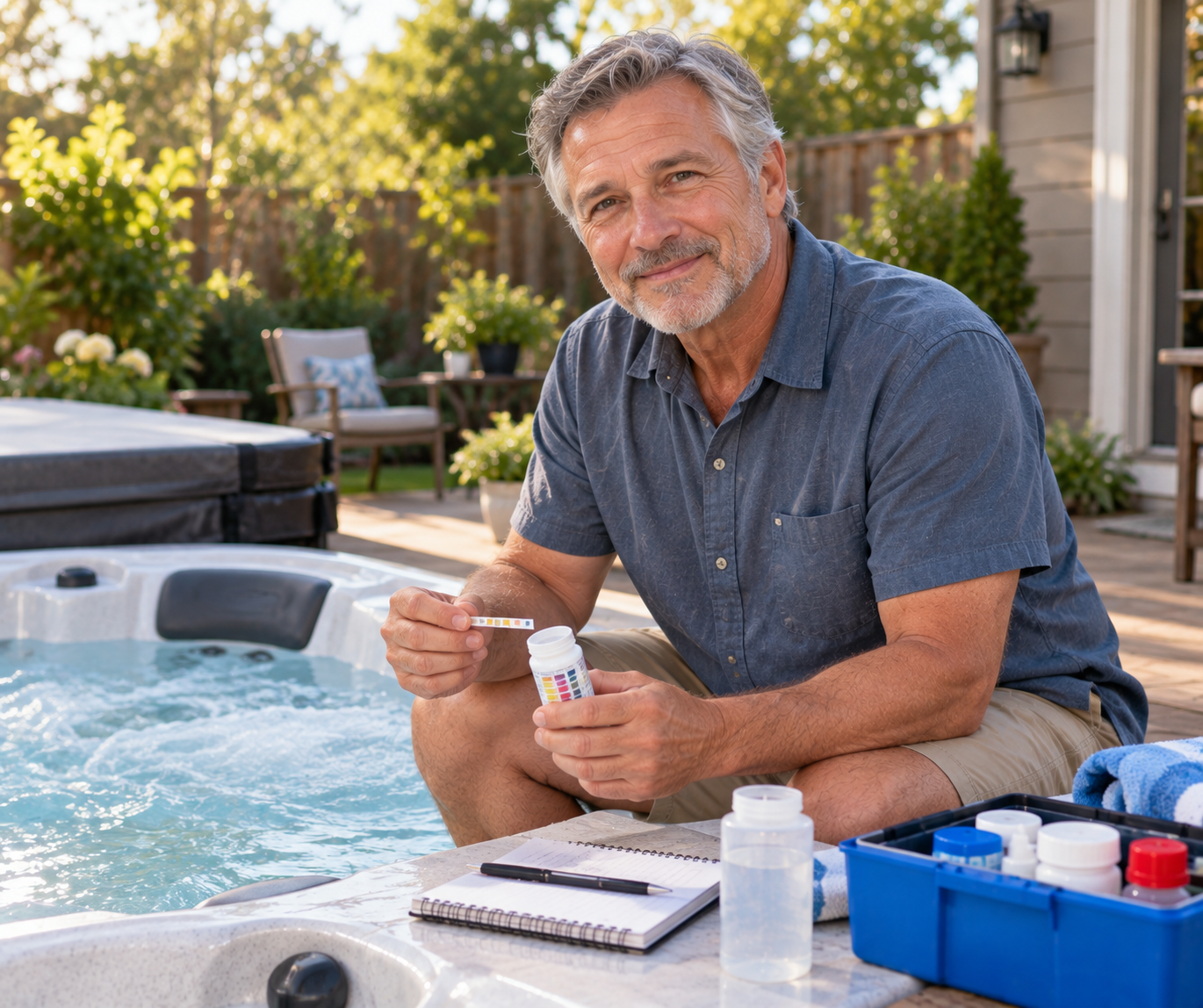

Managing winter standby electricity costs is often one of the biggest surprises for new spa owners. When cold weather arrives, maintaining a constant soaking temperature can cause your electric meter to spin continuously, leading many owners to investigate what is economy mode on a hot tub. This automated control setting modifies your spa pack logic so the heater only activates during pre-programmed filtration cycles rather than firing up every time the water drops a fraction of a degree. Pairing smart heating cycles with an insulated yard patio hot tub cover helps trap residual thermal energy inside the cabinet. Understanding how this operational mode balances water warmth against kilowatt-hour consumption can save significant money during long periods of non-use.
Most digital spa control packs allow you to toggle between standard, economy, and sleep modes with a quick sequence on the topside keypad. While standard mode prioritizes ready-to-soak heat at any hour of the day, economy mode restricts electrical heater engagement to designated circulation windows. This setup works exceptionally well for second homes, weekdays when nobody is soaking, or seasonal lulls between gatherings. However, running a reduced heating schedule also requires careful management of your chemical sanitization and freeze protection safeguards. Learning how your specific control board behaves ensures your water stays clean, safe, and reasonably warm whenever you decide to lift the cover.


Pros
- Pre-drilled holes and attached twine make hanging quick and hassle-free.
- Charming rustic farmhouse typography adds personality to spa areas and covered decks.
- Lightweight profile mounts safely on light-duty hooks without damaging walls.
- Inexpensive decorative touch for personal hot tubs or guest vacation rentals.
Cons
- Product dimensions show a discrepancy between the 10x8 title and 12x6 specification details.
- Natural wood construction is best kept in sheltered areas away from direct rain, heavy snow, and dense steam.
- Lightweight twine hanging can swing in outdoor wind unless anchored at the base.
The YCYD Wooden Hot Tub Sign is a charming decorative wall accent tailored for spa owners, cabin hosts, and homeowners looking to bring personality to their hot tub lounge area. Featuring the playful phrase 'Life Is Better In The Hot Tub' set against a rustic faux-slat background, this sign works especially well in covered patios, screened porches, hot tub enclosures, or adjacent indoor bathrooms. It provides a welcoming visual cue that invites guests and family members to unwind, making it a popular choice for vacation rental setups and backyard entertaining spaces.
Decorating a spa space requires accessories that fit constrained wall areas without crowding equipment or walking paths. With dimensions listed at approximately 12 by 6 inches and a slim 0.2-inch thickness, this plaque easily mounts on gazebo posts, deck privacy walls, fence rails, or changing room doors. Its compact scale makes it versatile enough to tuck into small nooks beside towel racks or outdoor drink shelves without dominating the wall space.
The plaque is constructed from smooth-finished wood featuring clean edges and clear, printed graphic lettering designed to resist premature peeling or burring. Because it relies on printed graphics rather than heavy carved lumber, the sign remains very lightweight. It comes equipped with pre-drilled holes on either side and includes hanging twine, allowing you to suspend it from standard finishing nails, cup hooks, or outdoor-rated adhesive hangers without needing power tools.
Installing the sign takes only a minute thanks to the pre-strung twine arrangement, but placement requires thoughtful consideration regarding weather exposure. While suitable for open-air enjoyment, prolonged exposure to direct rainfall, heavy snow, or constant high humidity from bubbling hot tub steam could degrade untreated wood over multiple seasons. Hot tub owners looking for maximum longevity will get the best results by hanging this sign under an eave, inside a gazebo, or along a covered patio where it stays shielded from direct weather runoff.
A practical detail to keep in mind when ordering is the size notation provided by the manufacturer. While the product title mentions 10 by 8 inches, the detailed specifications list the piece as approximately 12 by 6 inches by 0.2 inches thick. Additionally, because the sign is lightweight and suspended by rope, outdoor breezes can cause it to sway against siding or posts unless anchored with double-sided exterior mounting tape or small adhesive pads at the lower corners.
If you want a quick, affordable way to personalize your hot tub retreat or vacation property, the YCYD wooden sign offers an attractive rustic touch. It makes an enjoyable gift for new spa owners or an easy weekend decor upgrade for covered patio retreats. Just be sure to measure your intended display space against the 12-by-6-inch specifications and position the plaque away from direct downpours to keep the wood looking fresh.
Mounting this decorative wooden sign is simple thanks to the pre-drilled corner holes and included twine loop. For outdoor deck posts, privacy screens, or gazebo frames, a simple cup hook, screw, or nail will hold the lightweight plaque securely.
If you plan to hang the sign in an indoor spa bathroom or on smooth vinyl siding, an outdoor-rated adhesive hook works well without requiring drilled holes. In windy outdoor areas, applying a small piece of exterior-grade mounting tape behind the bottom edge prevents the sign from clattering or swinging against the wall during breezy conditions.
To maintain the appearance of the printed wood graphic, position the sign in a sheltered location that protects it from standing water, direct driving rain, and continuous spa steam. Covered porches, pergolas with solid roofs, screened cabanas, or adjacent indoor changing areas provide ideal environments.
Routine maintenance is minimal. Simply wipe the surface occasionally with a clean, dry microfiber towel or soft cloth to remove dust and outdoor pollen. Avoid using harsh chemical pool cleaners, abrasive scrubbers, or soaking the wooden board in water, as excess moisture could cause the material to warp over time.


Understanding Hot Tub Economy Mode and Heating Logic
Modern hot tubs rely on electronic spa packs to manage heaters, pumps, and filtration cycles. Rather than using simple thermostats, digital controllers provide specific operating profiles based on user habits. What is economy mode on a hot tub comes down to restricting when your heater is permitted to draw power. By synchronizing water heating with scheduled filtration windows, economy mode prevents continuous micro-heating cycles throughout the day.
How Economy Mode Regulates Spa Temperature and Heating Cycles
In standard mode, an electronic controller monitors water temperature using thermistors inside the heater tube. Whenever sensors detect a slight temperature drop, the pump engages and the heater activates immediately. Economy mode alters this relationship by locking out the heater during idle periods. Even if the water cools by several degrees, the heater remains off until the next programmed filtration window.
During a scheduled filtration cycle, the low-speed pump pulls water through the filter cartridge to capture suspended debris. In economy mode, the spa controller checks water temperature only during these designated filtration hours. If sensors indicate the water has cooled below your target setting, the heater turns on concurrently with the pump. Once the filtration timer expires, the heater shuts off regardless of whether the water reached full soaking temperature.
This operational logic creates a cyclical temperature pattern rather than a constant baseline. Owners will notice the water feels warmer immediately following an active filtration cycle and cooler several hours later. For spas operating in mild weather, this variance may only be two or three degrees across the day. In colder climates, water temperature can fall significantly between cycles, making it essential to time filtration windows carefully.
Standard, Economy, and Sleep Modes Compared
Evaluating the differences between operating modes helps you determine which setting best matches your soaking schedule. Standard mode, often labeled as ready mode on modern keypads, is engineered for maximum bather convenience. In this profile, the spa pack polls the water regularly by running the pump for brief sampling intervals. If heat is required, the heating element engages immediately to ensure the tub is always ready at your preferred temperature.
Economy mode, frequently displayed as rest mode on newer control systems, trades constant readiness for controlled power consumption. Instead of polling the water every thirty minutes, the spa pack stays dormant between filtration windows. The primary operational benefit is eliminating short-cycling, where the heater turns on and off repeatedly throughout the day. This makes economy mode an attractive choice for homeowners who only soak on weekends or during specific evening hours.
Sleep mode represents an even more aggressive power-conservation profile available on many electronic spa packs. While economy mode attempts to reach your full setpoint during filtration windows, sleep mode automatically lowers the target threshold by twenty degrees Fahrenheit. The heater only activates during filtration cycles if the water falls below this reduced limit. Sleep mode is primarily intended for extended vacations or seasonal shutdowns where maintaining basic freeze protection is necessary.
Energy Savings Versus Thermal Recovery Time
The decision to utilize economy mode revolves around the balance between standby energy savings and thermal recovery rates. Electric spa heaters typically draw between one kilowatt on dedicated 110-volt circuits and four to five-point-five kilowatts on 230-volt connections. When a spa maintains a continuous 104-degree soak temperature, standby heat loss occurs steadily through the acrylic shell, plumbing, and cover. Restricting heating cycles reduces the temperature differential against ambient air, which naturally slows down radiant heat loss.
The primary drawback of economy mode is the extended recovery time required to reheat the water before use. Standard 230-volt hot tubs, such as the Comfort Hot Tubs 6-person model requiring a 220-volt connection, typically recover three to six degrees Fahrenheit per hour. Conversely, plug-and-play spas operating on 110-volt circuits often reheat at a rate of only one to two degrees per hour. If your spa cools by ten degrees while resting, you must plan several hours in advance to return the water to soaking temperature.
Thermal retention plays a decisive role in determining whether economy mode actually delivers noticeable utility savings. If your spa cabinet lacks dense insulation or uses a waterlogged cover, the tub will lose heat rapidly between cycles. Investing in a quality spa cover with warranty protection helps preserve thermal energy during non-heating intervals. When the cover maintains a tight vapor seal, the water drops only a fraction of what an uninsulated spa would lose.
Impact on Water Chemistry, Sanitization, and Filtration
Operating in economy mode requires spa owners to monitor water chemistry more closely than in standard mode. Because heating is tethered directly to filtration cycles, owners often adjust filtration timers to balance heating demands. If you shorten filtration cycles to prevent the heater from running too long, you inadvertently reduce the volume of water passing through the filter. Adequate circulation is essential for trapping suspended contaminants, mixing added chemicals, and distributing primary biocides like chlorine or bromine.
Lower average water temperatures can also change the dissolution rate and chemical efficacy of your water treatment products. Granular sanitizers and chemical balancers dissolve more slowly in cooler water, which can lead to localized settling on the acrylic shell. Adding clarifying products, such as Hot Tub Things Spa Clarifier Water Treatment, can assist your filtration system in binding fine particulate matter during reduced filter runs. Using clarifying additives helps keep water sparkling even when your circulation pump operates on shorter programmed schedules.
Maintaining proper baseline water parameters remains vital regardless of which operational mode you select on your topside control panel. Bathers must regularly check total alkalinity, keeping it between 80 and 120 parts per million to stabilize pH fluctuations between 7.2 and 7.8. When pH drifts out of balance in cooler water, scale formation or equipment corrosion can still develop over time. Routine testing ensures that your sanitizing residual stays within safe parameters, protecting bathers from skin irritation and safeguarding internal components.
Cold Climate Operation and Winter Freeze Protection Risks
Running economy mode during freezing winter weather requires understanding your spa pack automated safety features. Electronic control systems incorporate freeze protection sensors programmed to engage if water inside the heater manifold drops below 40 degrees Fahrenheit. When this safety threshold is reached, the controller overrides user settings and activates the low-speed pump to circulate water continuously. However, relying strictly on automated freeze protection while in economy mode can create narrow margins of safety during severe blizzards.
Plumbing manifolds, external gate valves, and perimeter jet lines are particularly vulnerable to sub-zero ambient temperatures if water circulation ceases for extended periods. If filtration cycles are spaced twelve hours apart, stagnant water in perimeter plumbing can lose heat faster than the central body of water in the tub. In extreme weather, ice crystals can begin forming inside smaller air lines and jet returns before the main temperature sensors trigger a heating call. For this reason, many owners switch their control systems back to standard mode during peak winter freezes.
Cabinet insulation architecture and external thermal barriers provide the primary line of defense against rapid freeze damage. Spas with full-foam polyurethane insulation retain core thermal mass far better than open-cavity designs during cold spells. Installing a budget oversized hot tub cover with a thick tapered foam core provides an essential protective boundary against heavy snow loads and freezing winds. A tight thermal barrier ensures that internal water remains safely above freezing thresholds even when your heater is resting between economy cycles.
Step-by-Step Programming and Topside Keypad Navigation
Switching between heating modes on an electronic topside control panel typically requires a specific combination of button presses. On widely used control packs, you begin by pressing the Temperature button, immediately followed by the Light or Mode button. The digital display will alternate between the current temperature and an abbreviated mode indicator, such as ST, EC, or SL. Continuing to press the sequence toggles the active selection, allowing you to choose economy mode before the keypad times out and locks in the new setting.
Configuring the duration and frequency of your daily filtration cycles is just as important as selecting economy mode itself. Most digital packs allow owners to set two distinct filtration cycles per day, labeled as F1 and F2, spaced twelve hours apart. You can program each cycle to run for two, four, six, or eight continuous hours depending on your bather load and heating requirements. Setting each filtration window for four hours ensures your spa receives eight total hours of daily filtration and heating opportunity, which is generally sufficient for moderate climates.
Accidental mode toggling is a common issue that causes confusion among hot tub owners wondering why their water is suddenly lukewarm. Guests or family members adjusting the water temperature can easily trigger the mode sequence by pressing buttons in rapid succession. If the display shows EC or REST instead of ready status, the tub has been inadvertently placed into economy mode. Checking your topside display periodically ensures your spa remains in your desired operational mode, preventing unwelcome surprises when you prepare for an evening soak.
Practical Scenarios: When to Use Economy Mode
Economy mode offers practical utility in specific ownership scenarios where immediate soaking readiness is not an everyday requirement. Homeowners who only use their hot tub on Friday and Saturday evenings can set their spa to economy mode throughout the working week. This reduces overall kilowatt-hour consumption during Monday through Thursday while still keeping the water well above ambient outdoor temperatures. When Friday afternoon arrives, switching the system back to standard mode provides adequate time for the heater to bring the water up to full soaking temperature.
Property owners enrolled in Time-of-Use electrical billing structures can leverage economy mode to avoid expensive peak-rate energy surcharges. In many utility regions, electricity rates double or triple during late afternoon and early evening peak hours. By programming filtration cycles to run strictly during off-peak overnight and early morning hours, economy mode forces the heater to operate exclusively when power is cheapest. This synchronization prevents the high-wattage heating element from cycling on during peak grid hours, significantly lowering your monthly utility statement.
Conversely, daily bathers and families who enjoy spontaneous hydrotherapy sessions will likely find economy mode frustrating rather than beneficial. Stepping into a hot tub that has cooled to 94 degrees when you were anticipating a soothing 104-degree soak ruins the therapeutic experience. Because the heater will not engage outside filtration windows, you cannot simply press a button and expect rapid warmth without manually switching modes and waiting hours. For regular, frequent use, standard mode delivers the reliability and comfort that makes hot tub ownership worthwhile.
Best Practices for Long-Term Equipment Health and Efficiency
Maximizing the benefits of economy mode requires regular physical maintenance of your spa mechanical and hydraulic systems. Inspecting the cartridge filter every few weeks ensures that debris accumulation does not restrict water flow through the heater manifold during scheduled filtration cycles. Low flow rates can trip internal pressure switches or trigger flow error codes on your topside display, preventing the heater from firing even during its permitted windows. Keeping your filter degreased and clean promotes optimal water flow and efficient heat transfer.
Monitoring your spa cover integrity is equally critical when utilizing energy-saving heating schedules. Inspect the vinyl vapor barrier, safety straps, and center hinge seal to confirm that moist heat is not escaping into the surrounding atmosphere. Waterlogged cover cores lose their insulating value and place excessive physical strain on your lifter hardware, accelerating cabinet wear. Ensuring your cover fits squarely over the acrylic lip traps convective heat, allowing the water mass to retain warmth for hours between economy filtration cycles.
Deciding whether economy mode suits your backyard setup ultimately depends on your soaking habits, electrical configuration, and local climate. By matching filtration cycles to off-peak utility hours and maintaining high-quality cabinet insulation, you can achieve substantial energy savings without compromising water quality. Keep a close eye on chemical balance and seasonal weather changes, and you will enjoy a reliable, cost-effective hot tub experience throughout every season of the year.





Write Your Review
No reviews yet. Be the first to share your experience!