


Cleaning a pool by hand can take time, especially when leaves collect on the floor or fine debris settles between regular maintenance sessions. A suction-side cleaner uses the pool’s circulation pump and filtration system, so its performance depends on the plumbing, pump capacity, and a clear filter. That makes what is the best suction side pool cleaner a question of matching the cleaner to your pool, rather than picking one model for every setup.
The options here range from simple suction cleaners to models listing wall-climbing features and broader surface coverage. Before buying, check whether the cleaner is intended for your pool type, whether your pump meets its stated requirements, and whether the included hose can reach across the pool. Those details matter more than broad claims about suction power, particularly if your cleaner tends to stall, miss corners, or get caught near drains.
Also consider what reaches your filter: a suction cleaner sends collected debris into the pool’s filtration system, so full baskets or a dirty filter can limit pickup. The product specifications below identify useful differences, but they don’t establish how any model will perform in every pool. Match the stated requirements to your equipment and follow the cleaner and pool-system manufacturers’ guidance.




What makes a suction-side cleaner the right choice?
There isn’t one universally best suction-side pool cleaner. For a pool owner with a suitable circulation pump and a compatible suction connection, this cleaner type can automate routine floor cleaning without a separate robotic power supply or a dedicated pressure-cleaner booster pump. The tradeoff is that it relies on the pool’s existing pump and filter, and a mismatch in pump capacity, hose setup, or debris load can affect how well it moves and picks up dirt.
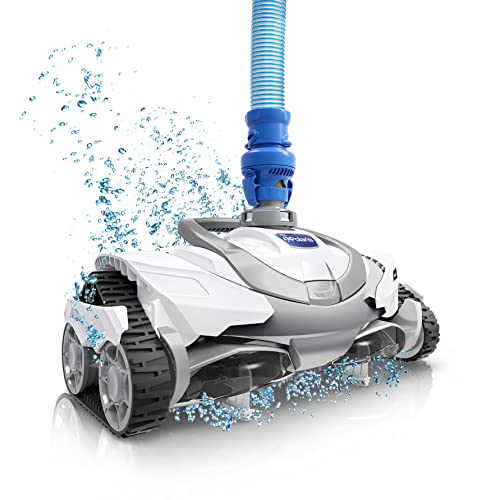
In the supplied specifications, the Zodiac MX6 is described as connecting to either a dedicated suction line or the skimmer, with a 32-foot twist-lock hose and hydraulic navigation. The Zodiac G3 lists skimmer or dedicated-line connection, a 39-foot push-fit hose, and compatibility with low-flow and variable-speed pumps. Those are distinct listed features, not a guarantee that either cleaner suits every variable-speed setting or pool layout.
For a simpler mechanism, Pentair’s Kreepy Krauly Kruiser is described as having one moving part and a wider mouth intended for both large and small debris. The Polaris MAXX adds a different set of listed features: active scrubbing brushes, HALO technology, and floor-to-waterline cleaning on in-ground pool surfaces. Its manufacturer states it is for routine maintenance, not initial cleanup after construction, resurfacing, or seasonal opening, so heavy startup debris calls for a separate plan.
Start with pump capacity and the suction connection
A suction cleaner does not have an independent power supply in the way a robotic cleaner does. The pool pump creates the suction that moves the cleaner, while the filter and baskets receive debris carried through the system. A clogged filter, full pump basket, or blocked skimmer basket can reduce available flow, so the Polaris MAXX product information specifically advises keeping baskets clear and cleaning or backwashing the filter regularly.
Check the exact pump requirement for the model you’re considering before purchase. The VINGLI Suction Pool Cleaner listing specifies a minimum three-quarter-horsepower pump or 1,700 gallons per hour, while another VINGLI listing gives a minimum 1.5-horsepower pump for optimal performance. Those stated requirements differ between listings, so don’t assume the specifications for one VINGLI model apply to another.
The MX6 is described as suitable for setup at the skimmer or a dedicated suction line, but a listing’s connection options don’t replace checking your pool plumbing. Confirm that the connection and fittings match the cleaner instructions, and use any supplied flow regulator or valve as directed. If your pump is variable-speed, follow both the pump and cleaner guidance to establish an operating setting that provides the cleaner’s required suction without compromising normal circulation.
Choose coverage based on the pool’s shape and surfaces
“Wall-climbing” in a product name does not mean a cleaner will cover every wall, step, or waterline equally in every pool. The MX6 lists wall climbing when set to proper flow, and the Polaris MAXX describes cleaning from floor to waterline on in-ground surfaces. Pool geometry, flow, hose reach, and obstructions can all affect the path, so consider steps, tight corners, ladders, and raised main drains as part of the decision.
Pool type deserves a careful check. Several VINGLI listings describe their cleaners for in-ground pools, while the newer VINGLI Suction-Side Pool Cleaner listing says it can serve in-ground and above-ground pools. The G3 lists compatibility with tile, vinyl, gunite, and fiberglass in-ground surfaces. Use the model-specific instructions to confirm suitability for your pool finish instead of treating a claim for one model as a brand-wide promise.
Cleaner movement can also be affected by transitions and obstacles. A hose that is too short may restrict coverage, while excess hose can make routing less tidy; check the included length against the distance from the suction connection to the farthest areas you expect the cleaner to reach. The VINGLI models listed include hose sections totaling roughly 33 to 40 feet, while the MX6 and G3 have different stated hose lengths. Match the actual model’s package and your pool layout rather than relying on a generic hose-length assumption.
Fine pollen, sand, or algae particles can behave differently from larger leaves and twigs. These products send debris through the pool’s filtration system; the supplied data does not provide micron ratings for their filtration. If very fine debris is your main concern, check what your existing filter can capture and whether the cleaner manufacturer supports that application. A wide intake, such as the one listed for the Pentair Kruiser, may be relevant to mixed debris, but it should not be read as a fine-particle filtration specification.
Understand the differences among the listed models
The VINGLI options share a focus on straightforward connection to existing pool filtration, but their stated pump requirements and hose details are not identical. One listing calls for at least three-quarter horsepower or 1,700 gallons per hour; another specifies 1.5 horsepower for optimal performance and includes twelve 3.3-foot hose segments. Read the exact listing for the version you intend to buy, since similar names and appearance do not establish identical specifications.
The MX6 may suit an owner who wants a compact suction-side design with twist-lock hose sections and hydraulic navigation, while the G3 has a longer listed hose and a disc-style cleaning element described as maneuverable around corners and pool fittings. The G3’s manufacturer lists several in-ground surface types and low-flow pump compatibility, but gives no numeric minimum flow rate in the supplied details. If your pump runs at a low variable-speed setting, verify operating requirements with the current manufacturer instructions before relying on that description.
The MAXX is the premium-feature alternative in this selection, with listed scrubbing brushes, multi-directional navigation, and a regulator valve intended to control excess water flow. Its stated floor-to-waterline scope may appeal to someone who wants more than floor pickup, but the product description also sets a clear boundary: it is for routine maintenance rather than post-construction or seasonal-opening cleanup. The Pentair Kruiser, by contrast, emphasizes a wider intake and a single moving part, making its listed design simpler to assess.
One item in the supplied product list is a replacement head only, not a complete cleaner. The Pool Cleaner 2 Wheel Head listing identifies itself as a headbox for Hayward or Poolvergnuegen cleaner models and says no assembly is required for installation. Treat it as a replacement component only after confirming your existing cleaner model and part compatibility. It is not a substitute for buying a complete hose-and-cleaner setup if you do not already own the corresponding system.
Set up the hose and diagnose weak movement
Before connecting a new cleaner, clear the relevant baskets and make sure the filter is not restricted. Assemble and connect hoses according to the product instructions, then ensure the connections are secure. The VINGLI guidance specifically says to connect hoses tightly, remove air from the hoses, and check pump suction; those checks are sensible starting points if a unit does not move as expected.
Air trapped in the hose can interrupt a steady water path, while loose connections can undermine suction. If the cleaner stalls or moves weakly, inspect the suction connection, hose joints, baskets, and filter before assuming the cleaner itself has failed. Follow the pool-system instructions when checking plumbing, and don’t bypass suction safety devices or alter pool fittings to force a connection.
A diaphragm-style cleaner can also stop if debris obstructs its moving parts. VINGLI’s supplied troubleshooting notes recommend checking the diaphragm opening for a gap or a small rock when its cleaner is not working. Disconnect the equipment and follow the manufacturer’s service guidance before inspecting or clearing a component. If the same problem returns after an obstruction is removed, check that the pump meets the particular model’s stated requirement and that the filter system is not restricting flow.
A cleaner repeatedly getting caught on a raised drain, step, or ladder may be running into a pool-layout limitation rather than a simple suction fault. The MX6 lists a wheel deflector to help it move around tight corners, but that feature does not establish that it can cross every drain cover or obstacle. Observe its route from outside the water, note the specific snag point, and compare that location with the cleaner’s instructions. Avoid removing or modifying a drain cover to free a cleaner.
Keep routine operation and ownership practical
Because the cleaner uses the pool’s filtration system, picked-up material adds to the load on its baskets and filter. Check and empty baskets as needed, and clean or backwash the filter according to its instructions. Heavy leaf fall can fill baskets sooner than routine light debris, while fine particles may require closer attention to filter condition. A suction cleaner can reduce manual vacuuming, but it does not remove the need to maintain the circulation system.
Inspect hoses and joints periodically for wear, separation, or leaks, and keep hose sections arranged so they can move freely. VINGLI listings describe scuff-resistant hoses, but that wording is not a reason to ignore damage or surface-specific instructions. Use only the cleaner on finishes approved by its manufacturer, particularly where vinyl liners or delicate surfaces are involved. If a hose has become brittle or cracked, replace it with a compatible part rather than relying on a temporary repair.
Store the cleaner and hose as directed when they are not in use, and follow manufacturer guidance about water chemistry and seasonal care. The supplied product data does not state chemical exposure limits or give a universal shock-treatment procedure, so don’t assume every model can remain in the pool during chemical treatment. Consult the cleaner and pool-equipment instructions before treatment or service. For suction-line hookups and pump settings, a qualified pool professional may help when your plumbing configuration is unclear or the system shows signs of trouble.
Make the decision from your actual equipment
For a straightforward choice, begin with the pump requirement and connection type, then compare hose reach and the coverage the model actually lists. A pool owner seeking a simpler design may focus on the Pentair Kruiser’s single moving part and wider mouth; someone prioritizing wall and waterline coverage may look more closely at the Polaris MAXX’s stated features. A buyer considering a VINGLI cleaner should distinguish the specific versions and their different pump requirements rather than selecting by name alone.
Cost-conscious shoppers may find suction-side cleaners appealing because they use existing circulation equipment, but that does not make them independent of the pump’s operating needs. A weak or restricted system can compromise cleaner movement, and debris goes into the pool’s filtration system rather than a separate robotic filter basket. Include the condition of your pump, filter, and suction plumbing in the decision, along with the cost and availability of model-specific replacement parts.
The best match is the model whose documented requirements fit your pump, pool surface, connection, and layout. Confirm the precise listing and manufacturer instructions before purchase, especially for pump horsepower, hose length, and pool-type compatibility. Once installed, steady movement and expected coverage are more useful indicators than a product name or broad marketing phrase. If the cleaner cannot maintain suction after basic checks, stop and resolve the pump or plumbing issue rather than forcing it to run.




Write Your Review
No reviews yet. Be the first to share your experience!