


Manual vacuuming can turn routine pool care into a recurring chore, especially when leaves settle across the floor or a cleaner loses suction halfway through a cycle. Asking what is the best suction pool cleaner is really asking which setup matches your pool’s circulation system, interior surface, and usual debris. Suction-side models connect to the skimmer or a dedicated suction line, so their performance depends on the pool pump and a clear filtration path. A cleaner that looks appealing on paper can disappoint if the pump cannot supply its stated flow requirement or the hose does not suit the pool layout.
The options here range from simple suction-side cleaners to robotic and handheld vacuums, which do not all work the same way. The Zodiac MX6 and G3, Polaris MAXX, and VINGLI models connect to pool suction, while the cordless robot and handheld vacuum have their own power and debris-handling arrangements. Check the product’s exact pool compatibility, pump requirement, hose setup, and cleaning coverage before buying. If you want to compare other pool-care equipment, our practical guide to inflatable hot tub ownership covers a separate decision about ongoing home water-care needs.

Top Products




How to Choose a Suction Pool Cleaner That Fits
There is no single best suction pool cleaner for every pool. The strongest starting point is whether you want a cleaner that uses the existing pool pump and filtration system, or whether a different cleaning architecture better addresses your needs. For a suction-side purchase, confirm pump requirements and plumbing compatibility first, then weigh surface, coverage, hose management, and debris expectations. This order helps prevent buying a cleaner that cannot run properly with the equipment already installed.
Start with the suction line and pool pump
Suction-side cleaners draw water through a hose connected to the pool’s skimmer or a dedicated suction line, then send debris into the pool filtration system. That means the cleaner shares available suction with the system’s hydraulic setup; it does not bring a separate powered pump. The Zodiac MX6 is listed for either a dedicated suction line or skimmer connection, and the Zodiac G3 connects to a skimmer or dedicated suction line. Check your pool’s actual plumbing and the cleaner’s supplied fittings before treating either connection as interchangeable.
Pump capacity is a key compatibility check, not a detail to leave until setup day. The VINGLI suction models list a minimum pump requirement of at least three-quarter horsepower or a flow rate of 1,700 gallons per hour; another VINGLI listing gives 1,600 gallons per hour and three-quarter horsepower. XtremepowerUS lists at least one horsepower or 1,600 gallons per hour. Compare the requirement for the exact model with your pump information, particularly if you use a variable-speed pump, and follow the cleaner and pool-equipment manuals for operating settings.
A suction cleaner can behave poorly if its hose admits air, the filter is restricted, or pump and skimmer baskets are full. Polaris specifically advises keeping pump and skimmer baskets empty and cleaning or backwashing the filter regularly for the MAXX. That advice illustrates an important system-level point: a suction-side cleaner relies on unobstructed circulation, and a dirty filter can reduce available cleaning power. If you are unsure which line serves the skimmer or a dedicated port, consult the pool’s equipment documentation or a qualified pool professional rather than changing plumbing by guesswork.
Match coverage claims to the pool’s shape
Cleaning labels such as wall climbing do not mean that every obstacle or transition will be handled the same way in every pool. The MX6 is described as navigating floors and walls through X-Drive movement, with its turbine and X-Trax intended to support grip and climbing when flow is set appropriately. The VINGLI descriptions mention wall cleaning and a wheel deflector intended to help it move around tight corners. These are useful design details, but steps, ladders, raised drains, and unusual ledges can still affect a cleaner’s route.
Pool geometry matters alongside surface type. Freeform curves, tight corners, a steep slope into the deep end, or an obstruction near the main drain can change how a hose-fed cleaner travels. Before buying, consider where hose sections may bend or bunch and whether the path includes objects that could trap the cleaner. The product descriptions do not establish that any listed suction model can navigate every step, tanning ledge, or raised drain, so avoid treating broad wall-cleaning language as a guarantee of complete coverage.
Surface compatibility also deserves a model-specific check. The G3 listing identifies tile, vinyl, gunite, and fiberglass among the in-ground surfaces it can clean, while Polaris states that MAXX is for all in-ground pool surfaces. Other supplied descriptions do not provide the same level of surface detail. Follow the manufacturer’s instructions for your exact finish, especially with vinyl liners, and inspect cleaner parts and hose connections for damage if you notice unusual contact or movement.
Compare the suction models by their design
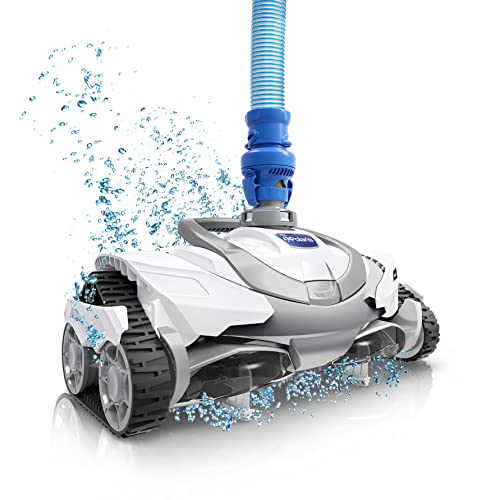
The Zodiac MX6 is a compact suction-side option whose listing highlights a cyclonic turbine, X-Trax, X-Drive navigation, and flow calibration for variable-speed pumps and lower flow rates. Its described package includes 32 feet of twist-lock hose and connection accessories for skimmer or dedicated-line installation. Those details make it worth considering when you want a named hose length and the ability to use either listed connection route. The product information still calls for proper flow setup, so a low pump setting should not be assumed to work without checking the instructions.
The Zodiac G3 takes a simpler disc-cleaner approach in its listing. It includes a 36-fin disc, wheel deflector, and 39 feet of push-fit hose, and the product information describes setup as attaching those parts and connecting the hose to suction. The G3 is also listed as compatible with low-flow and variable-speed pumps and multiple in-ground finishes. Pool owners may prefer its stated hose length or surface information, but actual suitability still depends on pool dimensions, fittings, pump condition, and manufacturer guidance.
Polaris MAXX occupies a different position among the suction-side options. Its listed features include active scrubbing brushes, HALO technology for different debris types, multidirectional navigation, and floor-to-waterline coverage for in-ground pools. The description also notes a regulator valve that controls excess water flow and says the cleaner is intended for routine maintenance, not initial cleanup after construction, resurfacing, or seasonal opening. Those caveats matter: a routine cleaner is not a substitute for handling a major one-time debris load or preparing a newly finished pool.
VINGLI and XtremepowerUS offer hose-based alternatives with explicit pump requirements in their descriptions. VINGLI listings describe ten hose sections, each 3.3 feet long, and recommend adjusting weights and a regulator valve for performance. XtremepowerUS lists a 30-foot hose set and a higher stated pump horsepower minimum than some competing options. Compare those details with the pool’s dimensions and pump rather than focusing only on advertised convenience. Also check whether the hose diameter and connection components match your equipment before ordering.
Separate suction cleaners from robots and handheld vacuums

Not every product in the product list is a suction-side automatic cleaner, and that distinction can change the buying decision. The BOTLIFE cordless robotic vacuum has its own battery, pump, filter basket, and floor, wall, and waterline modes. Its listing states up to 120 minutes of runtime, a 5,200 mAh battery, a 4-liter basket, and about 2.5 hours to recharge. Those are manufacturer-listed specifications, not a reason to assume the robot has the same pump requirements or plumbing connections as a suction cleaner.
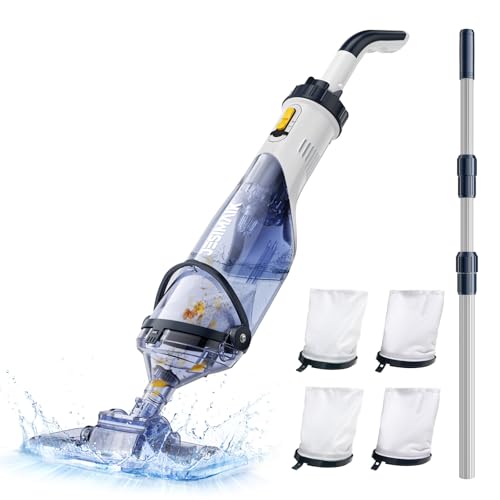
The JESIMAIK handheld vacuum is another different category. It is a cordless manual unit with a telescoping pole, two head styles, two mesh sizes, and a listed runtime of up to 60 minutes. The description says it can be used in above-ground pools and some inground settings, but it requires a minimum water depth and cautions against oversized debris. A handheld vacuum gives the owner direct control over where to clean, while a suction-side automatic cleaner travels on its own using pool circulation. Decide whether you want scheduled-style automatic movement or targeted manual cleanup.
The Hayward Navigator Pro listing names the product as a head only, so check carefully what is included before treating it as a complete cleaner package. Missing or separately required equipment can change setup expectations. Product titles and short descriptions may not show every included hose, adapter, or replacement part. Verify the full listing and manufacturer instructions, especially when replacing an existing cleaner and hoping to reuse its plumbing or accessories.
Think about debris, filtration, and routine upkeep
Suction-side cleaners generally deliver debris to the pool’s filtration system, so the skimmer basket, pump basket, and filter do much of the debris collection work. That can suit owners who already maintain those components and want a cleaner that uses existing circulation. It also means leaves and other debris can increase the need to empty baskets or clean the filter. A saturated or restricted system can undermine suction and may leave the cleaner crawling or stopping rather than covering the pool.
Fine silt, windblown sand, and dead algae can challenge a pool’s filtration system differently from larger leaves. The supplied suction product details do not state a micron rating, so there is no supported basis here to claim that a particular suction model captures a precise size of particle. The cordless robot listing does provide a 150-micron mesh figure for its filter basket, while the handheld JESIMAIK listing provides 300-mesh and 500-mesh bags without a micron conversion. Those specifications should not be treated as directly comparable filtration tests.
For heavy leaf fall, plan for frequent basket checks rather than assuming an automatic cleaner removes all maintenance. Large debris can fill baskets and restrict flow, while a cleaner’s hose or moving parts may need inspection if the unit stops. For fine particles that remain suspended or pass through your existing filtration arrangement, consider the filter system and water-care needs along with the cleaner. A suction cleaner is one part of pool maintenance, not a promise that every type of debris will disappear without attention.
Recognize the signs of a poor match
A suction cleaner that barely moves may have a flow problem, a clogged filter, full baskets, or a hose connection issue. Start with the checks allowed by the product instructions: inspect baskets and filter condition, confirm hose sections are tightly connected, and verify that the pump meets the model’s stated requirement. VINGLI’s instructions specifically recommend checking that hoses are tightly connected, air is bled from the hoses, and pump suction is adequate. Do not dismantle equipment or adjust pool plumbing while the pump is running.
A cleaner that repeatedly stalls at the same drain or step may be meeting a physical obstacle rather than suffering from weak suction alone. Observe its route from a safe position and note whether it hangs at a raised fitting, narrow corner, or transition. A wheel deflector is listed on some options to help with tight corners, but the supplied information does not establish that it prevents every hang-up. If the obstruction involves a drain cover or suction fitting, do not remove or alter safety components; follow pool and cleaner manufacturer guidance.
Hose behavior can also point to a setup mismatch. Sections that twist, kink, or pull the cleaner toward one area may limit movement, while a hose that cannot reach the farthest part of the pool can leave areas untouched. Compare the supplied hose length with the actual pool layout and connection location, then follow the manual’s setup guidance for hose configuration. Do not add unapproved sections or improvise connections, since changes can affect suction and safe operation.
Make the purchase decision around the whole system
For a pool owner with a suitable pump and accessible suction connection, a suction-side model can be a straightforward way to automate routine floor and wall cleaning while using existing filtration. The Zodiac models offer stated hose lengths and connection details, while the VINGLI and XtremepowerUS listings spell out pump requirements that should be checked before purchase. Polaris MAXX adds listed active brushes and waterline coverage, but it is still intended for routine maintenance and depends on a clean, unrestricted filtration path. Compare these tradeoffs against the actual pool setup rather than choosing by brand name alone.
If your pool pump does not meet the listed requirement, or you do not want a cleaner tied to circulation and filtration, the cordless robot or handheld vacuum represents a different ownership choice. The robot has its own basket and battery, while the handheld unit requires someone to guide it with its pole. Each approach has its own retrieval, charging, cleaning, and storage considerations. Confirm the full product details and the pool’s compatibility before deciding that an alternative category solves a specific problem.
Price alone is not a useful shortcut when total suitability depends on pump requirements, included hose, and the cleaner’s coverage. A lower-cost option that needs a pump upgrade or additional compatible parts may not be the simplest fit, while a more feature-rich cleaner can still be wrong for an incompatible pool setup. Check replacement-part availability and warranty terms directly with the seller or manufacturer because those details are not consistently supplied here. Keep receipts and product documentation with your pool-equipment records.
Routine care supports safer, more predictable operation. Keep pool water balanced and follow the cleaner manufacturer’s instructions about chemical treatment, storage, and when to remove equipment from the water; do not assume a cleaner should remain in the pool during shock treatment. For powered equipment, follow the manufacturer’s electrical safety directions and use appropriate GFCI protection. Disconnect power sources before servicing powered equipment, and avoid handling electrical connections with wet hands or near standing water.
The best match is the suction-side cleaner whose pump requirement, hose setup, surface guidance, and coverage suit your pool as it is actually built. Start by verifying the pump and connection, then narrow the choice by route obstacles, debris load, and the amount of filter upkeep you are willing to do. If those basics do not line up, consider a different cleaner category instead of expecting a suction model to compensate for an incompatible system. That compatibility check is more useful than choosing a cleaner based on a broad claim of wall climbing alone.




Write Your Review
No reviews yet. Be the first to share your experience!