
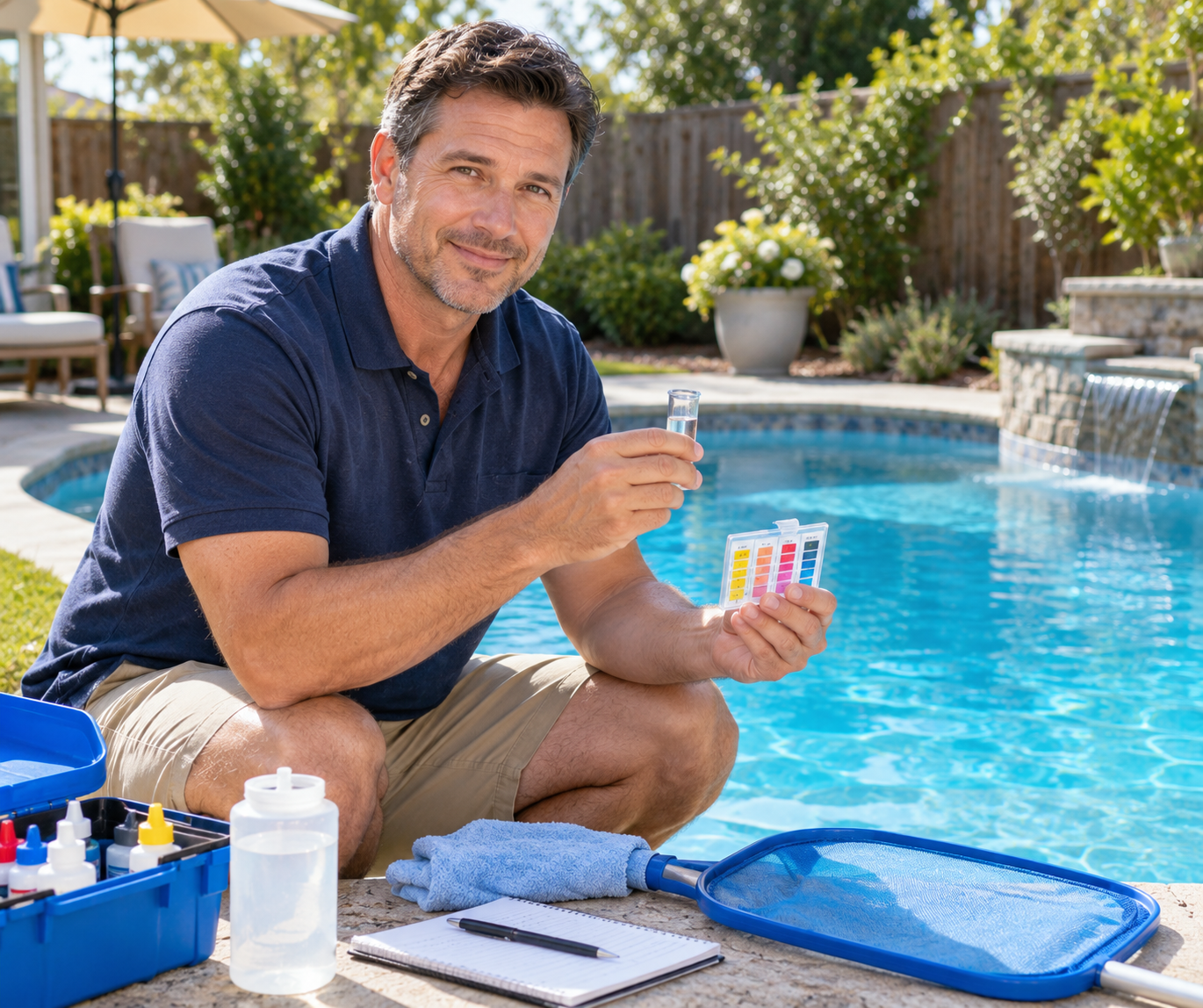

Leaves, sand, and fine dirt can turn routine pool care into repeated skimming, vacuuming, and brushing. A robotic cleaner can take on some of that work, but the right choice depends on the pool’s size and shape, the debris it collects, and whether floor-only cleaning is enough. Asking what is the best robot pool vacuum cleaner is really a question about which features match your pool, not which model has the longest feature list.
The options here range from simple cordless cleaners for flat pools to models listed for floor, wall, and waterline coverage. Their specifications also vary in battery runtime, navigation, filter design, and pool compatibility. If you’re planning seasonal care as well as routine cleaning, this cold-weather hot tub guide may help with broader outdoor-equipment planning, while the inflatable hot tub ownership guide covers a different kind of backyard maintenance decision.
Top Products





How to Choose a Robot Pool Vacuum That Fits
There isn’t one best robot pool vacuum cleaner for every pool. A useful match is a model whose stated pool compatibility, coverage, runtime, and filtration suit the pool owner’s actual cleaning needs. In this guide, “robotic” includes cordless battery models and a plug-in model, so power setup is an early distinction rather than a small convenience.
Start with the pool itself. Confirm whether the manufacturer lists the cleaner for an inground pool, an above-ground pool, or both, and compare any stated maximum pool area or length with your installation. The supplied product details do not establish universal surface compatibility, so don’t assume that a cleaner intended for one pool type will suit every vinyl, fiberglass, plaster, or tile finish.
Pool shape matters too. A flat-bottom above-ground pool presents a different navigation task from an inground pool with slopes, steps, a deep end, and a waterline to scrub. Raised drain covers, ladders, tight corners, and shallow ledges can interrupt a robot’s route; none of the listed specifications promises that a unit will negotiate every obstacle or clean every step.
Floor cleaning is not the same as full-pool coverage
Some owners mainly need help picking up material that settles on the floor. The X1A Cordless Robotic Pool Vacuum for Above Ground is listed for flat pools up to 960 square feet, while the Dolphin Nautilus AG is intended for above-ground pools up to 33 feet long. Dolphin’s description specifically says that this model does not clean walls or the waterline, a meaningful limitation if those areas need regular attention.
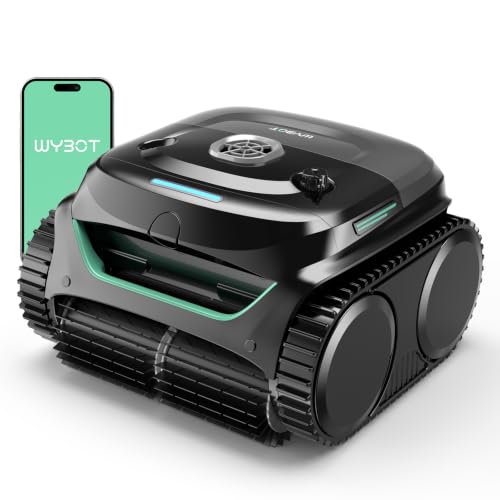
Other listed models offer broader coverage. The WYBOT C1 is described as cleaning the floor, walls, waterline, and steps in inground pools, and the Beatbot Sora 10 is listed for floor, wall, waterline, and shallow-area cleaning. Those claims can make a model more relevant for a pool with vertical walls or a shallow shelf, but they should be checked against the exact pool profile and the manufacturer’s current instructions.
Waterline cleaning deserves particular scrutiny. A robot that reaches the waterline may help with routine debris there, but that does not mean it will remove every stubborn algae ring or mineral deposit. Persistent buildup may still call for the pool owner’s normal brushing and water-care approach.
Match filtration to the debris you see
Large leaves and fine particles are different filtration jobs. The BRINBO C1 is described as having dual filtration for large debris and micro dust, while the WYBOT C2 lists a primary 180-micron filter and a 10-micron ultra-fine filter. Those are product-specific specifications, not a shared feature across all the models in this guide.
A pool that collects leaves may benefit from an easy-to-access basket with enough capacity to avoid frequent stops. The BOTLIFE cleaner lists a four-liter filter basket with 150-micron mesh, while the Beatbot Sora 10 lists a five-liter basket. Basket capacity can affect how often debris needs to be emptied, but actual frequency depends on what enters the pool and how dirty it is.
Fine sand, silt, and dead algae can be more demanding than visible leaves. A finer filter may capture smaller particles, but it also needs regular inspection and rinsing according to the product instructions. Don’t infer that a cleaner has a particular micron rating unless its product information states one.
Top-access baskets are convenient in the listed Dolphin model, and several other product descriptions also emphasize accessible filter baskets. After a cleaning cycle, check whether the basket is full, rinse it as directed, and inspect it for trapped hair or larger debris. A loaded or dirty filter can reduce useful cleaning performance, so filter care is part of ownership rather than an occasional extra.
Choose cordless convenience or plug-in operation
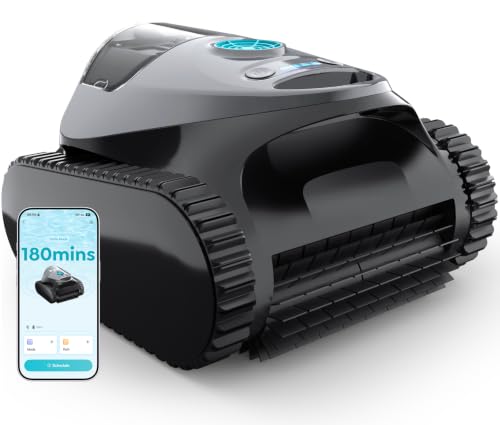
Cordless robots avoid a floating power cable during a cycle, but their usable cleaning time depends on battery runtime and pool conditions. The listed runtimes range from up to 100 minutes for the X1A to up to 300 minutes for the Beatbot Sora 10. These are manufacturer-listed maximums, not a guarantee that every cycle will last that long or cover every pool completely.
Charging time matters when a pool needs frequent cleaning. The X1A lists a 2.5-hour charge, the Lodoba model lists three hours, and the WYBOT C1 lists four hours. Consider how often the pool gathers debris and whether the time between cycles is practical for your routine.
The Dolphin Nautilus AG uses a plug-in setup and is listed with a 1.5-hour cleaning cycle. A corded model avoids the need to recharge a battery between cycles, but it introduces cable placement and electrical-safety considerations. Follow the manufacturer’s requirements for power-supply placement and GFCI protection, and never pull a cleaner from the water by its electrical cord.
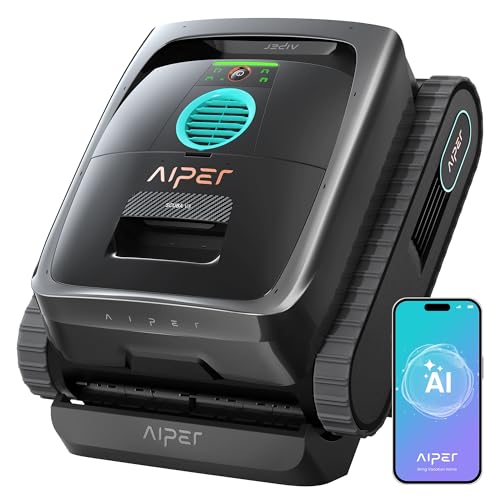
Cordless operation doesn’t remove the retrieval question. The BOTLIFE model is described as self-parking near the pool edge, and the Beatbot Sora 10 and AIPER Scuba V3 are described as returning to the waterline after cleaning. Such features may make retrieval easier, but check the instructions for the exact model and use its recommended retrieval method. Avoid entering deep water to retrieve a disabled unit; plan for safe handling before a cycle begins.
Navigation and traction can affect coverage
Navigation features are intended to guide a robot through its cleaning route, but labels such as “smart navigation” do not establish that it will map every pool perfectly. The WYBOT C1 lists gyroscope-based navigation with N-shaped and S-shaped paths. The Lodoba cleaner describes sonar navigation and tracks, while the Dolphin Nautilus AG lists Smart Navigation Technology.
Tracks, motors, and brushes are relevant when a cleaner must travel over slopes or climb walls. The Lodoba model is listed for slopes up to 40 degrees, the WYBOT C1 for slopes up to 45 degrees, and the BOTLIFE model for slopes up to 30 degrees. These stated limits should not be read as a promise of traction on every finish or transition; pool surface and shape still matter.
Check the product listing for cleaning modes as well as navigation. The BRINBO C1 lists seven modes and seven cleaning paths, with settings to be preset before the robot enters the water. The WYBOT B1 lists five cleaning modes and app control. If you prefer a simple start button over app setup, the control method may matter more than the number of modes.
Steps, ladders, and raised main drains can still pose practical obstacles. Product descriptions may list wall climbing or obstacle navigation without specifying performance on your exact drain cover, ladder arrangement, or ledge depth. If your pool has a known snag point, look for a clearly stated model limitation and check whether the manufacturer addresses that obstacle before buying.
Consider controls, retrieval, and routine upkeep
App control can be useful for scheduling or selecting a mode, but it is not essential for every owner. The WYBOT C1 lists app scheduling, mode customization, and progress tracking, while the WYBOT C2 describes Bluetooth control. The Dolphin Nautilus AG emphasizes plug-and-play operation instead. Compare the controls with how you actually want to start and manage cleaning.
Some robots are heavier or harder to handle than others, but the supplied specifications do not provide weight for most of these models. Don’t assume that a cordless unit is automatically easy to lift from the water. Read the manufacturer’s retrieval instructions, use any recommended hook or lift point, and use careful lifting technique rather than hauling a waterlogged cleaner by a cable or hose.
Routine care generally includes emptying and rinsing the filter after use, checking brushes or tracks for debris, and storing the unit as directed. The exact service needs and replacement-part availability differ by model, and the supplied data does not establish long-term part costs or availability. Before purchase, review the warranty terms and how to obtain replacement filters, brushes, or tracks for the specific cleaner.
Pool water chemistry and storage conditions also affect equipment care. Follow the cleaner’s manual for any restrictions during shock treatment, and remove equipment when the manufacturer directs. Keep the pool water balanced and store the cleaner and its power components as specified, especially when preparing equipment for an off-season break.
How the listed models differ in practice
For a straightforward above-ground pool, the Dolphin Nautilus AG has a clearly stated pool-length limit and a top-load filter basket, but it does not clean walls or the waterline. The X1A is listed for flat pools up to 960 square feet and offers a shorter stated runtime than several other cordless options. These distinctions help narrow the field without assuming that either model suits every above-ground installation.
For a larger inground pool, compare both the stated coverage area and the available runtime. The WYBOT C1 lists coverage up to 1,618 square feet and up to 160 minutes of operation, while the WYBOT C2 lists up to 2,152 square feet and up to 180 minutes. The Beatbot Sora 10 lists coverage up to 3,229 square feet and up to 300 minutes, along with shallow-area cleaning.
Those figures are useful for screening, not interchangeable guarantees. Pool shape, obstacles, debris load, wall conditions, and selected cleaning mode may influence whether a robot is a practical match. A pool owner should compare the stated area with the entire pool and verify that the manufacturer’s definition of coverage includes the cleaning surfaces they need.
For more demanding filtration needs, the WYBOT C2’s listed 10-micron filter and the BRINBO C1’s dual filtration are notable product-specific details. For longer cordless cycles, the Beatbot Sora 10 lists up to 300 minutes, while the AIPER Scuba V3 lists up to 240 minutes in Eco mode and up to 180 minutes in other listed modes. A longer maximum runtime may reduce interruptions, but it should be weighed against charging, cleaning coverage, and the owner’s retrieval preferences.
Models at different price tiers may offer different combinations of app control, filtration, coverage, or battery capacity, but price alone does not establish suitability. Avoid paying for features your pool does not need, and don’t choose solely by a headline runtime or suction figure. Pool compatibility and coverage limitations are more useful starting points.
Make the final match to your pool
Write down the pool type, approximate surface area or length, main debris, and whether walls or the waterline need cleaning. Then compare those needs with each model’s stated compatibility, coverage, filter details, runtime, charging time, and controls. This simple check can rule out a cleaner that has appealing features but does not address the pool’s main maintenance task.
For leaf-heavy pools, prioritize a practical debris basket and easy filter access. For fine sediment, pay attention to a stated fine-filter option rather than relying on general claims about suction. For pools with walls or shallow zones, confirm that the model specifically lists the needed cleaning coverage and that the pool’s shape falls within its stated limits.
The best choice is the model whose documented capabilities line up with your pool, not a robot that simply has the most modes or the largest runtime number. Verify compatibility and safety instructions before ordering, then use the cleaner only as its manufacturer directs.




Write Your Review
No reviews yet. Be the first to share your experience!