


Leaves, sand, and everyday dirt can turn pool upkeep into a recurring round of skimming, vacuuming, and brushing. An automatic cleaner can take on some of that work, but the right choice depends on more than whether a product is called a robot or an automatic vacuum. Pool size, surface, debris, and the plumbing already installed all affect which design makes sense.
If you’re asking what is the best automatic pool cleaner, start by deciding whether you want a self-contained robotic unit or a suction-side cleaner that uses the pool’s circulation system. The products listed below include cordless robots, a corded robotic model, and suction-side options. Their stated coverage and requirements differ, so check the product details against your pool rather than assuming one style works for every setup.
Also consider day-to-day handling. A cordless cleaner avoids a floating power cord but has a finite runtime and needs recharging, while a suction cleaner depends on compatible plumbing and adequate pump flow. Cleaning walls or the waterline may matter as much as floor coverage, especially if brushing those areas is the part of maintenance you most want to reduce.
Top Products


Choosing a Cleaner for Your Pool and Routine
There isn’t one automatic pool cleaner that suits every pool. The strongest starting point is matching the cleaner’s stated pool type, coverage, and power source to your setup, then checking the tradeoffs that affect routine use. A floor-only cleaner may be enough for settled debris, while wall and waterline coverage can be more useful when buildup along the sides is a regular chore.
Start with the cleaning system, not the product label
The options here fall into two broad types: robotic cleaners and suction-side cleaners. Robotic models have their own cleaning motors and collect debris in an onboard basket or filter system; cordless models also rely on a rechargeable battery. A suction-side cleaner connects to the skimmer or a dedicated suction line, drawing power from the pool’s circulation system and sending debris into the pool filtration setup.
Those designs create different setup responsibilities. A robot doesn’t require the pool pump to drive its cleaning movement, but its battery runtime or power connection still matters. A suction cleaner avoids a charging routine, yet its operation depends on suitable pump capacity, correct hose connections, and flow adjustment as directed by the manufacturer.
For a pool owner with limited or no dedicated suction plumbing, a robotic unit may be the simpler category to investigate. For someone who already has a compatible suction point and circulation system, a suction cleaner can be a practical alternative. Don’t assume that a low-priced-looking or familiar model will work with a variable-speed pump at every setting; confirm the cleaner’s requirements and the pump’s operating conditions.
Match pool type, size, and shape to stated coverage
Check whether the product is listed for an inground pool, an above-ground pool, or both. The S1 Pro cordless model is described for above-ground pools and specifically is not for inground pools with a bottom main drain. Other listed cordless models state compatibility with inground and above-ground pools, but their product descriptions include different coverage limits, so use the individual listing rather than treating those claims as interchangeable.
Pool area and depth are useful checks, but they aren’t the whole story. The WYBOT C1 is listed for inground pools up to 1,618 square feet and depths up to 9.86 feet, with a stated maximum runtime of 160 minutes. The BOTLIFE cleaner is listed for pools up to 1,830 square feet and up to 120 minutes of cordless operation. These are manufacturer-provided specifications, not promises that a particular cycle will clean every corner of a pool.
Shape and obstacles can affect coverage too. Steps, ladders, raised drain covers, tight corners, and changes in floor slope may interrupt a cleaner’s path or leave areas that need manual attention. A product description that mentions navigation or obstacle handling is helpful context, but it can’t establish that the cleaner will negotiate every feature in a specific pool.
Above-ground pools deserve a closer fit check. Some cordless units are intended mainly for floor cleaning, while others advertise additional modes or wall climbing. Verify that the chosen model is appropriate for the pool’s construction and shape, including any slope or center drain. The Poofata listing, for example, says it is not suitable for pool floors with slopes, a meaningful restriction for owners whose floor is not flat.
Decide how much wall and waterline work to automate
Coverage claims can distinguish a basic floor cleaner from a more versatile robot. The WYBOT C1 is described as cleaning the floor, walls, waterline, and steps. The BOTLIFE model lists full-pool, floor-only, and wall-only modes, while the Lodoba cordless robot lists floor, wall, and full-coverage modes.
A cleaner’s advertised coverage doesn’t mean it replaces every brushing task. Waterline residue, stubborn algae, and narrow steps can require attention beyond a routine automated cycle. If waterline buildup is your main frustration, choose a model whose stated coverage explicitly includes that area, then check the manufacturer’s surface and operating guidance.
Pool finish also matters, but the supplied specifications don’t establish detailed compatibility for every finish across these products. Don’t infer that a cleaner is safe for a delicate vinyl liner or suited to slick fiberglass simply because it has tracks, brushes, or a wall-climbing claim. Confirm suitability for your exact finish in the product documentation, particularly if the pool has vulnerable seams or smooth transitions.
Choose cordless convenience with runtime and retrieval in mind
Cordless robots remove the floating power cord from the pool, which can simplify placement and reduce cord-management chores. Their operating window is limited by battery capacity, however, and charging time determines how quickly the unit is ready for another cycle. The listed models vary: the S1 Pro states up to 130 minutes, the WYBOT B1 up to 120 minutes, and the Lodoba up to 190 minutes with a stated three-hour recharge.
Use those figures as product specifications, not a guarantee of the same runtime in every pool or operating mode. A longer listed runtime may be useful for a larger pool, but actual suitability also depends on the model’s stated coverage and pool conditions. Compare the recharge duration as well, especially if you expect to run a cleaner frequently during heavy debris periods.
Retrieval is another everyday consideration. The S1 Pro description says the cleaner parks near a pool wall when its cycle ends or the battery runs low. BOTLIFE also lists self-parking and an included hook. Those features may make recovery easier, but avoid entering deep water to retrieve a unit unless that is safe and necessary; follow the supplied instructions and use designated retrieval equipment as directed.
A cordless unit that stops in the deep end can be inconvenient if there is no practical retrieval method. Check whether the selected model includes or supports a retrieval hook, where it parks, and how its water drains during lifting. Also consider the unit’s handling weight and use proper lifting technique rather than pulling on a component that the manufacturer does not identify as a handle.
Understand suction-side pump and hose requirements
Suction-side models can be attractive when a pool already has compatible plumbing, but they are not self-contained. The Zodiac MX6 is listed for connection to a dedicated suction line or through the skimmer. It uses the pool’s filtration system and includes a 32-foot hose, according to the product information.
The VINGLI cleaner includes a 33-foot hose set and is listed as requiring at least a three-quarter-horsepower pool pump or 1,600 gallons per hour. The XtremepowerUS model includes a 30-foot hose set and lists a minimum one-horsepower pump or a flow rate of 1,600 gallons per hour. These stated requirements differ, so check the exact model information and your pump configuration before connecting a cleaner.
Insufficient flow can interfere with a suction cleaner’s movement and debris pickup; excessive or poorly adjusted flow can also keep a cleaner from operating as intended. Follow the manufacturer’s setup and flow-adjustment guidance rather than making assumptions based on pump horsepower alone. Variable-speed pumps may run at different settings through the day, so verify that the cleaner receives suitable flow during its scheduled operating period.
Hose reach should suit the pool without excess slack that can tangle or restrict movement. A hose that is too short may limit coverage, while a poor connection can affect operation. Before servicing plumbing or inspecting equipment, follow the manufacturer’s safety instructions and turn off relevant equipment as directed; never bypass suction safety devices or alter a safety connection to force a fit.
Separate large-leaf handling from fine-particle filtration
Debris type affects what a cleaner must collect. Leaves, twigs, and insects are different from fine sand or silt, and the product data provided here don’t give a consistent micron rating for comparing filter performance. Avoid assuming that a large basket or a strong-sounding suction claim means the cleaner captures the finest particles.
Some listed robots describe a large-capacity debris basket, while BOTLIFE specifies a four-liter basket with 150-micron mesh. That detail gives a clearer indication of its stated filtration than a general phrase such as “fine debris,” but it should not be treated as proof that the unit captures all dust, algae, or suspended material. If fine particles are your main concern, look for a documented filter specification that addresses them.
Basket access affects upkeep even when filtration is adequate for your pool. A top-loading or easy-access basket can make it simpler to remove leaves and rinse debris after a cycle. Empty the collection system as directed, and disconnect electrical power before cleaning or servicing equipment when the manufacturer’s instructions require it.
Heavy leaf fall can fill a basket sooner than light routine debris, so an automated cleaner may still need frequent checks. A pool’s skimmer and pump baskets also continue to play their normal roles when a suction-side cleaner sends debris through the circulation system. Don’t expect a pool cleaner to replace routine inspection of those components or water testing.
Balance navigation claims against pool obstacles
Navigation descriptions are useful for comparing design approaches, but no supplied listing establishes complete coverage in every layout. The WYBOT C1 describes gyroscope-based navigation with N-shaped and S-shaped paths, while the BOTLIFE product also lists S-shaped floor and N-shaped wall paths. The Lodoba model describes sonar navigation and floor, wall, and full-coverage modes.
Those details suggest a planned route rather than an unspecified path, but they don’t eliminate the possibility of missed spots. Raised main drains, steps, ladders, tight corners, and steep transitions can still affect movement. Check the cleaner during early cycles and note whether it repeatedly stalls or leaves the same area untouched, then consult the manual for approved adjustments.
Traction claims need similar care. The Lodoba description lists tracks and a climbing limit of 40 degrees, while the WYBOT C1 lists slopes up to 45 degrees. These manufacturer specifications don’t establish performance on every pool finish, and the listed slope capacity should not be interpreted as a guarantee that the cleaner will climb every wall or traverse every step.
Repeatedly getting stuck can point to a mismatch between the cleaner and the pool layout, rather than a failure that can be fixed with an unsupported modification. Clear ordinary debris from the cleaner as instructed, check for visible obstructions, and confirm that the model is approved for the pool’s drains and surfaces. If a cleaner gets trapped near a main drain or another fitting, follow the product and pool safety guidance to free it without placing yourself at risk.
Use the product descriptions to narrow the field
For an above-ground pool where a lower-cost cordless option is the priority, the S1 Pro is listed for above-ground use and states a runtime of up to 130 minutes. Its stated limitation around inground pools with a bottom main drain is important, and owners should also check its operating instructions against their pool floor. The Poofata model advertises a longer runtime, but its stated restriction on sloped floors may rule it out for some layouts.
For inground owners seeking broader robotic coverage, the WYBOT C1 lists four-area cleaning and app controls, while the BOTLIFE model lists multiple cleaning modes, an onboard basket, and self-parking. The B1 is described for above-ground and small inground pools, with a stated 1,150-square-foot limit and up to 120 minutes of runtime. These distinctions can help you build a shortlist, but verify current documentation and the pool-size limit for the exact version being considered.
Owners who prefer to use existing suction plumbing can compare the Zodiac MX6 with the VINGLI and XtremepowerUS options. Their listed hose lengths and pump requirements are not identical, so the choice should follow the actual pump and connection setup, not brand familiarity alone. A suction cleaner may be a sensible fit when the installation meets its requirements; if it doesn’t, look at a different category rather than trying to compensate with an unsafe plumbing change.
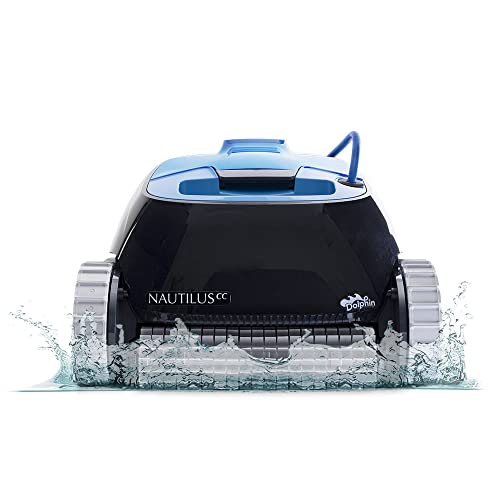
The Dolphin Nautilus CC is a corded robotic option listed for pools up to 33 feet in length, with wall climbing, a top-load filter basket, and a stated two-hour cleaning cycle. A corded design avoids the battery recharge interval but means the power supply and floating cable need careful placement and management. Follow the manufacturer’s electrical safety directions, use the specified GFCI protection, keep power equipment positioned as instructed, and never handle a powered cleaner in the water.
Make routine care part of the ownership decision
Robots need their baskets or filters cleared, and cordless units need charging and appropriate storage. Suction cleaners require hose inspection and a compatible circulation setup. In either category, worn or obstructed parts can affect movement, so inspect and maintain components only as the manufacturer directs, with power disconnected where applicable.
Pool water chemistry and storage conditions matter to equipment longevity, but the provided product descriptions do not specify a shared chemical tolerance or temperature range. Follow each manufacturer’s limits, and remove equipment during shock treatment unless its instructions explicitly permit operation in those conditions. Keep pool water balanced and store equipment as directed, particularly when preparing for an off-season or freezing weather.
Before buying, check replacement-part availability for the exact model, including its filters, brushes, tracks, or other wear components. The supplied descriptions don’t establish long-term part costs or availability, so confirm those details with the seller or manufacturer rather than assuming all brands offer equivalent support. A cleaner that fits the pool but is difficult to maintain may be less convenient over time than its feature list suggests.
The most useful choice is the cleaner whose documented pool compatibility, coverage, power arrangement, and maintenance routine match your actual needs. Confirm pump requirements for suction models, runtime and retrieval plans for cordless robots, and stated surface suitability for any pool finish. That check is a better basis for deciding what is the best automatic pool cleaner for your pool than relying on a single feature or broad marketing claim.




Write Your Review
No reviews yet. Be the first to share your experience!