
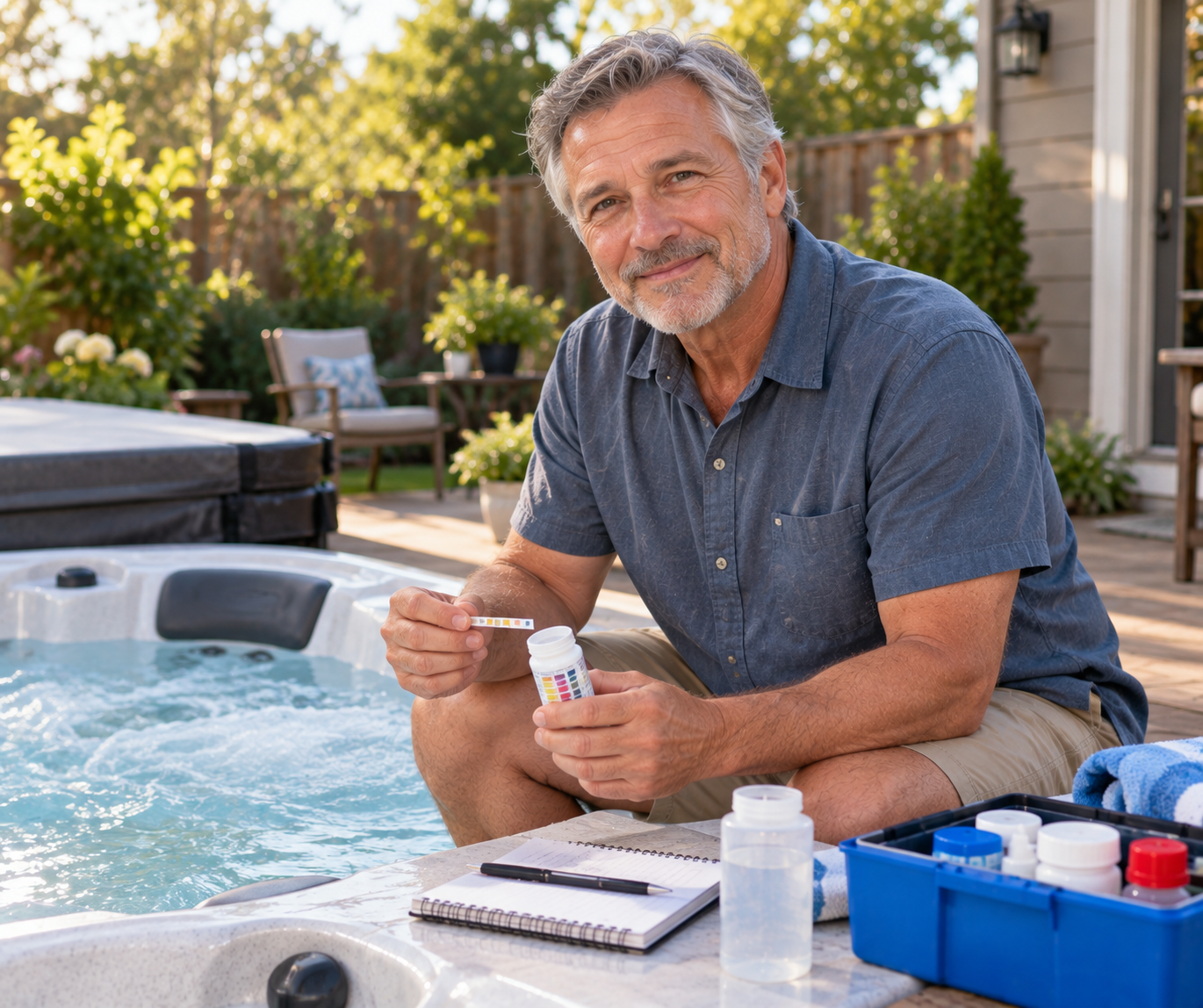

Hot tub water faces continuous exposure to elevated temperatures, bather waste, and dissolved minerals that rapidly deplete routine sanitizing chemicals. When bathers enter a heated spa, perspiration, skin oils, and cosmetic residues interact with residual sanitizer molecules to create irritating chemical byproducts known as chloramines. Knowing what is shocking a hot tub enables spa owners to eliminate these stubborn chemical bonds and restore pristine water clarity before cloudiness takes hold. Regular oxidation prevents persistent waterline rings and harsh chemical odors while reactivating the primary sanitizing agent in the water.
Routine shock treatments also safeguard critical spa hardware from the aggressive degradation caused by neglected water balance. Maintaining stable chemical parameters protects internal plumbing manifolds, titanium heater elements, and the insulating core of a protective hot tub cover with warranty. Adding targeted shock oxidizers to a weekly maintenance schedule reduces overall chemical consumption and extends water longevity between full drain-and-refill routines. Applying the correct oxidizing compound ensures a clean, inviting soaking environment every time the hydrotherapy pumps turn on.



Pros
- Fast-dissolving sodium dichlor formula leaves minimal residue in heated spa water
- Specifically formulated for spa water temperatures and chlorine sanitizing systems
- Five-pound container provides a practical supply for ongoing routine water care
- EPA-approved formulation effectively targets algae growth and organic bather waste
Cons
- Designed strictly for chlorine-based setups and not compatible with non-chlorine or biguanide systems
- Continuous use gradually builds cyanuric acid in hot tub water, requiring standard periodic drain-and-refill cycles
- Requires careful dosing and routine water testing to avoid over-chlorination or chemical vapor buildup
Leisure Time Spa 56 Chlorinating Granules provide a dedicated sanitizing solution designed specifically for residential hot tubs and spas operating on chlorine water-care systems. Unlike standard swimming pool chemicals that may dissolve too slowly or alter chemistry unpredictably in small bodies of heated water, this formula is tailored for the high temperatures and rapid agitation of hot tubs. It suits first-time spa owners, vacation rental hosts, and established hot tub users seeking an EPA-approved sanitizer that maintains clean, clear water without complicated dosing steps.
Daily hot tub maintenance requires dependable control over organic waste introduced by bathers, including perspiration, body oils, and environmental residues. Spa 56 addresses these contaminants using fast-dissolving granules that disperse quickly across the water when circulation jets run. Rapid solubility is a significant advantage in acrylic spas because it minimizes the risk of undissolved chemical particles settling on the bottom shell or bleaching headrests and plastic fittings, helping to protect internal spa surfaces while re-establishing necessary sanitizer residual levels.
The active chemical agent in this formula is Sodium Dichloro-s-Triazinetrione Dihydrate, widely known as sodium dichlor. This stabilized chlorine compound resists degradation from heat and sunlight while providing active sanitizing power to clear cloudy water and inhibit algae growth. Packaged in a sturdy 5-pound bottle with exterior dimensions of 4.75 by 4.75 by 11.5 inches, this size offers an economical supply that minimizes frequent reordering for owners who use their spa regularly throughout the year.
Proper application habits are essential not only for water safety but also for the longevity of your hot tub cover and accessories. Whenever introducing chlorinating granules to the spa, the hot tub cover should remain fully off or folded back with circulation jets active for at least fifteen to twenty minutes. Allowing chemical vapors to off-gas freely prevents corrosive chloramine fumes from becoming trapped underneath the cover, which helps protect the underside vinyl, vapor barrier seals, and foam core from premature degradation.
While sodium dichlor provides reliable sanitizing performance, realistic chemical considerations come with its routine use. Dichlor naturally introduces cyanuric acid (CYA) as a stabilizing agent, meaning CYA levels will gradually rise over months of repeated dosing. Once stabilizer concentrations become elevated, chlorine efficiency drops, making periodic water drain-and-refill intervals necessary every three to four months. In addition, this product must never be mixed directly with alternative sanitizers such as bromine or biguanide systems.
Leisure Time Spa 56 is a reliable, practical choice for any hot tub owner maintaining a chlorine-sanitized spa environment. Before adding this product to your maintenance regimen, verify that your hot tub relies on a chlorine sanitizing routine, and keep a dependable test strip kit on hand to monitor free available chlorine, pH, and total alkalinity levels before dosing.
Consistent water sanitation with Leisure Time Spa 56 plays a key role in protecting the structural integrity of your hot tub accessories and cover. Unbalanced water or neglected sanitizing schedules can lead to organic buildup, scum lines, and mildew along cover skirts and headrests, while excessive chemical buildup can accelerate wear on acrylic surfaces and filtration media.
To ensure optimal water quality while safeguarding your spa components, always test water balance before adding granules and allow the tub to circulate with the cover open during initial dosing. Storing the 5-pound container in a cool, dry area away from direct sunlight will preserve granular potency and maintain reliable performance throughout the lifespan of the bottle.

Pros
- Significantly reduces chlorine odor and fabric fading compared to conventional chemical treatments
- Continuous floating action sanitizes water evenly without requiring complex installation
- Manufacturer-recommended monthly shocking schedule simplifies routine weekly spa upkeep
- Compact 9 x 9 x 9 inch profile moves easily in the water without crowding bathers
Cons
- Requires ongoing purchases of proprietary FROG @ease SmartChlor replacement cartridges
- Free-floating design may need to be set aside on a spa tray during crowded soaking sessions
- Still requires periodic water testing to maintain proper baseline pH and alkalinity balance
The FROG @Ease Floating Sanitizing System is a dedicated water treatment accessory designed for hot tub owners who want consistent sanitation without the harsh odors of standard chemical regimens. Floating directly on the water surface, this self-contained dispenser utilizes FROG @ease SmartChlor replacement cartridges to supply steady sanitizing action throughout daily spa use. It is a practical match for first-time spa owners, vacation rental operators, and busy families looking to simplify routine water maintenance.
Daily water care often presents challenges with strong chlorine odors and bleached swimwear when using standard chemical doses. The FROG @Ease system addresses these pain points by maintaining uniform sanitizer levels while keeping chemical smells to a minimum and protecting bathing suits from fading. In addition, the manufacturer highlights a reduced shocking interval of just once per month, allowing hot tub owners to spend less time balancing water and more time relaxing.
Built with an all-weather blue plastic housing, the floating dispenser measures 9 x 9 x 9 inches and weighs approximately 1.19 pounds. The enclosed chamber holds the active cartridges securely while bobbing along the water line, allowing water circulation to distribute sanitizer evenly across the spa shell. The durable construction is specifically intended to handle continuous hot water contact and typical spa chemical exposure without degrading.
Operating the system is straightforward because it requires no mounting hardware, cabinet drilling, or plumbing connections. Cartridge replacement involves snapping a fresh SmartChlor cartridge into the floating housing, eliminating the need to measure loose powders or handle liquid chemicals. When owners use the hot tub, the compact 1.19-pound unit can remain floating or be briefly lifted out and rested on a spa-side tray until soaking is complete.
Owners should recognize that this floating dispenser relies strictly on proprietary FROG @ease SmartChlor cartridges rather than generic bulk chemicals, creating an ongoing replacement requirement. Furthermore, while the system automates everyday sanitizer delivery, regular testing of pH, total alkalinity, and calcium hardness remains essential for complete water balance. Spa owners should also ensure that their closed hot tub cover leaves adequate clearance for the 9-inch floating profile when the spa is not in use.
For spa owners seeking softer-feeling water, reduced odor, and minimal chemical handling, the FROG @Ease Floating Sanitizing System offers a dependable, low-hassle water care upgrade. Before purchasing, verify that your hot tub maintenance routine aligns with the FROG @ease SmartChlor cartridge format and ensure you have matching replacement cartridges ready for seasonal upkeep.
Proper water balancing serves as the foundation for the FROG @Ease Floating Sanitizing System. Before floating the dispenser, check and adjust the hot tub water balance to ensure total alkalinity and pH fall within standard recommended ranges. Starting with balanced water helps the SmartChlor cartridge perform as intended throughout its service cycle.
Routine maintenance involves monitoring the dispenser position in the water, as the unit is designed to tip or provide visual notice when the chlorine cartridge requires replacement. Shocking the spa water only once a month per manufacturer guidelines keeps maintenance simple while sustaining clear water conditions alongside regular filter cartridge rinsing.
The FROG @Ease Floating Sanitizing System is engineered specifically to accept FROG @ease SmartChlor replacement cartridges. Standard chlorine tablets, bromine pucks, or non-compatible mineral sticks cannot be loaded into this custom-fit floating housing.
Keeping extra SmartChlor cartridges on hand ensures seamless operation and prevents downtime in your hot tub sanitizing routine. Always inspect the cartridge seating during installation to confirm a tight, secure latch inside the blue floating holder before placing it into the water.

Pros
- Combines cleaner, clarifier, and conditioner to reduce the number of separate specialty chemical bottles needed
- Does not require draining the spa, making it practical for cold-weather maintenance when draining is risky
- Compatible with standard chlorine and bromine sanitizing systems
- Helps dislodge hidden oils and line buildup that standard sanitizers alone may struggle to clear
Cons
- Does not replace primary sanitizers such as chlorine or bromine and must be used as a supplement
- Initial treatment can release accumulated plumbing grime, requiring extra filter rinsing and waterline wiping
- At 16 fluid ounces per bottle, owners of larger spas may need frequent reorders for year-round weekly dosing
Oh Yuk 5-in-1 Hot Tub Cleaner, Clarifier, and Conditioner is a multi-purpose liquid water treatment designed to streamline routine spa maintenance without draining the tub. It serves spa owners, rental property operators, and busy households who want to prevent cloudy water and line buildup alongside their regular sanitation routine. Rather than managing separate bottles of clarifier, plumbing line maintenance, and water softeners, this single 16-ounce formulation tackles multiple water quality challenges at once.
In daily hot tub ownership, bather loads introduce body oils, lotions, and organic residues that coat plumbing walls and create dull, cloudy water. This 5-in-1 formula actively suspends and lifts those trapped residues, allowing the built-in clarifier to coagulate fine debris so your filter cartridge can capture it. It also conditions the water to improve overall water feel, making soaks feel noticeably smoother without altering primary sanitizer baselines. Because it works without requiring a water drain, it proves especially valuable during freezing winter months when draining and refilling a spa is inconvenient or hazardous.
A crucial factor in hot tub water chemistry is chemical compatibility, and this product is engineered strictly as a supportive supplement rather than an EPA-registered sanitizer. It is formulated to work seamlessly with standard chlorine or bromine maintenance systems. It will not eliminate the need to test and balance free sanitizer, pH, or total alkalinity. Instead, by neutralizing organic residues and keeping plumbing lines clearer, it helps your primary sanitizer work more efficiently without being consumed prematurely by hidden organic contaminants.
Applying the treatment is straightforward, but users should prepare for the way deep-cleaning additives interact with existing buildup. During the first few doses, especially in older spas or tubs with heavy bather traffic, the formula may purge accumulated oils and residue from the plumbing into the main footwell. Spa owners should anticipate wiping down the waterline with a clean cloth and removing the filter cartridge for a thorough rinse 24 to 48 hours after application to prevent dislodged debris from re-circulating.
While the formula simplifies maintenance, it comes with practical limitations that every hot tub owner should understand. The 16-ounce bottle size provides a compact footprint for spa caddies, but frequent weekly dosing across large multi-person hot tubs means a single bottle may deplete quickly. Furthermore, this maintenance product is not an emergency purge flush intended for complete tub draining, nor will it correct severe chemical imbalances caused by neglected calcium hardness or erratic pH levels.
Oh Yuk 5-in-1 Hot Tub Cleaner is best suited for hot tub owners who want to minimize weekly water care steps and preserve water clarity without dumping their water. Before purchasing, verify your spa sanitation setup to confirm you have an established chlorine or bromine routine in place, and ensure you have spare filter cartridges or cleaning tools ready to handle any dislodged residue from the initial treatment.
Using this 5-in-1 treatment on a weekly schedule helps control the organic film and cosmetic oils that normally accumulate on hot tub acrylic and inside internal jet lines. Regular use prevents stubborn waterline rings from setting, which reduces the need for aggressive scrubbing pads that could scratch spa shell surfaces.
Because the built-in clarifier groups micro-particles together for mechanical removal, filter care is directly tied to the success of this treatment. Hot tub owners should inspect and rinse their pleated filter cartridges with clean water shortly after dosing, as the filter media will trap an increased amount of suspended matter once the clarifier takes effect.
Oh Yuk 5-in-1 is formulated to work in harmony with traditional hot tub sanitizers, specifically standard chlorine and bromine water care regimens. It does not replace residual sanitizers, oxidizers, or shock treatments, meaning regular testing of free available sanitizer levels remains necessary.
Adding this conditioner and clarifier assists in maintaining consistent water chemistry by reducing organic demand on the sanitizer. Always ensure your hot tub water is properly balanced for pH and total alkalinity before introducing specialty water conditioners to achieve the best clarity and water feel.

The Mechanics and Chemical Principles of Shocking a Hot Tub
Shocking a hot tub involves adding a concentrated dose of an oxidizing compound directly into the water to destroy organic contaminants, break down combined chlorine molecules, and reactivate dormant sanitizers. While everyday sanitizer maintenance controls active bacteria, it cannot process the heavy volume of body oils, perspiration, and dead skin cells introduced during an average soak. Over time, these organic compounds bind to free chlorine or bromine, rendering the sanitizer ineffective and producing a strong, unpleasant chemical smell. Applying a chemical shock oxidizes these bound molecules, converting them into harmless gases that vent into the atmosphere.
Breaking Down Combined Chlorine and Bather Contaminants
Sanitizers in a hot tub exist in two distinct chemical states: free available sanitizer and combined sanitizer. Free chlorine actively neutralizes living bacteria, viruses, and microbial pathogens that enter the water. Once a free chlorine molecule binds to ammonia or nitrogen compounds from bather sweat, it transforms into combined chlorine, commonly called a chloramine. Chloramines lack effective sanitizing power, cause irritating eye burn, and generate the pungent bleach smell that many bathers mistakenly blame on excessive fresh chlorine.
Eliminating chloramines requires an advanced chemical reaction known as breakpoint chlorination. To achieve breakpoint, the concentration of free chlorine must reach approximately ten times the measured combined chlorine level in the water. This massive chemical spike breaks the molecular bond between the chlorine and nitrogen, allowing the contaminants to gas off through the water surface. Without reaching this threshold, adding minor doses of chlorine only creates more chloramines, intensifying water cloudiness and skin discomfort.
Bather waste represents the primary contributor to rapid sanitizer consumption in residential spas. A single adult soaking in one hundred and four degree water releases significant amounts of sweat, dead skin cells, natural sebum, and lingering cosmetic products within twenty minutes. In a typical four-hundred-gallon spa, this organic volume creates a substantial chemical load that quickly overwhelms baseline sanitizer residuals. Shock oxidizers target these non-living contaminants directly, neutralizing dissolved solids that would otherwise form unsightly foam and stubborn scum lines.
Cartridge filtration systems provide mechanical cleaning, but they cannot remove dissolved chemical compounds or suspended microscopic waste. Pleated polyester filters capture hair, sand, and particulate matter down to approximately twenty microns, leaving molecular pollutants in circulation. When these unfilterable organics accumulate, they create persistent turbidity that prevents light from passing cleanly through the water column. Chemical shock treatments alter the chemical structure of these dissolved organics, breaking them down into simpler compounds that filters can trap or that completely evaporate.
Chlorinated Shock Compared to Non-Chlorine Oxidizers
Chlorinated shock formulations, such as Leisure Time Spa 56, utilize sodium dichloro-s-triazinetrione dihydrate to deliver both high-level oxidation and active sanitizing power. Sodium dichlor dissolves rapidly in warm water without clouding the water column or dramatically skewing baseline pH levels. Because dichlor contains built-in cyanuric acid, it protects chlorine from sunlight degradation in outdoor spas while delivering a fast biocide boost. However, frequent use steadily increases cyanuric acid concentrations, which can eventually diminish sanitizer efficiency if left unmanaged over several months.
Chlorine-free shock oxidizers, such as the 2LB Chlorine-Free Hot Tub Shock Oxidizer, rely on potassium peroxymonosulfate to eliminate organic waste without increasing active chlorine levels. Potassium peroxymonosulfate, often abbreviated as MPS, is a powerful oxidizing agent that does not sanitize or kill living pathogens on its own. Instead, MPS strips electrons from organic contaminants, freeing up the primary chlorine or bromine in the water to focus entirely on destroying bacteria. This makes non-chlorine oxidizers an outstanding choice for weekly maintenance in spas using mineral or bromine systems.
Turnaround time represents a primary distinction between chlorinated and non-chlorine shock options. Following a heavy chlorinated shock, free chlorine levels often spike well above five parts per million, requiring owners to wait twenty-four to forty-eight hours before safe soaking can resume. Non-chlorine MPS oxidizers allow bathers to re-enter the hot tub in as little as fifteen to twenty minutes after application. Busy spa owners often prefer MPS for routine post-soak treatments because it maintains water balance without causing extended downtime.
Multi-purpose shock treatments, such as SpaGuard Enhanced Shock, combine oxidizing chemicals with water clarifiers, flocculants, and pH buffering agents in a single formulation. The oxidizing component destroys bather waste, while the clarifiers bind tiny colloidal particles into larger clusters that the cartridge filter can catch. Built-in buffering agents prevent the sharp pH dips that standard acidic oxidizers can cause in low-alkalinity water. Using a buffered multi-functional shock simplifies chemical maintenance by addressing organic removal, water sparkle, and mineral balance in one step.
Determining the Proper Shock Frequency and Timing
Residential hot tubs typically require a routine maintenance shock once every seven days under standard usage conditions. This regular weekly treatment prevents bather waste from compounding into stubborn biofilm or persistent water cloudiness. Even if the spa sits unused for several days, environmental dust, atmospheric nitrogen, and dormant bacteria slowly consume available sanitizer residuals. Establishing a consistent weekly shocking routine ensures that baseline oxidation keeps pace with ongoing water degradation.
Heavy bather loads demand immediate supplemental shock treatments outside the normal weekly maintenance schedule. Hosting multiple guests or allowing children to use the hot tub introduces a surge of laundry detergent residues, body lotions, and perspiration into the plumbing lines. Waiting for the next scheduled weekly shock after a high-load event allows bacteria and chloramines to multiply rapidly. Adding a measured dose of shock immediately after all bathers exit restores chemical balance and prevents overnight water clouding.
Automated and low-chlorine systems operate on modified shock intervals tailored to their specific chemical delivery hardware. Systems like the FROG @Ease Floating Sanitizing System combine slow-release SmartChlor technology with mineral cartridges to maintain steady sanitization with up to seventy-five percent less free chlorine. Because the mineral system handles continuous microbial suppression, these specialized configurations typically require shocking only once a month under normal conditions. Spa owners must always match their shock frequency to the specific sanitizing system installed in their tub.
Environmental factors also influence how frequently an outdoor hot tub requires chemical oxidation. Windblown pollen, falling leaves, rain runoff, and lawn debris introduce organic matter and phosphates directly into the water column whenever the lid is open. Spas located under dense tree canopies or in high-wind patio environments accumulate organic contaminants much faster than indoor installations. Increasing shock frequency during peak pollen seasons or after severe rainstorms keeps the water clear and protects sanitizing efficiency.
Practical Execution: How to Shock Your Hot Tub Safely
Successful shock treatments require testing and balancing foundational water parameters before adding any oxidizing chemicals. Total alkalinity must measure between eighty and one hundred and twenty parts per million, while pH should sit firmly between 7.2 and 7.8. If the pH is too high, the chemical effectiveness of chlorine drops drastically, preventing breakpoint oxidation from occurring. Conversely, adding shock to acidic water accelerates shell etching and can trigger rapid corrosion across metal heater elements.
Applying the shock requires proper circulation to distribute the granules evenly throughout the plumbing manifolds and footwell. Turn on all circulation pumps to high speed, but turn off air venturi controls to prevent excessive chemical volatilization and erratic bubbling. Measure the exact dosage recommended on the product label based on your spa water capacity, then broadcast the granules evenly across the water surface. Running the high-speed jet pumps for at least fifteen to twenty minutes ensures thorough chemical distribution without concentrated granules settling on the acrylic floor.
Leaving the spa cover open during and immediately following a shock treatment is a vital safety step that many owners overlook. Oxidizing reactions release aggressive chemical vapors, trapped chloramines, and acidic gases that must escape into open air. Securing the lid during this phase traps caustic vapors inside the head space, rapidly destroying the vinyl underside of a foldable hot tub cover and corroding plastic pillow hardware. Keep the cover off for at least twenty to thirty minutes to allow complete chemical off-gassing.
Integrating specialized plumbing purges, such as Oh Yuk 5-in-1 Hot Tub Cleaner, before shocking helps tackle stubborn organic accumulation deep within internal pipework. Plumbing lines naturally accumulate oily biofilm and slime that standard shock dosages cannot fully penetrate. Using a targeted line cleaner during seasonal water changes lifts hidden residues to the surface where the filtration system and shock oxidizers can eliminate them. Routine chemical shocking works far more efficiently when the underlying plumbing manifolds remain free from established biofilm buildup.
Safeguarding Spa Hardware, Plumbing, and Thermal Covers
Aggressive chemical treatments can damage sensitive hot tub components if administered carelessly or in excessive quantities. Undissolved shock granules that settle on the acrylic shell floor can bleach the finish, cause micro-blistering, or weaken decorative acrylic surfaces over time. Concentrated oxidizers also attack rubber jet gaskets, silicone o-rings, and pump seals, increasing the risk of plumbing leaks inside the cabinet. Always distribute dry chemicals evenly across deep water zones to protect structural shell integrity and mechanical plumbing joints.
Thermal hot tub covers suffer severe structural degradation when exposed to trapped chemical off-gassing from regular shock treatments. Corrosive vapors penetrate the protective plastic vapor barrier enclosing the dense expanded polystyrene foam core. Once the barrier punctures or degrades, the foam core absorbs evaporated water, becoming heavy, waterlogged, and thermally ineffective. Investing in a durable outdoor patio hot tub cover and observing strict twenty-minute lid-off ventilation rules preserves cover longevity and saves energy over the winter months.
Cartridge filter elements require special consideration during and immediately following high-potency shock treatments. High concentrations of oxidizers break down accumulated oils, forcing suspended particles toward the filter pleats at an accelerated rate. Rinsing the filter cartridge with fresh water twenty-four hours after shocking removes trapped debris and prevents premature pressure buildup inside the filter canister. Regular filter maintenance ensures optimal water flow, preventing common topside error codes and protecting circulation pump motors from hydraulic strain.
Diagnosing and Correcting Water Imbalances After Shocking
Water that remains cloudy or turns milky immediately following a shock treatment usually indicates mineral precipitation or suspended dead organic matter. When oxidizers react with high concentrations of dissolved calcium or metals, these minerals drop out of solution and cloud the water column. In other instances, a massive shock dose kills large blooms of bacteria and algae simultaneously, leaving billions of microscopic dead cells floating in suspension. Running the filtration cycle continuously and adding a concentrated clarifier will help the filter capture these fine particles and restore clarity.
Surface foaming following a shock treatment often surprises spa owners, but it typically stems from trapped soaps, detergents, or dead organic waste rising to the surface. As high-speed jets agitate the water, lingering surfactant molecules bond with dead bather waste and form thick, persistent foam mounds. Wiping down the waterline with a microfiber cloth and running an extra filtration cycle helps remove these loosened oils. If foaming persists, checking calcium hardness levels ensures that soft water is not contributing to structural surface tension issues.
Repeated shocking with stabilized dichlor granules can lead to chemical lock caused by excessive cyanuric acid accumulation. Cyanuric acid acts as a sunscreen for chlorine, but levels exceeding fifty parts per million significantly slow down chlorine kill rates and oxidative reactions. When cyanuric acid climbs too high, free chlorine readings may appear normal on test strips while the water remains cloudy, dull, and unsanitized. The only practical solution for elevated cyanuric acid is performing a partial or complete water drain and refilling with fresh tap water.
Establishing a Consistent Chemical Maintenance Schedule
Maintaining balanced hot tub water requires integrating testing, chemical dosing, and mechanical filtration into a disciplined weekly routine. Testing free sanitizer, pH, and total alkalinity two to three times per week allows owners to make minor adjustments before water quality collapses. Scheduling shock treatments on the same day each week creates an easy maintenance habit that prevents organic waste accumulation. Pairing chemical care with regular filter cleaning ensures that both chemical and mechanical purification systems function harmoniously.
Proactive bather habits dramatically reduce the volume of organic contaminants entering the hot tub, lessening the demand for aggressive chemical shock treatments. Encouraging bathers to take a quick rinse before entering eliminates residue from body lotions, deodorants, perfumes, and laundry detergents. Using bathing suits that have been rinsed in clean water rather than washed with fabric softeners also prevents severe foaming episodes. Minimizing the introduction of external organics preserves free sanitizer residuals and keeps the water clearer between shock cycles.
Understanding the chemical purpose and proper execution of shock treatments transforms hot tub ownership from a frustrating chore into a simple, predictable routine. Selecting the appropriate oxidizing compound, whether chlorinated dichlor or gentle non-chlorine monopersulfate, ensures optimal performance tailored to your specific sanitizing system. Maintaining foundational chemical balance, allowing proper lid-off ventilation, and adhering to routine schedules keeps your spa water crystal clear, inviting, and sanitary for every soak.



Write Your Review
No reviews yet. Be the first to share your experience!