
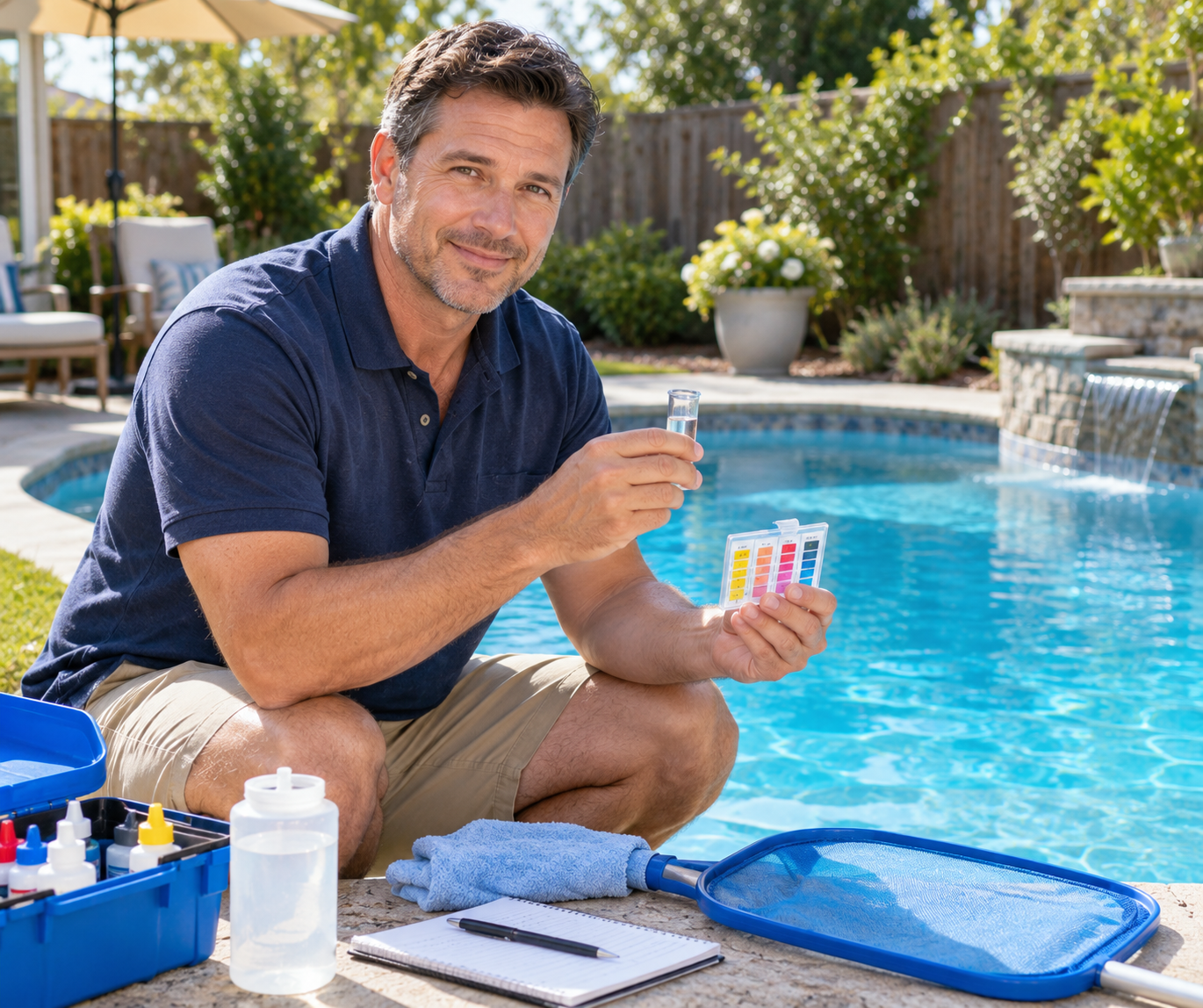

Lifting your spa cover to find murky, dull water instead of a crystal-clear sanctuary is one of the most frustrating experiences for any hot tub owner. Understanding what does cloudy hot tub water mean is crucial because turbid water is rarely just a cosmetic issue; it signals an active imbalance in your chemical sanitization, filtration cycle, or bather waste levels. Suspended microscopic particles scatter light and prevent you from seeing the spa floor clearly, creating an uninviting environment. Taking swift diagnostic action protects your internal plumbing manifolds, heating elements, and family bathers from unwanted bacteria.
Water clarity can deteriorate rapidly when environmental debris mixes with sweat, body oils, and residual laundry detergents rinsed off swimwear. Installing a protective hot tub cover provides an immediate physical barrier against airborne spores, leaves, and rainwater that deplete sanitizer levels. Regular testing of your sanitizer residuals, combined with timely physical clarification treatments, keeps your water pristine and ready for every hydrotherapy session. Addressing the root cause early prevents stubborn biofilm accumulation inside your internal jet lines.

Pros
- Compatible with all major spa sanitizers including chlorine, bromine, and biguanide
- Improves filter media efficiency by binding fine particles that normal cartridges miss
- Concentrated formula requires relatively small doses per treatment
- Compact bottle footprint fits easily into standard outdoor storage cabinets
Cons
- Requires clean filter cartridges to capture coagulated debris without restricting water flow
- Does not resolve cloudiness caused by severely unbalanced pH, total alkalinity, or zero sanitizer
- Liquid format requires careful measuring to prevent accidental over-treatment
HTH Spa 86121 Clarifier is a concentrated liquid water-care treatment designed to clear dull, hazy water in portable and built-in hot tubs. This maintenance product serves first-time hot tub owners, busy families, and vacation rental managers who need a dependable way to restore water clarity after heavy bather loads without having to perform an immediate, water-wasting drain and refill.
Microscopic particles such as dead algae, lotions, cosmetic residues, and fine environmental dust often bypass standard hot tub cartridge filters due to their tiny particle size. HTH Spa Clarifier acts as a coagulant, combining those microscopic floaters into larger masses that your filtration system can easily snare during standard circulation cycles. This action directly supports filter efficiency and helps keep water looking transparent and inviting.
Chemical compatibility is a critical consideration for any spa additive, and this formula is designed to work across diverse sanitation programs. HTH lists compatibility with chlorine, bromine, and biguanide sanitizers, making it versatile for virtually any residential spa setup. The 16-ounce bottle weighs approximately one pound and measures 2.46 by 2.46 by 7.85 inches, allowing it to fit neatly inside outdoor storage bins, hot tub steps with storage compartments, or utility shelves.
Application fits easily into standard spa care routines. Adding the recommended dose while the circulation pump or low-speed jets are active distributes the liquid evenly across the spa volume. After the clarifier binds suspended debris and directs it toward the filter, owners should plan to rinse or chemically wash their filter cartridges within a day or two to remove the collected solids and maintain optimal circulation pressure.
While clarifiers are effective at targeting physical haze, they cannot substitute for fundamental water balancing. If cloudy water is driven by incorrect total alkalinity, skewed pH levels, or an absence of active sanitizer, those underlying chemistry issues must be corrected first. Furthermore, overdosing clarifier can occasionally cause foaming or reverse cloudiness, meaning precise measurement remains necessary during application.
For owners seeking a low-cost, straightforward tool to maintain polished, sparkling water between scheduled drain intervals, HTH Spa Clarifier is a practical addition to the maintenance cabinet. Verifying that your spa filter is clean and that water balance parameters are within normal ranges before pouring will deliver the clearest results.
HTH Spa Clarifier is formulated for broad chemical compatibility, allowing safe use alongside chlorine, bromine, and biguanide sanitizing programs. This flexibility prevents chemical conflict and makes it suitable for both standard residential tubs and rental property installations utilizing different sanitation preferences.
For optimal results, ensure the hot tub water has balanced pH and active sanitizer levels before adding the clarifier. Activating low-speed filtration jets while dosing ensures the liquid disperses thoroughly across the water column to bind tiny particles uniformly.
Because this clarifier gathers microscopic contaminants so that the spa filter can catch them, regular filter maintenance is essential after treatment. Thoroughly rinsing your cartridge pleats with clean water after running the cycle prevents coagulated debris from causing filter restriction.
Store the 16-ounce bottle in a cool, dry, and well-ventilated area away from direct sunlight. Ensuring the cap is tightly secured after each use preserves chemical potency and prevents accidental leakage inside your spa storage box or cabinet.


Pros
- Coagulates micro-particles so standard spa cartridge filters can trap fine debris
- Designed to clarify cloudy water without altering overall pH balance
- Simple application procedure using active spa jets for rapid circulation
- Compact 1-pint bottle is easy to store alongside routine hot tub chemicals
Cons
- Requires a clean, functioning filter cartridge to physically remove the clumped debris
- Over-dosing can lead to temporary haziness, requiring careful measurement based on spa gallon capacity
- Does not replace primary sanitizers or shock treatments for bacteria and heavy organic buildup
AquaDoc Hot Tub Clarifier is a concentrated liquid treatment designed to clear cloudy water and support routine cartridge filtration. It best suits hot tub owners, vacation rental hosts, and busy homeowners who experience dull or hazy water resulting from bather load, body lotions, or fine airborne debris. Instead of waiting for microscopic suspended solids to slowly cycle out through standard circulation, this formula acts as a coagulant to bundle tiny particles together so spa filters can trap them efficiently.
Microscopic dirt particles are frequently smaller than the micron rating of standard hot tub cartridge filters, allowing them to bypass filter pleats and keep the water looking hazy. AquaDoc works by attracting these micro-particles like a magnet, creating larger agglomerations that the filter media can physically catch. Running spa jets and blowers during application accelerates circulation, allowing the treatment to disperse evenly throughout the tub and push debris toward the skimmer intake.
Maintaining water balance is a central part of spa ownership, and chemical additions that swing pH can trigger scale or skin irritation. This clarifier is formulated to clear water without upsetting established pH levels, which helps avoid cascading chemical adjustments. By pulling floating debris out of suspension, it helps cartridge filters capture dirt effectively, though regular filter rinsing remains essential to flush away the collected material.
Applying the clarifier fits easily into weekly spa care routines without complicated steps. The manufacturer directions suggest adding 2 ounces for every 800 gallons of water while the jets or blowers are active, continuing filtration until the water turns clear. For standard residential tubs, which often hold between 300 and 450 gallons, measuring out roughly 1 ounce twice a week provides consistent water maintenance without over-treating.
While clarifiers improve mechanical filtration, they are not a substitute for proper sanitizer levels, oxidizers, or routine filter cleaning. If a hot tub filter cartridge is already loaded with oils or scale, adding a clarifier will yield limited results until the filter is thoroughly rinsed or degreased. Additionally, overdosing clarifier can have an inverted effect, where excess polymers temporarily cloud the water, making accurate measurement essential.
AquaDoc Hot Tub Clarifier is a reliable, practical addition to any spa chemical cabinet for clearing minor haziness and supporting regular filtration. Before adding it to your spa, verify your water sanitizer levels, test baseline pH, and inspect your cartridge filter to ensure it is clean and ready to trap the gathered particles. Hot tub owners looking for a low-fuss way to preserve water clarity between water changes will find good everyday value here.
Using AquaDoc Hot Tub Clarifier effectively requires basic attention to spa capacity and filtration cycles. The listed dosage is 2 ounces for every 800 gallons of water, meaning most typical residential hot tubs holding 350 to 400 gallons require approximately 1 ounce per application. Adding the measured dose twice weekly with the circulation jets running ensures thorough dispersion across the entire spa shell.
Because the clarifier works by grouping tiny particles into larger debris, your spa filter cartridge does the physical work of removing the cloudiness from the water. Running the filtration cycle until the water clears is essential, followed by a quick garden-hose rinse of the filter pleats to prevent the trapped coagulants from restricting water flow.
Understanding Cloudy Spa Water: Causes, Chemistry, and Diagnostic Solutions
Turbidity in a hot tub indicates that microscopic solids are suspended throughout the water column in quantities dense enough to refract light. When you observe hazy or milky water, it serves as an early warning that chemical sanitizers are depleted, your filter cartridge is overwhelmed, or dissolved solids have precipitated out of solution. Diagnosing the issue systematically prevents minor water quality hiccups from evolving into hazardous bacterial blooms or mechanical scaling inside the heater manifold. Taking immediate action restores clarity, protects bather safety, and avoids the premature need to dump hundreds of gallons of heated water.
The Core Chemistry Behind Water Turbidity and Suspended Microscopic Particles
Water cloudiness occurs when millions of colloidal particles float freely in the water rather than dissolving completely. These contaminants are typically smaller than the nominal pore size of standard pleated polyester cartridge filters, which usually trap debris down to roughly twenty to fifty microns. Because these particles carry matching electrostatic surface charges, they continuously repel one another instead of settling or sticking together. As artificial light or sunlight enters the spa, these suspended solids scatter the light rays in multiple directions, creating the characteristic dull, milky, or gray appearance.
The presence of turbidity always indicates an imbalance within the physical, chemical, or biological equilibrium of your spa. In a confined body of heated water ranging between 100°F and 104°F, chemical reactions happen much faster than in a swimming pool. Heated water causes rapid organic decomposition, accelerated mineral precipitation, and faster sanitizer degradation. Identifying whether the cloudiness stems from biological growth, chemical precipitation, or physical debris dictates the exact treatment path you must follow.
Sanitizer Depletion and Opportunistic Microbial Proliferation
A sharp drop in your active biocide is the most common trigger for hazy water in residential spas. When free chlorine drops below 3.0 parts per million (ppm) or total bromine dips beneath 3.0 ppm, opportunistic bacteria begin multiplying at exponential rates. Microorganisms like Pseudomonas aeruginosa thrive in warm, aerated environments and quickly form microscopic colonies that turn clear water opaque. Without sufficient active oxidizer present, these living organisms and their organic byproducts stay suspended throughout the vessel.
Sanitizer demand spikes sharply during and immediately after heavy soaking sessions. When free chlorine molecules bind with nitrogenous compounds from sweat and urine, they transform into combined chlorine, commonly known as chloramines. Chloramines lack the sanitizing efficiency of hypochlorous acid and give off a strong, pungent chemical odor that many owners mistake for excess chlorine. Testing your water with reliable liquid test drops or diagnostic strips will reveal whether you have sufficient free available sanitizer or an overabundance of ineffective combined sanitizer.
Imbalanced pH, Total Alkalinity, and Calcium Precipitation
Improper chemical balance can cause dissolved minerals to fall out of solution and cloud the water column within hours. When your water pH drifts above 7.8, minerals such as calcium carbonate lose their solubility and precipitate into tiny white particles. This phenomenon often occurs simultaneously when total alkalinity rises above 120 ppm, creating an environment that encourages scale formation along acrylic shells, internal jet nozzles, and titanium heater elements. Left uncorrected, high pH also cripples the sanitizing potency of chlorine, cutting its effectiveness by more than half.
Conversely, critically low total alkalinity below 80 ppm triggers rapid pH bounce, creating corrosive conditions that erode internal metal components. As copper heat exchanger coils or pump seals oxidize, metallic byproducts enter the water and generate an unsightly metallic haze. Maintaining total alkalinity between 80 and 120 ppm acts as a chemical cushion, stabilizing your pH strictly within the recommended 7.2 to 7.8 operating corridor. Balancing alkalinity first allows your pH adjustments to hold steady, which in turn keeps dissolved calcium stable in solution.
Heavy Bather Load and Organic Contaminant Accumulation
Every individual who enters a hot tub introduces an array of non-living organic compounds into the water. The average bather releases perspiration, dead skin cells, natural sebum oils, cosmetic products, deodorant, hair conditioners, and residual laundry surfactants. In a standard 400-gallon spa, four adults soaking for thirty minutes introduce a proportional organic load equivalent to hundreds of swimmers in a municipal pool. These insoluble lipids float through the plumbing, creating oily surface scums, foam lines, and persistent water cloudiness.
Laundry detergents trapped within bathing suits represent a notorious source of persistent cloudiness and foaming. Standard household washing machines rarely rinse modern synthetic fabrics completely clean of fragrant surfactants. When these garments encounter vigorous hydrotherapy jet aeration and heated water, the trapped soap residue dissolves directly into the spa. Encouraging bathers to take a quick rinse shower before soaking and designating detergent-free swimwear dramatically cuts down on cloudy organic contamination.
Filtration Inadequacy and Pleated Cartridge Saturation
Your circulation pump and pleated cartridge filter serve as the primary mechanical defense against suspended water turbidity. When the filter cartridge becomes clogged with oils, hair, and calcified scale, water flow drops and fine contaminants bypass filtration entirely. Most modern electronic spa control packs monitor circulation pressure and may display low-flow error codes such as FLO or dr when restricted cartridges impede water movement. If your spa filtration cycles are programmed for only two hours daily, fine debris accumulates much faster than the pump can extract it.
Extending your automated filtration cycles to run at least four to six hours twice daily ensures the entire water volume turns over multiple times. In addition, rinsing your cartridge weekly with high-pressure garden hose water dislodges surface particulates before they embed deep within the polyester media. Monthly soaking in a specialized degreasing chemical compound dissolves embedded body oils that plain water cannot dislodge. Even premium cartridges lose their structural integrity over time, making complete replacement every twelve to twenty-four months an essential maintenance milestone.
Biofilm Formation and Pipe Slime in Internal Manifolds
Beneath the smooth acrylic shell of your spa lies a complex network of flexible PVC piping, manifolds, and air lines spanning up to one hundred feet. Over months of operation, bacteria attach to the interior walls of these dark, warm pipes and secrete a protective slimy matrix known as biofilm. This sticky polysaccharide barrier shields colonies from standard chemical biocide concentrations, allowing bacteria to flourish unseen. As water rushes through the plumbing under high jet pump pressure, fragments of this biofilm slough off into the main tub, causing persistent turbidity.
Biofilm cloudiness typically presents as stubborn haziness that resists standard chemical shock treatments. Owners often notice that their water turns milky immediately after activating high-speed therapy pumps. Regular surface sanitizing cannot penetrate deep plumbing deposits, which makes an intensive plumbing line purge necessary before routine water draining. Adding an enzymatic plumbing flush product breaks down the underlying matrix, flushing accumulated biological slime into the tub where it can be completely drained away.
Clarifiers and Coagulants: How Flocculation Clears Cloudy Water
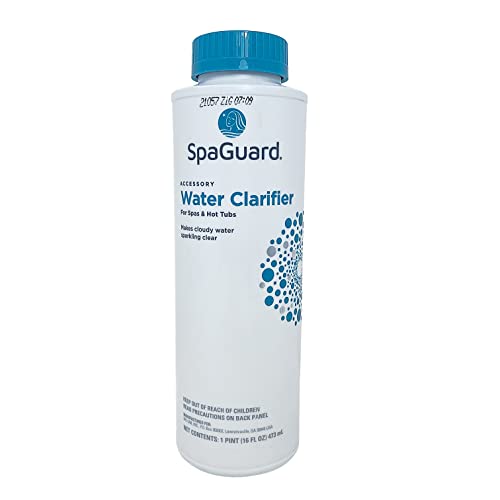
When microscopic particles are too small for standard cartridge filters to catch, water clarifiers provide an indispensable chemical assist. Products like an outdoor patio spa cover help keep outdoor debris away, but internal water clarifiers act directly on suspended micro-solids. Formulations such as SpaGuard Spa Water Clarifier and AquaDoc Hot Tub Clarifier feature specialized positively charged polymeric coagulants. These molecules act like microscopic magnets, binding to the negatively charged colloidal particles and neutralizing their repelling electrostatic fields.
As these neutralized particles collide under gentle water circulation, they coalesce into larger clumps known as flocs. Formulas like HTH Spa Clarifier are specifically concentrated to enlarge these tiny particulates so that your existing pleated filter media can easily trap and hold them. A significant benefit of quality clarifiers, such as the SpaGuard formula, is that they clear water without disrupting your carefully balanced pH levels. Similarly, AquaDoc recommends adding two ounces per eight hundred gallons of water while running your jets, allowing the filtration system to capture the enlarged debris swiftly.
Step-by-Step Restoration Protocol for Murky Spa Water
Restoring pristine water clarity begins with thorough diagnostic testing of your chemical parameters using calibrated test strips or a liquid reagent kit. Start by adjusting total alkalinity into the ideal range of 80 to 120 ppm using sodium bicarbonate or sodium bisulfate. Once your alkalinity stabilizes, balance your pH level strictly between 7.2 and 7.8 to create optimal conditions for sanitizer performance. Never add sanitizing shock treatments while pH is skewed, as extreme acidity or alkalinity hampers chemical efficacy and risks damaging spa components.
After establishing chemical balance, administer an oxidizing shock treatment to burn away accumulated bather waste and break apart chloramines. Utilize non-chlorine shock (potassium peroxymonosulfate) for routine oxidation or a concentrated granular chlorine shock if active bacteria are suspected. Allow the water to circulate with the spa cover removed for at least twenty minutes so volatile disinfection byproducts can off-gas safely. Once sanitizer levels return within safe soaking parameters, dose your chosen water clarifier according to manufacturer guidelines and engage continuous low-speed filtration.
Keep your circulation pump running continuously for twelve to twenty-four hours to ensure all flocculated solids pass through the filtration cartridge. After this clarification cycle completes, remove the filter cartridge and rinse it thoroughly to wash away the trapped coagulated waste. Failing to rinse the filter after using a clarifier can cause the cartridge pleats to load up, restricting water flow and causing future cloudiness. Inspect the water against a submerged flashlight beam to verify that every trace of optical turbidity has dissipated.
Determining When to Treat vs. When to Drain and Refill
While water clarifiers and chemical shocks excel at resolving temporary turbidity, every body of spa water possesses a finite operational lifespan. Over weeks of daily soaking and chemical additions, the concentration of total dissolved solids (TDS) steadily climbs. TDS measures the total weight of all minerals, salts, sanitizer byproducts, and dissolved organic matter lingering in the water. Once TDS levels exceed 1,500 ppm above your original fill tap water, the water becomes chemically saturated and can no longer dissolve additional treatments effectively.
You can calculate your expected drain interval using a standard spa maintenance formula: divide your total water volume in gallons by three, and then divide that number by the average daily bather count. For example, a 400-gallon hot tub used by two people daily typically requires draining and refilling every 66 days. Continuing to pour clarifiers and shocks into chemically exhausted water wastes money and risks damaging internal mechanical components. When your water feels heavy, foams excessively, or resists repeated shock treatments, performing a complete drain, acrylic wipe-down, and fresh refill is the most sensible solution.
Preventative Water Care and Environmental Maintenance Habits
Sustaining crystal-clear spa water year-round requires consistent preventive habits rather than reactive troubleshooting after cloudiness appears. Establishing a strict weekly testing and dosing schedule ensures sanitizer residuals never dip below recommended thresholds. Shocking your water after every heavy soak or social gathering neutralizes organic bather waste before it can form complex colloidal suspensions. Utilizing a dense folding spa cover helps prevent external contaminants like pollen, tree sap, and dust from entering the water during storms.
Rinsing your body before soaking, rotating twin filter cartridges every month, and running adequate daily filtration cycles will keep your water sparkling clean. Investing in reliable clarifying products like HTH Spa Clarifier or AquaDoc Hot Tub Clarifier gives you an effective maintenance aid whenever bather loads surge unexpectedly. Paying close attention to early signs of dullness allows you to correct minor water balance issues before bacterial growth or mineral precipitation takes hold. With proper chemical discipline and routine equipment care, your hot tub will remain an inviting, crystal-clear hydrotherapy retreat.





Write Your Review
No reviews yet. Be the first to share your experience!