


Opening your spa cover to find an unsightly discoloration along the acrylic waterline or seating surfaces can quickly disrupt your planned evening soak. Identifying what causes yellow stain in hot tub shells requires looking beyond surface grime, as these marks frequently stem from oxidized minerals, organic bather waste, or microscopic algae blooms. Tap water sources often introduce trace metals like iron and manganese that react aggressively when exposed to standard sanitizers. Left untreated, these discolored deposits can bind to acrylic finishes, foul pleated filter cartridges, and degrade heating elements over time.
Restoring pristine water conditions demands a targeted approach that isolates chemical imbalances from mechanical filtration issues. Using a dense, well-fitted outdoor patio hot tub cover protects open water from airborne pollen and environmental contaminants that aggravate organic staining. Implementing dedicated metal sequestering agents and routine oxidizer shocks stabilizes the aquatic environment while protecting expensive internal plumbing. Exploring the chemical dynamics of discoloration ensures spa owners can quickly diagnose, treat, and prevent recurrent surface blemishes.


Diagnosing and Resolving Yellow Discoloration in Hot Tub Spas
Spotting a yellow blemish on spa walls or around jet fittings signals that chemical reactions or biological contaminants have overwhelmed your filtration system. Understanding the underlying source of the discoloration prevents wasted spending on incorrect treatments and protects internal spa components from long-term corrosion. Mineral oxidation, organic bather scum, and stubborn algae strains each create distinct visual and tactile clues across the acrylic shell. Systematically evaluating water chemistry parameters and surface textures allows you to apply the exact chemical remedies needed to restore clear, hygienic water.
Primary Chemical and Biological Causes of Yellow Staining
Dissolved iron represents one of the most frequent catalysts for yellow and rust-colored stains in residential hot tubs. Well water supplies and aging municipal plumbing systems often deliver tap water rich in soluble ferrous iron that remains completely invisible upon initial filling. Once you introduce strong oxidizers like chlorine, bromine, or ozone into the heated water, the ferrous iron oxidizes into insoluble ferric iron. These oxidized microscopic metal flakes drop out of suspension, adhering to warm acrylic walls and creating a stubborn yellowish or reddish-brown film.
Aggressive, corrosive water chemistry can cause the hot tub itself to produce staining minerals from within its internal plumbing. When water pH drops below 7.2 or total alkalinity plummets below 80 ppm, the water becomes acidic and seeks out minerals to balance itself. This acidic condition slowly corrodes metal internal components, including copper heater elements, brass sensor housings, and pump impellers. The stripped metallic ions circulate through the plumbing manifold and precipitate onto the acrylic shell, forming distinct yellow, copper-gold, or greenish-yellow stains.
Bather waste and topical cosmetics account for the majority of gummy, yellow discoloration rings concentrated along the spa waterline. Soakers naturally shed body oils, perspiration, dead skin cells, cosmetic lotions, deodorants, and sunscreens into the hot water. High water temperatures dissolve these oily lipids, allowing them to float to the surface where aerated therapy jets drive them toward the perimeter. As the oils cling to the acrylic surface, they combine with atmospheric dust and residual sanitizer byproducts to produce a sticky, yellowish scum line.
Biological organisms like yellow mustard algae and bacterial biofilm can establish colonies that mimic mineral stains. Mustard algae spores thrive in poorly circulated pockets, behind removable headrests, and within the dark recesses of pleated filter housings. This specific algae strain resists moderate sanitizer levels and exhibits a powdery, yellowish-green appearance that easily brushes off but quickly returns. Complex bacterial biofilms also develop within internal flex-pipe plumbing manifolds, periodically sloughing off as yellowish, sticky flakes that adhere to the shell.
Elevated calcium hardness combined with high water pH frequently creates a rough scaling condition that amplifies yellow discoloration. When calcium levels exceed 250 ppm and water temperatures hover near 104 degrees Fahrenheit, calcium carbonate rapidly precipitates out of solution. This mineral precipitation creates a gritty, sandpaper-like crust over the smooth acrylic finish and inside internal heater assemblies. Because calcium scale is porous, it readily traps airborne yellow pollen, iron particles, and organic matter, transforming standard white scale into a persistent yellow stain.
Diagnostic Testing: Pinpointing the Root Cause of Spa Discoloration
Performing simple localized spot tests before purchasing specialty chemicals saves time and avoids chemical mismanagement. Pressing a crushed vitamin C tablet or ascorbic acid powder against the yellow stain for thirty seconds serves as a reliable test for oxidized iron. If the yellow discoloration lightens or disappears instantly beneath the vitamin C, the blemish is definitively caused by metal precipitation. If the mark remains unchanged, pressing a cloth soaked in liquid chlorine bleach against the stain will quickly oxidize and lift organic scum or algae deposits.
Analyzing the physical texture and spatial distribution of the yellow mark provides critical diagnostic confirmation. A slick, slimy texture localized along the water line or concentrated inside jet nozzles confirms organic buildup, cosmetic grease, or active biofilm colonies. A rough, abrasive texture distributed across the tub floor and seating contours indicates hard calcium scale that has absorbed dissolved impurities. Uniform discoloration that tints the entire water volume a faint yellow or pale green typically signals dissolved oxidized metals actively circulating through the hydraulic system.
Step-by-Step Chemical Treatments for Yellow Stain Removal
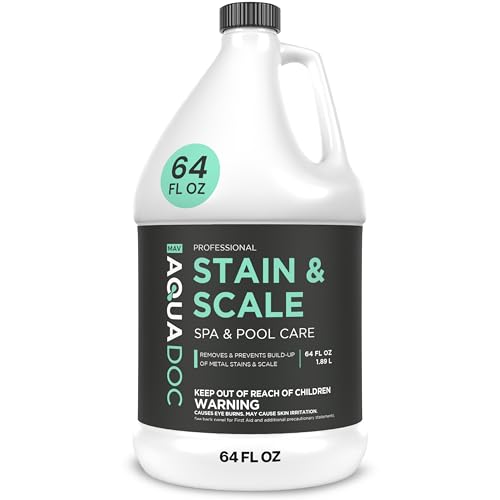
Removing dissolved metal stains requires specialized chelating chemicals that alter the molecular charge of suspended metallic ions. Sequestering agents like AquaDoc Spa Stain and Scale Control and SpaGuard Stain & Scale Control chemically bond with dissolved iron, calcium, and copper. This chemical encapsulation prevents the metal particles from adhering to the acrylic shell and slowly draws existing surface stains back into solution. Running the primary circulation pump continuously for twenty-four hours after dosing allows the pleated filter to collect the sequestered compounds effectively.
Eradicating persistent waterline grease requires specialized cleaning compounds formulated specifically for hot tub acrylic shells. Standard household bathroom detergents must never be used because they introduce aggressive foaming agents and phosphates that ruin water chemistry balance. Dedicated surface treatments, such as Adios! 3-in-1 Hot Tub Cleaner, effectively dissolve stubborn cosmetic scum, body oils, and grime without scratching delicate surfaces. Applying the cleaner with a soft microfiber cloth or specialized spa scrubber lifts the yellow scum line without transferring abrasive micro-scratches to the glossy shell.
Eliminating biological yellow algae and stubborn bather waste necessitates a significant increase in free sanitizer levels. Introducing a high-potency non-chlorine shock, such as potassium monopersulfate, or a dedicated spa chlorine shock breaks down persistent organic compounds rapidly. The concentrated oxidation destroys the protective outer layer of mustard algae spores and dissolves the sticky binders holding organic scum to the walls. Keeping the spa cover off for thirty minutes after shocking allows irritating gas byproducts to escape cleanly into the atmosphere without degrading the cover vapor barrier.
Severe staining driven by deep-seated plumbing biofilm requires a comprehensive system purge and complete water replacement. Adding a concentrated plumbing line cleaner before draining circulates concentrated enzymatic agents through all internal jets, diverter valves, and manifold lines. This purging process strips away the slimy bacterial matrices where yellow-pigmented microorganisms breed and release debris into the bathing area. Evacuating the fouled water completely with a submersible utility pump enables a thorough manual wipe-down of the empty shell before introducing fresh fill water.
Restoring and Maintaining Balanced Water Chemistry
Stabilizing total alkalinity between 80 and 120 ppm serves as the crucial primary step in preventing recurrent yellow spa discoloration. Total alkalinity functions as a chemical buffer that absorbs acidic inputs and prevents volatile swings in water pH. Allowing alkalinity to drop below 80 ppm accelerates equipment corrosion, triggering rapid metal leaching from internal electric heaters and pump fittings. Dosing sodium bicarbonate in controlled increments stabilizes the buffering capacity of the water before making any subsequent adjustments to pH levels.
Maintaining water pH strictly within the recommended range of 7.2 to 7.8 preserves mineral solubility and optimizes sanitizer performance. When pH drifts above 7.8, minerals lose their ability to stay dissolved in hot water, rapidly precipitating as stained scale deposits. Conversely, a low pH environment below 7.2 creates an aggressive bath that corrodes heating elements and leaches yellow-forming iron and copper. Regular testing with precision test strips or digital photometers ensures you can add sodium bisulfate to lower pH or sodium carbonate to raise it safely.
Managing calcium hardness between 150 and 250 ppm protects equipment longevity while avoiding unsightly scale precipitation. Water with insufficient calcium will aggressively extract minerals from equipment surfaces, whereas excessively hard water deposits crusty scale along the plumbing. In conjunction with calcium balance, maintaining a consistent free chlorine residual of 3 to 5 ppm or bromine residual of 3 to 6 ppm prevents algae germination. Routine weekly testing prevents sanitizer dips that allow cosmetic residues and organic contaminants to bind into stubborn yellow waterline marks.
Pleated spa filter cartridges capture sequestered iron particles and floating bather oils, but they require consistent maintenance to remain effective. As filter media become saturated with yellow scum and oxidized metals, hydraulic flow drops, triggering flow error codes on digital topside controls. Rinsing filter pleats weekly with high-pressure garden hose water clears loose debris, but mineral oils require an overnight chemical degreasing soak monthly. Rotating between two separate filter cartridges allows one unit to dry thoroughly after cleaning, which resets the polyester fibers and maximizes filtration efficiency.
Long-Term Preventive Strategies for Crystal Clear Spa Water
Preventing yellow discoloration begins at the garden hose before a single gallon enters your clean hot tub shell. Utilizing an inline hose pre-filter packed with activated carbon and sediment-trapping media filters out dissolved iron, copper, and suspended silt. This physical filtration barrier significantly reduces the mineral load of fresh fill water, particularly for homeowners drawing from private residential wells. Filling the spa through the filter compartment with pre-filtered water also prevents air locks in internal pump volutes while keeping incoming water pristine.
Incorporating a regular weekly maintenance dose of metal and scale inhibitors stops dissolved minerals from bonding to the acrylic shell. Products such as Hot Tub Things Stain & Scale Control and Clorox Pool&Spa Stain & Scale Control continuously sequester fresh minerals introduced by top-off water. These specialized liquid treatments keep calcium and trace metals suspended in microscopic complexes that pass harmlessly through the heater manifold. Sustained chemical defense protects expensive titanium heating elements from chalky calcification and prevents persistent yellow staining on underwater surfaces.
Atmospheric contaminants such as windborne pollen, decomposing leaves, and acid rain frequently introduce organic matter that triggers yellow water discoloration. Installing a dense, well-insulated protective spa cover with warranty creates an impermeable physical barrier against exterior debris when the hot tub sits unused. For homeowners seeking rapid daily access without wrestling heavy vinyl slabs, an affordable foldable hot tub cover ensures effortless closure while maintaining a snug thermal seal. Regularly wiping down the underside of the spa cover with a diluted sanitizer solution prevents trapped mildew and yellow airborne spores from dripping back into the tub.
Adopting simple pre-soak hygiene practices dramatically reduces the organic load introduced to the hot tub water column. Asking guests to take a quick rinse shower before entering washes away sunscreens, body lotions, and residual laundry detergents that generate yellow scum. Placing floating oil-absorbent sponges or reusable microfiber scum discs directly in the skimmer well traps floating lipids before they contact the acrylic perimeter. These proactive bather practices reduce ongoing sanitizer consumption, stabilize water clarity, and eliminate the greasy precursors of yellow waterline staining.
Eliminating yellow spa stains requires methodically identifying whether the root cause is mineral oxidation, organic bather waste, or biological algae growth. Applying targeted sequestering agents, specialized non-abrasive cleaners, and consistent weekly sanitizer shocks restores the brilliant clarity of your acrylic shell. Maintaining balanced total alkalinity, steady pH levels, and clean filter cartridges ensures your hot tub remains protected against mineral precipitation and corrosive damage. Combining pre-filtered fill water with proactive bather hygiene provides a reliable foundation for an inviting, pristine soaking environment throughout every season.






Write Your Review
No reviews yet. Be the first to share your experience!