
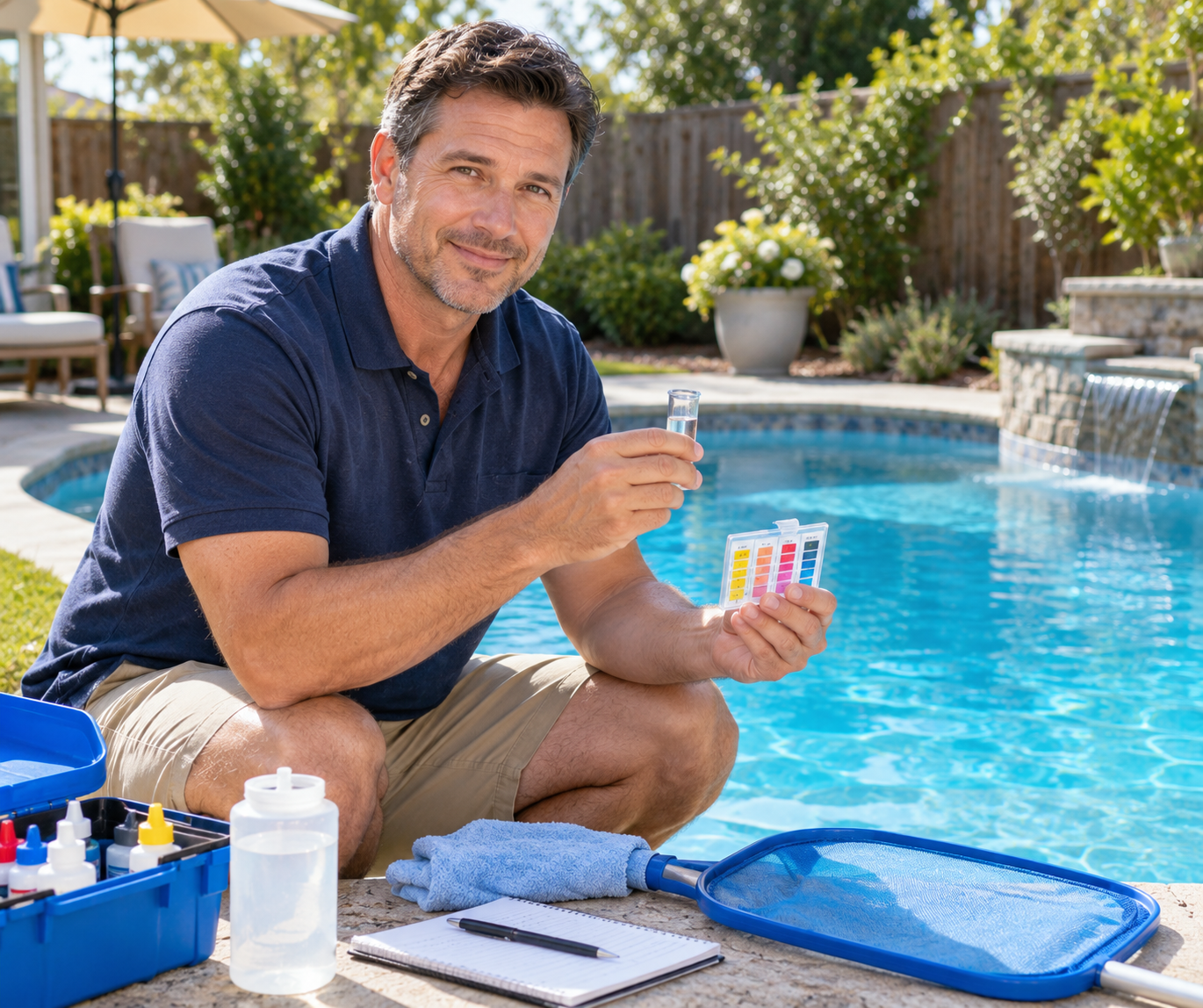

Stepping into a warm spa only to find thick, floating suds can immediately disrupt your hydrotherapy relaxation. While water agitation naturally creates transient surface bubbles, genuine froth signals accumulated organic waste, detergent residues, or unbalanced water parameters. Hot tub owners experiencing this issue often wonder: is a hot tub supposed to foam during normal jet operation? The answer is no; persistent surface foam indicates that contaminants or improper chemical parameters are lowering the surface tension of the water.
High bather loads, residual laundry detergents in swimsuits, cosmetic lotions, and soft water conditions combine to create resilient suds blankets. Maintaining your sanitization routine and protecting the shell with a durable yard patio hot tub cover helps prevent external contaminants from compounding the problem. Treating the underlying water balance resolves the suds, preserves your equipment, and ensures an inviting soak every time you turn on the pumps.



Pros
- Compatible with all sanitizer types, removing the guesswork about whether it will work with your existing water-care system
- Fast-acting formula targets surface foam on contact, which can restore a pleasant soaking experience in minutes rather than hours
- Small, lightweight bottle is convenient to keep near the spa for immediate use whenever foam appears
- Straightforward application makes it accessible for first-time spa owners who may not yet be comfortable with complex chemical treatments
Cons
- Anti-foam products treat the symptom rather than the root cause - persistent foaming may indicate the need for a water change, filter cleaning, or adjusted bather habits
- A single 1-pint bottle may not last long for owners who use their hot tub frequently or have recurring foam issues from high bather loads
- The product listing does not specify exact dosing instructions per gallon of spa water, so buyers should check the bottle label carefully before applying
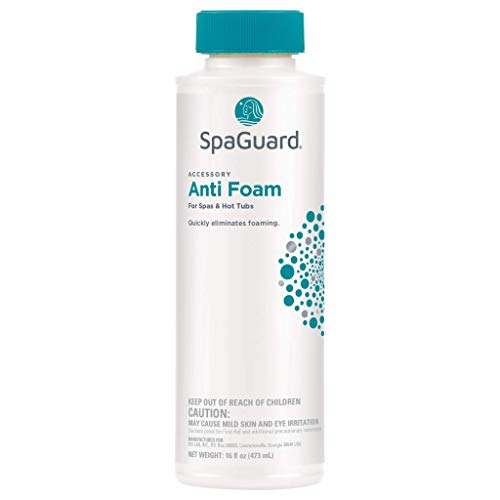
SpaGuard Spa Anti-Foam is a dedicated foam-elimination treatment sold in a 1-pint bottle and designed for use in all spas and hot tubs. It's best suited for hot tub owners who occasionally or regularly encounter surface foam - a common nuisance caused by residual detergents from swimwear, body lotions, cosmetics, deodorants, and other personal-care products that dissolve into warm, agitated water. Rather than requiring a full drain-and-refill, this product offers a fast, targeted way to clear foam and get back to enjoying a clean-looking soak.
The product is listed as compatible with all sanitizer types, which is a meaningful practical advantage. Whether a spa runs on chlorine, bromine, a saltwater chlorine generator, or a mineral-based system, SpaGuard Anti-Foam should integrate without conflicting with the existing water-care chemistry. This broad compatibility makes it a convenient shelf staple for households that may switch sanitizer methods over time, or for vacation-rental operators and property managers maintaining multiple spas with different setups.
From a day-to-day ownership standpoint, foam tends to appear most often after parties, after new bathers who haven't showered first, or when swimsuits have been washed with standard laundry detergent. A quick dose of anti-foam can restore the water's appearance without disrupting a planned soak. The compact bottle dimensions - roughly 7.6 x 2.3 x 2.3 inches and about 1 pound - mean it tucks easily into a spa-side storage bin, a maintenance caddy, or even a small outdoor cabinet. Older users or anyone who prefers minimal fuss with their water care will appreciate that there's no mixing or special equipment involved.
It's worth noting that anti-foam treatments address the visible symptom of foaming but don't resolve the underlying water-quality issue. If foam keeps returning quickly after treatment, that's typically a signal that total dissolved solids (TDS) are high, the water is overdue for a drain and refill, or the filter needs cleaning or replacement. Relying solely on anti-foam without investigating root causes can mask water-balance problems. Many experienced spa owners use anti-foam as a bridge solution - clearing foam for an evening soak while planning a water change for the weekend, for example.
For hot tub owners in any climate - whether dealing with heavy use in warm weather or maintaining a spa through cold-weather soaking season - foam can appear year-round. High-UV environments don't specifically cause foam, but increased sunscreen use among bathers certainly contributes. Families with kids who jump in without rinsing off, couples hosting friends, and rental operators with frequent guest turnover are all likely to encounter foam regularly enough to justify keeping a bottle on hand.
SpaGuard Spa Anti-Foam is a practical, low-cost maintenance product for any hot tub owner who wants a quick fix for surface foam. It's especially useful for first-time spa owners still learning water-care basics, busy families who want their spa ready on short notice, and property managers who need to keep rental spas looking inviting between guests. Before purchasing, consider how frequently foam appears in your spa - occasional users may find a single pint lasts a full season, while heavy-use spas may go through it faster. Pairing anti-foam with good bather habits like pre-soak rinsing and washing swimwear without detergent can reduce the need for repeated treatments.
SpaGuard Spa Anti-Foam is a reactive maintenance product rather than a preventive one. It works best as part of a broader water-care routine that includes regular filter cleaning or replacement, balanced sanitizer levels, and periodic water changes. When foam appears, a small dose applied directly to the water surface should begin dispersing foam quickly according to the product description.
To minimize how often anti-foam is needed, many spa owners encourage bathers to shower before entering the spa and avoid laundering swimwear with standard detergent - fabric softener and detergent residue are among the most common foam triggers. Keeping the spa filter clean also helps, since a clogged or degraded filter allows more contaminants to circulate. If foam persists even after treatment, testing total dissolved solids and considering a fresh water fill is a practical next step.
Store the bottle in a cool, dry location away from direct sunlight, consistent with standard chemical storage practices. The compact size makes it easy to keep alongside other water-care products without cluttering your storage area. Always check the product label for specific dosing guidance based on your spa's water volume before applying.

Understanding Hot Tub Foam: Causes, Diagnostics, and Water Care Solutions
Clean spa water should never hold a thick layer of persistent froth when hydrotherapy jets run at full capacity. Venturi injectors introduce air into pressurized water streams, but those natural aeration bubbles burst within seconds once the water calms. When froth accumulates in stubborn mounds or resembles soapy lather, your spa is signaling chemical imbalance or surfactant contamination. Diagnosing the underlying cause allows you to apply the correct treatment, protect internal plumbing manifolds, and restore pristine soaking conditions.
Aeration Bubbles Versus Contaminant Foam
Mechanical aeration occurs when jet pumps draw air through topside venturi controls to intensify the massage stream. This action produces transparent, lightweight bubbles that rise swiftly and pop almost immediately upon contacting the atmosphere. The water beneath normal aeration bubbles remains clear, and the surface settles into a calm mirror within seconds of shutting off the air dials. In a properly balanced spa with adequate sanitizer residuals, this bubbling action enhances physical relaxation without altering water viscosity.
True hot tub foam behaves differently because foreign substances have lowered the surface tension of the water. Surfactants and organic oils create an elastic film around rising air bubbles, preventing them from bursting at the surface. These durable bubbles stack upon one another, forming dense rafts of froth that linger long after the jet pumps turn off. This contaminated foam often appears off-white or yellowish, clinging to the acrylic shell and creating unsightly waterline scum rings.
Primary Surfactant Contaminants in Spa Water
Laundry detergent residues trapped inside synthetic swimsuit fibers represent the most frequent source of sudden spa foaming. Standard washing machine rinse cycles rarely flush out all concentrated surfactants from swim trunks and athletic wear. When hot water and turbulent jet streams agitate these fabrics, residual soap molecules dissolve directly into the water column. Even a minuscule amount of laundry detergent can turn a four-hundred-gallon hot tub into a frothy bubble bath within minutes. Dedicating clean suits that are rinsed solely in plain tap water prevents this frustrating issue entirely.
Personal grooming cosmetics and skincare products serve as another major contributor to persistent hot tub suds. Body lotions, sunscreens, moisturizing soaps, deodorants, hair gels, and makeup introduce complex oils and emulsifiers into the water. These commercial compounds do not dissolve easily in warm water and resist immediate filtration by pleated paper cartridges. As the circulation pump cycles water through the jets, these floating oils whip into persistent, stubborn froth. Encouraging bathers to take a quick warm shower before soaking eliminates these cosmetic contaminants before they enter the circulation system.
Water Chemistry Imbalances That Accelerate Foaming
Calcium hardness levels dictate how easily surfactants can produce and stabilize bubbles across the spa surface. When calcium hardness drops below the recommended minimum of one hundred and fifty parts per million, the resulting soft water froths with minimal physical agitation. In low-calcium environments, soaps and dissolved body oils produce much larger, longer-lasting suds because there are fewer mineral ions to inhibit lathering. Testing your calcium levels with reliable test strips reveals whether soft water is amplifying your surface froth. Adding a dedicated calcium hardness increaser quickly raises mineral levels into the ideal range of one hundred and fifty to two hundred and fifty parts per million.
Imbalanced pH and total alkalinity parameters directly compromise sanitizer efficacy, accelerating the accumulation of organic waste. Total alkalinity should remain stable between eighty and one hundred and twenty parts per million to buffer against rapid pH fluctuations. When pH drifts above seven point eight, chlorine sanitizers lose up to eighty percent of their oxidizing effectiveness, allowing bather waste to build up unchecked. Conversely, acidic water with a pH below seven point two irritates bather eyes and corrodes internal heating element sheaths. Regular testing and prompt additions of pH decreaser or increaser keep your water in the safe seven point two to seven point eight operating window.
How Silicone Defoamers Provide Temporary Relief
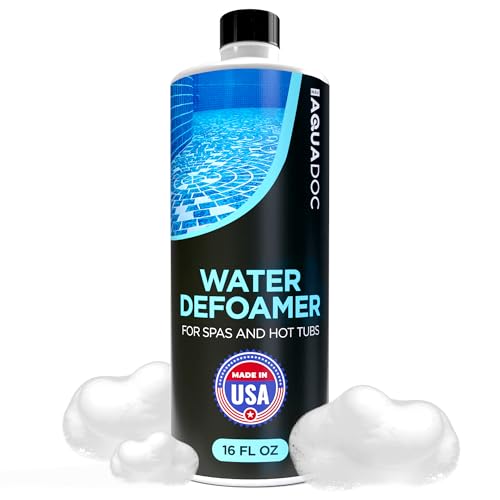
Specialty anti-foam chemicals deliver immediate relief when unsightly froth interrupts an evening soak with guests. Formulations like Leisure Time Foam Down, AquaDoc Hot Tub Defoamer, SpaChoice Premium Foam Free, and SpaGuard Anti-Foam utilize concentrated silicone emulsions to collapse surface suds. When applied across the foaming water, the silicone polymer spreads rapidly, drastically weakening the surface tension of the floating bubbles. Within seconds of application, the elastic bubble walls rupture, leaving the water surface calm, flat, and inviting. These liquid defoamers are formulated to remain compatible with standard chlorine, bromine, and biguanide sanitizing programs.
While chemical defoamers offer rapid visual improvement, spa owners must understand that these products do not remove the underlying contaminants. The silicone emulsion simply suppresses bubble formation while the original laundry soaps, cosmetics, and organic oils remain dissolved in the water. Overusing defoamer products introduces excess silicone oils into the plumbing, which can coat the polyester pleats of your filter cartridge. This oily coating restricts water circulation, triggers low-flow heater errors, and makes the water look cloudy or dull. Defoamers should be treated as convenient short-term band-aids rather than permanent replacements for proper sanitization and filtration.
Breaking Down Organics with Oxidizing Shock Treatments
Oxidative shock treatments actively destroy the microscopic organic waste that primary sanitizers cannot fully eliminate during routine operation. Dosing the spa with a non-chlorine oxidizer, such as potassium peroxymonosulfate, burns away accumulated perspiration, body oils, and residual cosmetics. This chemical oxidation breaks the molecular bonds of surfactants, eliminating their capacity to reduce water surface tension. Unlike silicone anti-foam products that merely disguise symptoms, oxidizers physically eliminate the contaminants fueling the foam. Performing a weekly oxidizer shock restores natural water clarity and prevents organic compounds from binding into stubborn suds.
Aeration during and immediately following a shock treatment helps volatile chemical byproducts dissipate harmlessly into the open air. After adding your oxidizer, activate the high-speed jet pumps and leave the hot tub cover completely open for at least twenty to thirty minutes. Trapping concentrated chemical vapors beneath a closed cover can bleach acrylic headrests and corrode internal vinyl vapor barriers. Investing in a resilient spa cover such as a best selling hot tub cover with warranty protects your thermal insulation while you maintain consistent venting practices. Once the shock treatment completes its oxidation cycle, your free sanitizer can maintain sanitary soaking conditions without being overwhelmed by organic waste.
Cartridge Filter Cleaning and Degreasing Protocols
Pleated filter cartridges capture suspended debris, dead organic matter, and insoluble oils before they can recirculate through the hydrotherapy jets. When filter pleats become saturated with oily residues, water flow drops and captured surfactants can leach back into the hot tub. Contaminated filters actively perpetuate foaming problems by constantly reintroducing trapped oils and soap films into the pressurized water stream. Rinsing the filter cartridge weekly with a focused garden hose nozzle removes loose hair, dirt, and superficial grit. This routine maintenance step prevents everyday organic accumulation from evolving into a persistent sudsing crisis.
A simple water rinse cannot dislodge deep-seated body lotions, suntan oils, or silicone defoamer residues embedded in the polyester fabric. Monthly deep cleaning requires soaking the filter cartridge in a specialized spa filter degreasing solution for twelve to twenty-four hours. Never use household dish soap or kitchen detergents to clean your spa filters, as even trace residues will trigger massive foaming when reinstalled. After soaking, rinse the cartridge thoroughly until the run-off water is completely free of cleaning suds and chemical odors. Keeping an alternate filter on hand allows you to rotate cartridges easily without interrupting your spa circulation schedule.
Step-by-Step Procedure to Clear Persistent Foam
Eliminating an active foaming episode requires a structured troubleshooting routine that addresses chemistry, mechanical filtration, and organic loading. Begin by testing the water to verify that your free sanitizer measures between three and five parts per million. Check total alkalinity and pH, adjusting alkalinity first to establish a stable chemical buffer between eighty and one hundred and twenty parts per million. Next, test calcium hardness and add calcium increaser if the reading falls below one hundred and fifty parts per million. Rebalancing these core parameters often resolves mild foaming without requiring further chemical additions.
If suds persist after balancing foundation parameters, dose the water with an oxidizer shock while running the jet pumps on high speed. Skim away large mounds of dense foam using a clean hand skimmer net as the jets circulate. Physically skimming foam extracts concentrated surfactants directly from the spa rather than allowing them to cycle back through the plumbing. For immediate visual relief during social events, apply a measured one-ounce dose of silicone defoamer directly over any remaining suds. If heavy foam reappears repeatedly despite proper sanitizer levels and clean filters, scheduling a full drain and refill represents the appropriate solution.
Performing a Complete Plumbing Purge and Water Refill
Hot tub water naturally reaches the end of its chemical lifespan every three to four months under regular residential use. Over time, dissolved solids from sanitizers, shocks, and bather waste saturate the water, preventing fresh chemicals from working efficiently. Before draining the old water, add a bottle of concentrated plumbing line flush or enzymatic purge directly into the filter well. Run the high-speed jet pumps for thirty minutes to circulate the cleaner through all internal plumbing lines, diverter valves, and manifold assemblies. This vital step strips stubborn biofilm, scale deposits, and embedded body oils from the hidden PVC pipe walls.
Once the line purge cycle finishes, cut electrical power completely at the dedicated GFCI service disconnect switch. Drain the water fully using the internal drain bib or an auxiliary submersible sump pump for faster clearance. Wipe down the empty acrylic shell with a non-abrasive, non-foaming spa shell cleaner to remove residual waterline rings and dislodged biofilm. Refill the hot tub by placing your garden hose directly into the filter housing pipe to push trapped air out through the jets, preventing pump air locks. Once full, restore electrical power, balance your foundation chemistry, and establish an initial sanitizer residual before soaking.
Preventive Habits for Long-Term Water Clarity
Establishing clear bather hygiene protocols provides the most reliable long-term defense against recurring hot tub foam. Encourage all family members and guests to take a quick rinse in the shower before entering the spa. This simple habit washes away skin moisturizers, cosmetics, hair products, and body perspiration before they can pollute your water. Furthermore, designate specific swimsuits for hot tub use that are washed only with warm water and no laundry detergent. Preventing soap molecules and cosmetic oils from entering the shell minimizes chemical demand and keeps the water pristine.
Consistent water testing ensures that chemical parameters never shift into zones that encourage bubble stabilization. Test sanitizer and pH levels two to three times each week, adding chlorine or bromine as bather loads dictate. Maintain calcium hardness consistently between one hundred and fifty and two hundred and fifty parts per million to suppress surface foaming. Apply a weekly oxidizer shock to burn away invisible organic waste before it can degrade water surface tension. Diligent maintenance habits protect your equipment, simplify water care, and keep your hot tub ready for a clean soak at all times.
Practical Takeaways for Hot Tub Foam Control
Hot tub foam is never a normal operational characteristic; it is an unmistakable sign of surfactant contamination or chemical imbalance. While concentrated defoamers like AquaDoc, Leisure Time Foam Down, and SpaGuard provide swift cosmetic relief, they should never replace fundamental water care. Prioritizing proper calcium hardness, weekly filter cleaning, regular oxidizer shocking, and timely water refills ensures lasting water clarity without chemical buildup. Addressing the root causes of foam keeps your water clean, protects your circulation pumps, and preserves the restorative comfort of your backyard spa.






Write Your Review
No reviews yet. Be the first to share your experience!