
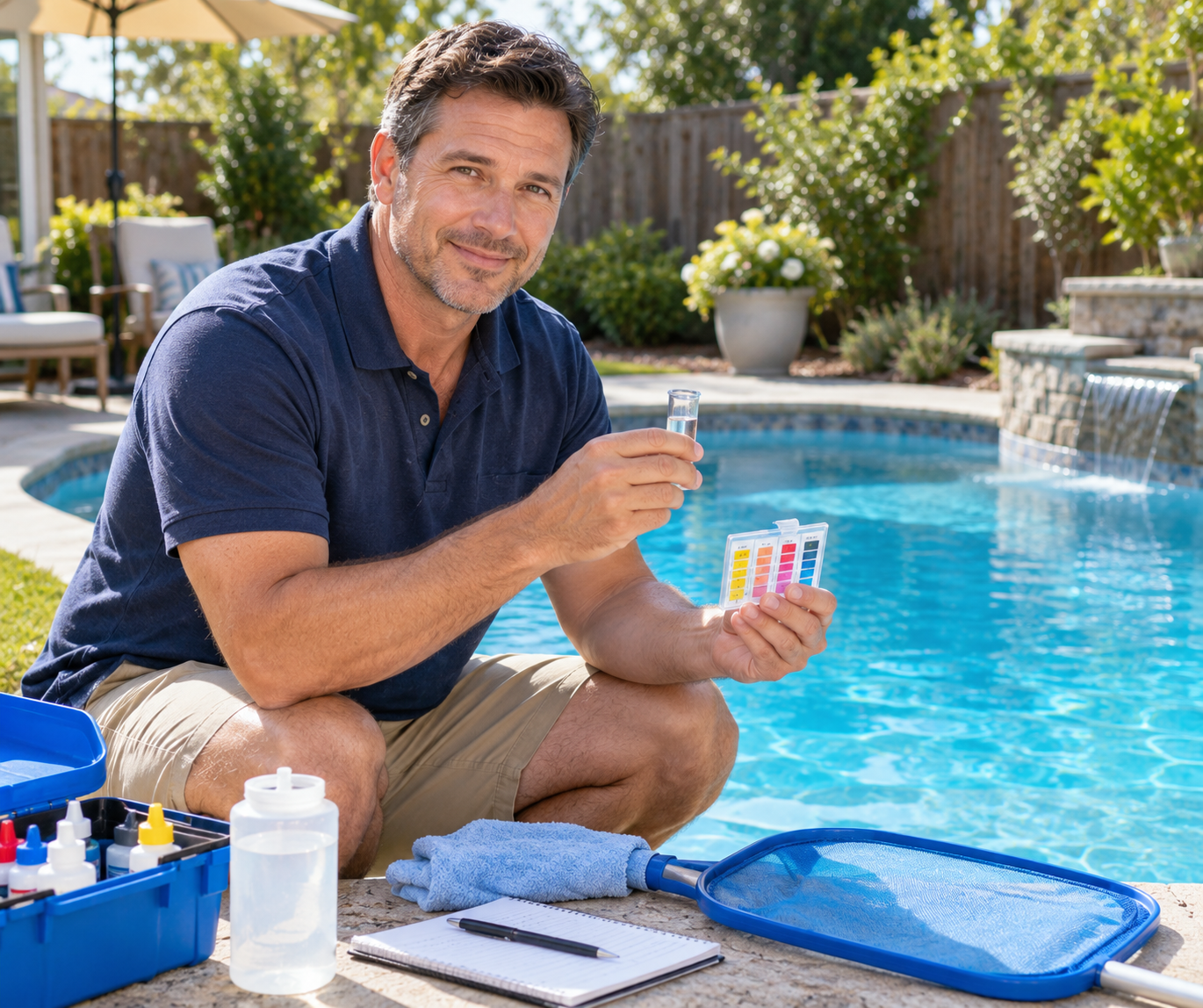

Cloudy water, persistent chemical odors, and sudden foaming after heavy bather use often signal that your spa sanitizer is overwhelmed by organic contaminants. Knowing how to shock hot tub water allows you to restore sparkling clarity, break down irritating chloramines, and reactivate dormant sanitizers without completely draining the acrylic shell. Whether your backyard retreat relies on traditional bromine granules, a standard chlorine regimen, or mineral purification cartridges, routine oxidation breaks apart body oils, cosmetics, and dead bacteria that bypass the pleated cartridge filter. Pairing balanced water chemistry with high-efficiency equipment and durable hot tub covers helps prevent excessive chemical off-gassing while shielding the water from outdoor debris.
Achieving clean soaking conditions requires understanding the critical distinction between chlorine-based sanitizing shock and non-chlorine oxidizing treatments. While halogen shocks destroy living microorganisms and rapidly elevate free sanitizer levels, oxygen-based oxidizers eliminate non-living waste while letting bathers return to the hydrotherapy jets much faster. Adding treatments in the proper sequence protects internal heating elements, prevents shell surface discoloration, and maintains proper pH buffering. Mastering these straightforward application techniques ensures your hydrotherapy jets deliver soothing relaxation rather than strong chemical smells or irritated skin.






Comprehensive Guide to Shocking Hot Tub Water Correctly
Shocking hot tub water is a foundational maintenance practice designed to restore chemical equilibrium, burn off accumulated organic contaminants, and maintain water safety. High water temperatures combined with confined water volumes cause bather waste, perspiration, and cosmetic residues to saturate primary sanitizers rapidly. Performing a deliberate shock treatment breaks down these binding compounds, eliminating the foul odors and cloudy haze that frequently plague heavily used spas. Routine oxidation also revitalizes the active sanitizing capacity of your water, ensuring your daily soak remains soothing, hygienic, and inviting.
The Chemical Difference Between Sanitizing and Oxidizing Shock
Hot tub shock treatments fall into two distinct chemical categories: halogen-based sanitizing shock and non-chlorine oxidizing shock. Sanitizing shocks utilize concentrated chlorine or bromine compounds to kill pathogenic bacteria, eliminate algae spores, and dramatically raise the free sanitizer level in the spa. Non-chlorine shocks rely primarily on potassium peroxymonosulfate to destroy organic contaminants through pure oxidation without elevating free chlorine concentrations. Choosing between these two formulations depends entirely on whether your current water condition suffers from biological contamination or non-living organic buildup.
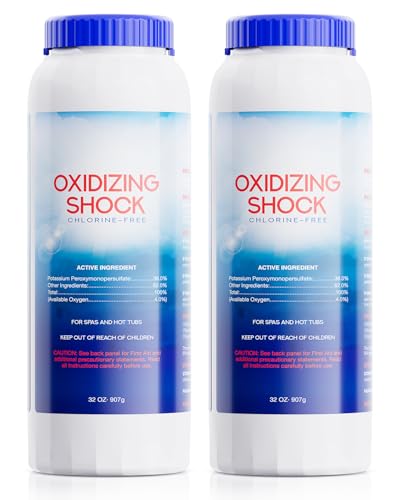
Non-chlorine shock formulas, including AquaDoc Non Chlorine Hot Tub Shock and 2LB Chlorine-Free Hot Tub Shock Oxidizer, excel at breaking down lotions, oils, and dead skin cells. These oxygen-based oxidizers target combined chlorine molecules, known as chloramines, which are the true culprits behind irritating chemical odors and burning eyes. Because non-chlorine oxidizers do not introduce additional halogen biocides, they will not over-chlorinate your water or disrupt delicate chemical balances. Many spa owners prefer this gentle approach for weekly maintenance because it keeps the water sparkling clear while protecting sensitive skin.
Chlorine-based options, such as SpaGuard Enhanced Shock, provide aggressive sanitization alongside specialized clarifying agents. This multi-purpose formula functions as a shock, water clarifier, flocculant, and pH buffer in a single granular application. The integrated flocculant binds microscopic particles together so your pleated cartridge filter can trap them more efficiently. Meanwhile, the built-in buffering agents prevent sudden drops in pH that might otherwise corrode internal heater elements or jet fittings. Selecting an all-in-one chlorinated treatment is ideal after high bather turnover or when water clarity begins to deteriorate visibly.
Identifying When Your Spa Water Demands a Shock Treatment
Distinct physical and sensory warning signs will clearly indicate when your spa water requires an immediate shock application. A strong, pungent bleach odor often fools owners into believing they have added too much chlorine, when in reality it signals an overabundance of bound chloramines. Cloudy water that looks dull under the underwater LED lights suggests that suspended organic particles have overwhelmed the filter and sanitizer reserves. Persistent surface foaming that lingers long after you deactivate the hydrotherapy pumps provides another unmistakable sign of organic saturation.
Routine maintenance schedules should dictate your shocking frequency just as much as visible water problems. Spas subjected to normal use by one or two people generally thrive on a weekly oxidation routine to prevent contaminants from gaining a foothold. Hosting a weekend gathering with multiple guests introduces high volumes of sweat, deodorant, and laundry detergent residues that demand an immediate shock dose once the party concludes. Shocking is also mandatory when refilling the tub with fresh municipal or well water to establish an initial sanitizing foundation.
Accurate water testing provides the ultimate objective baseline for determining exact chemical demands. Using a reliable test strip or liquid test kit lets you measure both free available chlorine and total chlorine levels. When total chlorine exceeds free chlorine by more than 0.5 parts per million, your water contains problematic chloramines that require rapid oxidation. Testing also reveals whether low free sanitizer levels simply require a boost or if high bather loads have completely depleted your protective chemical residual.
Balancing Baseline Water Chemistry Before Adding Shock
Proper water balancing must precede every shock treatment to guarantee maximum chemical efficiency and protect your equipment. Sanitizing shocks lose up to eighty percent of their oxidizing potency when added to water with an elevated pH level. You should always adjust total alkalinity to the ideal range of 80 to 120 parts per million before addressing pH. Once alkalinity stabilizes, adjust the pH between 7.2 and 7.8 to create an optimal environment for rapid chemical oxidation.
Calcium hardness levels between 150 and 250 parts per million protect internal plumbing components from aggressive, corrosive water conditions. Maintaining proper water temperature around 100 to 104 degrees Fahrenheit also assists granular shock in dissolving evenly throughout the water column. Adding heavy chemical doses to out-of-balance water risks precipitating dissolved minerals, which can lead to unsightly scale deposits on heating elements and shell surfaces. Taking ten minutes to test and adjust baseline parameters ensures that your expensive shock treatments perform as intended.
Venting the hot tub area is another critical preparation step that many hot tub owners overlook. Chemical oxidation releases acidic gases and volatile organic compounds that can deteriorate internal acrylic surfaces and headrests if trapped beneath a closed cover. Owners utilizing fitted yard patio hot tub covers should fully remove or fold back the lid during the entire shocking cycle. Allowing adequate airflow protects both your cover underside and the sensitive mechanical controls housed near the water line.
Step-by-Step Procedure for Shocking Hot Tub Water
Preparation begins by turning on your spa circulation pumps to ensure rapid water movement throughout the entire plumbing manifold. You must switch off all air diverter valves and aerator controls because injecting ambient air into the jets raises pH levels rapidly and causes excessive surface turbulence. Remove the thermal cover completely and fold it away to an area protected from direct sun exposure. Verify that the water level reaches the midpoint of the skimmer opening so the circulation pump does not draw in unwanted air pockets.
Dosing calculations must align strictly with the total water volume of your hot tub, which typically spans 300 to 500 gallons for standard residential models. Fast-dissolving granular products like AquaJoyer Non-Chlorine Spa Shock for Hot Tub or POOLHOUR 32 Oz Chlorine-Free Hot Tub Shock require no pre-dissolving in a bucket. Always read the manufacturer dosing chart carefully to calculate the exact ounces or capfuls required for your specific water volume. Over-dosing wastes valuable chemicals, while under-dosing fails to achieve the chemical breakpoint necessary to eradicate chloramines.
Application requires slowly scattering the granules across the deep water surface while walking around the perimeter of the hot tub. Never dump the entire chemical dose directly into the skimmer well because concentrated oxidizers can strip the internal filter cartridge pleats and damage delicate heater manifolds. Distributing the treatment evenly into the jet discharge stream promotes instantaneous dispersion and prevents undissolved granules from settling onto the acrylic floor. Keeping the dosage distributed safeguards the shell finish against localized chemical bleaching or surface pitting.
Circulation must run continuously for at least twenty to thirty minutes following chemical addition to disperse the oxidizer thoroughly. Run the primary jet pump on low or high speed according to manufacturer recommendations, ensuring all diverter valves allow water to pass through every internal seat jet. Leave the cover fully open during this operational window to permit spent gases and oxidized waste to escape cleanly into the atmosphere. Once the circulation cycle finishes, your filtration system can begin collecting the microscopic waste particles targeted by the shock.
Waiting Periods and Safe Re-Entry Thresholds
Safe soaking intervals depend directly upon the specific chemical formulation applied during your treatment. Oxygen-based non-chlorine treatments, such as the POOLHOUR oxidizing shock, dissolve rapidly and typically allow bathers to re-enter the water in as little as fifteen to twenty minutes. Because non-chlorine oxidizers do not elevate halogen biocide levels, they do not create harsh skin contact risks once thoroughly circulated. This rapid turnaround makes non-chlorine shock exceptionally convenient for owners who wish to treat their spa shortly before soaking.
Chlorine-based shock treatments demand significantly longer waiting intervals before bather re-entry is medically safe. Applying a potent chlorinated shock causes free chlorine concentrations to spike well above ten parts per million to achieve breakpoint chlorination. Soaking in water with free chlorine levels above five parts per million can trigger severe contact dermatitis, eye stinging, and respiratory irritation. Spa owners must keep the cover cracked and allow the high-speed filtration cycle to circulate the water until sanitizers drop within the standard range of three to five parts per million.
Testing before entering the hot tub provides absolute confirmation of chemical safety. Dip an accurate test strip into elbow-deep water and check that free chlorine or bromine residuals have settled back to recommended operational levels. Verify that pH has stabilized between 7.2 and 7.8, as shocking can occasionally induce temporary pH drift. Never assume the water is ready based solely on visual clarity, because clear water can still harbor caustic chemical spikes that harm sensitive skin.
Protecting Spa Components and Covers from Chemical Damage
Aggressive chemical treatments can inflict gradual structural degradation on spa hardware if handled carelessly. Concentrated oxidizers that settle onto the floor of an acrylic hot tub can bleach pigment or create microscopic blisters in the shell surface. Similarly, internal titanium heating elements and pump mechanical seals suffer accelerated wear when exposed to chronic chemical overdosing. Maintaining balanced alkalinity and dissolving chemicals into circulating water prevents localized caustic pockets that shorten the service life of internal plumbing equipment.
Spa covers represent one of the most vulnerable and costly accessories exposed to harsh water care routines. Oxidizing gases trapped under closed lids quickly break down protective plastic vapor barriers, causing internal polystyrene foam cores to absorb heavy moisture. Investing in well-crafted foldable thermal spa covers protects your outdoor investment, but proper venting during shocking is vital to preserve their thermal insulating value. Leaving your cover open for thirty minutes after adding shock allows harsh chemical fumes to dissipate harmlessly.
Using buffered chemical products provides an additional layer of equipment safety. Formulations like SpaGuard Enhanced Spa Shock 6lbs contain dedicated buffering agents engineered to prevent drastic swings in water balance during oxidation. Unbuffered shocks often cause rapid drops in total alkalinity, leaving spa water mildly acidic and corrosive to copper heat exchangers and rubber gaskets. Selecting balanced, high-grade chemicals shields expensive spa mechanical packs while keeping maintenance simple and predictable.
Troubleshooting Persistent Cloudiness, Foaming, and Chemical Lock
Water that remains cloudy several hours after a shock treatment usually points to overloaded filtration rather than insufficient chemicals. Clarifying agents within multipurpose shocks bind fine colloidal particles together, creating larger clumps that can temporarily plug cartridge filter pores. Remove the pleated filter cartridge, rinse away trapped debris with a pressurized garden hose, and reinstall the clean filter to restore optimal hydraulic flow. If water clarity does not improve within twenty-four hours, inspect the cartridge fabric for mineral scale or embedded oils that require an enzymatic degreasing soak.
Persistent foaming that resists oxidation often originates from high concentrations of surfactant residues, such as laundry detergent or hair conditioner. While shock burns off non-living body oils, synthetic soaps require dedicated spa enzymes or specialized defoaming agents to break surface tension. If your hot tub water continuously foams despite balanced chemistry and repeated shock treatments, the concentration of total dissolved solids is likely too high. Under these conditions, the only permanent remedy is to purge the plumbing lines with a dedicated cleaner and refill the tub with fresh water.
Chemical lock occurs when stabilized chlorine products introduce excessive cyanuric acid into hot tub water over months of regular use. When cyanuric acid levels climb beyond fifty parts per million, chlorine molecules become overly bound, rendering standard shock dosages virtually ineffective against bacteria. Testing your cyanuric acid concentration will reveal whether your sanitizer has lost its oxidizing power due to stabilizer buildup. Spas suffering from stabilizer lock cannot be salvaged with additional shock and must be drained, scrubbed, and replenished with fresh water.
Tailoring Shock Treatments to Different Sanitizing Systems
Bromine-treated spas require a slightly different approach to chemical oxidation than traditional chlorine systems. Bromine sanitization relies on a bank of bromide ions that convert into active hypobromous acid upon contact with an oxidizing agent. Adding a non-chlorine shock to a bromine hot tub reactivates spent bromamines, converting them back into active disinfectant without introducing unnecessary chlorine into the system. This synergistic interaction makes weekly non-chlorine oxidation an essential component of maintaining an efficient, low-odor bromine spa routine.
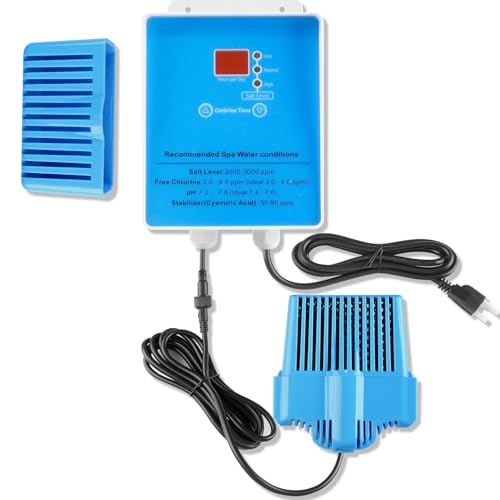
Saltwater hot tub systems generate continuous low levels of pure chlorine through electrolytic generator cells, but they still benefit from supplemental shock. Heavy bather loads can consume chlorine faster than a standard salt cell can generate it, creating temporary sanitizer deficits. Adding an oxygen-based shock oxidizer eliminates organic waste rapidly without requiring you to run your salt cell at maximum output. Reducing generator stress extends the operational life of the expensive titanium salt cell while keeping water pristine.
Spas equipped with modern ozone generators or ultraviolet sanitizing tubes integrate seamlessly with routine shock treatments. These supplemental hardware purifiers continuously destroy organic contaminants as water circulates through the equipment chamber, reducing your total chemical consumption. However, ozone and UV systems only treat water passing directly through internal plumbing and leave zero residual sanitizer inside the open bather vessel. Performing a regular shock application ensures that free-floating bacteria and surface contaminants are thoroughly oxidized across every square inch of your spa.
Establishing a Sustainable Long-Term Maintenance Schedule
Establishing a dependable chemical maintenance schedule prevents water quality emergencies before they develop. Designate a specific day each week to test parameters, adjust baseline pH, and administer a routine non-chlorine shock treatment. Maintaining this steady cadence prevents organic residues from building into resilient plumbing biofilms that resist standard sanitizing levels. Proactive water care also reduces the overall volume of harsh chemicals needed, creating a more comfortable soaking environment for your entire family.
Pairing chemical shocking with consistent filter cleaning cycles ensures peak hydraulic performance and long equipment lifespan. Pleated cartridge filters capture the oxidized organic particles and coagulated debris generated during every shock cycle. Inspect and hose down your filter cartridges bi-weekly, and perform a deep chemical soak every few months to remove embedded oils. Clean filters allow high-flow circulation pumps to circulate water freely without triggering flow switch error codes or unnecessary heating delays.
Mastering the timing, chemistry, and execution of spa shocking empowers you to maintain immaculate water with minimal effort and frustration. Selecting high-quality oxidizers matched to your sanitizer system preserves equipment integrity while eliminating stubborn odors and cloudy water. Always remember to keep your cover fully open during oxidation, balance baseline alkalinity beforehand, and verify safe sanitizer levels before stepping into the water. Following these practical principles guarantees that your backyard hot tub remains a pristine sanctuary of soothing hydrotherapy and effortless relaxation.


Write Your Review
No reviews yet. Be the first to share your experience!