


Stepping into a warm spa after a demanding day should offer immediate physical relief, but thick layers of persistent suds can quickly ruin the soaking experience. Understanding how to reduce bubbles in hot tub plumbing and surface water starts with identifying whether the agitation comes from natural hydrotherapy aeration or chemical contamination. While normal jet action creates light bubbles that pop within seconds, oily residues and laundry detergents trap air in durable pockets that linger across the entire water surface.
Unbalanced sanitizers, low calcium hardness, and dissolved organic compounds frequently combine to create stubborn surface foam that standard filtration cannot trap. Protecting your spa with an insulated spa cover with warranty protection keeps airborne pollen and yard debris from aggravating these chemical imbalances between soaking sessions. By combining targeted defoamer concentrates with steady sanitizer balancing and regular plumbing line flushes, spa owners can restore crystal water clarity without having to drain hundreds of gallons every time suds appear.


Pros
- Combines cleaner, clarifier, and conditioner to reduce the number of separate specialty chemical bottles needed
- Does not require draining the spa, making it practical for cold-weather maintenance when draining is risky
- Compatible with standard chlorine and bromine sanitizing systems
- Helps dislodge hidden oils and line buildup that standard sanitizers alone may struggle to clear
Cons
- Does not replace primary sanitizers such as chlorine or bromine and must be used as a supplement
- Initial treatment can release accumulated plumbing grime, requiring extra filter rinsing and waterline wiping
- At 16 fluid ounces per bottle, owners of larger spas may need frequent reorders for year-round weekly dosing
Oh Yuk 5-in-1 Hot Tub Cleaner, Clarifier, and Conditioner is a multi-purpose liquid water treatment designed to streamline routine spa maintenance without draining the tub. It serves spa owners, rental property operators, and busy households who want to prevent cloudy water and line buildup alongside their regular sanitation routine. Rather than managing separate bottles of clarifier, plumbing line maintenance, and water softeners, this single 16-ounce formulation tackles multiple water quality challenges at once.
In daily hot tub ownership, bather loads introduce body oils, lotions, and organic residues that coat plumbing walls and create dull, cloudy water. This 5-in-1 formula actively suspends and lifts those trapped residues, allowing the built-in clarifier to coagulate fine debris so your filter cartridge can capture it. It also conditions the water to improve overall water feel, making soaks feel noticeably smoother without altering primary sanitizer baselines. Because it works without requiring a water drain, it proves especially valuable during freezing winter months when draining and refilling a spa is inconvenient or hazardous.
A crucial factor in hot tub water chemistry is chemical compatibility, and this product is engineered strictly as a supportive supplement rather than an EPA-registered sanitizer. It is formulated to work seamlessly with standard chlorine or bromine maintenance systems. It will not eliminate the need to test and balance free sanitizer, pH, or total alkalinity. Instead, by neutralizing organic residues and keeping plumbing lines clearer, it helps your primary sanitizer work more efficiently without being consumed prematurely by hidden organic contaminants.
Applying the treatment is straightforward, but users should prepare for the way deep-cleaning additives interact with existing buildup. During the first few doses, especially in older spas or tubs with heavy bather traffic, the formula may purge accumulated oils and residue from the plumbing into the main footwell. Spa owners should anticipate wiping down the waterline with a clean cloth and removing the filter cartridge for a thorough rinse 24 to 48 hours after application to prevent dislodged debris from re-circulating.
While the formula simplifies maintenance, it comes with practical limitations that every hot tub owner should understand. The 16-ounce bottle size provides a compact footprint for spa caddies, but frequent weekly dosing across large multi-person hot tubs means a single bottle may deplete quickly. Furthermore, this maintenance product is not an emergency purge flush intended for complete tub draining, nor will it correct severe chemical imbalances caused by neglected calcium hardness or erratic pH levels.
Oh Yuk 5-in-1 Hot Tub Cleaner is best suited for hot tub owners who want to minimize weekly water care steps and preserve water clarity without dumping their water. Before purchasing, verify your spa sanitation setup to confirm you have an established chlorine or bromine routine in place, and ensure you have spare filter cartridges or cleaning tools ready to handle any dislodged residue from the initial treatment.
Using this 5-in-1 treatment on a weekly schedule helps control the organic film and cosmetic oils that normally accumulate on hot tub acrylic and inside internal jet lines. Regular use prevents stubborn waterline rings from setting, which reduces the need for aggressive scrubbing pads that could scratch spa shell surfaces.
Because the built-in clarifier groups micro-particles together for mechanical removal, filter care is directly tied to the success of this treatment. Hot tub owners should inspect and rinse their pleated filter cartridges with clean water shortly after dosing, as the filter media will trap an increased amount of suspended matter once the clarifier takes effect.
Oh Yuk 5-in-1 is formulated to work in harmony with traditional hot tub sanitizers, specifically standard chlorine and bromine water care regimens. It does not replace residual sanitizers, oxidizers, or shock treatments, meaning regular testing of free available sanitizer levels remains necessary.
Adding this conditioner and clarifier assists in maintaining consistent water chemistry by reducing organic demand on the sanitizer. Always ensure your hot tub water is properly balanced for pH and total alkalinity before introducing specialty water conditioners to achieve the best clarity and water feel.


Eliminating Hot Tub Foam and Controlling Persistent Bubbles
Persistent bubbles and heavy foam are among the most frequent water care frustrations spa owners encounter during routine operation. When hydrotherapy pumps push water through venturi air injectors, the resulting physical aeration should dissipate almost immediately upon reaching the surface. When contaminants alter the surface tension of the water, those air bubbles become coated in oily films or surfactant molecules, transforming healthy hydrotherapy action into an unsightly layer of suds that refuses to pop.
Distinguishing Normal Hydrotherapy Jets from Problematic Foam
Every hot tub relies on an aeration process to deliver invigorating hydrotherapy massage through its jet nozzles. Venturi valves mix ambient air with pressurized water streams, creating thousands of small, energetic bubbles that collide with tired muscles. In balanced, clean spa water, these mechanical air bubbles rise to the waterline and burst within two to five seconds of leaving the jet nozzle. They never pile up into thick, spongy layers or leave sticky residues along the acrylic shell.
Problematic foam behaves in a completely different manner because chemical surfactants alter the cohesion of the water. Instead of bursting immediately, contaminated bubbles form a dense, persistent blanket that can rise several inches above the waterline once the high-speed pump engages. This foam often feels slippery between the fingers and may carry an off-white, yellowish, or slightly brown discoloration. If turning off the jet pump leaves a frothy mat floating on the calm water surface, your spa is experiencing chemical foaming rather than standard air aeration.
Recognizing this distinction saves substantial time during water troubleshooting. Turning down the top-side air control dials will immediately reduce mechanical bubble volume if you simply want a calmer soak. If the suds remain thick even when air controls are fully closed, chemical surfactants are actively holding the water surface tension hostage. Addressing that issue requires chemical intervention rather than mechanical adjustment.
Chemical Contaminants and Surfactant Buildup
Surfactants are compounds that lower the surface tension between two liquids or between a liquid and a gas. In a hot tub environment, the most common source of surfactants is residual laundry detergent trapped inside bathing suits. Standard washing machines rarely rinse out all commercial detergents, especially liquid fabric softeners. When heated spa water interacts with these fabrics under high pump pressure, the trapped detergent dissolves directly into the water, creating an active bubble bath environment.
Personal care products present an equally troublesome source of foaming agents. Body lotions, cosmetic foundations, hair conditioners, deodorants, and sunscreens contain synthetic oils and emulsifiers designed to adhere to human skin. High water temperatures open skin pores and wash these cosmetic compounds into the plumbing lines. As water circulates through narrow pipe manifolds, the shear forces blend these oils into a stable froth that resists normal oxidation.
Organic bather waste, including perspiration and shed skin cells, also contributes to total dissolved solids that stabilize surface foam over time. When bather load is heavy and primary sanitizer levels dip below recommended parameters, these organic compounds accumulate rapidly. The water loses its natural ability to self-cleanse, resulting in persistent froth every time hydrotherapy pumps run on high speed.
Immediate Relief with Dedicated Anti-Foam Concentrates
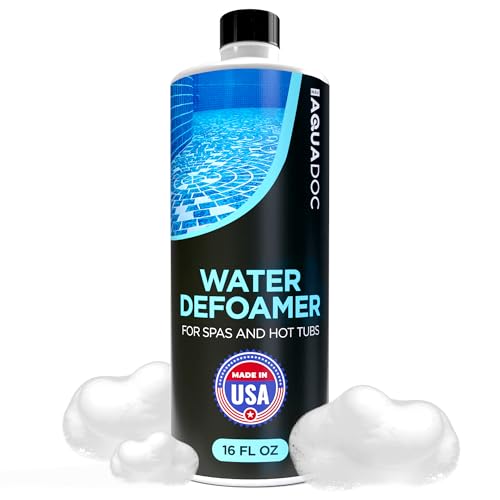
When unexpected suds threaten an evening soak with family or guests, fast-acting defoamer concentrates provide an effective temporary solution. Products such as AquaDoc Hot Tub Defoamer utilize specialized silicone-based compounds or food-grade emulsions that rapidly alter the surface tension of the bubbles. When applied across the foamy surface, the concentrate causes the bubble walls to destabilize instantly, collapsing the suds back into clear water within seconds.
Application requires careful measurement to avoid compounding water balance issues. The recommended protocol involves adding one to three ounces of anti-foam concentrate directly over the foamy areas while the primary circulation pump runs. Running the jets for at least five minutes allows the defoamer to disperse evenly through the plumbing manifolds and across the entire shell footprint. Adding too much defoamer can actually worsen water cloudiness, so owners should stick strictly to measured doses rather than pouring freely from the bottle.
Spa owners must understand that defoamer concentrates are symptom controllers rather than permanent cures. A high-quality anti-foam agent knocks down existing suds so you can enjoy your hot tub immediately, but it does not remove the underlying detergents or oils from the water. Think of defoamer as a practical tool for guest readiness while you plan a more thorough water correction.
Weekly Maintenance with Multi-Action Clarifiers and Cleaners
Preventing recurrent bubble problems over weeks of regular soaking requires comprehensive water care additives. Formulations like Oh Yuk 5-in-1 Hot Tub Chemicals, Cleaner act simultaneously as clarifiers, cleaners, and water conditioners. Rather than merely popping bubbles at the surface, these multi-action treatments work alongside primary chlorine or bromine sanitizers to coagulate microscopic contaminants into larger clusters that the paper filter pleats can physically capture.
Similarly, all-in-one maintenance solutions like BubbyShine 5-in-1 Weekly Hot Tub Chemicals introduce natural enzyme complexes into the spa ecosystem. Enzymes target the complex molecular bonds of non-living organic matter, such as body oils, cosmetic residues, and sweat. By breaking these contaminants down into simple carbon dioxide and water, enzyme treatments eliminate the raw food supply that stabilizes stubborn foam.
Establishing a dependable weekly schedule is straightforward. Adding four ounces of multi-action treatment per five hundred gallons of water and running the jets for fifteen minutes circulates the active ingredients thoroughly. On older or heavily used spas, the initial application may loosen hidden oils from the plumbing lines, creating a slight temporary ring around the waterline. Simply wiping the acrylic edge with a microfiber cloth and rinsing the filter cartridge restores clean operational balance.
Balancing Water Parameters: Calcium, Alkalinity, and pH
Imbalanced basic water chemistry is a frequently overlooked driver of chronic hot tub bubbles. In particular, low calcium hardness makes water feel soft and increases its foaming potential. When calcium hardness levels drop below one hundred fifty parts per million, water behaves much like household distilled water, lathering aggressively whenever soap traces or air turbulence are introduced. Maintaining calcium hardness between one hundred fifty and two hundred fifty parts per million provides the necessary mineral weight to keep surface suds suppressed.
Total alkalinity and pH also play critical roles in bubble formation and water stability. Total alkalinity acts as a chemical buffer, preventing sudden fluctuations in pH. When alkalinity drifts below eighty parts per million or spikes above one hundred twenty parts per million, pH control becomes erratic. An excessively high pH reduces the killing efficacy of free chlorine, allowing organic contaminants to accumulate without being oxidized.
To establish a stable baseline, test your spa water with reliable liquid reagent kits or fresh test strips at least twice weekly. Adjust total alkalinity first using sodium bicarbonate to achieve the eighty to one hundred twenty parts per million window. Once alkalinity stabilizes, adjust pH into the ideal range of 7.2 to 7.8 using sodium bisulfate to lower or sodium carbonate to raise the level. Properly balanced water maximizes sanitizer performance and significantly reduces surface tension anomalies.
Deep Plumbing Purges and Biofilm Remediation
Hot tubs contain dozens of hidden plumbing lines, flex hoses, and diverter manifolds behind the cabinet walls. Over months of regular operation, organic matter, dead skin cells, and cosmetic oils bond together inside these dark, warm pipes to create a sticky matrix known as biofilm. This accumulation harbors bacteria and continuously sheds organic surfactants into the circulating water, causing foam to reappear even after the water is fresh and properly balanced.
Standard surface sanitizers like free chlorine or bromine cannot effectively penetrate mature plumbing line buildup on their own. Performing a dedicated plumbing purge using a concentrated pipe cleaner strips these sticky deposits from the internal pipe walls. You add the purge chemical directly to the warm water before an scheduled drain, open all diverter valves, and run the hydrotherapy pumps on high speed for several circulation cycles. The formula scours the pipe interiors, pushing dark, foaming gunk into the main tub body where it can be completely drained away.
Scheduling a line purge every three to four months before refilling prevents long-term contaminant accumulation. After purging, rinsing the acrylic shell thoroughly removes loosened residues before fresh tap water enters the system. Protecting the cleared tub with a foldable thermal spa cover prevents airborne dust from reintroducing unwanted organic material while the fresh fill stabilizes.
Cartridge Filter Degreasing and Circulation Timing
The spa filter cartridge serves as the primary physical barrier against circulating contaminants, but a saturated filter quickly exacerbates foaming issues. Pleated filter media captures suspended oils and coagulated debris until the fabric pores become clogged. Once saturated, oily films begin washing back into the active water stream, where pump impellers churn them into persistent bubbles. Merely spraying a filter with a garden hose rinses away large dirt particles, but it cannot dissolve oily cosmetic residues embedded deep in the polyester fabric.
A thorough filter maintenance routine requires chemical degreasing on a monthly basis. Submerge the cartridge in a dedicated filter cleaner solution mixed with warm water for at least twelve hours. The degreasing solution breaks down body oils, lotion residues, and scale deposits without fraying the structural pleats. After soaking, rinse the cartridge thoroughly with high-pressure water until no soapy runoff remains, allowing it to dry completely before returning it to the filter well.
Adequate filtration run time is equally essential for bubble prevention. Spas should run low-speed circulation cycles for at least six to eight hours each day, or continuously if equipped with a dedicated low-wattage circulation pump. Extended circulation ensures that water passes through the filter media frequently enough to capture coagulated particles before they assemble into thick surface mats.
Bather Habits and Laundry Detergent Control
Preventative bather etiquette eliminates the vast majority of foaming causes before anyone ever enters the water. Designating specific swimsuits exclusively for hot tub use is one of the most effective strategies an owner can adopt. Instead of running these suits through a standard washing machine with scented detergents and liquid fabric softeners, rinse them thoroughly with plain warm water after each soak and hang them to dry. Eliminating detergent residue from bathing fabrics prevents nearly eighty percent of common foaming outbreaks.
Encouraging a quick pre-soak shower removes lotions, deodorants, perfumes, and natural body oils that otherwise transfer directly into the spa water. Even a thirty-second rinse under clean tap water strips away surface cosmetics that would otherwise exhaust sanitizer reserves. For guests with long hair, tying hair up or wearing a swim cap keeps conditioners and leave-in styling products from dissolving into the suction intakes.
Environmental maintenance around the tub perimeter also keeps organic matter out of the hydraulic circuit. Keeping patio pavers clean and using a durable patio hot tub cover seals the water surface against lawn clippings, tree sap, and wind-blown dirt. The less external organic material enters the tub, the lower the chemical demand remains on your primary sanitizing system.
Knowing When to Drain and Refill the Spa
Every hot tub eventually reaches a point where chemical additions can no longer correct severe bubble accumulation. As water evaporates and chemicals are added over weeks of use, the total dissolved solids (TDS) level steadily increases. When TDS climbs more than one thousand five hundred parts per million above the source fill water, the water becomes completely saturated with dissolved salts, minerals, and organic byproducts. In this saturated state, defoamers fail to work, clarifiers cloud the water, and even high sanitizer doses struggle to keep suds at bay.
Most residential hot tubs require a complete drain, clean, and refill every three to four months under normal soaking schedules. A practical formula to calculate drain frequency is dividing total spa gallons by three, then dividing that result by the average daily bather count. For example, a four-hundred-gallon tub used by two people each day should be completely drained approximately every sixty-six days to maintain optimal water feel and prevent stubborn foaming.
When refilling your hot tub, always use an inline hose pre-filter to trap incoming iron, copper, and sediment before it reaches the acrylic shell. Place the hose directly into the empty filter well so water fills the internal plumbing from the bottom up. This prevents air locks from forming inside the pump wet end, ensuring smooth, surge-free circulation the moment you power the system back up at the main breaker.
Managing surface suds does not require complex mechanical repairs or endless chemical purchases. By recognizing the difference between natural jet aeration and surfactant foam, deploying concentrated defoamers for rapid relief, and maintaining disciplined water chemistry alongside clean bather habits, you can keep your hot tub water crystal clear, inviting, and free of frustrating bubble blankets all season long.






Write Your Review
No reviews yet. Be the first to share your experience!