


Clear, sparkling spa water requires a consistent maintenance schedule rather than occasional corrective doses. Unbalanced water chemistry can quickly cause persistent foam, cloudy water, unpleasant odors, and scale deposits on critical heating elements. Learning how to maintain a spa or hot tub allows spa owners to protect expensive mechanical components while keeping bathers comfortable. Establishing a dependable care routine preserves water quality, reduces equipment wear, and ensures your hot tub remains ready for daily relaxation.
Daily and weekly tasks revolve around testing sanitizer levels, rinsing pleated filter cartridges, and monitoring total alkalinity alongside pH. Beyond basic chemical additions, mechanical components like circulation pumps and ozonators require routine inspection to prevent flow errors and heater dry-fire conditions. Pairing good water sanitation with a high-grade outdoor patio hot tub cover also prevents environmental debris from overwhelming your filtration system. Understanding the balance between chemical management, physical filtration, and seasonal upkeep forms the foundation of effortless hot tub ownership.

Pros
- Compatible with all major spa sanitizers including chlorine, bromine, and biguanide
- Improves filter media efficiency by binding fine particles that normal cartridges miss
- Concentrated formula requires relatively small doses per treatment
- Compact bottle footprint fits easily into standard outdoor storage cabinets
Cons
- Requires clean filter cartridges to capture coagulated debris without restricting water flow
- Does not resolve cloudiness caused by severely unbalanced pH, total alkalinity, or zero sanitizer
- Liquid format requires careful measuring to prevent accidental over-treatment
HTH Spa 86121 Clarifier is a concentrated liquid water-care treatment designed to clear dull, hazy water in portable and built-in hot tubs. This maintenance product serves first-time hot tub owners, busy families, and vacation rental managers who need a dependable way to restore water clarity after heavy bather loads without having to perform an immediate, water-wasting drain and refill.
Microscopic particles such as dead algae, lotions, cosmetic residues, and fine environmental dust often bypass standard hot tub cartridge filters due to their tiny particle size. HTH Spa Clarifier acts as a coagulant, combining those microscopic floaters into larger masses that your filtration system can easily snare during standard circulation cycles. This action directly supports filter efficiency and helps keep water looking transparent and inviting.
Chemical compatibility is a critical consideration for any spa additive, and this formula is designed to work across diverse sanitation programs. HTH lists compatibility with chlorine, bromine, and biguanide sanitizers, making it versatile for virtually any residential spa setup. The 16-ounce bottle weighs approximately one pound and measures 2.46 by 2.46 by 7.85 inches, allowing it to fit neatly inside outdoor storage bins, hot tub steps with storage compartments, or utility shelves.
Application fits easily into standard spa care routines. Adding the recommended dose while the circulation pump or low-speed jets are active distributes the liquid evenly across the spa volume. After the clarifier binds suspended debris and directs it toward the filter, owners should plan to rinse or chemically wash their filter cartridges within a day or two to remove the collected solids and maintain optimal circulation pressure.
While clarifiers are effective at targeting physical haze, they cannot substitute for fundamental water balancing. If cloudy water is driven by incorrect total alkalinity, skewed pH levels, or an absence of active sanitizer, those underlying chemistry issues must be corrected first. Furthermore, overdosing clarifier can occasionally cause foaming or reverse cloudiness, meaning precise measurement remains necessary during application.
For owners seeking a low-cost, straightforward tool to maintain polished, sparkling water between scheduled drain intervals, HTH Spa Clarifier is a practical addition to the maintenance cabinet. Verifying that your spa filter is clean and that water balance parameters are within normal ranges before pouring will deliver the clearest results.
HTH Spa Clarifier is formulated for broad chemical compatibility, allowing safe use alongside chlorine, bromine, and biguanide sanitizing programs. This flexibility prevents chemical conflict and makes it suitable for both standard residential tubs and rental property installations utilizing different sanitation preferences.
For optimal results, ensure the hot tub water has balanced pH and active sanitizer levels before adding the clarifier. Activating low-speed filtration jets while dosing ensures the liquid disperses thoroughly across the water column to bind tiny particles uniformly.
Because this clarifier gathers microscopic contaminants so that the spa filter can catch them, regular filter maintenance is essential after treatment. Thoroughly rinsing your cartridge pleats with clean water after running the cycle prevents coagulated debris from causing filter restriction.
Store the 16-ounce bottle in a cool, dry, and well-ventilated area away from direct sunlight. Ensuring the cap is tightly secured after each use preserves chemical potency and prevents accidental leakage inside your spa storage box or cabinet.

Pros
- Fast-dissolving sodium dichlor formula leaves minimal residue in heated spa water
- Specifically formulated for spa water temperatures and chlorine sanitizing systems
- Five-pound container provides a practical supply for ongoing routine water care
- EPA-approved formulation effectively targets algae growth and organic bather waste
Cons
- Designed strictly for chlorine-based setups and not compatible with non-chlorine or biguanide systems
- Continuous use gradually builds cyanuric acid in hot tub water, requiring standard periodic drain-and-refill cycles
- Requires careful dosing and routine water testing to avoid over-chlorination or chemical vapor buildup
Leisure Time Spa 56 Chlorinating Granules provide a dedicated sanitizing solution designed specifically for residential hot tubs and spas operating on chlorine water-care systems. Unlike standard swimming pool chemicals that may dissolve too slowly or alter chemistry unpredictably in small bodies of heated water, this formula is tailored for the high temperatures and rapid agitation of hot tubs. It suits first-time spa owners, vacation rental hosts, and established hot tub users seeking an EPA-approved sanitizer that maintains clean, clear water without complicated dosing steps.
Daily hot tub maintenance requires dependable control over organic waste introduced by bathers, including perspiration, body oils, and environmental residues. Spa 56 addresses these contaminants using fast-dissolving granules that disperse quickly across the water when circulation jets run. Rapid solubility is a significant advantage in acrylic spas because it minimizes the risk of undissolved chemical particles settling on the bottom shell or bleaching headrests and plastic fittings, helping to protect internal spa surfaces while re-establishing necessary sanitizer residual levels.
The active chemical agent in this formula is Sodium Dichloro-s-Triazinetrione Dihydrate, widely known as sodium dichlor. This stabilized chlorine compound resists degradation from heat and sunlight while providing active sanitizing power to clear cloudy water and inhibit algae growth. Packaged in a sturdy 5-pound bottle with exterior dimensions of 4.75 by 4.75 by 11.5 inches, this size offers an economical supply that minimizes frequent reordering for owners who use their spa regularly throughout the year.
Proper application habits are essential not only for water safety but also for the longevity of your hot tub cover and accessories. Whenever introducing chlorinating granules to the spa, the hot tub cover should remain fully off or folded back with circulation jets active for at least fifteen to twenty minutes. Allowing chemical vapors to off-gas freely prevents corrosive chloramine fumes from becoming trapped underneath the cover, which helps protect the underside vinyl, vapor barrier seals, and foam core from premature degradation.
While sodium dichlor provides reliable sanitizing performance, realistic chemical considerations come with its routine use. Dichlor naturally introduces cyanuric acid (CYA) as a stabilizing agent, meaning CYA levels will gradually rise over months of repeated dosing. Once stabilizer concentrations become elevated, chlorine efficiency drops, making periodic water drain-and-refill intervals necessary every three to four months. In addition, this product must never be mixed directly with alternative sanitizers such as bromine or biguanide systems.
Leisure Time Spa 56 is a reliable, practical choice for any hot tub owner maintaining a chlorine-sanitized spa environment. Before adding this product to your maintenance regimen, verify that your hot tub relies on a chlorine sanitizing routine, and keep a dependable test strip kit on hand to monitor free available chlorine, pH, and total alkalinity levels before dosing.
Consistent water sanitation with Leisure Time Spa 56 plays a key role in protecting the structural integrity of your hot tub accessories and cover. Unbalanced water or neglected sanitizing schedules can lead to organic buildup, scum lines, and mildew along cover skirts and headrests, while excessive chemical buildup can accelerate wear on acrylic surfaces and filtration media.
To ensure optimal water quality while safeguarding your spa components, always test water balance before adding granules and allow the tub to circulate with the cover open during initial dosing. Storing the 5-pound container in a cool, dry area away from direct sunlight will preserve granular potency and maintain reliable performance throughout the lifespan of the bottle.
Pros
- Effectively dislodges stubborn pipe residue and organic buildup prior to draining
- Improves jet performance and circulation efficiency throughout the entire plumbing system
- Helps eliminate recurring foam and chemical demand caused by dirty internal lines
- Compatible with both indoor and outdoor hot tubs as well as larger swim spas
Cons
- Requires a full water drain and shell wipe-down after the cleaning cycle is completed
- Not an in-use water treatment, so the hot tub cannot be used while the cleaner is circulating
- Very large swim spas or heavily neglected plumbing may require more than one 16-ounce bottle depending on dosing instructions
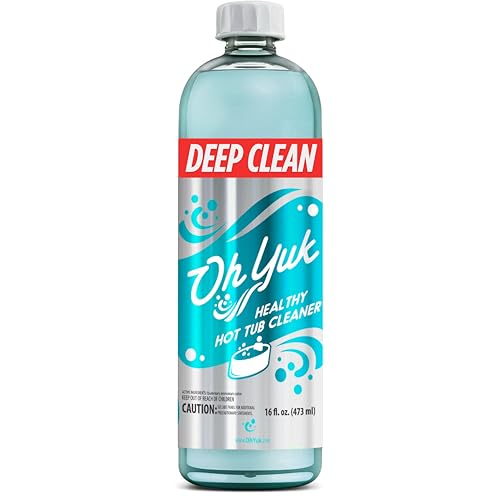
Oh Yuk Healthy Hot Tub Cleaner is a concentrated 16-fluid-ounce plumbing flush formulated to purge interior pipe walls, jet lines, and circulation fittings in indoor and outdoor hot tubs, portable spas, and swim spas. It is engineered specifically for homeowners, vacation rental operators, and regular spa owners preparing for a scheduled drain-and-refill cycle who want to eliminate the hidden organic waste that normal filtration and sanitizing tablets leave behind.
Hidden pipe buildup and accumulated body oils inside circulation lines are frequent culprits behind recurring cloudy water, surface foaming, and weakened jet pressure. By penetrating the interior plumbing pathways, this cleaner lifts and suspends embedded contaminants so they circulate out into the main footwell. This deep purge enables fresh water treatments to work much more effectively after refilling, since sanitizers no longer have to expend oxidation power fighting hidden line residue.
Circulation line maintenance directly benefits mechanical equipment by helping water move freely through pumps, heaters, and filter manifolds. When plumbing lines remain free of restrictive film and buildup, circulation pumps operate with less backpressure, allowing filter cartridges to trap suspended solids cleanly and consistently without unnecessary mechanical strain.
Using a plumbing cleaner requires timing your application around a complete water change, as the dislodged residue must be drained from the spa shell after running the jets. Hot tub owners should expect to wipe down the acrylic surface and water line once the tub empties, removing any residual oils before rinsing and refilling with fresh tap water.
While the 16-ounce bottle provides convenient handling for standard backyard spas, owners of oversized swim spas or tubs with years of neglected plumbing should check manufacturer dosage directions to ensure adequate volume. Furthermore, this product is designed purely as an evacuation flush before draining, meaning bathers must wait until the tub is emptied, rinsed, and refilled with fresh, balanced water before soaking.
For spa owners battling persistent water cloudiness or those establishing a dependable seasonal maintenance schedule, Oh Yuk Healthy Hot Tub Cleaner delivers a practical way to reset circulation lines. Verifying your spa water capacity and having clean towels or sponges ready to wipe the shell after draining ensures a smooth cleaning process and pristine water for your next soak.
Using Oh Yuk Healthy Hot Tub Cleaner is most effective when coordinated with your regular quarterly drain-and-refill schedule. Remove your filter cartridges prior to running the cleaner through the system to avoid trapping heavy dislodged gunk inside your primary filter pleats.
Turn on all jet pumps and allow the cleaner to circulate thoroughly through all plumbing lines according to the manufacturer label directions. Once the cleaning cycle finishes, drain the spa completely and wipe down the acrylic shell to remove any lifted oils and residue before refilling with fresh water.

Pros
- Coagulates micro-particles so standard spa cartridge filters can trap fine debris
- Designed to clarify cloudy water without altering overall pH balance
- Simple application procedure using active spa jets for rapid circulation
- Compact 1-pint bottle is easy to store alongside routine hot tub chemicals
Cons
- Requires a clean, functioning filter cartridge to physically remove the clumped debris
- Over-dosing can lead to temporary haziness, requiring careful measurement based on spa gallon capacity
- Does not replace primary sanitizers or shock treatments for bacteria and heavy organic buildup
AquaDoc Hot Tub Clarifier is a concentrated liquid treatment designed to clear cloudy water and support routine cartridge filtration. It best suits hot tub owners, vacation rental hosts, and busy homeowners who experience dull or hazy water resulting from bather load, body lotions, or fine airborne debris. Instead of waiting for microscopic suspended solids to slowly cycle out through standard circulation, this formula acts as a coagulant to bundle tiny particles together so spa filters can trap them efficiently.
Microscopic dirt particles are frequently smaller than the micron rating of standard hot tub cartridge filters, allowing them to bypass filter pleats and keep the water looking hazy. AquaDoc works by attracting these micro-particles like a magnet, creating larger agglomerations that the filter media can physically catch. Running spa jets and blowers during application accelerates circulation, allowing the treatment to disperse evenly throughout the tub and push debris toward the skimmer intake.
Maintaining water balance is a central part of spa ownership, and chemical additions that swing pH can trigger scale or skin irritation. This clarifier is formulated to clear water without upsetting established pH levels, which helps avoid cascading chemical adjustments. By pulling floating debris out of suspension, it helps cartridge filters capture dirt effectively, though regular filter rinsing remains essential to flush away the collected material.
Applying the clarifier fits easily into weekly spa care routines without complicated steps. The manufacturer directions suggest adding 2 ounces for every 800 gallons of water while the jets or blowers are active, continuing filtration until the water turns clear. For standard residential tubs, which often hold between 300 and 450 gallons, measuring out roughly 1 ounce twice a week provides consistent water maintenance without over-treating.
While clarifiers improve mechanical filtration, they are not a substitute for proper sanitizer levels, oxidizers, or routine filter cleaning. If a hot tub filter cartridge is already loaded with oils or scale, adding a clarifier will yield limited results until the filter is thoroughly rinsed or degreased. Additionally, overdosing clarifier can have an inverted effect, where excess polymers temporarily cloud the water, making accurate measurement essential.
AquaDoc Hot Tub Clarifier is a reliable, practical addition to any spa chemical cabinet for clearing minor haziness and supporting regular filtration. Before adding it to your spa, verify your water sanitizer levels, test baseline pH, and inspect your cartridge filter to ensure it is clean and ready to trap the gathered particles. Hot tub owners looking for a low-fuss way to preserve water clarity between water changes will find good everyday value here.
Using AquaDoc Hot Tub Clarifier effectively requires basic attention to spa capacity and filtration cycles. The listed dosage is 2 ounces for every 800 gallons of water, meaning most typical residential hot tubs holding 350 to 400 gallons require approximately 1 ounce per application. Adding the measured dose twice weekly with the circulation jets running ensures thorough dispersion across the entire spa shell.
Because the clarifier works by grouping tiny particles into larger debris, your spa filter cartridge does the physical work of removing the cloudiness from the water. Running the filtration cycle until the water clears is essential, followed by a quick garden-hose rinse of the filter pleats to prevent the trapped coagulants from restricting water flow.

Pros
- Contains all four foundational water-balancing chemicals plus 50 test strips in one package
- Compatible with acrylic, inflatable, and wooden spas across chlorine, bromine, and salt systems
- Helps prevent cloudy water, foaming, mineral scale, and heater corrosion caused by imbalanced water
- Manufactured in the USA with reliable, fast-dissolving water-care formulas
Cons
- Does not include primary sanitizers such as chlorine or bromine granules, which must be purchased separately
- Source water with extreme hardness or alkalinity may deplete specific individual bottles faster than the rest of the kit
- Requires careful incremental dosing and testing rather than one-size-fits-all application
The Bio Ouster Hot Tub Water Balancing Kit is an all-in-one water adjustment bundle designed for acrylic, inflatable, and wooden hot tubs. Proper water balance is critical for preventing mineral scale, heater corrosion, and bather discomfort, making this starter collection well suited for new spa owners, seasonal refills, and vacation rental hosts who need foundational water-care essentials in a single convenient package.
Maintaining balanced water chemistry requires managing several interconnected parameters, which this kit addresses through dedicated pH Up, pH Down, Alkalinity Increaser, and Calcium Hardness Increaser formulas. By adjusting total alkalinity first to buffer pH fluctuations, and raising calcium levels to protect internal spa plumbing and heating elements, hot tub owners can maintain clear water and protect their equipment investments.
Routine monitoring is supported by the 50 included test strips, which allow quick checks of pH, total alkalinity, and calcium hardness levels before adding any adjustment chemicals. The formulas are designed to work alongside standard sanitizing systems, including chlorine, bromine, ozone, and salt water configurations, without interfering with filtration systems or causing unwanted cloudy precipitation when added properly.
Integrating this kit into a routine hot tub maintenance schedule requires testing freshly filled or top-off water before adding chemicals in gradual increments. Because chemical demand varies depending on municipal tap water characteristics, tub volume, and bather load, spa owners should add adjustments incrementally with the water jets running to ensure thorough circulation and avoid overshooting targets.
A practical limitation to keep in mind is that this bundle is strictly a water-balancing kit and does not contain primary sanitizers such as chlorine or bromine. Additionally, owners with particularly hard or soft source water may find that one specific chemical depletes faster than the others, eventually requiring individual bottle replacements down the road.
Hot tub owners seeking a straightforward, Made-in-USA foundational chemistry package will find practical everyday value in the Bio Ouster water balancing starter kit. Before purchasing, ensure you have your preferred sanitizer on hand and plan to test your tap water before initial dosing to establish an accurate chemical baseline for your spa volume.
Proper water balancing begins with testing total alkalinity, which serves as the chemical buffer that stabilizes pH levels in your spa water. Using the included test strips, hot tub owners should adjust total alkalinity into the recommended range before fine-tuning pH with either pH Up or pH Down to prevent rapid chemical bounce.
Calcium Hardness Increaser is included to ensure water does not become aggressive or corrosive toward spa heating elements, pump seals, and plumbing fixtures. This is particularly relevant for owners in soft-water areas or those filling spas using whole-house water-softener systems where low calcium levels can accelerate metallic component wear.
The formulas are chemically neutral relative to sanitizers, meaning they can be used safely in spas treated with standard chlorine granules, bromine tablets, saltwater chlorination systems, or ozone generators. Always allow chemicals to circulate for at least twenty to thirty minutes before re-testing water or adding secondary treatment products.
Essential Protocols for Spa and Hot Tub Maintenance
Routine spa care relies on three connected pillars: water chemistry balancing, mechanical filtration maintenance, and periodic deep cleaning. Neglecting any single pillar places additional strain on the others, leading to cloudy water, skin irritation, or premature equipment failure. A structured routine makes hot tub maintenance straightforward and predictable, requiring only a few minutes several times each week. By approaching spa care systematically, owners can prevent common pitfalls like foaming, scaling, and circulation blockages before they start.
Testing and Establishing Core Water Chemistry Parameters
Accurate water testing provides the baseline data needed to prevent corrosion, scale accumulation, and bather discomfort. Testing strips or liquid test kits should be used at least two to three times per week to measure free sanitizer, pH, total alkalinity, and calcium hardness. Using a dedicated testing product like the strips included in the Bio Ouster Hot Tub Water Balancing Kit gives rapid feedback on water conditions. Testing should always be performed prior to adding any chemical treatments so that adjustments are based on current measurements rather than guesswork.
Total alkalinity serves as a chemical buffer that stabilizes pH, preventing rapid and erratic pH swings. The ideal range for total alkalinity in most residential spas spans between 80 and 120 parts per million. When alkalinity drops too low, water becomes acidic and corrosive, which can pit heater elements and irritate bather skin. Adding an alkalinity increaser stabilizes this buffer, making it much easier to hold the pH within its optimal range of 7.2 to 7.8.
Calcium hardness represents the concentration of dissolved minerals in the spa water and should ideally register between 150 and 250 parts per million. Water with low calcium hardness acts aggressively, drawing minerals directly from acrylic surfaces, gaskets, and metal fittings. Conversely, high calcium hardness leads to cloudy water, rough scaling on internal plumbing lines, and mineral crust on heating elements. Products like the calcium hardness increaser found in complete balancing starter kits allow owners to lock in safe mineral levels during initial fill cycles.
Sanitization Protocols and Oxidizing Organic Contaminants
EPA-registered sanitizers are essential for controlling bacteria, viruses, and algae growth in heated spa water. Dichlor granules, such as Leisure Time E5, Spa 56 Chlorinating Granules, represent a widely used sanitizer specifically formulated for hot water environments. This quick-dissolving sodium dichloro-s-triazinetrione dihydrate formula helps maintain clean, clear water without causing dramatic shifts in pH. Maintaining a consistent free chlorine level between 3.0 and 5.0 parts per million ensures adequate biocide protection against common waterborne contaminants.
High bather loads introduce sweat, body oils, lotions, and organic residues that rapidly consume available free chlorine. As chlorine bonds with these organic wastes, it forms combined chlorine, also known as chloramines, which produce strong chemical odors and cause eye irritation. Routine shock treatments oxidize these accumulated chloramines, breaking them down and freeing up active sanitizer to continue purifying the water. Shocking should typically occur once a week or immediately following heavy gatherings to maintain continuous clarity and sanitation.
Always add chlorinating granules or shock treatments directly to the water while the filtration jets run and the air controls remain off. Leaving the hot tub cover open for at least fifteen to twenty minutes after chemical addition allows off-gassing vapor to escape safely. Trapping caustic chemical fumes under a closed cover can degrade the underside vinyl and accelerate foam pillow deterioration. Waiting for sanitizer levels to stabilize below 5.0 parts per million before re-entering ensures safe and comfortable soaking conditions.
Resolving Turbidity with Concentrated Spa Clarifiers
Cloudy or dull water often results from tiny suspended particles that are too small for standard cartridge filters to catch. These microscopic particles can include dead algae cells, dissolved organics, and fine environmental dust that remain suspended in the water column. Water clarifiers, such as HTH Spa 86121 Clarifier, utilize coagulating agents to draw these microscopic particles together into larger clusters. Once grouped together, the enlarged particles become easily trapped by the pleated polyester media of the hot tub filter cartridge.
Another fast-acting option is AquaDoc Hot Tub Clarifier, which acts like an electrostatic magnet to bind micro-contaminants and eliminate haze. Clarifier products work best when added while the main circulation pumps and therapy jets are actively circulating the water. Most clarifier formulas require only small doses, such as a couple of ounces per several hundred gallons, to restore sparkling clarity. Overdosing clarifiers should be avoided, as excessive amounts of coagulant can actually create additional cloudiness or coat filter fabric prematurely.
Using a water clarifier twice per week as part of an ongoing care routine keeps water looking polished and extends the interval between deep filter cleanings. If water remains persistently cloudy despite proper sanitizer levels and clarifier doses, underlying issues like dirty filters or excessive total dissolved solids may be present. Clarifiers should always be viewed as mechanical filtration aids rather than replacements for primary EPA-registered sanitizers. Checking that the filter cartridge is clean before dosing clarifier ensures the dislodged clusters are effectively captured and removed from circulation.
Cartridge Filtration Maintenance and Cleaning Cycles
The filtration system functions as the mechanical lung of your hot tub, capturing debris, hair, and coagulated particles continuously. Most modern spas use pleated polyester cartridge filters designed to trap contaminants down to twenty or thirty microns. Rinsing the filter cartridge with a high-pressure garden hose once every week removes surface dirt and prevents debris from packing into the pleats. Regular weekly rinsing maintains strong water flow and prevents backpressure that can strain the primary circulation pump.
Water rinsing alone cannot dissolve the oily films created by body lotions, natural oils, and chemical residues that adhere to filter fabric. Once a month, the cartridge should be removed and soaked in a specialized filter cleaning degreaser solution for several hours. This deep-cleaning soak strips away trapped oils, opening up the micro-pores of the polyester fabric and restoring full water flow rates. After soaking, thoroughly rinsing the filter prevents leftover detergent residues from entering the spa and creating stubborn foam.
Restricted water flow caused by clogged filter cartridges frequently triggers error codes like FLO or low-flow warnings on digital control pads. When water flow drops below safety thresholds, internal pressure switches shut down the electric heater to prevent dry-fire element damage. Inspecting filter pleats for tears, cracked end caps, or collapsed cores ensures the filtration housing operates as engineered. Most manufacturers recommend replacing the pleated filter cartridge entirely every twelve to twenty-four months depending on bather usage and cleaning frequency.
Plumbing Line Purging and Biofilm Eradication
Hundreds of feet of flexible PVC tubing, jet manifolds, and fittings snake through the insulated cabinet of a modern hot tub. Over months of use, bather oils, dead skin cells, and microscopic residues collect along these internal pipe walls, forming a stubborn layer of biofilm. Standard sanitizers like chlorine and bromine struggle to penetrate this slimy matrix, which consumes active chemicals and leads to recurring cloudy water. Using a specialized plumbing flush, such as Oh Yuk Healthy Hot Tub Cleaner, dissolves this hidden buildup and purges jet lines effectively.
A plumbing purge should always be performed directly before draining the spa for a scheduled water replacement. To execute the flush, remove the filter cartridge, pour the cleaner into the warm water, and turn all jet pumps to high speed. Keep the air control valves closed during this cycle to maximize liquid scouring pressure through the internal plumbing lines. Running the jets for twenty to thirty minutes allows the cleaner to break loose dark deposits, oil rings, and residue that standard treatments miss.
Clearing plumbing manifolds restores optimal jet flow and allows subsequent chemical treatments to work with maximum efficiency. Clean plumbing reduces strain on circulation pumps, helping the equipment operate quietly and reliably over years of service. Once the purge cycle finishes, the dislodged grime floats to the surface and along the waterline, ready for complete evacuation during drainage. Performing this deep plumbing purge every three to four months ensures that fresh water fills an entirely clean internal plumbing system.
The Drain, Clean, and Refill Procedure
Even meticulously balanced spa water accumulates total dissolved solids, minerals, and chemical byproducts over time. When total dissolved solids exceed safe levels, water becomes difficult to balance, requiring excessive chemicals to maintain clarity. Most residential hot tubs should be completely drained, cleaned, and refilled every three to four months under normal soaking habits. High-turnover hot tubs or spas subject to heavy bather loads may require draining more frequently to maintain sanitary conditions.
Before initiating drainage, always cut power to the spa at the dedicated GFCI breaker panel to prevent accidental pump engagement. Water can be evacuated using the built-in gravity drain valve or accelerated significantly by using a submersible utility pump placed in the footwell. Once the vessel is empty, wipe down the acrylic shell using a soft microfiber cloth and a mild, non-abrasive spa surface cleaner. Avoid household detergents, bleach, or abrasive sponges, as these products can scratch acrylic finishes and introduce persistent foaming agents.
When refilling the hot tub, always place the garden hose directly into the empty filter housing compartment rather than the open footwell. Filling through the filter well forces water down into the internal plumbing manifolds, pushing trapped air pockets out through the jets. This filling technique effectively prevents air locks from stalling the circulation pump when electrical power is restored. Once the water level reaches the manufacturer fill line, turn on the breaker, activate the heater, and begin your fresh water balancing routine.
Thermal Cover Care and Heat Retention Management
A well-fitted thermal spa cover acts as the primary defense against heat loss, water evaporation, and airborne debris. Uncovered hot tubs lose up to seventy percent of their thermal energy through surface evaporation, driving up monthly electric utility bills. Investing in a durable insulated outdoor hot tub cover helps maintain consistent water temperatures even during harsh weather conditions. Clean the exterior marine vinyl monthly using a mild vinyl cleaner and UV protectant to prevent sun bleaching, cracking, and seam deterioration.
Inspect the underside vapor barrier regularly to ensure the expanded polystyrene foam core remains completely dry and sealed. Over time, caustic chemical fumes can penetrate worn vapor barriers, causing the internal foam cores to absorb water and become waterlogged. A waterlogged cover loses its insulating capability, becomes dangerously heavy to lift, and places excessive stress on lifter mounting brackets. Spa owners frequently choose a lightweight, foldable thermal spa cover to make daily handling manageable while ensuring a secure perimeter heat seal.
Ensure that all safety locking tie-down straps remain firmly anchored to the spa cabinet to prevent wind lift and unauthorized access. Clearing heavy snow accumulations or standing puddles from the center seam prevents foam cores from bowing or snapping under weight loads. Leaving the cover off for twenty minutes after chemical shock treatments prevents acidic vapors from degrading the underside stitching and vinyl backing. Routine cover maintenance protects expensive internal heating systems by maintaining tight thermal boundaries year-round.
Seasonal Preparations and Freeze Protection Safeguards
Freezing temperatures present serious risks to hot tub plumbing lines, pump volutes, and titanium heater manifolds. When water freezes inside closed PVC pipes, volumetric expansion can rupture manifolds, crack pump housings, and destroy internal seals. Most modern electronic control packs feature automated freeze protection modes that circulate warm water whenever internal temperature sensors detect near-freezing conditions. Ensuring that electrical power remains active and heating setpoints stay above fifty degrees Fahrenheit prevents expensive winter freeze emergencies.
If you plan to close the spa entirely for the winter, a rigorous winterization procedure must be followed to remove all moisture. After draining the vessel, a wet-dry vacuum set to blower mode must be used to purge residual water from every individual jet nozzle. Loosening pump unions and removing drain plugs allows trapped water to escape from the lowest points of the hydraulic circuit. Adding non-toxic propylene glycol spa antifreeze into the plumbing lines provides extra insurance against hairline freeze fractures.
For spas remaining open throughout the winter, inspecting water levels weekly prevents the circulation pump from pulling air beneath low skimmers. Maintaining water balance during cold months keeps heaters operating at peak thermal efficiency without building scale. Checking the topside control panel regularly ensures that no diagnostic error codes have interrupted scheduled filtration or heating cycles. Diligent winter monitoring guarantees uninterrupted hydrotherapy comfort and protects your long-term backyard investment.
Maintaining a spa or hot tub requires consistency, proper testing habits, and routine mechanical care rather than complex chemistry. By balancing total alkalinity, maintaining free chlorine residuals, and keeping filter cartridges clean, you eliminate the causes of cloudy water and equipment failure. Pairing clean plumbing lines with a well-maintained thermal cover preserves energy efficiency and extends the lifespan of pumps and heaters. Following these fundamental maintenance protocols ensures that every soak provides crystal-clear water, reliable warmth, and soothing hydrotherapy.






Write Your Review
No reviews yet. Be the first to share your experience!