
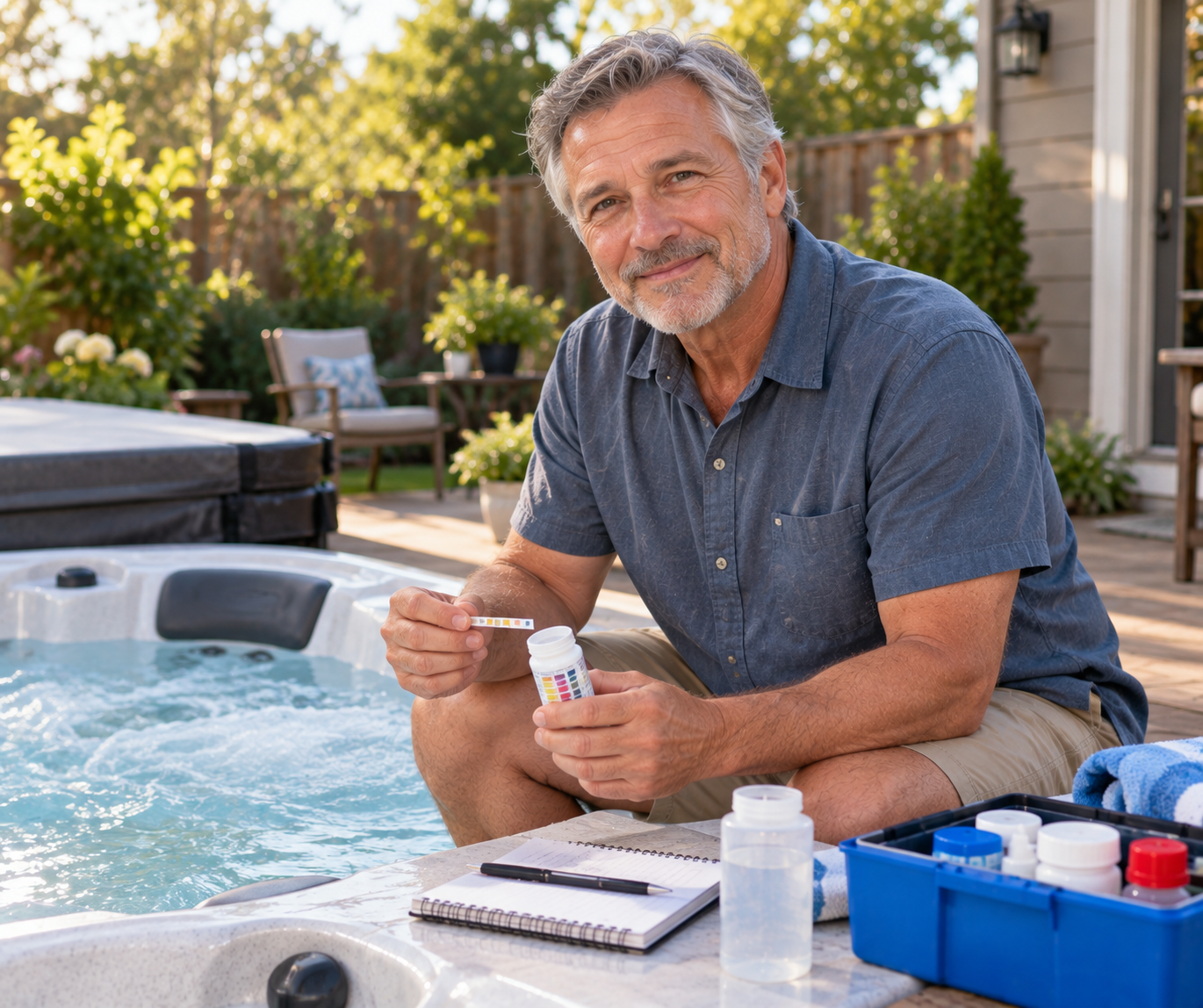

Testing your spa water only to watch the sanitizer pad instantly turn dark purple can stall an evening of hydrotherapy. High sanitizer levels irritate sensitive skin, cause respiratory discomfort, and rapidly bleach acrylic shells or corrode internal heater elements. Knowing how to drop chlorine in hot tub allows you to restore safe chemical equilibrium before soaking. Trapped chemical vapors also deteriorate the underside of a protective spa cover with warranty coverage, making proper ventilation and sanitizer management essential for preserving your investment.
Achieving the standard target range of 3 to 5 parts per million (ppm) free chlorine prevents equipment damage and eliminates the harsh chemical bite of over-sanitized water. Whether you accidentally added a double dose of chlorinating granules or shocked the water too heavily before a weekend gathering, several straightforward methods can reduce sanitizer concentrations. By understanding natural dissipation, water dilution, and balancing agents, you can safely reset your spa water chemistry without draining the entire vessel. Maintaining balanced water chemistry protects both your bathers and your spa components over the long term.




Pros
- Contains all four foundational water-balancing chemicals plus 50 test strips in one package
- Compatible with acrylic, inflatable, and wooden spas across chlorine, bromine, and salt systems
- Helps prevent cloudy water, foaming, mineral scale, and heater corrosion caused by imbalanced water
- Manufactured in the USA with reliable, fast-dissolving water-care formulas
Cons
- Does not include primary sanitizers such as chlorine or bromine granules, which must be purchased separately
- Source water with extreme hardness or alkalinity may deplete specific individual bottles faster than the rest of the kit
- Requires careful incremental dosing and testing rather than one-size-fits-all application
The Bio Ouster Hot Tub Water Balancing Kit is an all-in-one water adjustment bundle designed for acrylic, inflatable, and wooden hot tubs. Proper water balance is critical for preventing mineral scale, heater corrosion, and bather discomfort, making this starter collection well suited for new spa owners, seasonal refills, and vacation rental hosts who need foundational water-care essentials in a single convenient package.
Maintaining balanced water chemistry requires managing several interconnected parameters, which this kit addresses through dedicated pH Up, pH Down, Alkalinity Increaser, and Calcium Hardness Increaser formulas. By adjusting total alkalinity first to buffer pH fluctuations, and raising calcium levels to protect internal spa plumbing and heating elements, hot tub owners can maintain clear water and protect their equipment investments.
Routine monitoring is supported by the 50 included test strips, which allow quick checks of pH, total alkalinity, and calcium hardness levels before adding any adjustment chemicals. The formulas are designed to work alongside standard sanitizing systems, including chlorine, bromine, ozone, and salt water configurations, without interfering with filtration systems or causing unwanted cloudy precipitation when added properly.
Integrating this kit into a routine hot tub maintenance schedule requires testing freshly filled or top-off water before adding chemicals in gradual increments. Because chemical demand varies depending on municipal tap water characteristics, tub volume, and bather load, spa owners should add adjustments incrementally with the water jets running to ensure thorough circulation and avoid overshooting targets.
A practical limitation to keep in mind is that this bundle is strictly a water-balancing kit and does not contain primary sanitizers such as chlorine or bromine. Additionally, owners with particularly hard or soft source water may find that one specific chemical depletes faster than the others, eventually requiring individual bottle replacements down the road.
Hot tub owners seeking a straightforward, Made-in-USA foundational chemistry package will find practical everyday value in the Bio Ouster water balancing starter kit. Before purchasing, ensure you have your preferred sanitizer on hand and plan to test your tap water before initial dosing to establish an accurate chemical baseline for your spa volume.
Proper water balancing begins with testing total alkalinity, which serves as the chemical buffer that stabilizes pH levels in your spa water. Using the included test strips, hot tub owners should adjust total alkalinity into the recommended range before fine-tuning pH with either pH Up or pH Down to prevent rapid chemical bounce.
Calcium Hardness Increaser is included to ensure water does not become aggressive or corrosive toward spa heating elements, pump seals, and plumbing fixtures. This is particularly relevant for owners in soft-water areas or those filling spas using whole-house water-softener systems where low calcium levels can accelerate metallic component wear.
The formulas are chemically neutral relative to sanitizers, meaning they can be used safely in spas treated with standard chlorine granules, bromine tablets, saltwater chlorination systems, or ozone generators. Always allow chemicals to circulate for at least twenty to thirty minutes before re-testing water or adding secondary treatment products.
Practical Methods to Reduce Spa Chlorine Levels
Restoring high sanitizer levels requires an understanding of how chlorine degrades, evaporates, and interacts with spa water dynamics. Free chlorine naturally dissipates over time, but excessive levels require deliberate intervention to prevent skin burning, lung irritation, and acrylic damage. This guide examines passive dissipation, active mechanical dilution, chemical neutralizers, and water chemistry stabilization. Following these steps helps return your spa to safe soaking parameters without damaging equipment.
Why Chlorine Levels Spike and Safe Soaking Parameters
An accidental overdose often happens when adding concentrated granules without measuring the total spa gallon capacity first. Hot tub water volumes typically range between 250 and 500 gallons, which is far smaller than residential swimming pools. A single extra tablespoon of dichlor granules can instantly push free chlorine beyond 10 ppm, creating an aggressive environment that bleaches swimsuits and irritates eyes. Understanding your exact water volume prevents these accidental chemical spikes.
High readings can also occur following a heavy shock treatment or when tablet floaters release chemical sanitizer faster than bathers consume it. Safe soaking parameters established by pool and spa guidelines recommend maintaining free available chlorine between 3 and 5 ppm. If your test strips reveal levels exceeding 6 ppm, soaking should be avoided until concentrations fall back into the safe zone. Prolonged exposure to levels above 10 ppm can damage silicone seals, corrode heating elements, and degrade plumbing jets.
Method 1: Natural Dissipation Through Sunlight, Heat, and Aeration
The gentlest way to drop chlorine is simply letting natural oxidation and the hot tub circulation system do the work. Ultraviolet rays from direct sunlight break down free chlorine molecules at a rapid pace because unstabilized chlorine lacks photolytic protection. If the weather is clear, folding back your outdoor patio hot tub cover and exposing the water surface to direct sun can drop readings significantly over a few hours. This passive method costs nothing and avoids adding extra balancing agents to your water.
Engaging the hydrotherapy jet pumps accelerates this breakdown process through active aeration and surface turbulence. Turn off the air injection valves slightly if your spa produces intense bubbles that spike pH, but keep the primary water jets running on high speed. The aggressive agitation expels volatile chlorine gas into the open atmosphere while promoting thermal degradation. Leaving the cover off during this circulation cycle prevents the gaseous sanitizer from collecting under the lid.
This passive dissipation approach works best when your free chlorine reading sits moderately high, such as between 6 and 10 ppm. If the tub reads 15 ppm or higher, waiting for sunlight and aeration alone can take upwards of two or three days. For owners planning a soak within a few hours, mechanical intervention or chemical neutralization will be required. Patience remains key when relying strictly on natural chemical dissipation.
Method 2: Water Dilution and Partial Draining Techniques
Draining a portion of your hot tub and refilling with fresh tap water provides an immediate mathematical reduction in sanitizer concentration. If your tub holds 400 gallons and tests at 10 ppm free chlorine, draining 200 gallons and refilling with fresh water cuts the level in half to 5 ppm. This method provides the fastest physical reset without introducing additional reactive balancing chemicals into the water. It also helps refresh the water by lowering total dissolved solids.
Before initiating a partial drain, always isolate electrical power by shutting off the dedicated GFCI breaker on your service panel. Running hydrotherapy pumps or electric heaters without adequate water coverage can cause dry-fire conditions and ruin expensive heating elements. Use a submersible utility pump or open the low-point gravity drain spigot to remove 25 to 50 percent of the water volume. Refill the tub by placing your garden hose directly into the filter canister compartment to prevent internal air locks in the circulation plumbing.
Once refilled to the proper skimmer waterline, restore electrical power and allow the circulation pump to run for twenty minutes. Thorough circulation blends the fresh water with the remaining volume before you conduct confirmation testing. You must test both pH and total alkalinity following dilution, as municipal tap water often introduces different mineral characteristics. Adjusting these parameters promptly protects your spa components.
Method 3: Using Chemical Neutralizers for Rapid Correction
When you need to lower sanitizer readings immediately and cannot drain water, chlorine neutralizers like sodium thiosulfate provide a chemical solution. Sodium thiosulfate reacts chemically with free chlorine molecules, neutralizing hypochlorous acid and reducing active sanitizer into harmless saline compounds. Specialty spa retailers sell chemical neutralizer crystals formulated specifically for rapid water correction. This treatment acts rapidly, often dropping sanitizer readings within minutes of circulation.
Dosing must be calculated with extreme precision because adding too much neutralizer will strip all sanitizer and prevent the water from holding any chlorine residual for days. Always dose in micro-increments, starting with roughly half of the manufacturer recommendation based on your gallon capacity. Distribute the neutralizer across the water surface with the jets running and allow the tub to circulate for thirty minutes before retesting. Careful measuring prevents accidental chemical overshoot.
If you accidentally overdose sodium thiosulfate, you will create a persistent chlorine demand that swallows fresh granules without registering on test strips. For this reason, chemical neutralizers should be reserved for extreme situations, such as when chlorine levels exceed 15 or 20 ppm. For minor spikes, natural aeration or partial dilution remains the safer, more forgiving pathway. Treating chemical neutralizers as a secondary option prevents long-term balancing headaches.
Free Chlorine Versus Combined Chlorine and Chloramine Management
Understanding the distinction between free available chlorine and combined chlorine prevents common diagnostic mistakes. Free chlorine is the active, unattached biocide available to neutralize bacteria, viruses, and organic contaminants introduced by bathers. Combined chlorine, also known as chloramines, forms when free chlorine binds to ammonia, sweat, body oils, and cosmetic residues. These two chemical states behave very differently in your spa water.
High chloramine levels produce the harsh, pungent chemical smell often mistaken for excessive free chlorine. When owners smell strong chemical odors, their initial instinct might be to lower chlorine, when in reality the water requires oxidation to destroy the chloramines. Using a reliable test kit that reads both free chlorine and total chlorine clarifies this balance. Subtracting free chlorine from total chlorine reveals your combined chlorine level, which should never exceed 0.5 ppm.
If your free chlorine is within the normal 3 to 5 ppm range but your combined chlorine is elevated, do not attempt to drop sanitizer levels. Instead, introduce an oxidizer to burn off the chloramine compounds and restore fresh, odor-free soaking conditions. Differentiating between these chemical states ensures you do not strip necessary sanitizing protection from contaminated water. Proper diagnosis saves time and prevents unnecessary water dumping.
Balancing Total Alkalinity and pH During Chlorine Adjustments
Aggressive chlorine adjustments frequently disrupt the surrounding water balance, particularly total alkalinity and pH parameters. High chlorine levels create acidic conditions that can drag pH below the recommended 7.2 baseline, risking heater corrosion and pipe degradation. Conversely, heavy aeration used to gas off excess sanitizer drives carbon dioxide out of the water, which naturally pushes pH levels upward. Monitoring these shifts keeps your water comfortable and chemically balanced.
Maintaining total alkalinity between 80 and 120 ppm acts as a chemical cushion that resists sudden pH shifts. Comprehensive balancing kits such as the Bio Ouster Hot Tub Water Balancing Kit provide pH increaser, pH decreaser, and alkalinity buffers to restore equilibrium. If aeration has driven your pH above 7.8, add a small dose of sodium bisulfate to bring the reading back to 7.4 or 7.6. Maintaining this balance protects sensitive bather skin from irritation.
Always balance total alkalinity first before attempting fine adjustments to your pH reading. When alkalinity sits in the correct zone, pH stabilizes naturally, allowing sanitizer to operate with peak biocidal efficiency. Stable pH also ensures that future chlorine doses dissolve smoothly without causing cloudiness or unpredictable chemical swings. Taking time to stabilize these buffers prevents recurring water clarity problems.
Utilizing Non-Chlorine Shock to Prevent Recurrent Chlorine Spikes
Spa owners often overdose their tubs because they shock the water with chlorinating granules every time water clarity dips. Chlorinating granules contain cyanuric acid or calcium stabilizers that accumulate in the water, requiring higher chlorine levels over time to maintain effectiveness. Switching to a potassium monopersulfate oxidizer eliminates the need to spike sanitizer concentrations just to clear organic waste. This proactive habit keeps your daily chlorine levels manageable.
Dedicated oxidizers such as the AquaDoc Non Chlorine Hot Tub Shock and the 2LB Chlorine-Free Hot Tub Shock Oxidizer break down bather oils and cosmetic residues without adding free chlorine. These oxygen-based treatments support both chlorine and bromine systems by attacking non-living organic buildup that clouds water. Regularly incorporating non-chlorine shock allows you to maintain crystal clarity while keeping your base free chlorine steady at a comfortable 3 ppm. This approach prevents chemical accumulation over time.
For ongoing routines, starter bundles like the Hot Tub Things Chlorine Starter Kit provide balanced supplies of sanitizers, test strips, and clarifiers. If your routine requires a rapid multipurpose treatment, products like SpaGuard Enhanced Shock offer buffered oxidation that targets organic compounds without unbalancing delicate pH levels. Choosing the correct oxidizing agent prevents the accidental sanitizer over-saturation that causes high chlorine levels in the first place. Smart chemical selection preserves your water balance for weeks.
Equipment Protection, Cover Care, and Verification Testing
Excessively high chlorine levels present severe risks to hot tub hardware, acrylic finishes, and thermal insulating accessories. Sanitizer concentrations lingering above 10 ppm degrade jet gaskets, embrittle pump impellers, and corrode heating elements. Trapped acidic vapor also attacks the foam core and vinyl underside of your foldable hot tub cover, leading to waterlogging and loss of thermal efficiency. Protecting these components requires prompt sanitizer management.
Always keep the cover propped open or completely removed while lowering high sanitizer levels to allow aggressive vapors to dissipate safely. Inspect the underside of the vinyl periodically for bleaching, brittleness, or chemical blistering that indicates recurring chemical traps. Wiping down the waterline and vinyl surfaces with clean, fresh water after high-sanitizer incidents helps preserve material integrity. Proper maintenance extends the operating lifespan of all spa equipment.
Conduct thorough testing using liquid reagent kits or fresh test strips before allowing bathers back into the tub. Verify that free chlorine sits between 3 and 5 ppm, pH rests between 7.2 and 7.8, and total alkalinity measures within 80 to 120 ppm. Once these parameters align, your spa is once again a safe, soothing environment ready for luxurious hydrotherapy. Taking these final verification steps guarantees a relaxing soak without chemical worries.



Write Your Review
No reviews yet. Be the first to share your experience!