
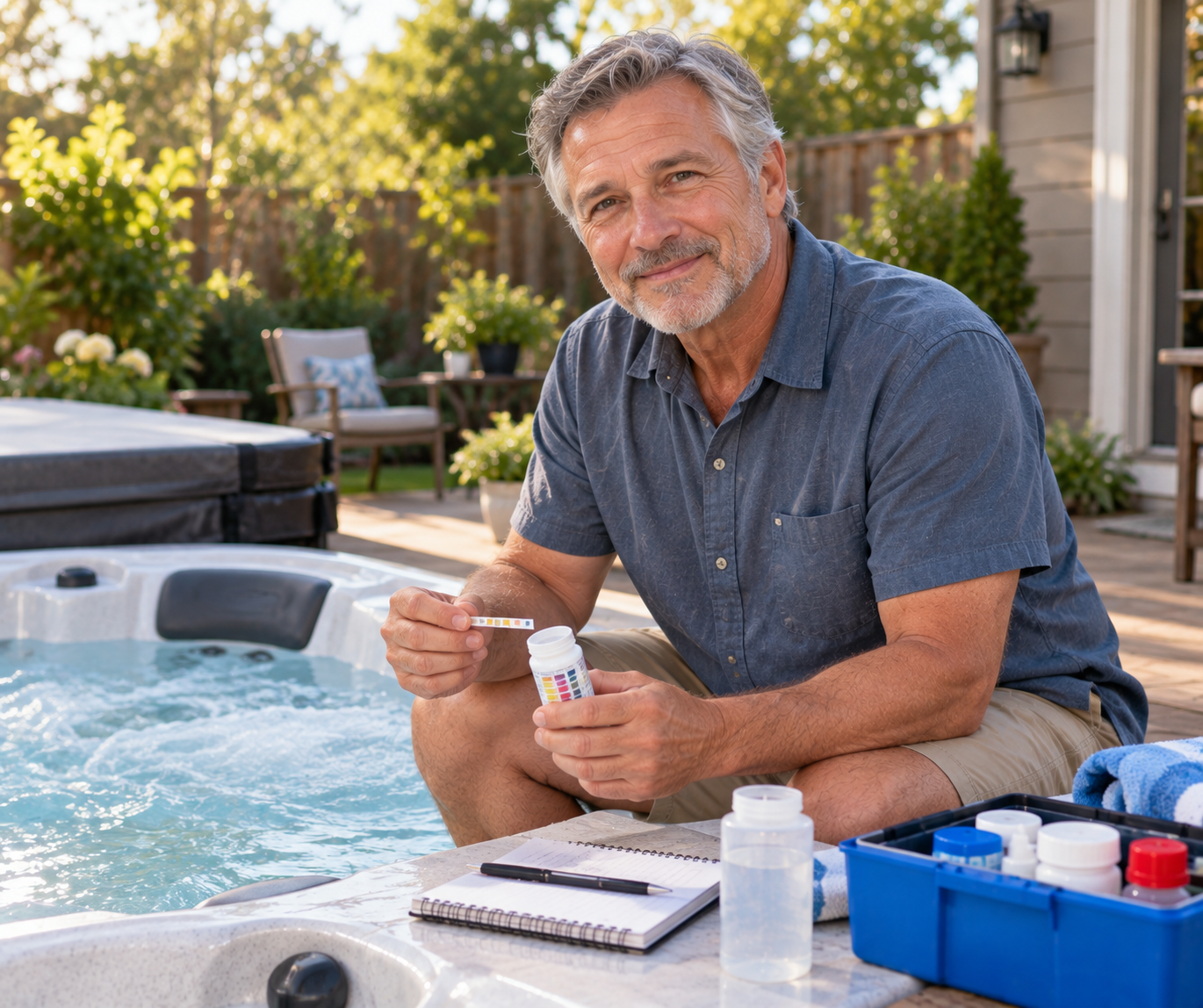

Heavy bather loads, body oils, lotions, and perspiration quickly consume residual sanitizers in portable hot tubs, leaving behind dull water and unpleasant odors. When free chlorine binds with these organic contaminants, it transforms into combined chlorine, commonly known as chloramines. Learning how to chlorine shock your hot tub restores water clarity by oxidizing stubborn waste, neutralizing irritants, and reactivating your sanitizing system. Without routine oxidation, spa water becomes a breeding ground for biofilm and cloudy mineral deposits that overwhelm your cartridge filtration system.
Executing this chemical treatment correctly protects your spa equipment from premature corrosion and prevents surface scaling on acrylic shells. Applying the proper dosage while circulating water with all therapy jets running ensures thorough chemical dispersion throughout internal plumbing lines. Maintaining an airtight, durable hot tub cover with warranty protection helps insulate your spa, but leaving the cover open during chemical oxidation is crucial to allow volatile chemical vapors to escape. Balancing your water chemistry before shocking ensures maximum sanitizer efficiency and keeps your spa safe for routine hydrotherapy.





Complete Guide to Shocking Your Hot Tub with Chlorine and Oxidizers
Shocking a hot tub resets water sanitization, breaks down organic contamination, and prevents irritating chemical odors. Understanding the operational distinction between routine sanitizing and oxidative shocking ensures your hydrotherapy system remains clean, balanced, and inviting. The following guide details the technical chemistry, water preparation, chemical dosages, and step-by-step procedures required to shock your hot tub safely and effectively.
The Chemistry of Shocking: Free Chlorine vs. Combined Chloramines
Routine spa sanitation relies on free available chlorine to neutralize bacteria, viruses, and algae introduced by bathers and ambient air. As free chlorine attacks organic matter such as sweat, skin flakes, and cosmetic residues, chemical bonds form between chlorine and ammonia compounds. These resulting compounds are known as combined chlorine or chloramines. Chloramines possess negligible sanitizing capability, yet they produce the sharp chemical odor mistakenly associated with over-chlorinated hot tubs.
Total chlorine represents the sum of both free chlorine and combined chlorine in your spa water. When your test kit reveals a combined chlorine reading exceeding 0.5 parts per million, sanitizing efficiency plummets. Bathers begin experiencing burning eyes, itchy skin, and respiratory irritation caused by volatile chloramine off-gassing. Shocking forces a chemical reaction known as breakpoint chlorination, where sanitizer levels rise high enough to shatter the molecular bonds of chloramines and convert them into harmless nitrogen gas.
Achieving breakpoint chlorination requires raising the free chlorine concentration to roughly ten times the measured combined chlorine level. This dramatic surge in biocide concentration burns off persistent organic contaminants that regular maintenance dosages cannot eliminate. Once oxidation concludes, total chlorine readings align closely with free chlorine levels, restoring a healthy, odor-free soaking environment.
Chlorinated Shock vs. Non-Chlorine Oxidizers: Selecting the Proper Product
Hot tub owners generally choose between two primary shock categories: chlorinated shock and non-chlorine oxidizing treatments. Chlorinated shocks, such as products utilizing sodium dichloroisocyanurate, perform dual functions by simultaneously sanitizing water and oxidizing waste. Formulations like SpaGuard Enhanced Shock also incorporate clarifiers, flocculants, and pH buffers to help the filtration system capture microscopic suspended debris while preventing severe acidity fluctuations during treatment.
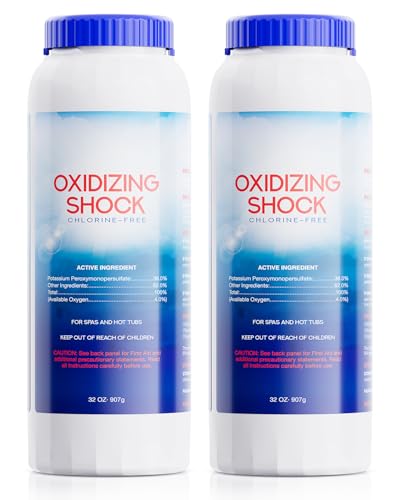
Non-chlorine shock oxidizers, such as potassium peroxymonosulfate formulations from brands like AquaDoc, POOLHOUR, and Kriooxluue, function strictly as oxidizers rather than registered biocides. These oxygen-based treatments break down oils, lotions, and non-living organic compounds without increasing the active chlorine residual. Because non-chlorine shock does not elevate sanitizer levels to extreme highs, bathers can safely re-enter the spa within fifteen to thirty minutes after application.
Choosing between these two chemical options depends on the current state of your water chemistry. Chlorinated shock is necessary when opening a hot tub, recovering from visible algae, addressing severe cloudiness, or neutralizing high combined chlorine levels. Non-chlorine oxidizers serve as an ideal weekly maintenance tool, freeing up existing chlorine residuals to target living pathogens while keeping chemical scents to an absolute minimum.
Pre-Treatment Chemical Balancing: Alkalinity and pH Parameters
Applying shock chemicals to unbalanced spa water severely degrades product effectiveness and risks equipment damage. Sanitizer efficiency depends heavily on water pH, which measures the balance between acidic and alkaline ions in the vessel. Before broadcasting any shock treatment into the tub, use a calibrated digital photometer, liquid test kit, or high-grade test strip to evaluate your total alkalinity and pH levels.
Total alkalinity must be adjusted first, targeting a stable baseline between 80 and 120 parts per million. Alkalinity acts as a chemical buffer, preventing sudden pH swings caused by chemical additions or aeration. If total alkalinity drops below 80 parts per million, adding shock can trigger rapid water acidification that corrodes internal electric heater elements and pump seals. Conversely, excessive alkalinity locks the pH at elevated levels, leading to stubborn mineral precipitation.
Once total alkalinity stabilizes, adjust the pH into the recommended operating range of 7.2 to 7.8, with 7.4 to 7.6 being ideal. At a pH of 8.0 or higher, chlorine converts primarily into hypochlorite ions, reducing its sanitizing strength by more than half. Establishing proper pH equilibrium ensures that your shock treatment releases maximum hypochlorous acid to destroy organic compounds rapidly.
Step-by-Step Procedure: How to Chlorine Shock Your Hot Tub Safely
Preparation begins with ensuring your equipment operates under optimal circulation settings. Remove the spa cover completely and set it aside in a shaded, well-ventilated space. Rotate all topside air control valves and diverters to the closed position. Closing the air intake prevents excessive surface aeration and foaming, which can drive pH upward and scatter chemical granules against dry acrylic surfaces.
Activate your primary hydrotherapy jet pump on low or high speed to establish continuous water movement throughout the plumbing lines. Put on chemical-resistant protective gloves and safety glasses to shield your skin and eyes from concentrated dust or accidental splashing. Read the manufacturer dosage instructions carefully, calculating the exact quantity required for your spa capacity in gallons.
Slowly broadcast the dry shock granules across the deep water surface near the center of the tub or over the return jet flow. Avoid dumping concentrated mounds of chemical directly into the filter canister well or on top of seating surfaces, where undissolved granules can bleach the acrylic shell. Allow the circulation pumps to run continuously for a minimum of twenty to thirty minutes to distribute the oxidizer through every jet line, manifold, and heater chamber.
Cover Protection and Chemical Off-Gassing Requirements
The chemical reaction that occurs during hot tub shocking generates intense volatile vapors containing chloramines, ozone, and gaseous chlorine. If the spa cover remains closed immediately following chemical addition, these caustic vapors become trapped between the water line and the underside of the cover. Trapped chemical gases rapidly bleach marine vinyl, degrade perimeter stitching, and break down the vapor barrier encasing the expanded polystyrene foam core.
Installing a well-built protective patio hot tub cover shields outdoor spas against harsh weather and thermal heat loss during idle hours. However, leaving the cover fully open for at least twenty to thirty minutes after shocking allows volatile gases to dissipate harmlessly into the atmosphere. This critical off-gassing interval preserves the moisture barrier of your cover, preventing heavy waterlogging that ruins insulation R-values and strains lifting hardware.
After the initial thirty-minute aeration window passes, you may replace the cover loosely or lower it halfway if you need to retain thermal energy in cold climates. Always ensure the internal jet pumps have completed their primary high-speed cycle before latching tie-down straps securely. Regular cover care paired with sensible chemical aeration extends the lifespan of both your thermal barrier and your topside digital control console.
Determining Dosage Based on Gallon Capacity and Bather Load
Accurate chemical dosing requires knowing the precise water volume of your hot tub model. Most residential portable spas hold between 300 and 500 gallons of water when filled to the recommended waterline indicator. Under-dosing shock fails to reach breakpoint chlorination, leaving partially oxidized chloramines in the water that continue to cause skin irritation. Over-dosing creates unnecessarily elevated chlorine concentrations that delay spa usage and stress silicone plumbing gaskets.
Standard maintenance shock dosing typically calls for one to two tablespoons of granular shock per 300 to 500 gallons of water. When treating severe water problems, such as distinct biofilm slime lines or green algae tinting, corrective shock dosages often double or triple based on product labeling. Multi-purpose products like SpaGuard Enhanced Shock provide clear volumetric guides on their containers, allowing owners to match exact scoop measurements to specific spa capacities.
Bather load represents another critical factor in determining how much shock your tub requires. A single bather in a 400-gallon hot tub heated to 102 degrees Fahrenheit generates the proportional organic waste equivalent of dozens of swimmers in a large commercial swimming pool. Spas subject to heavy weekend entertaining or short-term vacation rental turnover demand more frequent or slightly larger shock treatments to process elevated perspiration and cosmetic oils.
Troubleshooting Post-Shock Complications: Cloudiness, Odors, and High Residuals
Occasionally, hot tub water exhibits unexpected symptoms immediately following a shock treatment. One common complaint is sudden water cloudiness or a milky appearance shortly after adding chemicals. This haze usually indicates that oxidized organic particles and dead bacteria have precipitated out of solution, suspended in the water column faster than the pleated cartridge filter can extract them.
Addressing post-shock cloudiness involves checking filter cleanliness and verifying calcium hardness levels, which should remain between 150 and 250 parts per million. Remove your filter cartridge and rinse away accumulated debris using a pressurized garden hose nozzle. If oils and mineral scale have coated the filter fabric, soak the cartridge in an approved degreasing cleaner to restore proper water flow through the filtration core.
If strong chlorine odors persist after shocking, the treatment likely failed to exceed the breakpoint chlorination threshold. Re-test both free and total chlorine levels to verify whether combined chloramines remain trapped in the water. A secondary shock application or a targeted dose of non-chlorine oxidizer may be required to finish breaking down lingering chloramine molecules completely.
Establishing an Ongoing Shock Routine and Maintenance Schedule
Consistent preventative water care minimizes chemical consumption and prevents unexpected water fouling. For average residential spas utilized two to three times weekly by one or two bathers, shocking once every seven days provides sufficient oxidation. Incorporating non-chlorine oxidizers immediately after heavy soaking sessions neutralizes organic waste before it has time to bind with your free chlorine residual.
Spas operating in colder climates or equipped with supplemental sanitizing hardware, such as ozone generators or UV-C chambers, still require routine oxidation. While ozone and ultraviolet light neutralize pathogens passing through the equipment line, they do not provide a lingering residual or thoroughly scrub stagnant plumbing corners. Shocking complements these supplemental systems by ensuring full-system oxidation from the jet nozzles to the suction drains.
Over time, the accumulation of dissolved solids from chemical treatments and bather waste reduces chemical responsiveness. When total dissolved solids exceed 1,500 parts per million above your source tap water, even aggressive shocking struggles to maintain clarity. Plan to drain, deep clean, and refill your hot tub with fresh water every three to four months to maintain an efficient chemical baseline.
Safe Soaking Parameters and Final Water Verification
Never enter a hot tub immediately after applying a chlorinated shock treatment. Elevated biocide levels can cause severe skin redness, exacerbate eczema, and trigger respiratory coughing spells from concentrated surface vapors. Before opening the spa for bathers, verify that your water parameters have safely settled within recognized recreational water health standards.
Use a fresh chemical test strip or DPD liquid test kit to confirm that free available chlorine has returned to the safe soaking range of 1 to 5 parts per million, with 3 parts per million being optimal. If chlorine readings remain dangerously high above 8 parts per million, keep the cover off during daylight hours to allow ultraviolet sunlight to degrade the sanitizer naturally, or introduce an approved chemical chlorine neutralizer.
Re-evaluate total alkalinity and pH to confirm that the oxidative reaction has not displaced your chemical equilibrium. Once your sanitizer sits below 5 parts per million and your pH rests securely between 7.2 and 7.8, your spa is fully sanitized, crystal clear, and ready for a relaxing hydrotherapy soak.



Write Your Review
No reviews yet. Be the first to share your experience!