

Freezing winter temperatures pose a serious threat to outdoor spa plumbing, pump volutes, and delicate heating manifolds. When water freezes inside closed PVC pipes, the physical expansion can easily rupture flexible lines and crack expensive equipment wet ends. Preparing a spa for extended sub-zero weather requires clearing internal lines and introducing specialized chemical protection to shield vulnerable low points from catastrophic structural failure. Pairing these winter precautions with a protective hot tub cover with a reliable warranty ensures external moisture cannot penetrate the cabinet while internal lines stay dry.
Homeowners often wonder how much antifreeze to winterize a hot tub effectively without creating unnecessary chemical residue or wasting product. Portable acrylic spas and plug-and-play units generally hold only a small amount of trapped fluid once you blow out the main plumbing loops. Using the right quantity of dedicated, non-toxic pool and spa antifreeze provides essential burst protection while making spring recommissioning straightforward. Taking the time to calculate exact requirements prevents freeze damage and keeps internal spa components safe until warmer weather returns.

Comprehensive Guide to Winterizing Hot Tub Plumbing and Antifreeze Calculations
Knowing precisely how much antifreeze to winterize a hot tub depends primarily on the total length of internal plumbing and how thoroughly you evacuate water beforehand. Standard residential hot tubs typically require between one and two gallons of non-toxic pool and spa antifreeze to protect all critical low points. Flooding an entire spa with gallons of liquid is unnecessary because the water is drained before winterization begins. Instead, the fluid serves as targeted insurance inside manifolds, pump volutes, and heater tubes where gravity drainage cannot reach.
Determining the Correct Volume of Antifreeze for Your Spa
For most two-person to four-person portable hot tubs, a single gallon of non-toxic antifreeze is sufficient to treat all plumbing circuits. Smaller tubs feature shorter pipe runs, fewer hydrotherapy jets, and compact manifolds that hold very little residual moisture after blowout procedures. Pouring roughly half a gallon down the filter canister and distributing the remaining liquid through lower jet openings protects critical components without oversaturating the system. Compact spas with single pump setups rarely possess hidden pockets where large amounts of trapped water can linger.
Mid-sized to large acrylic hot tubs designed for six to eight occupants generally require two full gallons of antifreeze for complete peace of mind. These expansive models incorporate dual therapy pumps, dedicated circulation loops, air blower channels, and extensive jet arrays linked by complex flex PVC manifolds. The additional volume allows you to distribute liquid through primary suction ports, secondary diverter valves, and individual jet lines. Having two gallons on hand guarantees that each isolated hydraulic zone receives an adequate barrier against extreme sub-zero temperatures.
Swim spas and dual-temperature exercise pools represent an exception that may demand three to four gallons depending on their total length. These units feature extended plumbing runs spanning fifteen to twenty feet from the equipment bay to the swim current jets. While the primary swim tank is drained dry, the long suction and return conduits create low-lying valleys where residual droplets can gather. Providing ample chemical displacement throughout those extensive underground or cabinet-enclosed channels prevents structural pipe splits along structural frame beams.
Why Non-Toxic Antifreeze Is Essential for Hot Tubs
Selecting the appropriate chemical formula is critical when introducing any winterizing fluid into a hot tub environment. You must only use non-toxic propylene glycol or specialized pool and spa formulas designed specifically for recreational water equipment. Automotive antifreeze contains ethylene glycol, an extremely poisonous compound that can permanently contaminate acrylic shells and pose fatal hazards to humans and pets. Pool and spa winterizing fluids are specifically engineered to provide burst protection down to -50 degrees while remaining safe for aquatic plumbing systems.
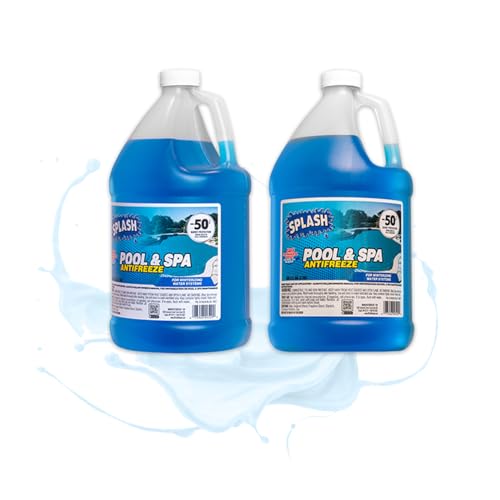
Plumbing-safe antifreeze formulations like Splash Pool & Spa Antifreeze -50°F and EZ Pools Antifreeze are compatible with brass, copper, galvanized steel, and common thermoplastics. Standard hot tub heaters utilize titanium or copper elements, while internal pipe networks rely on rigid and flexible PVC joined by ABS manifolds. Harsh chemical compounds can degrade rubber O-rings, pump shaft seals, and union gaskets over several months of stagnant contact. Certified winterizing formulas lubricate internal seals rather than drying them out, preserving mechanical integrity throughout winter storage.
Color tinting serves an important practical function during both application and seasonal reopening. Most high-grade pool and spa products feature vibrant pink or blue dyes that provide instant visual verification when the liquid emerges from jet orifices. This high visibility confirms that the protective barrier has successfully reached the lowest points of the hydraulic circuit. During spring startup, the distinct color also indicates when the flushing process is complete and fresh water has thoroughly cleared the lines.
Complete Preparation Steps Before Introducing Antifreeze
Thorough site preparation and complete mechanical shutdown must precede any chemical addition to your hot tub. Begin by turning off the dedicated 50-amp GFCI breaker switch located on your outdoor subpanel to eliminate electrical shock hazards. Never attempt to drain or winterize a hot tub with electrical power connected to the control pack. Cutting power prevents the circulation pump or electric heater from engaging dry, which would otherwise melt heater element coils or destroy ceramic pump seals within seconds.
Once the system is powered down, remove the cartridge filter elements from the filter well and thoroughly clean or store them indoors. Leaving damp paper or polyester filters inside an unheated hot tub promotes mildew growth and can crack internal core plastics during hard freezes. Open the bottom drain valve and attach a garden hose to empty the bulk water from the acrylic shell. For faster evacuation, homeowners often drop a submersible utility pump into the deepest footwell to empty hundreds of gallons in under an hour.
After the main shell is empty, use a wet-dry vacuum with powerful blower and suction capabilities to clear remaining water from the internal plumbing. Place the vacuum hose over every individual hydrotherapy jet nozzle, rotating through both suction and blowing modes to force out hidden moisture. Move to the filter standpipe, suction fittings, and water feature valves, repeating the process until no additional mist or water droplets emerge. Thoroughly evacuating water first ensures that the antifreeze you introduce later remains undiluted and retains its full burst rating.
How to Distribute Antifreeze Through Spa Plumbing Lines
Distributing the antifreeze requires a systematic approach to ensure every isolated pipe run receives adequate coverage. Pour the first portion of liquid directly into the filter canister standpipe, which connects directly to the circulation pump intake and heater housing. Gravity naturally pulls the fluid down into the lowest plumbing loop, displacing residual moisture gathered around the impeller. Pouring approximately half a gallon into this port shields the pump wet end and titanium heating vessel from cracking under sub-zero pressure.
Next, use a flexible funnel to pour smaller amounts of fluid into individual jet housings, working from the highest seats down to the footwell. If your hot tub includes water diverter valves or air control knobs, set them to the center position to open all internal channels simultaneously. Some owners use a shop vacuum in reverse at low speed to gently blow the antifreeze further into the pipe network. The liquid will flow through the flexible manifold lines and settle in any sagging pipe loops where stagnant pockets of water could cause freeze damage.
When protecting skimmer wells or narrow suction channels, empty bottles can provide clever physical expansion protection. As highlighted by EZ Pools Antifreeze, placing a partially empty, sealed plastic container into the skimmer housing absorbs crushing pressure if external water seeps inside. If ambient moisture enters and freezes around the skimmer walls, the ice expands inward against the flexible plastic bottle instead of cracking the rigid plastic housing. Securing the skimmer lid and installing rubber winterizing plugs into treated ports locks the chemical barrier securely inside.
Climate Variations and Managing Freeze Burst Ratings
Understanding how cold-weather chemicals behave in extreme northern climates helps prevent unexpected plumbing catastrophes. Pool and spa antifreeze rated to -50 degrees provides burst protection, meaning the solution will not expand with sufficient force to crack rigid PVC pipes at that temperature. However, the fluid can still thicken into a soft slush at higher sub-zero temperatures, which is normal and does not cause structural breakage. As long as the chemical remains concentrated, the crystallization structure lacks the rigid crystalline density that makes solid water ice expand destructively.
Dilution is the primary reason winterized hot tubs suffer freeze cracks despite using reputable antifreeze products. If several quarts of trapped water remain pooled in a manifold, adding a small volume of antifreeze dilutes the formula and drastically raises its burst temperature. A solution intended to protect down to -50 degrees can lose half its protective capacity if diluted with equal parts standing water. This vulnerability emphasizes why thorough air evacuation with a high-flow vacuum is mandatory before adding any protective chemicals.
Cabinet insulation and external cover integrity also influence how cold your internal plumbing gets during harsh blizzards. Shielding your investment with a durable yard patio hot tub cover prevents heavy snow loads from bowing the acrylic shell or forcing freezing meltwater through seams. Even with adequate antifreeze inside the pipes, keeping the interior cabinet dry and shielded from freezing wind chill reduces thermal stress on fragile plastic valves. A sturdy cover also stops winter rains from diluting the winterizing fluid sealed within the floor drains.
Common Mistakes to Avoid During Hot Tub Winterization
One of the most frequent mistakes made by first-time hot tub owners is pouring antifreeze into a completely filled or partially drained tub. Antifreeze cannot simply be mixed into a tub of water to winterize it; the entire volume must be drained and lines evacuated before treatment. Adding chemicals to hundreds of gallons of standing water does nothing to protect the internal pipework and creates an environmental hazard when draining. Always ensure the tub is empty, dry, and blown clear before introducing your one to two gallons of winterizing fluid.
Another critical error is neglecting the pump wet ends and heater barrel drain plugs located inside the mechanical service compartment. Most circulation and jet pumps feature small, threaded plastic drain plugs on the front or bottom of the impeller casing. Unscrewing these plugs allows trapped water to drain out onto the equipment pad, preventing cracked pump housings during severe cold snaps. After draining the pumps and heater unions, many owners leave the plugs loose inside a labeled bag taped to the pump to prevent lost hardware.
Using high-pressure air compressors to blow out hot tub plumbing lines is an additional risk that frequently causes internal valve damage. Household air compressors deliver sharp bursts of pressure exceeding one hundred pounds per square inch, which can dislodge internal check valves, rupture diverter gaskets, and crack glued fittings. A high-volume, low-pressure wet-dry shop vacuum is far safer and more effective at evacuating water without blowing apart internal pipe joints. Maintaining moderate airflow ensures gentle moisture clearance throughout delicate hydrotherapy manifolds.
Spring Startup and Flushing Out Antifreeze Residue
When spring arrives and outdoor temperatures remain consistently above freezing, you must purge all antifreeze residue before enjoying your first soak. Begin by removing all rubber winterizing plugs, expansion bottles, and protective tape from the jet nozzles and skimmer housings. Reconnect the pump plumbing unions, tighten all equipment drain plugs, and reinstall your cleaned cartridge filters into the filter canister. Taking inventory of every mechanical fitting ensures the spa is watertight before you introduce hundreds of gallons of fresh tap water.
Next, use your wet-dry vacuum to extract as much leftover antifreeze as possible directly from the floor drains and lower jet ports. While non-toxic pool antifreeze is safe for plumbing, residual fluid can cause heavy foaming, chemical cloudiness, and unpleasant odors if left in fresh fill water. Fill the hot tub with a few inches of fresh water, run the pumps on low speed for two minutes to flush the lines, and pump that rinse water out completely. This quick preliminary rinse flushes out residual pink or blue dyes, leaving internal pipe walls clean.
After the rinse cycle, fill the spa completely through the filter well to prevent air locks in the circulation pump. Turn on the main GFCI breaker, let the water heat up, and test your baseline water chemistry using reliable test strips or a liquid reagent kit. Balance your total alkalinity between 80 and 120 parts per million, adjust pH to the ideal range of 7.2 to 7.8, and add your primary chlorine or bromine sanitizer. Inspecting your thermal cover and maintaining proper foldable hot tub cover insulation will keep your newly balanced water warm and energy-efficient for the upcoming season.
Key Guidelines for Safe Spa Winterization
Winterizing a hot tub properly comes down to methodical water removal and measured chemical application rather than excessive volume. Using one to two gallons of non-toxic, burst-rated pool and spa antifreeze provides complete security against cracked manifolds without overwhelming your spring cleaning routine. Always remember to disconnect power completely, blow out the lines gently with a shop vacuum, and treat every low point in the circulation loop. With careful preparation and the right non-toxic formula, your hot tub plumbing will remain intact and ready for another relaxing soaking season.








Write Your Review
No reviews yet. Be the first to share your experience!