
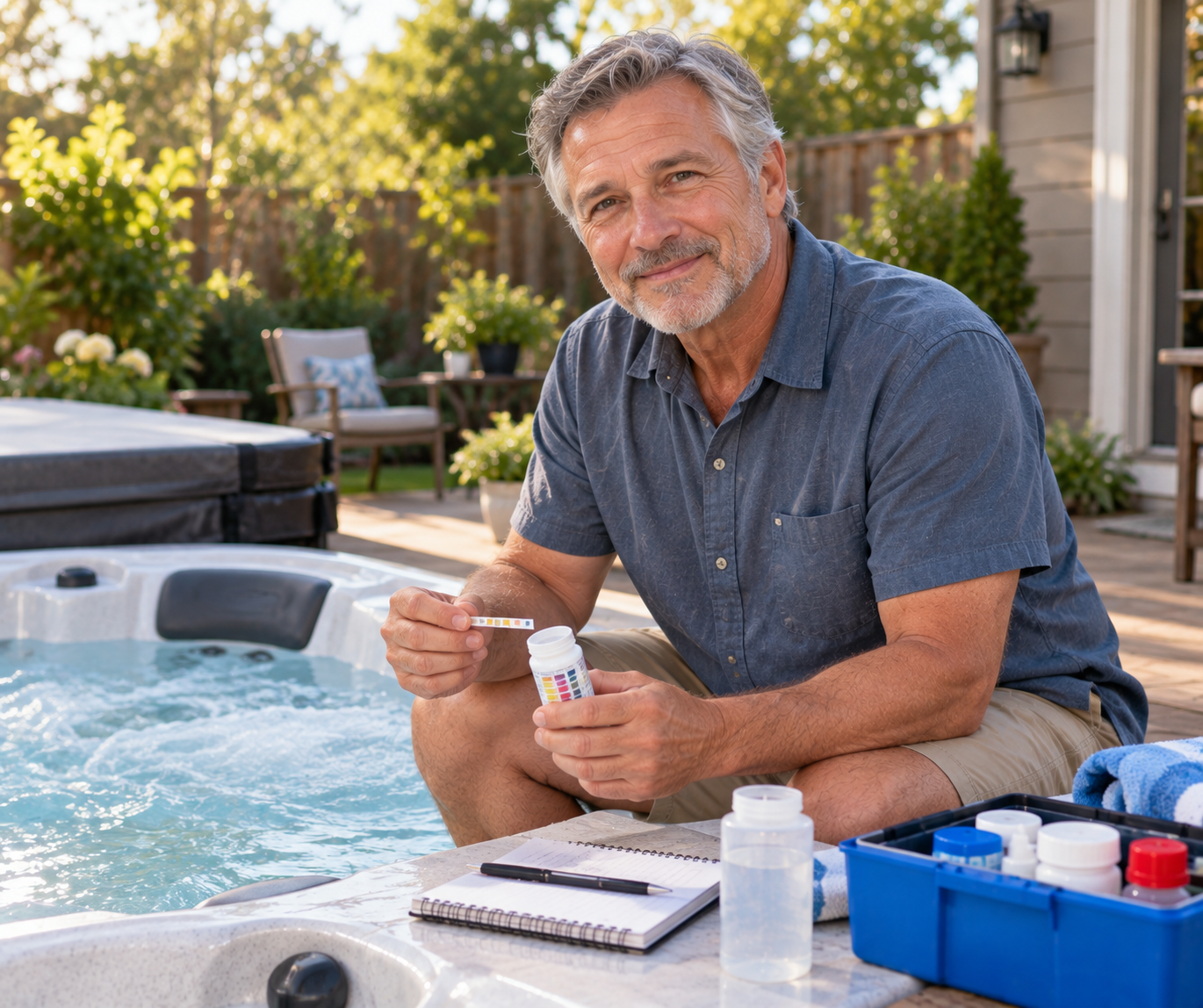

Stepping out to a steaming patio spa expecting soothing hydrotherapy only to realize chemicals were just added creates immediate hesitation. Knowing how long to wait after chlorinating hot tub water protects your skin, respiratory tract, and equipment while keeping your spa sanitary. Sanitizing with concentrated granules neutralizes organic waste and eliminates harmful bacteria, but entering the water too quickly exposes bathers to concentrated chemical vapors and elevated oxidizer levels. Pairing a disciplined chemical routine with a durable hot tub cover with warranty coverage keeps the water protected while managing heat retention and chemical off-gassing.
The exact waiting period depends on whether you performed a routine sanitizer boost or a full superchlorination shock treatment. Daily maintenance doses require only a brief circulation window, whereas intensive oxidation shocks demand hours for free chlorine residuals to drop back to safe soaking ranges. Balancing hot tub water chemistry and verifying active sanitizer levels with test strips ensures total peace of mind before anyone steps into the acrylic shell.

Safe Timelines and Water Chemistry Rules After Adding Chlorine
Entering a hot tub too soon after adding sanitizing chemicals risks severe skin irritation, burning eyes, and respiratory discomfort. As a direct rule of thumb, routine maintenance chlorination requires a waiting period of twenty to thirty minutes with the spa cover off and circulation pumps running. In contrast, heavy shock treatments require twelve to twenty-four hours before chemical residuals return to safe bathing limits. You should never rely solely on elapsed time; verifying that free chlorine measures between 3.0 and 5.0 parts per million with a reliable test strip is the only certain way to confirm the water is safe.
Maintenance Chlorination Versus Shock Treatment Timelines
Routine maintenance chlorination involves adding small doses of sanitizer to replace chlorine consumed during regular bather use. When you add a modest maintenance dose of sodium dichlor granules to elevate sanitizer levels by one or two parts per million, the granules dissolve within minutes. Running the jet pumps on low or medium speed disperses the disinfectant evenly throughout the entire plumbing circuit. Bathers can safely enter the spa after twenty to thirty minutes, provided the free chlorine level rests securely within the recommended 3.0 to 5.0 parts per million range.
Shocking a hot tub involves superchlorination, which requires a much larger dose of oxidizer to break down stubborn contaminants and chloramines. Superchlorination intentionally elevates free chlorine levels up to ten or twenty parts per million to destroy organic waste and biofilm. This heavy chemical load cannot be used for soaking and takes anywhere from twelve to twenty-four hours to dissipate naturally. Testing the water the following morning ensures the excessive sanitizer concentration has fallen back down to safe soaking parameters.
Entering water with active chlorine readings above five parts per million exposes bathers to unnecessary health hazards. High oxidizer levels strip natural oils from human skin, triggering intense itching and chemical contact dermatitis. Breathing the vapors trapped just above steaming, superchlorinated water can also inflame sensitive airway passages and cause coughing fits. Waiting until chemical levels fall below five parts per million guarantees a comfortable, therapeutic soak without painful side effects.
Chemical Dynamics of Sodium Dichlor Granules
Most residential hot tub owners rely on sodium dichloro-s-triazinetrione, commonly known as sodium dichlor, for routine sanitization. Products such as Hot Tub Things Chlorine Granules for Hot Tub provide a quick-dissolving chlorinating concentrate that functions simultaneously as a sanitizer and an oxidizer. This granular formulation dissolves almost instantly in warm water without clouding the shell or leaving gritty residue on the acrylic floor. Because sodium dichlor has a nearly neutral pH value near 6.7, it causes minimal disruption to your established total alkalinity and pH balance.
Sodium dichlor also contains cyanuric acid, a stabilizing compound that binds to chlorine molecules to shield them from ultraviolet degradation. Cyanuric acid serves a vital function in outdoor pools, but it does not evaporate or break down in high-temperature spa environments. Every ounce of granular chlorine introduced to the spa adds a proportionate amount of stabilizer that remains permanently dissolved in the water. Over several months, excessive cyanuric acid accumulation leads to chemical lock, rendering free chlorine progressively less effective at neutralizing harmful bacteria.
Distinguishing between free chlorine and combined chlorine explains why water sometimes smells foul even after treatment. Free chlorine represents active, unbound sanitizer ready to attack incoming bacteria, viruses, and body oils. Combined chlorine, also referred to as chloramines, forms when free chlorine binds to ammonia and nitrogen waste from human perspiration. Chloramines generate that pungent, stinging chemical odor mistakenly attributed to an over-chlorinated hot tub. Routine oxidation breaks the chloramine bond, allowing free chlorine residuals to return to optimal purifying strength.
The Critical Role of Off-Gassing and Aeration
Leaving the thermal spa cover open after adding chlorine is just as important as measuring the chemical dose itself. Rapid oxidation releases volatile chemical byproducts and pungent gases that must escape into the ambient air. Sealing the spa immediately after adding chlorine traps corrosive vapors beneath the cover, where they condense into highly acidic moisture droplets. This acidic condensation damages headrests, bleaches acrylic shell surfaces, and degrades expensive topside control interfaces.
Vapor accumulation also attacks the structural integrity of your insulating spa cover over time. Acidic moisture eats through the internal plastic vapor barrier, allowing heavy moisture to penetrate the dense expanded polystyrene foam core. Installing a protective yard patio hot tub cover shields the spa from external debris, but leaving it propped open for thirty minutes after chlorination preserves the internal vinyl stitching. Regular aeration prevents premature cover waterlogging, preserving essential thermal insulation and saving on monthly electric heating expenses.
Running the circulation pumps during the off-gassing period accelerates chemical dissolution and guarantees uniform distribution. Activating low-speed hydrotherapy jets pulls chemical-laden water down through the cartridge filter canister and pushes it out through every jet nozzle. You should turn off secondary air venturi controls during this phase, because excessive aeration causes water pH levels to drift rapidly upward. A steady, gentle water flow without vigorous air bubbles provides the best balance between fast dispersion and chemical stability.
Testing Water Parameters Before Entering the Tub
Relying solely on a kitchen timer to determine safe soaking conditions is one of the most common mistakes spa owners make. Water temperature, ambient sunlight, bather load, and organic debris levels all alter the rate at which chlorine is consumed. A hot tub holding clean water might retain elevated chlorine levels for several hours longer than a spa loaded with residual body lotions or organic matter. Dipping a reliable test strip or using a liquid reagent test kit provides concrete confirmation that your water has reached a safe equilibrium.
Safe hot tub immersion requires all fundamental chemical parameters to align within their targeted operating ranges. Free chlorine should measure between 3.0 and 5.0 parts per million for standard residential systems. Total alkalinity must read between 80 and 120 parts per million to serve as a buffering foundation that prevents wild pH swings. The water pH should sit comfortably between 7.2 and 7.8, matching the natural pH of human eyes and skin for maximum bather comfort.
Proper testing technique ensures accurate readings and prevents unnecessary chemical overdosing. Immerse the test strip approximately twelve to eighteen inches below the water surface, away from active jet nozzles and filter return lines. Hold the strip horizontally for roughly fifteen seconds without shaking off excess water, comparing the color reaction against the manufacturer chart in natural light. Liquid DPD test kits provide even greater precision for measuring free and total chlorine fractions if color matching on paper strips proves difficult.
Health and Safety Risks of Soaking Too Early
Stepping into a hot tub with sky-high sanitizer levels creates immediate skin and mucous membrane distress. High concentrations of hypochlorous acid strip the protective lipid layer from skin cells, leaving the body dry, red, and prone to severe itching. Sensitive areas such as the neck, underarms, and eyes react almost instantly with burning sensations that ruin the hydrotherapy experience. In extreme cases, bathers develop chemical burns that resemble mild sunburns across exposed skin.
Conversely, entering a hot tub with insufficient sanitizer levels exposes bathers to dangerous microbial hazards. Warm water temperatures between 100 and 104 degrees Fahrenheit create an ideal breeding environment for opportunistic bacteria such as Pseudomonas aeruginosa. This resilient organism causes hot tub folliculitis, a painful, pustular skin rash that infects hair follicles beneath wet swimwear. Maintaining consistent free chlorine residuals above 3.0 parts per million ensures bacteria are destroyed within seconds of introduction.
Respiratory sensitivity represents another serious consequence of premature soaking or poor ventilation. When chlorine combines with body oils and sweat under hot water conditions, volatile trichloramines rise into the breathing zone just above the water line. Inhaling these concentrated chloramine fumes triggers coughing fits, throat tightness, and airway inflammation, especially in individuals with asthma or allergies. Allowing the water to aerate thoroughly and confirming balanced chemical residuals eliminates these airborne irritants before bathers submerge.
How to Safely Lower High Chlorine Levels Fast
Accidental overdosing happens frequently when owners miscalculate water volume or misread chemical measuring scoops. If your test strip shows excessive purple saturation indicating chlorine well over ten parts per million, passive waiting may take days. Natural ultraviolet sunlight provides the fastest, chemical-free method to degrade excessive free chlorine in an outdoor hot tub. Removing the spa cover completely on a bright, sunny afternoon can reduce active chlorine levels by up to fifty percent within just two hours.
Running your high-speed jet pumps with the air diverters fully opened also helps strip volatile chlorine from the water. Vigorous aeration agitates the water surface, encouraging gaseous chlorine to escape into the atmosphere more rapidly. Be mindful that extended high-speed jet cycles generate mechanical friction heat that can elevate water temperatures above safe limits. Monitor the topside control panel to ensure the water does not exceed 104 degrees Fahrenheit during prolonged agitation cycles.
When you need to use the hot tub immediately and levels remain dangerously high, partial water replacement offers a reliable physical solution. Draining twenty to thirty percent of the water volume with a submersible pump and refilling with fresh tap water dilutes chemical concentrations instantly. Alternatively, commercial chlorine neutralizers like sodium thiosulfate can drop chlorine levels within minutes. If you use chemical neutralizers, dose conservatively in tiny increments, because neutralizing too much chlorine will leave your spa completely unprotected.
Routine Chemical Schedules and Long-Term Spa Care
Establishing a consistent chemical dosing routine prevents the sharp peaks and valleys that cause long waiting times. Adding a teaspoon of quick-dissolving sodium dichlor granules per person immediately after every soak handles the newly introduced bather load overnight. By morning, the filtration system has processed the organic matter, and chlorine levels naturally settle back into the ideal 3.0 to 5.0 parts per million range. This proactive post-soak sanitation habit eliminates the need for frequent, heavy shock treatments that lock you out of the tub for hours.
Proper cover management remains an essential pillar of long-term water quality and equipment longevity. Utilizing a quality foldable hot tub cover provides essential thermal containment while making routine chemical additions quick and effortless. Inspecting your cover regularly for sagging foam or saturated vinyl ensures that heat stays trapped inside the acrylic vessel during freezing weather. Maintaining clean, balanced water extends the working lifespan of the cover vinyl, pillows, and internal jet gaskets by preventing chemical erosion.
Routine draining and refilling every three to four months is unavoidable for any portable hot tub utilizing stabilized chlorine. As you continually add sodium dichlor, total dissolved solids and cyanuric acid steadily climb toward unmanageable concentrations. Once cyanuric acid exceeds one hundred parts per million, chlorine effectiveness drops dramatically, requiring larger chemical doses and longer waiting periods to achieve sanitation. Purging the internal plumbing with an enzymatic pipe cleaner and refilling with fresh tap water resets your water chemistry for effortless, predictable maintenance.
Patience and accurate testing are the ultimate keys to safe, restorative hydrotherapy. Waiting the required twenty to thirty minutes for maintenance chlorination or letting a heavy shock treatment off-gas overnight preserves your physical comfort and equipment integrity. Always keep the cover open during chemical distribution, verify the 3.0 to 5.0 parts per million range on a fresh test strip, and confirm balanced pH before entering the water. Taking these straightforward precautions guarantees that every soak in your hot tub remains clean, relaxing, and completely safe.






Write Your Review
No reviews yet. Be the first to share your experience!