
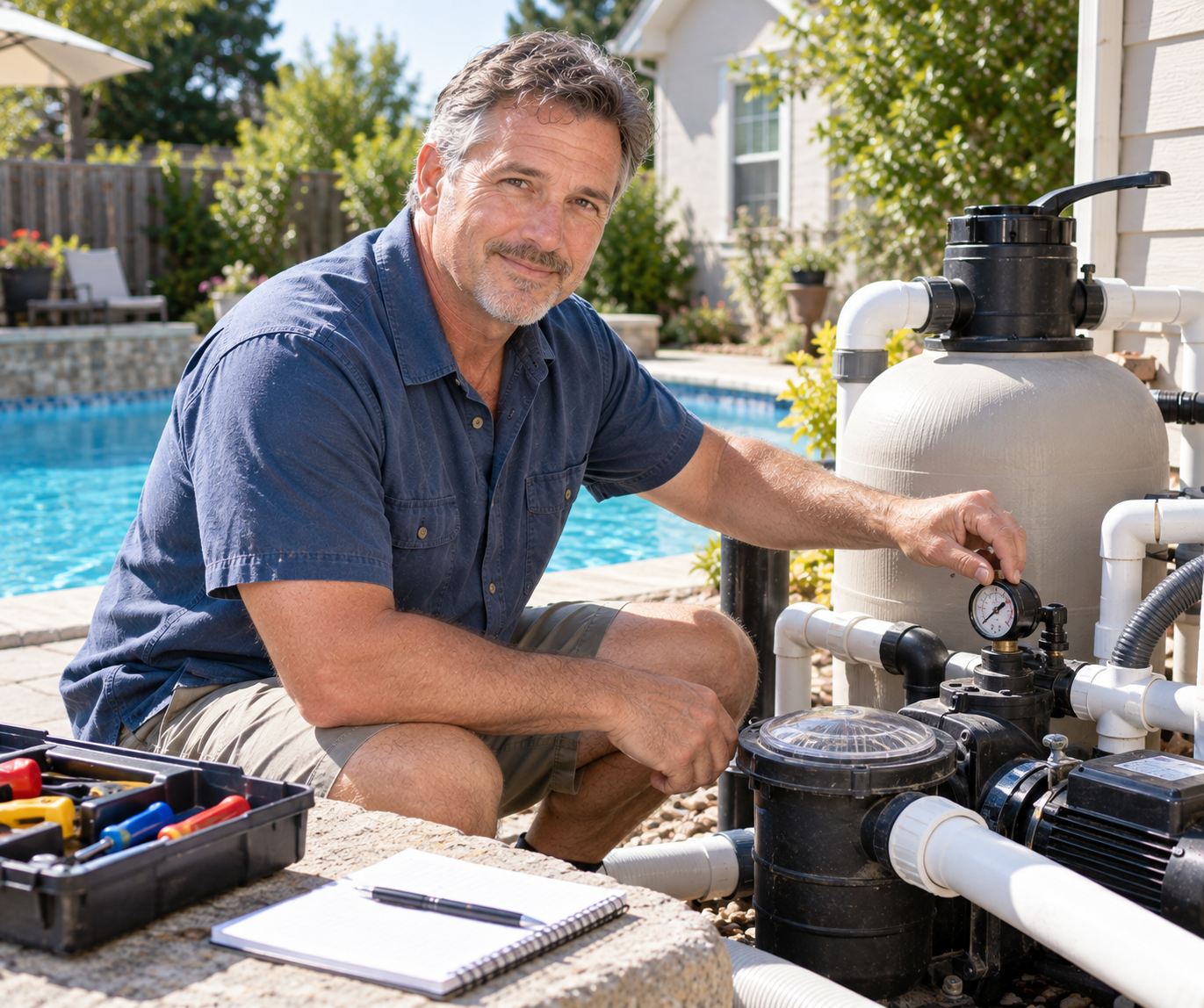

Planning backyard space for a new spa requires careful attention to foundation size and structural weight loads. Many homeowners wonder how big of a pad for hot tub setups should actually be to prevent settling, shell cracking, and spatial crowding. A properly sized base must support thousands of pounds of water and bathers while leaving adequate perimeter space for routine maintenance and safety equipment. Pairing a well-built foundation with a protective yard patio hot tub cover ensures your outdoor retreat remains durable and energy efficient throughout every season.
Whether pouring a permanent concrete slab or positioning modular ground mats for a portable spa, sizing decisions dictate how easily you can access service panels and maneuver accessories. Compact pads that match only the exterior shell dimensions often cause headaches when installing steps or hydraulic cover lifters. Planning an extended perimeter protects your surrounding landscape from continuous splashout while providing a clean, level surface for bathers stepping in and out of the water.

Pros
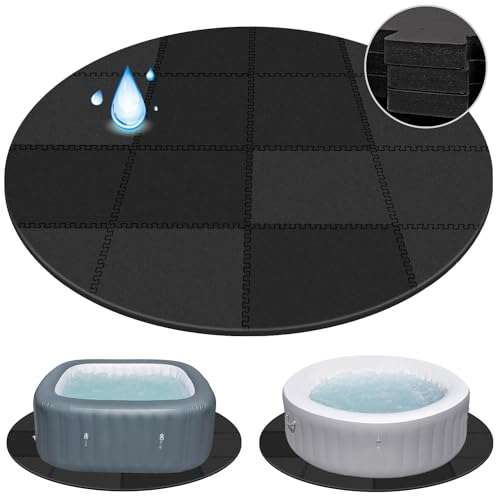
- Thick 2/5-inch high-density EVA foam provides superior puncture protection compared to standard thin ground tarps
- Interlocking tile format makes transport, setup, and seasonal off-season storage simple for a single person
- Forms an effective thermal break that helps retain water temperature on cold garage floors, stone pavers, or concrete
- Generous 78-inch circular dimension matches standard round inflatable spa footprints closely
Cons
- Interlocking puzzle seams require a smooth, flat foundation to keep tiles from pulling apart during tub filling
- Not suitable for larger portable spas or square models measuring over 78 inches in width
- EVA foam will naturally develop surface compressions over time under the massive weight of filled water
The Oyrlize 78-Inch Round Hot Tub Mat is a specialized ground protection pad designed specifically for portable and inflatable spas. Sized to accommodate round hot tubs measuring up to 78 inches in exterior diameter, this accessory addresses two common vulnerabilities that inflatable spa owners encounter: ground friction punctures and bottom heat dissipation. It is particularly well suited for homeowners setting up portable tubs on abrasive concrete patios, paver decks, gravel-adjacent pads, or garage slabs where rough surfaces can easily compromise thin vinyl liners.
Placing an inflatable hot tub directly onto bare concrete or hard dirt allows cold ground temperatures to constantly sap heat from the water through conduction. This pad utilizes 2/5-inch high-density EVA foam to establish an insulating thermal barrier that helps slow downward thermal transfer during cool weather. In addition to aiding temperature retention, the foam provides substantial underfoot cushioning, turning a hard, unforgiving ground surface into a soft, comfortable floor inside the spa.
In terms of build quality, the high-density EVA foam material offers significantly better tear resistance, puncture defense, and durability than standard plastic tarps or thin felt cloths. The foam is inherently waterproof and resists moisture absorption from splash-out. Furthermore, both sides of each tile feature a frosted anti-slip texture engineered to maximize surface friction. This textured finish prevents the pad from sliding on smooth deck boards and helps quiet pump and motor vibrations transmitted through the ground.
Setup is straightforward thanks to the puzzle-style interlocking edges. A single person can assemble the full circular footprint in just a few minutes without tools or adhesives. When winter approaches or it is time to drain and store the hot tub, the tiles pull apart cleanly and stack into a compact footprint that takes up minimal space on garage shelving. Routine maintenance is equally simple, requiring only a periodic rinse with a garden hose to clear away dirt, grass, and outdoor debris before air drying.
Prospective buyers should be mindful of sizing and site preparation constraints. Because the mat forms a 78-inch circle, it will not fully protect oversized round spas or square models with wider dimensions. The subfloor beneath the mat must also be properly cleared and leveled; large rocks, pronounced roots, or significant slope can cause the puzzle joints to separate once the heavy weight of water settles onto the tiles.
For owners of Coleman, Intex, or Bestway SaluSpa models seeking an affordable way to safeguard their investment and improve heating efficiency, the Oyrlize protective pad is a sensible, high-value addition. It delivers noticeable comfort and essential puncture defense across everyday backyard setups. Before purchasing, verify your spa exterior diameter when fully inflated to ensure it fits neatly within the 78-inch circular perimeter.
Inflatable hot tubs lack the rigid insulated floor bases found on permanent acrylic spas, leaving the vinyl bottom vulnerable to heat drain and abrasion. The 2/5-inch dense EVA foam core acts as a protective buffer, absorbing mechanical stress from uneven subsurfaces while shielding the liner from sharp stones and grit.
From an energy perspective, concrete slabs and outdoor paving stones act as massive heat sinks. By placing this closed-cell foam pad between the tub bottom and the cold ground, conductive heat loss is reduced, helping your portable heater maintain target soaking temperatures more efficiently during chilly evenings.
This circular pad is engineered specifically for round portable hot tubs with an outer inflated diameter of 78 inches or smaller. Compatible models include popular Bestway SaluSpa units such as the Miami, Cancun, Fiji, Madrid, Zurich, St. Lucia, Milan, Palm Springs, and Tahiti, alongside standard Coleman and Intex round tubs.
To guarantee complete edge-to-edge coverage, always measure your hot tub across the widest outer edge when fully inflated before purchasing. Ensuring the entire tub footprint rests within the 78-inch boundary prevents the bottom seams from hanging over the foam perimeter.


Pros
- Large 80 x 80 inch size accommodates most standard inflatable hot tubs without needing multiple mats or awkward overlapping
- Dual-layer construction with absorbent felt on top and waterproof PE on the bottom addresses both splash absorption and floor protection in one product
- Trimmable design lets owners customize the shape to fit decks, patios, or tight corners without buying a specialty-cut mat
- Folds flat for off-season storage, making it practical for seasonal or vacation-rental hot tub setups
- Affordable entry point for inflatable spa owners who want basic ground protection without a major investment
Cons
- The mat is designed primarily for inflatable hot tubs and may not provide sufficient cushion or structural support under heavier permanent acrylic spas
- Felt surface may retain moisture over time in consistently wet or humid environments, so periodic drying is recommended to avoid mildew buildup
- At 80 x 80 inches, the mat may not extend far enough beyond larger hot tubs to catch splashes in a wide surrounding area
The POOLTALE 80 x 80 in Hot Tub Mat is a ground-level protective pad built to sit underneath inflatable hot tubs, shielding the surface below from water, abrasion, and chemical drips. It's best suited for owners of inflatable spas like the Intex PureSpa, Coleman SaluSpa, or Bestway models who set up on patios, decks, garage floors, or even indoor surfaces and want a barrier between the tub's base and the ground. Vacation-rental operators and seasonal spa users who frequently set up and break down inflatable hot tubs will also find this mat practical because of its foldable, trimmable design.
The dual-layer construction is the core of the POOLTALE mat's usefulness. The top felt layer absorbs water splashes, drips, and minor spills that inevitably occur around any hot tub, while also providing a cushioning barrier that may reduce friction between the tub bottom and rough surfaces like concrete or textured composite decking. The PE (polyethylene) backing on the underside is listed as waterproof and slip-resistant, which means water absorbed by the felt layer should not seep through to stain or damage the floor underneath. This combination addresses two common inflatable hot tub ownership headaches: surface damage beneath the tub and slippery, wet areas around it.
At 80 x 80 inches, the POOLTALE mat is sized to fit under round or square inflatable hot tubs up to 80 inches in diameter or width. Owners should measure their specific tub's footprint before purchasing to confirm adequate coverage. Keep in mind that an 80-inch mat under an 80-inch tub leaves virtually no overhang for splash protection, so those who want extra coverage around the perimeter may want to consider whether this size provides enough margin for their setup. The mat can be cut to custom shapes with standard scissors or a utility knife, which is helpful for fitting around deck posts, railings, or irregular patio layouts.
Setup is straightforward - lay the mat flat on a clean, dry surface and position the hot tub on top. No adhesives, fasteners, or tools are required. For cleaning, the product description indicates that wiping with a damp cloth or mild detergent handles most stains and debris. Drying the mat in a ventilated area or in sunlight between uses is a good practice, especially in humid climates or shaded locations where moisture can linger. When the hot tub season ends or the inflatable tub is deflated, the mat folds up for compact storage, which is a genuine convenience compared to rigid ground pads.
There are some realistic limitations to keep in mind. This mat is designed for inflatable hot tubs, not heavy permanent acrylic or rotomolded spas that can weigh well over 3,000 pounds when filled. The felt surface, while absorbent, can retain moisture if left perpetually wet without periodic drying, which could lead to mildew or odor in damp climates. Owners in rainy or high-humidity regions should plan on lifting the mat to dry it out periodically. Additionally, the mat does not provide thermal insulation for the hot tub itself - it is a surface protector, not a heat-retention product.
For budget-conscious inflatable hot tub owners looking for a simple, effective way to protect their deck, patio, or garage floor, the POOLTALE 80 x 80 in Hot Tub Mat offers solid practical value. It's particularly well-suited for renters, seasonal users, and vacation-rental operators who need a portable, storable ground pad. Before purchasing, measure your inflatable tub's actual footprint and decide how much overhang you want for splash protection. If your tub is close to 80 inches, you may want to verify whether the coverage meets your needs or whether a larger mat would be more practical for your setup.
The POOLTALE hot tub mat measures 80 x 80 inches, making it suitable for round or square inflatable hot tubs up to 80 inches in diameter or width. This is a common size range for popular inflatable spas from brands like Intex, Coleman, and Bestway. However, an 80-inch tub on an 80-inch mat means edge-to-edge coverage with little to no overhang for catching splashes beyond the tub's footprint.
Before ordering, measure the actual outer diameter or width of your inflatable hot tub at its widest point, including any protruding control panels or pump housings that sit at the base. If your tub measures close to 80 inches, consider whether you need extra coverage around the perimeter. The mat can be trimmed to fit smaller or irregular spaces, but it cannot be expanded if your tub's footprint exceeds the 80-inch coverage area.
The packaged dimensions are listed at approximately 16.9 x 13.4 x 3.15 inches, confirming that the mat folds down to a compact size for storage or transport. This is convenient for seasonal setups, apartment or rental use, and anyone who needs to store the mat when the hot tub is not in use.
Maintaining the POOLTALE hot tub mat is straightforward. The product description recommends wiping away stains and debris with a damp cloth or mild detergent. For routine upkeep, lifting the mat periodically to check for moisture accumulation underneath is a smart habit, especially on wood decks or painted surfaces where trapped moisture could cause damage over time.
After cleaning, place the mat in a well-ventilated area or in direct sunlight to dry thoroughly before repositioning it under the hot tub. This step is especially relevant for owners in humid, rainy, or shaded environments where the felt surface may retain moisture longer. Allowing the mat to dry fully helps reduce the risk of mildew or musty odors developing on the felt side.
When storing the mat for the off-season, make sure it is completely dry before folding. Store it in a dry location away from direct prolonged UV exposure to help preserve the PE backing and felt surface. The foldable design makes it easy to tuck into a garage, shed, or storage closet.

Pros
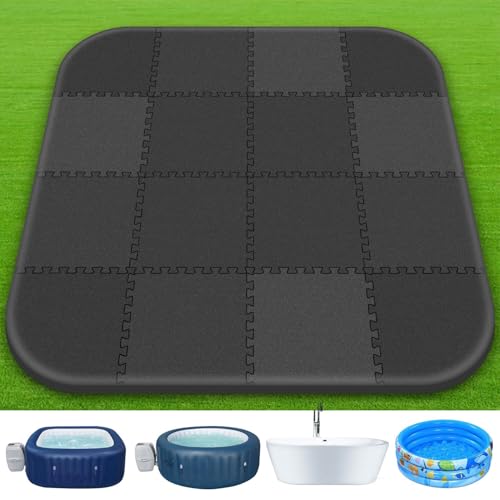
- Large 78-inch round size fits most standard inflatable and portable round hot tubs without leaving the floor exposed
- Felt top absorbs splashed water so owners don't have to mop the surrounding floor after every soak
- PE backing prevents absorbed moisture from reaching the floor underneath and adds grip to reduce slipping on wet surfaces
- Lightweight at 3.52 pounds and foldable for easy seasonal storage or relocation
- Can be cut to a custom size or shape, which adds flexibility for non-standard tub placements or tight spaces
Cons
- At 3 mm thick, the mat provides limited cushioning and may not offer significant insulation between a hot tub and a cold concrete surface
- The mat is designed for placement under the tub, so it won't protect surrounding walkway areas unless buyers purchase additional mats
- Owners with permanent or heavy acrylic hot tubs should verify that this mat suits their weight and drainage needs, as it's primarily marketed for inflatable and portable spa setups
The NOVWANG 78-inch round hot tub mat is a floor-protection accessory, not a hot tub cover or filter. It's designed to sit underneath a round hot tub - particularly inflatable or portable models - to absorb splashed water, reduce friction between the tub base and the floor, and protect surfaces from moisture staining or damage. This mat is best suited for inflatable hot tub owners placing their spa on a patio, deck, garage floor, or indoor surface where water runoff and slip hazards are concerns. Vacation-rental operators and seasonal spa users who frequently set up and break down inflatable tubs will also find the lightweight, foldable design convenient.
The listed 78-inch diameter is sized to accommodate round hot tubs up to 77 inches across, giving about a half-inch of overhang on each side. That's enough to catch minor splashes right at the tub's edge, though it won't extend far enough to cover a large surrounding walkway area. If the mat is too large for a particular tub, NOVWANG notes it can be trimmed down to a custom fit, which also means owners with oval or irregular placements can cut it to shape. Buyers should measure their tub's actual footprint before ordering to confirm the 78-inch diameter provides adequate coverage.
Construction uses a dual-layer approach: a felt top layer and a PE (polyethylene) backing. The felt surface is described as absorbing water and oil, which helps keep the area around the tub drier after use. The PE layer underneath serves two purposes - it acts as a waterproof barrier so absorbed moisture doesn't seep through to the floor, and it provides a non-slip grip against the surface below. At 3 mm thick, the mat adds a thin cushioning layer between the tub and the ground, which may help reduce vibration noise and minor surface scratching. However, 3 mm is relatively thin, so owners shouldn't expect substantial thermal insulation between a warm tub and a cold floor.
Setup and maintenance are straightforward. The mat weighs 3.52 pounds and ships folded to compact dimensions of approximately 12.6 x 7.9 x 5.9 inches, so it's easy to carry and store. To use it, simply unfold the mat on a clean, level surface and place the hot tub on top. Cleaning doesn't require washing during regular use - the manufacturer recommends air-drying in a ventilated spot or in sunlight, and wiping stains with soapy water as needed. When the season ends or the tub comes down, the mat folds back up for storage without taking much space.
There are some practical limitations worth noting. The 3 mm thickness won't do much to level an uneven surface or insulate against significant ground cold, so owners in cold climates placing a tub on concrete may still want additional insulation underneath. The mat is primarily marketed for inflatable and portable hot tubs, and owners of heavier permanent spas should consider whether the felt-and-PE construction can handle the sustained weight and drainage demands of a full-size acrylic shell. Additionally, while the PE layer is described as waterproof, prolonged standing water or heavy flooding around the mat could still create issues, so good drainage around the tub placement area remains important.
For inflatable hot tub owners, first-time spa buyers setting up a portable tub on a patio or deck, and vacation-rental operators who need a simple floor-protection solution, the NOVWANG 78-inch round hot tub mat offers a practical and affordable layer of defense. Its trimmable design and lightweight portability add flexibility that fixed mats can't match. Before purchasing, measure the full diameter of your hot tub's base to confirm the 78-inch mat provides the coverage you need, and consider whether the 3 mm thickness is sufficient for your specific surface and climate conditions.
The NOVWANG hot tub mat has a listed diameter of 78 inches and is designed to fit round hot tubs up to 77 inches in diameter. This leaves roughly half an inch of mat extending beyond the tub's edge on each side. Buyers should measure the actual base diameter of their hot tub rather than relying on the tub's advertised size, since inflatable tubs can vary slightly in footprint depending on inflation level and model.
If the 78-inch mat is larger than needed, the manufacturer states it can be cut to a smaller or custom shape. This is a useful feature for owners with slightly smaller tubs or those who need to fit the mat into a tight corner or irregular space. Keep in mind that cutting the mat is a one-way modification, so measure carefully before trimming.
The mat ships folded to approximately 12.6 x 7.9 x 5.9 inches and weighs 3.52 pounds. At 3 mm thick, it lies relatively flat under the tub. Owners who need a thicker pad for insulation or surface leveling may need to look at foam-based options in addition to or instead of this mat.
Day-to-day maintenance of the NOVWANG hot tub mat is minimal. The manufacturer recommends against washing the mat during regular use. Instead, owners can place the mat in a ventilated area or under sunlight to let it air dry after absorbing water. For visible stains, wiping the surface with soapy water should be sufficient.
Because the felt layer absorbs moisture, it's important to let the mat dry thoroughly between uses or before folding it for storage. Storing the mat while damp could lead to mildew or odor over time. Owners in humid climates or those who use their hot tub frequently should plan for regular drying sessions to keep the mat in good condition.
The foldable design makes off-season storage simple. Once the mat is clean and fully dry, fold it up and store it in a dry location. At 3.52 pounds, it's easy to move and doesn't take up much closet or garage space.

Determining the Ideal Hot Tub Pad Dimensions and Foundation Requirements
A hot tub pad should always measure larger than the outer dimensions of the spa cabinet. Building a pad that precisely matches the tub footprint creates severe installation and operational challenges. A safe standard is to extend the foundation at least four to twelve inches beyond the cabinet edge on all sides, with even greater allowances for steps and lifters. Understanding these physical dimensions guarantees a stable, code-compliant foundation that preserves the structural integrity of your hot tub for years to come.
The Foundation Dimension Rule: Shell Footprint Plus Perimeter Buffers
Most residential hot tubs range from six feet by six feet for compact models up to eight feet by eight feet or larger for multi-person acrylic spas. When contractors pour a pad exactly flush with an eight-foot cabinet, the edges of the concrete are vulnerable to chipping and structural degradation. Sinking anchor bolts or setting down heavy cabinet corners near the edge of unreinforced concrete can fracture the slab. Pouring an oversized foundation gives the structure greater stability and prevents point-load failure along the perimeter.
Extending the base beyond the hot tub cabinet also creates a practical barrier against mud, debris, and ground moisture. When bathers enter and exit the water, splashing is inevitable. A perimeter apron of concrete, gravel, or protective matting keeps water runoff away from the surrounding lawn and prevents soil erosion around the foundation base. Also, this clean walkway prevents bathers from tracking grass clippings and dirt into the spa, which protects the cartridge filters from premature clogging.
Clearance Allowances for Cover Lifters and Access Steps
Cabinet measurements only represent the spa when it is closed and sitting idle. Spa accessories alter the required footprint dramatically once installed. Standard pivot-style cover lifters need between twelve and twenty-four inches of clearance behind the spa cabinet so the folded cover can rest comfortably. If you choose an oversized hot tub cover or hydraulic lifter, check the specific pivot arc to ensure the rear edge of the slab accommodates the full swing without hitting a fence or exterior wall.
Spa entry steps demand substantial horizontal ground space on the primary entrance side. A standard two-tier or three-tier outdoor spa step requires roughly twenty-four to thirty-six inches of level foundation depth to sit firmly without tipping. Placing spa steps directly on soft turf or loose soil creates a serious tipping hazard when wet. Extending the pad forward ensures that both the hot tub cabinet and the entry steps rest on the same unified, level surface.
National Electrical Code Clearances and Equipment Maintenance Access
National Electrical Code safety guidelines, specifically NEC Article 680, impose strict spatial rules on outdoor spa installations. The dedicated emergency disconnect switch or GFCI breaker panel must be installed within sight of the hot tub, yet mounted at least five feet away from the inside water edge. Planning your pad dimensions requires factoring in this electrical corridor so conduits, trenching, and disconnect boxes fit neatly within the designated backyard layout without crowding walkways.
Every hard-shell hot tub features an equipment access panel that conceals the pump wet ends, pack controllers, titanium heating elements, and plumbing slice valves. Certified technicians require a minimum of three feet of unobstructed clearance in front of this maintenance panel to perform diagnostic checks or swap out parts. Pouring a foundation that abuts directly against a deck railing, privacy fence, or house siding makes simple heater repairs or pump servicing virtually impossible without draining and moving the entire hot tub.
Calculating Total Structural Weight and Ground Load Distribution
The physical dimensions of a pad directly influence how water weight is distributed across the underlying soil. A typical six-person acrylic hot tub has a dry weight of approximately eight hundred pounds, but holds around four hundred gallons of water. Because water weighs roughly 8.34 pounds per gallon, the liquid alone adds over three thousand three hundred pounds. When you include six adult bathers averaging one hundred seventy-five pounds each, the total operating weight easily exceeds five thousand pounds.
Dividing that massive five-thousand-pound load by an eight-foot by eight-foot footprint yields a structural load requirement between one hundred and one hundred fifty pounds per square foot. If the foundation pad is too small or lacks adequate subgrade compaction, this concentrated weight forces the slab to settle unevenly. Uneven settling twists the internal wooden or composite framing, places immense shear stress on acrylic shell footwells, and can snap glued PVC plumbing manifolds.
Foundation Material Types: Concrete, Compacted Gravel, and Modular Grids
Poured concrete remains the industry benchmark for supporting heavy, hard-shell acrylic hot tubs. A poured slab should measure at least four inches thick and utilize 4,000 PSI concrete reinforced with rebar or welded wire mesh. To handle five thousand pounds without cracking, the concrete must cure on top of a four-inch base of compacted crushed gravel rather than raw topsoil. Pouring the slab so it extends six to twelve inches past the spa cabinet provides dependable edge strength and peace of mind.
Crushed stone or gravel pads offer an effective, permeable alternative when concrete pouring is impractical or prohibited by local zoning. A gravel pad should consist of four to six inches of crushed angular gravel, such as three-quarter-inch crushed stone, tightly packed within a sturdy treated-timber perimeter box. The gravel bed must extend at least twelve inches beyond the hot tub dimensions on all sides to retain its structural integrity under heavy soaking loads while offering excellent water drainage.
High-density structural plastic spa pads, composed of interlocking polymer grids, provide a modular solution that can sit atop leveled sand or compacted gravel. These interlocking tiles distribute heavy point loads across a wide surface area to prevent sinkholes. When using modular plastic pads, you should still size the overall assembly slightly larger than the hot tub to give the cabinet corners stable support and prevent sliding during vigorous bather movement.
Protective Flooring Mats and Thermal Insulation for Inflatable Spas
Inflatable and portable plug-and-play hot tubs have unique foundation requirements compared to rigid acrylic models. While an inflatable spa is lighter when empty, it still carries substantial weight when filled with water and requires complete ground protection against punctures. Circular and square mats measuring seventy-eight inches, eighty inches, eighty-five inches, or one hundred inches match standard portable spa footprints. These durable floor mats shield the soft PVC floor from abrasive concrete, sharp stone debris, and stray twigs that could compromise the air chamber.
Thermal heat loss through the bottom of a portable tub can rapidly drive up monthly electrical bills in cooler weather. Interlocking high-density EVA foam pads that measure one-half inch thick create a crucial thermal barrier between cold ground surfaces and the spa water. Using an insulating base alongside a durable hot tub cover with warranty protection helps maintain soaking temperatures without placing excessive strain on the heating element. This added foam cushioning also makes sitting on the floor of an inflatable tub much more comfortable for bathers.
Protective mats crafted from thick felt with waterproof polyethylene backing serve a dual purpose for outdoor patios. The absorbent felt layer captures splashed water, prevents slippery puddles, and dampens mechanical vibration from circulating pumps. Meanwhile, the non-slip waterproof backing grips the patio concrete and blocks ground moisture from seeping upward. Many of these mat options can be custom cut, allowing you to tailor the dimensions around specialized steps, corner seating, or external pump housing units.
Leveling Tolerances and the Danger of Sloping Foundations
A hot tub foundation must be flat and level within one-half inch across its entire diagonal span. Some homeowners mistakenly assume that standard patio drainage slopes, which pitch one-quarter inch per foot, are acceptable for a hot tub base. However, placing a four-hundred-gallon spa on a sloped surface creates severe hydraulic imbalance. Water naturally seeks its own level, shifting thousands of pounds of pressure against the downhill cabinet wall while leaving uphill jets partially exposed.
Operating a hot tub on an unlevel surface leads to serious mechanical and structural failures over time. Water levels at the skimmer weir can drop too low on the uphill side, causing the circulation pump to suck air and trigger flow error codes. The uneven weight distribution also bends internal wooden framing, warps acrylic lips, and causes persistent stress cracks around jet housings. Taking time to establish a true, flat grade prevents these costly repairs and ensures even water depth across all massage seats.
Site Layout and Pre-Pour Excavation Step by Step
Executing a successful pad installation begins with precise measurement and staking before any digging starts. Use batter boards, stakes, and mason line to outline the outer perimeter, making sure to include your four- to twelve-inch buffer margins. Measure diagonally from corner to corner; if both diagonal measurements are identical, your layout is perfectly square. Mark the ground with landscaping spray paint to guide the excavation team and prevent accidental encroaching on property lines or utility setbacks.
Excavate the marked area to a depth of roughly eight inches to remove all organic topsoil, turf, and root systems that could decay and cause voids. Lay down commercial-grade geotextile filter fabric across the excavated dirt to prevent weed growth and stop the gravel base from sinking into the subsoil. Add four inches of crushed aggregate stone and run a motorized plate compactor over the surface until the gravel bed is rock hard and completely flat.
Construct your wood concrete forms using straight two-by-four or two-by-six lumber, securing them with exterior wooden stakes. Double-check all elevations using an eight-foot carpenter level or transit level to guarantee the forms have zero slope. If you plan to route electrical conduit underground through the bottom of the spa cabinet, install the conduit stub inside the forms before pouring. Once the reinforced concrete is poured, screeded, and finished, allow it to cure for a minimum of seven to fourteen days before scheduling spa delivery.
Selecting the proper dimensions for your hot tub foundation protects your property, streamlines electrical hookups, and ensures long-term hydrotherapy enjoyment. By adding generous buffers for cover lifters, steps, and equipment access, you eliminate cramped maintenance situations and create an inviting backyard space. A level, structurally sound pad provides the exact support your spa needs to perform reliably through countless relaxing soaks.






Write Your Review
No reviews yet. Be the first to share your experience!