
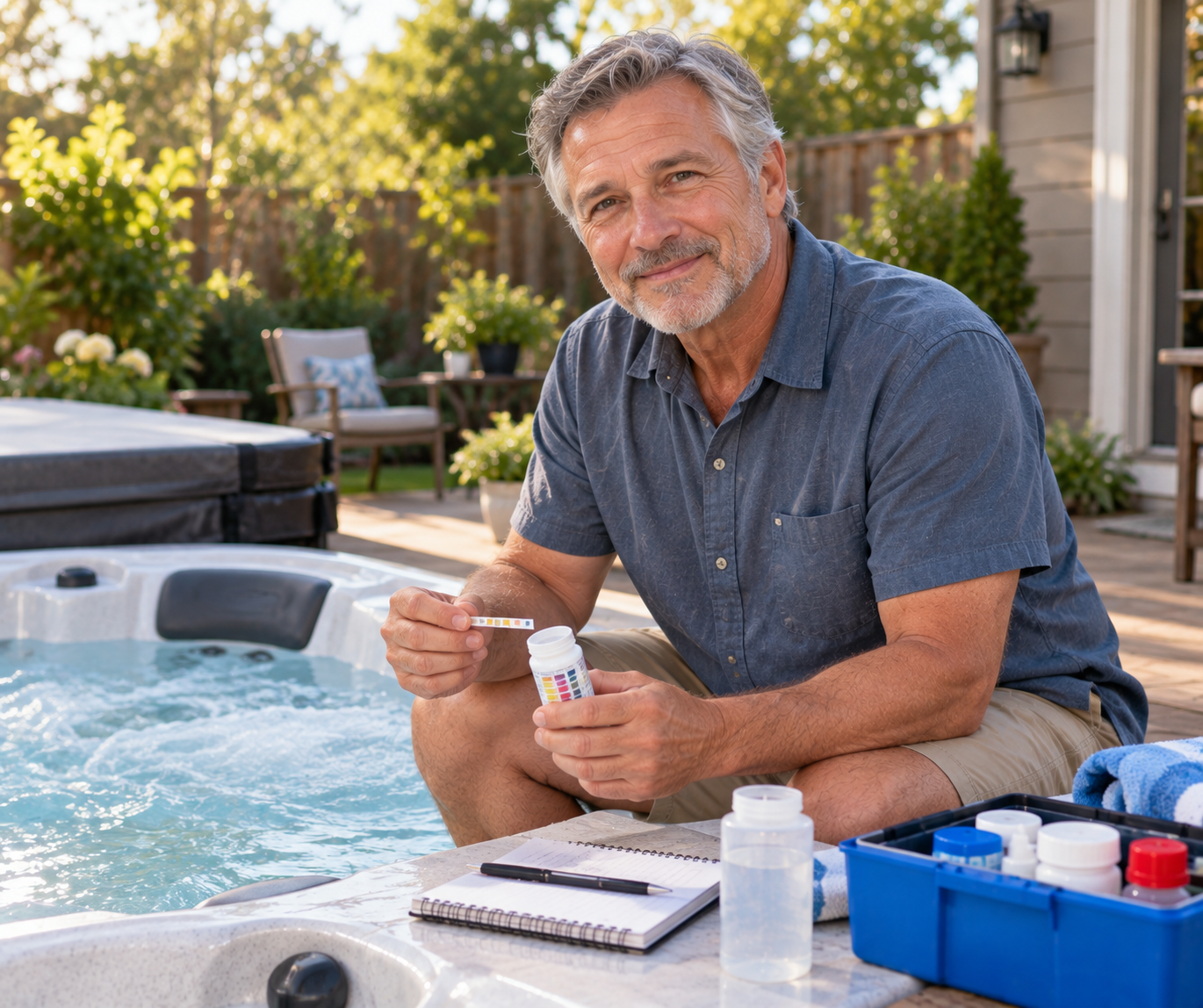

Stepping into a backyard spa expecting crystal-clear water only to find a dull, milky haze is a frustrating experience for any spa owner. Many hot tub caretakers assume that cloudy water indicates bacterial contamination or insufficient sanitizer, prompting them to add even more chemicals. However, you might wonder whether can too much chlorine make hot tub cloudy after dosing your spa heavily. While chlorine is an essential EPA-registered sanitizer designed to destroy organic contaminants and control algae growth, dumping excessive amounts into hot water can trigger unintended chemical reactions that actively sabotage water clarity.
Maintaining balanced spa chemistry requires managing free chlorine, total alkalinity, pH levels, and total dissolved solids simultaneously. When chemical additions push water parameters out of their ideal ranges, suspended mineral particles and undissolved sanitizer can quickly form a stubborn haze across the water surface. Protecting your investment with a quality yard patio hot tub cover shields the water from outdoor debris, but internal chemical dynamics determine whether the water stays clear. Understanding how heavy chlorination impacts water balance will help you diagnose the root cause of cloudiness and restore pristine water quickly.




Resolving Cloudy Spa Water from Chlorine Overdose and Chemical Imbalance
Hot tub water turns cloudy when microscopic particles become suspended in the liquid and scatter light rather than allowing it to pass cleanly through. While under-chlorinated water often turns cloudy due to unchecked bacterial growth or accumulating bather waste, adding too much chlorine can also create a milky appearance. High sanitizer spikes frequently alter water balance, force dissolved minerals out of solution, and saturate the spa with chemical byproducts. Addressing this issue requires looking beyond basic sanitizer levels to evaluate how chemical additions interact with total water chemistry.
The Direct Link Between High Chlorine and Water Turbidity
Adding a large dose of chlorinating granules introduces active chemical compounds that rapidly react with everything in the water. Quick-dissolving products like AquaDoc Hot Tub Chlorine Granules are engineered to dissolve swiftly to sanitize water, but dumping excessive amounts at once can temporarily exceed the water’s solubility limits. When granules fail to dissolve completely because of water saturation or low water temperatures, tiny particles circulate through the plumbing and create a hazy, turbid appearance. Circulating water continuously with the jets running helps disperse granules, but massive overdoses will overwhelm the physical carrying capacity of the spa water.
Beyond physical dissolution limits, super-chlorination rapidly oxidizes organic matter, oils, and lotions present in the bather load. This rapid chemical breakdown creates dead organic debris and micro-flocs that are too small for standard cartridge filters to catch immediately. As these microscopic oxidized particles drift throughout the spa, the water takes on a dull or grayish haze. Running the filtration system consistently allows the pleated paper cartridge to capture these micro-contaminants over several filtration cycles.
Cyanuric Acid Buildup and Granular Dichlor Overdosing
Most standard hot tub chlorine granules utilize sodium dichloroisocyanurate, commonly referred to as dichlor. Dichlor is a stabilized form of chlorine containing roughly fifty percent cyanuric acid by weight, which protects the chlorine molecule from breaking down under outdoor ultraviolet light. While cyanuric acid is helpful in outdoor swimming pools, it does not evaporate or break down in hot tubs. Every single dose of dichlor added to your spa permanently increases the cyanuric acid concentration until the spa is completely drained and refilled.
When cyanuric acid concentrations climb above fifty to one hundred parts per million, a condition known as chlorine lock or cyanuric acid over-stabilization begins to develop. High levels of stabilizer bind tightly to the chlorine molecules, severely reducing the amount of active hypochlorous acid available to sanitize the water. In this state, a test strip may indicate extremely high total chlorine, yet the water turns cloudy because the bound sanitizer cannot kill bacteria or oxidize bather waste effectively. Overdosing dichlor in an attempt to clear this initial cloudiness only compounds the problem by raising cyanuric acid and total dissolved solids even further.
Calcium Carbonate Precipitation and pH Disruption
Water clarity depends heavily on the delicate equilibrium between pH, total alkalinity, and calcium hardness. The ideal pH range for residential hot tubs is 7.2 to 7.8, while total alkalinity should remain buffered between 80 and 120 parts per million. When excessive chlorine is added, it can disrupt this balance, especially if you add strong chlorinating shocks or alkaline sanitizers that push pH upward. If the pH climbs above 7.8 alongside high alkalinity, calcium dissolved in the water becomes unstable and falls out of solution.
This chemical precipitation transforms invisible calcium ions into millions of suspended calcium carbonate crystals. The result is an instant milky or chalky haze that spreads across the entire spa within hours of chemical dosing. These fine mineral particulates will not disappear by adding more sanitizer; in fact, adding more chlorine can worsen the chemical imbalance. The water will remain turbid until the pH and total alkalinity are adjusted downward with an acid decreaser, allowing the calcium to redissolve back into the water.
Combined Chlorine and Chloramine Odor Confusion
Many hot tub owners mistake a strong chemical smell for an excess of free, active chlorine. In reality, that pungent, irritating chlorine odor usually indicates the presence of chloramines, also known as combined chlorine. Chloramines form when free chlorine binds with nitrogen-rich contaminants such as sweat, body oils, cosmetics, and urine. Combined chlorine has almost zero sanitizing power, but it causes burning eyes, skin irritation, and noticeable water cloudiness.
When owners smell this strong odor and notice cloudy water, they often assume they have added too much sanitizer and stop treating the spa entirely. Alternatively, some owners add a small dose of chlorine that is insufficient to reach the breakpoint chlorination threshold required to burn off the chloramines. Breakpoint chlorination requires adding enough oxidizer to destroy the combined chemical bonds completely. If you are experiencing cloudiness alongside strong odors, testing both free chlorine and total chlorine separately is crucial for diagnosing whether you have true excess chlorine or lingering chloramines.
Using Non-Chlorine Shock to Restore Clarity Without Adding Chlorine
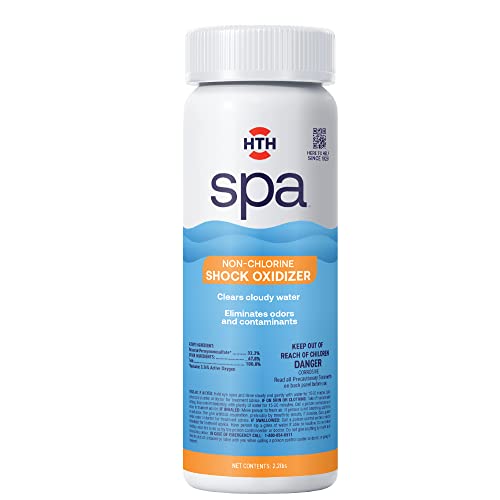
When your hot tub has high sanitizer levels yet remains cloudy from oxidized organic waste, adding more chlorine granules is counterproductive. This scenario is where non-chlorine oxidizing shocks become invaluable for routine water maintenance. Formulations such as AquaDoc Non Chlorine Hot Tub Shock and HTH Spa 86135 Non Chlorine Shock Oxidizer utilize potassium peroxymonosulfate to oxidize contaminants without raising chlorine residuals. These oxygen-based oxidizers break down oils, cosmetics, and chloramines, allowing the filtration system to clear the water quickly.
Non-chlorine shock oxidizers provide a distinct advantage because they work alongside both chlorine and bromine systems without increasing cyanuric acid levels. Products like SpaGuard Spa Shock Oxidizer for Spas & Hot Tubs are specifically designed to eliminate microscopic organic waste and stabilize water clarity without leaving residual biocides. Because non-chlorine shock does not raise free chlorine, bathers can safely enter the spa shortly after treatment, typically within fifteen minutes of application while the water circulates. Using an oxygen shock on a weekly schedule prevents the organic buildup that often tempts spa owners to overdose on chlorine granules.
Diagnostic Testing: Reading Test Strips During Sanitizer Spikes
Accurate testing is the only reliable way to confirm whether high chlorine is causing your water clarity issues. Standard test strips measure free chlorine, total chlorine, pH, total alkalinity, and calcium hardness. However, when free chlorine spikes above ten parts per million, a phenomenon called reagent bleaching frequently occurs. The extreme sanitizer concentration bleaches the indicator dye on the test pad, making the pad appear pale yellow or completely white within seconds of being dipped.
Spa owners unaware of reagent bleaching often misinterpret the pale test pad as a sign of zero chlorine and add another heavy dose of sanitizer to the cloudy tub. If you suspect your sanitizer levels are exceedingly high, perform a simple dilution test to verify the reading. Mix equal parts of spa water and distilled water in a clean cup, dip a fresh test strip, and multiply the resulting chlorine reading by two. If the diluted sample shows a vivid purple or dark reading, your spa is heavily over-chlorinated, and you must pause all chemical additions immediately.
Step-by-Step Recovery Process for Over-Chlorinated Spa Water
Restoring clarity to an over-chlorinated and cloudy hot tub requires a systematic approach to lower chemical levels and remove suspended particulates. Your first step is to turn off all automated chemical feeders and stop adding any sanitizing products. Remove your durable hot tub cover with warranty and set it aside to allow sunlight and outdoor air to interact with the water surface. Ultraviolet rays from direct sunlight naturally break down free chlorine molecules, rapidly lowering sanitizer levels over a few sunny hours.
Next, activate the primary jet pumps on high speed with the air control diverters open for at least twenty to thirty minutes. Vigorous aeration encourages dissolved chlorine gas to off-gas into the atmosphere, which steadily reduces sanitizer concentration while promoting water movement through the filter housing. While the pumps run, check the physical filter cartridge to ensure it is not clogged with mineral dust or trapped oils. If the water remains milky due to high calcium or excessive cyanuric acid, draining one-third to one-half of the water volume and refilling with fresh tap water is the fastest way to dilute total dissolved solids and restore baseline balance.
Mechanical Filtration and Cartridge Maintenance
Chemicals alone cannot maintain pristine spa water without efficient mechanical filtration to pull suspended matter out of circulation. Most residential hot tubs utilize pleated polyester cartridge filters designed to trap particles down to twenty or thirty microns. When heavy chlorination precipitates minerals or oxidizes organic residue into fine debris, these microscopic particles can coat the filter pleats and restrict water flow. Reduced water flow triggers topside error codes such as low-flow or flow switch errors, which can shut down the heater and circulation pump.
Inspect your filter cartridge whenever cloudiness appears following a chemical addition. Remove the cartridge from the filter well and rinse between each pleat using a pressurized garden hose nozzle to wash away trapped chalky residue. If the pleats feel oily or discolored from lotion buildup, soak the cartridge in a dedicated spa filter degreasing solution rather than household soap. Ensure your topside control pack is programmed for adequate filtration runtime, ideally running continuous low-speed circulation or two daily filtration cycles of at least two to four hours each.
Dosing Discipline and Long-Term Prevention Strategies
Preventing recurring cloudy water requires calculating precise chemical dosages tailored to your specific spa volume. Most residential hot tubs hold between three hundred and five hundred gallons of water, meaning small chemical additions create significant swings in water parameters. Using large containers like AquaDoc Hot Tub Chlorine Granules is economical for ongoing maintenance, but you must always measure doses carefully with a dedicated measuring scoop. A typical maintenance dose of granular dichlor is merely one-half to one tablespoon for a four-hundred-gallon spa after each soak.
Always broadcast chlorine granules evenly across the water surface with the circulation pumps running and the air controls turned off to prevent undissolved clumps from sinking to the shell bottom. Maintain free chlorine residuals strictly between 3.0 and 5.0 parts per million, avoiding unnecessary super-chlorination unless you are remediating severe algae or opening a fresh fill. Implementing a balanced routine that combines small daily sanitizer additions with weekly non-chlorine shock oxidation will keep water crystal clear without saturating the spa with excess chemicals.
Managing hot tub chemistry is a continuous balancing act between sanitation, mineral saturation, and mechanical filtration. When cloudiness occurs after adding chemicals, pausing sanitizer additions and testing water parameters methodically will prevent costly mistakes. Allowing high chlorine levels to dissipate naturally, keeping the filter clean, and diluting over-stabilized water ensures your spa remains safe, inviting, and crystal clear for every soak.






Write Your Review
No reviews yet. Be the first to share your experience!