

Stubborn waterline scum and settled grit at the floor slope can turn swimming pool upkeep into a daily chore. Wrestling with tangled floating cords and hauling heavy hoses across the deck drains all the fun out of owning a pool. Upgrading to the best aiper pool cleaner provides true cordless freedom, letting dual active scrubbers and high-capacity suction lift sand, dead algae, and leaves on complete autopilot. Many pool owners who balance swimming pool care with other backyard amenities, such as maintaining a winter hot tub setup, know that automated filtration saves hours of manual vacuuming.
Based on product specifications and user feedback, modern battery vacuums now tackle tricky spots where older cleaners get stuck, including main drains and steep transitions. Models packed with ultra-fine filtration capture microscopic debris down to 3 microns while scrubbing two inches above the waterline to wipe out greasy sunscreen rings. Our evaluation of manufacturer data and motor flow rates shows that smart route planning significantly cuts cycle times compared to random bounce patterns. You’ll spend far less energy brushing the plaster, saving both your back and your weekend free time.





Frequently Asked Questions
Can a cordless robotic pool cleaner climb walls and scrub the waterline?
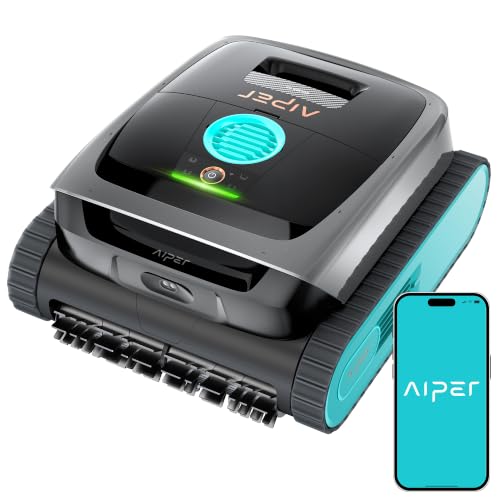
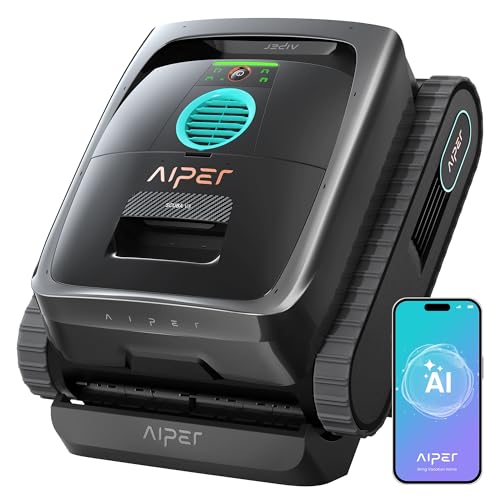
Yes, advanced cordless pool cleaners use caterpillar tracks and directional water jets to climb vertical walls and scrub the waterline. Units like the Scuba S1 and Scuba X1 utilize active PVC brushes and specialized algorithms to reach up to two inches above the water surface. This lateral movement scrubs away stubborn pollen rings and oily scum lines without slipping back down.
How well does the best aiper pool cleaner handle fine sand and algae?
Very effectively, provided the unit features multi-layer filtration with ultra-fine inserts. A dual-stage system combines a 180-micron mesh basket for leaves with an ultra-fine 3-micron filter designed to trap fine silt and microscopic algae spores. This fine particle capture keeps water sparkling without blowing cloudy dust back out into the pool.
Are cordless pool cleaners safe for vinyl liners and fiberglass pools?
Yes, cordless robotic pool cleaners are designed to operate safely on vinyl, fiberglass, and gunite surfaces. Soft PVC rollers and rubber treads provide traction without scratching gel coats or tearing delicate vinyl seams. Unlike older pressure-side units with rigid wheels, these cordless cleaners distribute their weight evenly across floor contours.
How do you retrieve a cordless pool cleaner once the battery cycle finishes?
Most units activate automatic edge parking or waterline docking as soon as the cleaning cycle ends. The robot drives itself to the pool wall or floats to the waterline and pauses for several minutes so you can lift it out without diving into the deep end. You can easily grab the handle from the pool deck, keeping your hands dry and saving you from fishing around with a pole hook.
How should you store a cordless pool cleaner during the winter?
Store the clean, dry unit indoors in a climate-controlled space away from freezing temperatures. Just as seasonal care protects a portable spa or an inflatable hot tub during harsh weather, keeping lithium-ion pool batteries above freezing prevents cell degradation. Charge the battery to roughly 50 percent before putting it away to preserve long-term battery health for 2026.




Write Your Review
No reviews yet. Be the first to share your experience!