


Maintaining clean spa water requires reliable mechanical filtration that captures suspended debris before it reaches your circulation pump. When spa owners replace an old cartridge for the first time, many wonder if are all hot tub filters the same size or whether spas follow a single universal standard. The short answer is no, because filter housings vary across acrylic spas, rotomolded plug-and-play units, and portable inflatable tubs. Forcing an incompatible cartridge into your filter canister can cause bypass leaks, low water flow, and unnecessary strain on the pump motor.
Pairing proper mechanical filtration with a durable hot tub cover with warranty helps protect your water balance from outdoor dirt and heat loss. Cartridge filters come in dozens of physical shapes with specific end caps, pipe threads, and surface area ratings designed for precise hydraulic flow. Identifying the exact measurements of your existing unit prevents expensive plumbing damage and keeps your sanitizing chemicals working efficiently. In the guide below, you will find a comparison of popular replacement cartridges followed by practical steps to measure and select the right fit for your spa.


Physical Sizing and Compatibility of Hot Tub Filter Cartridges
The direct answer to whether hot tub filters share a standard size across the spa industry is an unequivocal no. Every spa manufacturer designs plumbing circuits, circulation pumps, and filter canisters around specific flow rates and space constraints. A compact plug-and-play tub uses vastly different filtration hardware than a multi-pump acrylic spa or an inflatable soaking tub. Installing the wrong cartridge can disrupt water circulation, damage internal equipment, and leave you with cloudy water.
Why Hot Tub Filter Sizes Differ Across Spa Brands
Manufacturers engineer filter compartments to match the precise hydraulic volume moved by their circulation pumps. High-output hydrotherapy pumps moving dozens of gallons per minute require larger surface areas to keep water flowing freely through the pleated media. Smaller spas with low-wattage circulation pumps or 110V electrical systems utilize more compact canisters to conserve interior cabinet space. Because there is no universal industry mandate for spa dimensions, brand engineers select cartridge geometries that best serve their proprietary plumbing layouts.
Engineering variations also reflect the structural design of different spa shells. Hard-shell acrylic tubs often house top-loading canisters built directly into the acrylic lip, which accommodates tall, narrow cylinders. In contrast, rotomolded plastic tubs frequently position the filter inside a molded corner well that requires a threaded base to hold the cartridge securely against jet suction. Inflatable hot tubs take an entirely different approach by placing tiny filter housings directly over the underwater suction grate.
The Four Key Dimensions Required for Proper Filter Sizing
Finding a matching replacement cartridge begins with measuring the outer diameter across the widest part of the end cap. You should measure straight across the circular plastic cap from outer edge to outer edge using a standard tape measure or ruler. Common spa filter diameters include five inches, five and three-eighths inches, and seven or eight inches for heavy-duty commercial housings. Even a difference of half an inch can prevent a cartridge from sliding into the canister or allow dirty water to bypass the media entirely.
The second dimension you need is the overall length of the cartridge. To measure length accurately, measure from the outside face of the top end cap down to the outside face of the bottom end cap. Do not include extended handles, strings, or protruding threaded fittings in this measurement unless a manufacturer specification explicitly lists total length including threads. Standard lengths commonly range from around nine and a half inches up to thirteen and five-sixteenths inches for residential acrylic spas.
The third factor is the top end cap configuration, which dictates how the cartridge sits inside the canister or lid. Some filters feature an open hole that allows water to enter from the top, while others have a completely closed end cap to force water inward through the pleats. Many closed caps include a molded plastic handle or a flexible string handle to help you pull the cartridge out of deep filter wells. Choosing a cartridge with a raised handle when your canister lid requires a flat cap will prevent the canister from sealing properly.
The fourth critical dimension involves the bottom end cap opening and connection type. Hot tub filters generally feature either an open center hole that slips over a standpipe or a threaded male fitting that screws into the base of the canister. Open hole connections usually measure two and one-eighth inches across the inner diameter to seat over standard spa plumbing. If your spa utilizes a threaded connection, you must identify both the diameter of the fitting and the specific thread pitch.
Distinguishing Between Thread Types and Slip-Fit Connections
Threaded filter end caps generally fall into two distinct mechanical categories that cannot be interchanged. Male Pipe Thread fittings, often abbreviated as MPT, feature fine, tightly spaced threads that taper slightly to create a snug seal within the plumbing port. A common size is one and a half inch MPT, which is widely used in rotomolded and portable plug-and-play models. Coarse threads, frequently called SAE or buttress threads, have wide, square-edged ridges designed for quick installation with only a few turns.
Forcing a coarse-threaded cartridge into a fine-threaded receiver will instantly strip the plastic plumbing fittings inside your spa. Replacing a stripped filter adapter often requires draining the tub, opening the equipment cabinet, and cutting out glued PVC pipe fittings. Slip-fit cartridges avoid threads entirely by sliding directly over a rigid plastic standpipe inside the filter well. These open-bottom filters rely on gravity, suction, or a lock-ring lid to keep the cartridge seated securely against the lower intake gasket.
Surface Area Ratings and Pleat Density Variations
Two filter cartridges can share identical exterior dimensions while providing completely different amounts of filtration fabric. For example, a standard five-inch by thirteen and five-sixteenths-inch cartridge is commonly sold in both twenty-five square foot and fifty square foot configurations. The square footage rating reflects the total surface area of the unfolded pleated fabric packed inside the core. A fifty-square-foot model contains twice as many pleat folds packed tightly around the inner core as a twenty-five-square-foot model of the exact same size.
Higher square footage provides more surface area to trap fine debris, body oils, and suspended particles. This increased fabric area allows the cartridge to hold more dirt between cleanings while maintaining steady water clarity. However, excessively dense pleating can slightly increase resistance to water flow in low-horsepower circulation systems. Advanced materials like trilobal filtration fabric feature three-lobed fibers that capture dirt more effectively than flat paper fibers without choking pump flow.
When choosing between different surface areas for the same housing, consider your typical bather load and pump capacity. Heavy spa usage with multiple bathers benefits from fifty-square-foot cartridges that capture lotions and cosmetic oils before water turns cloudy. Vacation homes or infrequently used tubs can run smoothly on twenty-five-square-foot media that offer minimal hydraulic resistance. Always confirm that your circulation pump produces enough head pressure to move water through tightly pleated fabric without triggering low-flow sensor errors.
Comparing Acrylic, Rotomolded, and Inflatable Spa Filters
Hard-shell acrylic spas represent the most diverse category of filter configurations on the market. These spas typically utilize large drop-in cartridges with open holes on both ends or specialized top-mount canisters that secure with threaded lock rings. Many acrylic models feature dual-cartridge systems where one filter handles continuous circulation while the second engages during high-speed hydrotherapy cycles. Maintaining a fitted yard patio hot tub cover keeps organic debris out of these large canisters, reducing the strain on your primary pump.
Rotomolded polyethylene spas frequently utilize compact threaded filters located in a corner skim filter compartment. Models such as Free Flow, AquaTerra, and Fantasy spas often employ nine and a half-inch cartridges with fine MPT threads and integrated top pull-strings. Because rotomolded spas usually operate on dedicated 110V circuits with single-speed or two-speed pumps, their filter housings are engineered for minimal drag. Installing an oversized or improperly threaded cartridge in a rotomolded unit can cause water to bypass the filtration chamber entirely.
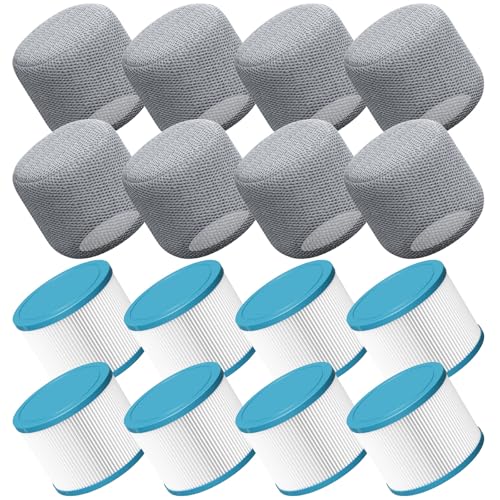
Inflatable hot tubs use radically smaller filter cartridges compared to permanent acrylic or rotomolded spas. Brands like RELX-TIME, Aleko, and Aquaspa rely on small cylindrical cartridges that screw directly onto an underwater suction port inside the pool liner. These compact cartridges possess only a few square feet of fabric surface area, which means they clog rapidly when exposed to sunscreen or heavy bather loads. Because of their tiny size, manufacturers recommend rinsing them every couple of days and replacing them frequently to prevent pump motor failure.
Mechanical Consequences of Using the Wrong Filter Size
Installing an undersized filter creates open gaps between the cartridge end caps and the housing seals. When water encounters these gaps, it follows the path of least resistance and flows around the filter rather than through the pleated media. This bypass allows hair, grit, and dead algae to enter the internal plumbing lines where they can clog heater elements and seize delicate pump impellers. Over time, unfiltered water leads to severe scale accumulation, cloudy conditions, and frequent sanitizing chemical spikes.
An oversized filter or an incompatible end cap creates the opposite mechanical problem by severely restricting water intake. When a pump cannot draw sufficient water through the filter, it creates a vacuum condition known as pump cavitation. Cavitation generates tiny vapor bubbles that collapse violently against the pump impeller, causing internal pitting and loud humming noises. Furthermore, reduced water flow prevents heat dissipation across the heater element, triggering high-limit sensor shutdowns and topside flow error codes like FLO or DR.
How to Read Part Numbers and Manufacturer Cross-References
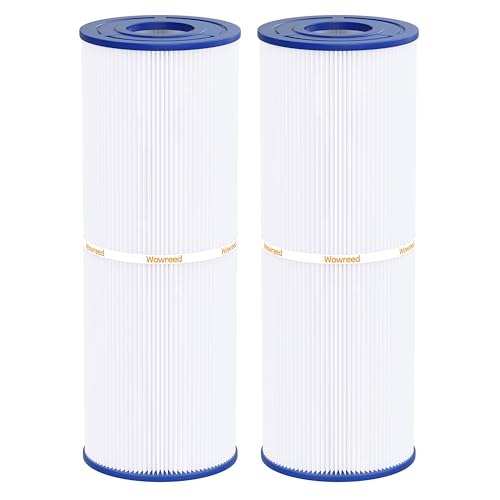
Most filter cartridges have an identification code stamped directly into the plastic on one of the end caps. Major filtration manufacturers like Unicel, Filbur, and Pleatco assign standardized part numbers that correspond to specific physical dimensions. For example, a Unicel code like C-4326 designates a five-inch by thirteen and five-sixteenths-inch cartridge with open holes on both ends. Once you locate this embossed number, you can easily cross-reference it with compatible aftermarket replacements from brands like POOLPURE or Wowreed.
If the manufacturer markings have worn off or become illegible from chemical exposure, you can identify the model using your four core measurements. Cross-reference guides match outside diameter, overall length, and top and bottom hole styles to established industry part numbers. Many replacement cartridges list multiple compatible part numbers on their product packaging to confirm fit across various brands. Keeping a written note of your verified filter part number inside your spa manual saves time whenever you need to reorder supplies.
Cleaning Schedules, Fabric Care, and Replacement Intervals
Even the best-fitting filter cartridge will restrict water circulation if it becomes coated with mineral scale and body oils. You should remove your hard-shell spa filter every two to three weeks and rinse the pleats thoroughly using a garden hose nozzle. Once a month, soak the cartridge in a dedicated spa filter cleaning solution to break down greasy residues that standard water pressure cannot dislodge. Protecting your water surface with a foldable hot tub cover minimizes the amount of airborne pollen and dust your filter must catch.
High-pressure car wash sprayers and household laundry detergents should never be used to clean pleated spa cartridges. Intense water pressure from a pressure washer can easily rip the delicate trilobal fabric and separate the pleats from the molded end caps. Laundry detergents leave behind soapy residues that cause uncontrollable foaming the moment you restart your hydrotherapy jets. Gentle rinsing combined with proper chemical soaking preserves the structural integrity of the pleats and keeps filtration pores open.
Standard hard-shell spa filter cartridges typically last twelve to twenty-four months before the fabric loses its porosity. Over repeated cleanings, the microscopic pores in the fabric stretch or permanently clog with calcified minerals. Inflatable hot tub filters operate under much tighter constraints and usually require replacement every two to four weeks depending on usage. You can tell a cartridge has reached the end of its lifespan when the pleats feel fuzzy, the end caps crack, or your spa repeatedly shows flow error codes despite cleaning.
Troubleshooting Filter Seating and Air Locks After Installation
When inserting a fresh replacement filter, always verify that the cartridge seats squarely against the bottom intake port. A cartridge that sits tilted inside the canister will allow dirty water to bypass the media and may prevent the canister lock ring from closing. For threaded models, turn the cartridge gently by hand until the threads catch smoothly, taking care never to over-tighten the fitting. Hand-tight tension is sufficient to create a watertight seal without risking cracked end caps or stripped internal fittings.
Air trapped beneath a freshly installed cartridge can enter the intake line and cause an air lock in your circulation pump. To prevent air locks, submerge the new filter cartridge in water at an angle before sliding it into the well, allowing trapped air to escape the pleats. If your pump hums without moving water after a filter change, shut off power at the breaker and bleed the air from the filter housing bleeder valve. Ensuring smooth water flow through a properly sized, air-free cartridge guarantees reliable heating and pristine water for every soak.
Taking a few minutes to measure outer diameter, length, and end cap styles ensures you select the correct filter for your hot tub model. Standardized dimensions do not exist across the spa industry, making accurate verification essential for equipment longevity. A properly sized cartridge protects your heater, prevents pump cavitation, and maintains sparkling water clarity with minimal chemical demand. Always check your spa manual or existing cartridge markings before purchasing to enjoy uninterrupted relaxation in your backyard spa.







Write Your Review
No reviews yet. Be the first to share your experience!