


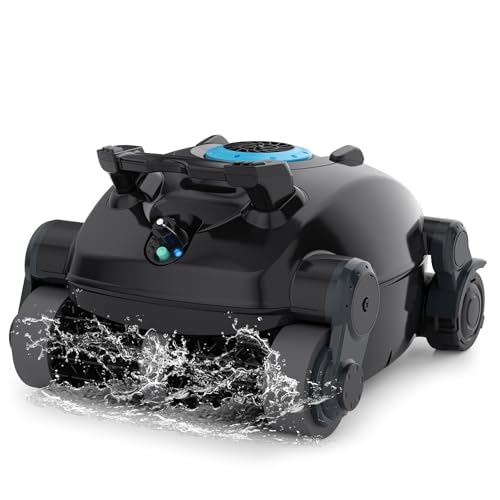
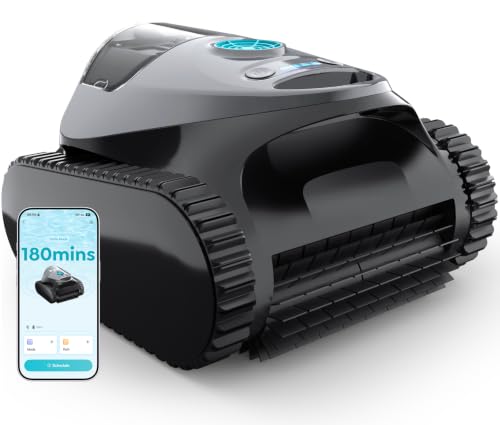
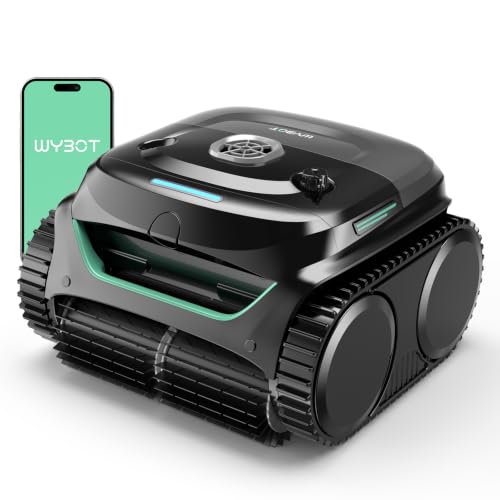
Fine silt and stubborn algae love to settle right where the shallow floor drops off into the deep end, turning steep transitions into slick headache zones. Standard vacuums often slide backwards or spin their wheels uselessly when facing a sharp transition slope, forcing you to pull out the manual telescoping pole and scrub every inch by hand. Selecting the best robotic pool cleaner for sloped pools comes down to picking a machine equipped with continuous track drive systems, high suction ratings, and smart slope navigation sensors that conquer steep gradients without tumbling over. Rather than burning your free weekend wrestling with cumbersome suction hoses, an automated robotic vacuum powers through tough transitions so you can unwind in your backyard oasis or kick back in a therapy hot tub for muscle relief.
Based on product specifications and user feedback, models packing triple brushless motors and durable rubber tracks handle aggressive floor angles far better than traditional wheeled units. Modern units also feature smart gyroscope navigation and multi-layer filtration baskets designed to trap heavy leaves along with microscopic dirt before debris slides down into the main drain. Investing in a cleaner with reliable wall climbing capabilities and strong floor adhesion ensures your entire basin stays clear of dirt, letting you enjoy sparkling pool water with virtually zero manual effort.






Frequently Asked Questions
Can standard pool cleaners handle steep bottom slopes?
No, basic wheeled cleaners typically struggle on steep transitions because they lack the required traction and motor power. Units without dedicated caterpillar tracks or dual drive motors often slip, spin their wheels, or slide backward when climbing slopes over 15 degrees. Choosing a model designed with continuous rubber tracks and multi-motor suction ensures steady adhesion on angled floors and walls.
How does the best robotic pool cleaner for sloped pools navigate slopes without tipping over?
Advanced internal gyroscopes and sonar sensors balance drive torque with real-time incline detection to keep the chassis planted. The robotic cleaner adjusts motor speed when it senses an incline, preventing the unit from losing ground contact or tumbling over. High-flow suction ports also pull the chassis firmly against the floor plaster or vinyl liner to maintain continuous traction.
Will a cordless robotic pool cleaner run long enough to clean deep end slopes in 2026?
Yes, current lithium-ion battery cleaners provide anywhere from 100 to 300 minutes of runtime on a single charge. Climbing steep inclines demands more motor wattage, but high-capacity batteries ensure thorough coverage of both shallow and deep zones before docking. When your pool season ends, storing your cleaner indoors protects battery health, much like winterizing water equipment with a hot tub for winter use checklist.
Do robotic cleaners get stuck on main drains located at the bottom of sloped pools?
High-clearance chassis designs and raised track rollers prevent most modern robots from catching on raised drain covers. Multi-directional drive systems allow the machine to reverse or pivot away if bottom brushes make contact with an uneven drain dome. Selecting a cleaner with smart obstacle navigation ensures uninterrupted cleaning cycles across the deepest point of your pool.
What filtration type works best for sloped pools with fine sand and leaf buildup?
Dual-stage filtration featuring both an ultra-fine pleated cartridge and a large debris basket offers the best performance. Fine sand and blown silt naturally roll down floor slopes and collect in the deep end, where ultra-fine filters trap them securely. A large-capacity debris basket also keeps falling leaves from choking the intake during heavy autumn cleanups.


Write Your Review
No reviews yet. Be the first to share your experience!