

Lifting your spa cover to find dull, milky water instead of an inviting, clear soak ruins any evening hydrotherapy session. Cloudy water signals that suspended microscopic debris, dead microorganisms, bather waste, or mineral imbalances have overwhelmed your sanitization system. Knowing what to do when hot tub is cloudy allows you to restore sparkling clarity quickly without dumping hundreds of gallons of water prematurely. Maintaining proper chemical equilibrium prevents uncomfortable eye irritation, unpleasant odors, and equipment corrosion over time.
Most cloudy water events stem from inadequate filtration cycles, depleted free sanitizer levels, or excessive bather contamination like lotions, body oils, and cosmetics. Keeping a snug patio spa cover secured when the tub is idle shields the water from airborne dust, organic spores, and rain that compromise chemical stability. Systematically checking sanitizer reserves, shocking the water with a non-chlorine oxidizer, and clearing organic residue restores safe soaking conditions fast. Addressing cloudiness immediately also protects circulation pump wet ends and heating elements from mineral scaling and biofilm accumulation.

Pros
- Chlorine-free formula makes it a practical choice for hot tub owners with sensitive skin or those who dislike the smell of chlorine-based shock treatments
- Broad sanitizer compatibility means owners don't need to switch products if they change from bromine to chlorine or add an ozone or mineral system
- Buffered formulation reduces the back-and-forth of adjusting pH after shocking, which simplifies the weekly maintenance process
- Quick-dissolving granules are easier to apply than slow-dissolving products that may leave residue on spa surfaces or require pre-dissolving
- Active ingredient potassium peroxymonosulfate (MPS) is a well-established oxidizer widely used in spa water care
Cons
- This product is not a disinfectant, so it must be used alongside a primary sanitizer like chlorine, bromine, or a mineral system - it cannot replace them for killing bacteria
- Some hot tub owners may find that MPS-based shocks can interfere with certain test strip readings for combined chlorine or total bromine, potentially giving misleading results if tested too soon after application
- At 2.2 lbs, frequent hot tub users who shock after every session may go through the container relatively quickly depending on spa volume and usage patterns
Leisure Time RENU2 Renew is a non-chlorine oxidizing shock treatment designed specifically for hot tub and spa maintenance. Its active ingredient, potassium peroxymonosulfate (MPS), targets organic contaminants like body oils, soaps, deodorants, and lotions that accumulate in spa water with regular use. This product is best suited for hot tub owners who want a chlorine-free shock option that won't add chlorine odor or contribute to chloramine buildup, while still keeping water clear and fresh between sanitizer applications.
The practical value of Leisure Time RENU2 centers on its broad compatibility and buffered formula. It works with chlorine, bromine, ozone, and mineral purification systems, which means most residential hot tub owners can incorporate it regardless of their existing sanitizer setup. The buffered formulation is designed to minimize pH swings after application, which is a real convenience factor - many spa owners find themselves constantly re-adjusting pH after using unbuffered shock products, and this feature may reduce that cycle. The quick-dissolving granules also simplify application, as they can typically be added directly to the spa water without pre-mixing.
One important distinction to understand is that Leisure Time RENU2 is an oxidizer, not a disinfectant. It breaks down organic waste and helps restore water clarity, but it does not replace a primary sanitizer. Hot tub owners still need to maintain proper chlorine, bromine, or mineral sanitizer levels for bacteria and pathogen control. This product works alongside those systems to handle the organic load that sanitizers alone may struggle with, especially in heavily used spas. The manufacturer positions it for weekly use as part of the Leisure Time Simple Spa Care program, or after every use when paired with the Reserve and Renew system.
For hot tub owners dealing with cloudy water, unpleasant odors, or that familiar "chemical" smell that often comes from chloramine buildup rather than free chlorine, RENU2 addresses those symptoms at the source. By oxidizing the organic compounds that combine with chlorine to form chloramines, this product can help reduce eye and skin irritation that many bathers experience. The 2.2 lb container provides multiple treatments for a typical residential spa, though owners who use their hot tub daily and shock after each session should expect to replenish more frequently.
A practical consideration for owners using test strips: MPS-based shocks are known to temporarily affect readings on some combined chlorine or total bromine test methods. It's generally advisable to wait a period after shocking before testing water chemistry to avoid misleading results. Owners should consult their test kit instructions or the Leisure Time product label for specific guidance on testing timing after application.
Leisure Time RENU2 Renew is a sensible choice for hot tub owners who maintain a regular water-care routine and want a chlorine-free oxidizer that fits into most sanitizer systems. It's particularly well-suited for owners with sensitive skin, families who use their spa frequently, and anyone looking to reduce chloramine-related irritation and odor. Before purchasing, verify that your current sanitizer system is among the compatible types listed (chlorine, bromine, ozone, or mineral), and confirm the recommended dosage for your spa's water volume to get the most effective results from each treatment.
Leisure Time RENU2 fits into a straightforward weekly spa maintenance routine. The manufacturer recommends using it weekly as part of the Simple Spa Care program, or after every hot tub session when paired with the Reserve and Renew system. Because the granules are quick-dissolving, application typically involves measuring the appropriate dose for your spa's water volume and adding it directly to the water with the jets running to ensure even distribution.
Consistent use of a non-chlorine oxidizer like RENU2 can help extend the time between full water changes by keeping organic contaminant levels lower. However, it does not eliminate the need for periodic draining and refilling, filter cleaning, or regular sanitizer level checks. Owners should continue to test and balance pH, alkalinity, and sanitizer levels according to their spa manufacturer's guidelines. Storing the product in a cool, dry location away from direct sunlight and moisture helps maintain its effectiveness over time.
While Leisure Time RENU2 is a water-care chemical rather than a filter product, its function directly relates to filter maintenance and longevity. By oxidizing body oils, lotions, soaps, and other organic compounds in the water, regular use of a non-chlorine shock can reduce the organic load that accumulates on filter cartridges. This may help extend the effective cleaning interval between filter rinses, though it does not replace the need for routine filter cleaning and eventual filter cartridge replacement.
Owners who notice their filters clogging more quickly than expected may benefit from more consistent shock treatment to reduce the dissolved organic content in their spa water. This product is compatible with standard spa filtration systems and does not require any special filter type or configuration.


Step-by-Step Diagnostic and Clarification Protocol for Cloudy Hot Tub Water
Resolving cloudy water requires identifying whether the turbidity stems from chemical imbalances, dead organic contaminants, suspended fine particulates, or mechanical filtration failures. When water turns cloudy, treating the symptom blindly with random chemicals often worsens the haze and throws total alkalinity out of alignment. Following a disciplined troubleshooting sequence allows you to pinpoint the exact failure point, restore optical clarity, and keep the spa sanitized for safe hydrotherapy.
Step 1: Test and Balance Core Water Chemistry
Every water recovery process begins with a precise chemical analysis using reliable test strips or a liquid reagent drop test kit. High pH levels are among the most common culprits behind milky water because alkaline conditions force dissolved calcium minerals out of solution. When your pH climbs above 7.8, calcium precipitates into tiny free-floating mineral crystals that scatter light and produce a distinct milky sheen. Correcting this balance requires reducing pH into the ideal range of 7.2 to 7.8 using a sodium bisulfate pH decreaser.
Total alkalinity acts as a chemical buffer that stabilizes pH, preventing erratic swings during routine use. You must adjust total alkalinity into the target zone of 80 to 120 parts per million before attempting to lock in your pH. If alkalinity drops below 80 parts per million, pH becomes volatile and can plummet rapidly, creating acidic water that corrodes metal heater elements. Conversely, total alkalinity above 120 parts per million locks pH at elevated levels, promoting persistent cloudiness and scale accumulation across acrylic shells.
Sanitizer levels require immediate verification after stabilizing pH and alkalinity parameters. Free available chlorine should read between 3.0 and 5.0 parts per million, while a bromine system should maintain 3.0 to 5.0 parts per million. When free sanitizer drops near zero, bacteria and algae reproduce rapidly, turning warm water hazy within just a few hours. Restoring an active sanitizer residual establishes the primary defense against microbial contamination before you introduce clarifying treatments.
Step 2: Oxidize Organic Waste with Non-Chlorine Shock
Bather waste accumulates rapidly in hot water, as elevated soaking temperatures induce perspiration and release body oils, deodorants, and skin lotions into the plumbing. Standard sanitizer dosages frequently become consumed binding to these organic contaminants, forming irritating combined chloramines rather than eliminating live pathogens. Shock oxidation breaks the molecular bonds of chloramines and neutralizes organic waste, liberating active sanitizer to keep water clear. Routine shock treatments ensure that organic compounds do not linger as suspended colloidal haze.
Using an oxidizer like Leisure Time RENU2, Renew Non-Chlorine Shock delivers quick-dissolving potassium peroxymonosulfate directly to the water. This non-chlorine formula destroys microorganisms, soap films, and cosmetic residues without introducing additional cyanuric acid or elevating chlorine levels excessively. Because it is buffered to prevent erratic pH fluctuations, it clears cloudy water without destabilizing the baseline balance you established in step one. Adding an oxidizer after heavy bather loads or as part of a weekly maintenance routine prevents organic buildup from overwhelming your primary biocide.
Turn on the low-speed jet pumps and leave the hot tub cover open for at least twenty minutes following an oxidation dose. Allowing the spa to off-gas prevents trapped chemical vapors from degrading the underside of your thermal cover or corroding plastic headrests. Protecting the water with a reliable hot tub cover with warranty coverage keeps organic matter and rainwater from neutralizing sanitizer levels between soaks. Once the oxidation cycle finishes, suspended waste breaks down into smaller components ready for filtration.
Step 3: Clear Fine Suspended Particulates with Spa Clarifiers
Standard spa cartridge filters excel at trapping debris larger than twenty to fifty microns, but microscopic dead algae, skin cells, and pollen pass right through pleated fabric. These ultra-fine particles remain suspended in the water column indefinitely because their individual mass is too light to settle or get caught by filter pleats. Specialized hot tub clarifiers contain positively charged polymers that attract negatively charged microscopic contaminants. This reaction coagulates tiny particles into larger, cohesive clusters that your filter paper can physically capture.
Formulations such as SpaChoice 1-Pint Premium Clear and Sparkle Hot Tub work specifically in hot water environments to restore natural water clarity. Applying two ounces of clarifier for spas holding up to eight hundred gallons helps bind fine particles without foaming or leaving sticky residue. Similarly, adding Hot Tub Things Spa Clarifier Water Treatment improves filtration efficiency by grouping ultra-fine debris for fast extraction during normal circulation cycles. These clarifiers integrate smoothly across chlorine, bromine, saltwater, and mineral sanitizing systems without altering overall pH balance.
Careful measurement is vital when administering clarifying agents, as more chemical is not better. Overdosing a polymer clarifier creates an excess of identical electrical charges in the water, causing suspended particles to repel each other rather than bind together. This inadvertent chemical inversion prolongs cloudy conditions and leaves water looking dull for several days. Always follow manufacturer dosing instructions precisely and allow filtration cycles to run for several hours before evaluating whether an additional application is necessary.
Step 4: Physically Absorb Surface Scum and Body Oils
Oily residues from skin conditioners, sunscreens, and hair products do not always dissolve, often floating as an oily sheen on the water line. This organic film coats acrylic surfaces and forms a stubborn brown or yellowish scum ring around the perimeter of the tub. Chemical clarifiers push some oils into the filter, but heavy oil slicks can rapidly glaze cartridge fabric and choke water flow. Introducing a mechanical absorbent tool collects these floating non-polar lipids before they degrade your paper filter pleats.
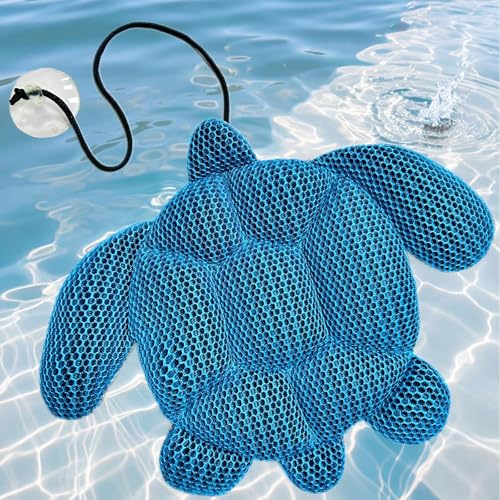
Deploying a dedicated oil absorber like the Hot Tub Scum Absorber Hot Tub Sponge provides continuous extraction of floating cosmetics and body oils. Designed with an open three-dimensional air grid structure and absorbent fibers, this reusable turtle sponge captures oily contaminants directly from the water surface. Its dual floating and sinking modes allow it to intercept debris at the water line or deeper within the seating wells. Rinsing the sponge regularly maintains peak absorption capacity and extends the service life of your primary filtration cartridge.
Step 5: Inspect, Clean, and Degrease the Filter Cartridge
A clarifying treatment or shock oxidizer cannot clear cloudy water if the cartridge filter is clogged with embedded grit and oily film. When filter pleats fill with trapped contaminants, water flow drops significantly, which can trigger low-flow error codes like FLO on your topside control panel. Reduced circulation prevents the coagulated particles created by clarifiers from reaching the filter media. Shut off power at the dedicated GFCI disconnect switch before removing the filter to ensure complete electrical safety.
Rinsing the cartridge with a high-pressure garden hose nozzle removes loose surface dirt, hair, and leaf fragments trapped between the pleats. However, water rinsing alone will not dissolve oily body fats, mineral scale, or cosmetic residue embedded deep within the polyester fibers. Soak the cartridge overnight in a specialized hot tub filter degreasing solution once a month or whenever combating severe water cloudiness. Chemical soaking breaks down oily binders that plain tap water cannot budge, restoring original filtration permeability and water flow rates.
Inspect the physical integrity of the filter fabric, plastic end caps, and internal center core before reinstalling the cartridge. If the polyester fabric appears frayed, flattened, or torn, microscopic particles will bypass the filter entirely and re-enter the spa through the jets. Cracked end caps also permit water to channel around the filter media rather than passing through it. Replacing an aged cartridge every twelve to twenty-four months ensures that your filtration system retains the mechanical capacity needed to maintain optical clarity.
Step 6: Optimize Circulation Cycles and Pump Filtration Runtime
Water clarity relies directly on the total volume of water passing through the filter media each day. Most contemporary spas feature programmable filtration cycles that operate a low-speed jet pump or a dedicated low-wattage circulation pump. During normal standby operation, running filtration cycles for two to four hours twice daily keeps clean water properly turned over. When actively clearing cloudy water, however, that baseline filtration schedule is insufficient to process coagulated debris rapidly.
Access your topside control panel and increase the filtration duration to six, eight, or even continuous twenty-four-hour circulation until clarity returns. Running the low-speed pump continuously keeps water moving through the newly treated filter, sweeping suspended coagulated clusters out of the bather well. Ensure all diverter valves are centered so that water circulates evenly through all jet pathways and footwell suction fittings. Once the water looks crystal clear, you can return your filtration programming to standard energy-saving cycles.
Differentiating Cloudy Water Causes: Bacterial, Chemical, or Mineral
Understanding the visual characteristics of your cloudy water helps identify the underlying root cause and prevents recurring problems. A hazy, grayish or milky tint with slippery acrylic surfaces typically points to bacterial growth caused by depleted sanitizer levels. In this scenario, checking sanitizer parts per million will reveal zero residual biocide, demanding an immediate shock dose and biocide replenishment. Failing to eradicate bacterial blooms creates foul odors and increases the risk of skin rashes like Pseudomonas folliculitis.
Milky water accompanied by white flakes drifting through the jets usually signals calcium precipitation from high pH or elevated calcium hardness. Hard source water containing calcium hardness above three hundred parts per million will shed mineral scale when heated above one hundred degrees Fahrenheit. Testing the water will show elevated pH and high alkalinity, requiring pH decreaser and a scale control sequestering agent. Replacing an old, waterlogged cover with a tight-fitting foldable hot tub cover prevents outdoor spores and grime from constantly blowing into the water.
Foamy, dull water that lathers when jets activate points toward an excess of surfactant chemicals, soaps, and dissolved organic solids. Detergent residues transferred from laundered bathing suits frequently cause persistent surface foam that clouds water when agitated. Remedying surfactant foaming requires a combination of shock oxidation, mechanical scum absorbers, and educating bathers to rinse swimwear without laundry soap. If foaming persists despite chemical treatments, total dissolved solids have likely saturated the water capacity.
When Chemical Recovery Fails: Drain, Purge, and Refill Guidelines
Spa water has a finite chemical lifespan, as every chemical adjustment, shock treatment, and bather soak adds dissolved solids to the volume. Over three to four months, total dissolved solids naturally climb above fifteen hundred parts per million over the baseline tap water reading. Once water reaches this saturation threshold, chemicals lose their reactive efficacy, and clarifiers can no longer bind suspended particulates effectively. When water resists multiple shock treatments and clarifier doses, performing a complete drain and refill is the most efficient solution.
Add an enzymatic plumbing line purge product directly to the warm water before attaching a drain hose or dropping in a submersible utility pump. Circulating a plumbing purge on high-speed jets for thirty minutes strips hidden biofilm, body fat deposits, and fungal slime from internal PVC manifolds. Biofilm colonies inside plumbing pipes continuously shed dead organic matter into fresh water, triggering sudden cloudiness even in newly balanced tubs. Flushing the internal lines ensures your new water starts in a clean, sanitized plumbing environment.
Kill power at the main GFCI breaker before draining the spa completely using a submersible pump or bottom gravity drain valve. Wipe down the acrylic shell with an approved non-abrasive surface cleaner, paying close attention to the water line where scum lines accumulate. When refilling the tub, place your garden hose directly down into the filter standpipe rather than filling into the open footwell. Refilling through the filter well forces air out of the plumbing manifolds and pump volutes, preventing frustrating air locks that stop circulation upon startup.
Establishing a Preventative Spa Care Routine
Consistent preventative habits prevent sudden water cloudiness and minimize the need for heavy corrective chemical treatments. Test water parameters twice weekly and make minor adjustments to pH and sanitizer before significant imbalances take hold. Encourage family members and guests to rinse off body lotions and perfumes before entering the spa to reduce organic loading. Incorporating routine non-chlorine shock oxidizers and maintaining clean filter cartridges ensures that your hot tub remains clean, inviting, and crystal clear all season long.






Write Your Review
No reviews yet. Be the first to share your experience!