

Backyard hydrotherapy often sounds appealing until homeowners face the complex logistics of hiring an electrician, upgrading main breaker panels, and trenching heavy conduit across a finished lawn. Traditional hardwired spas require dedicated 40-amp to 60-amp electrical service, which can quickly introduce unexpected installation expenses and scheduling delays. Understanding what is plug and play hot tub technology changes that entire equation by allowing spa owners to connect their unit directly into a standard household electrical circuit. These self-contained portable spas combine internal water filtration, jet pumps, and electric heating elements into an all-in-one package designed for immediate backyard placement.
Rather than needing complex hardwired subpanels, these accessible spas operate on standard 110V or 120V household outlets equipped with built-in ground-fault circuit-interrupter power cords for optimal electrical safety. Homeowners can place a unit on a solid concrete foundation or reinforced deck, fill the shell using a standard garden hose, and start heating the water without modifying their home electrical service panel. Pairing these portable setups with a protective yard patio hot tub cover helps maintain consistent thermal efficiency and shields the cabinet from seasonal weather extremes. Evaluating the mechanical operation, thermal capacity, and operational tradeoffs ensures you choose an outdoor spa configuration that matches your family relaxation habits.


Everything You Need to Know About Plug-and-Play Hot Tubs
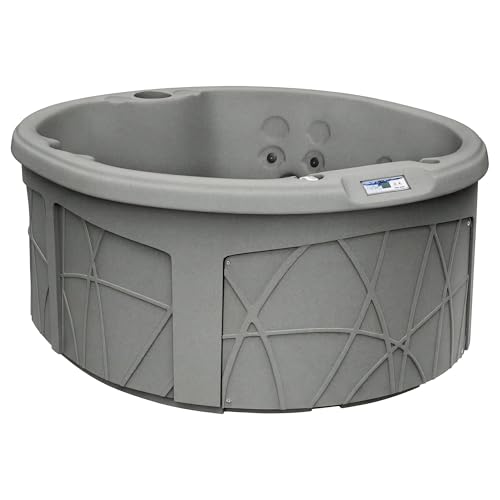
A plug-and-play hot tub is a completely self-contained portable spa designed to connect directly into a standard 110-volt or 120-volt household electrical outlet without requiring hardwired electrical modifications. Unlike traditional spas that demand specialized 240-volt subpanels and professional electrician installations, these practical units come pre-wired with an integrated ground-fault circuit-interrupter cord. The internal system houses the circulation pump, electric heating element, filtration core, and digital topside controls inside a durable exterior cabinet. This architecture allows homeowners and renters alike to set up a functional hydrotherapy spa on an existing patio, deck, or crushed stone base with minimal site preparation.
Electrical Architecture and Power Requirements
The defining feature of any 110V plug-and-play spa is its ability to operate on a standard household electrical circuit. Most manufacturers design these models to draw between 11 and 15 amps of current, which matches standard residential wall receptacles. However, safe and reliable operation strictly requires connecting the unit to a dedicated 15-amp or 20-amp electrical circuit that shares no other appliances or lighting loads. Sharing a circuit with outdoor lights, garage tools, or patio heaters can quickly overload the breaker and lead to nuisance tripping.
Electrical safety standards established under National Electrical Code Article 680 govern the installation of outdoor self-contained spas and hydromassage equipment. The factory-supplied power cord includes a sensitive ground-fault circuit interrupter built directly into the plug assembly to prevent electrical shock. In addition, local building codes generally mandate that outdoor electrical receptacles feature an in-use weatherproof cover to protect against rain and moisture intrusion. Spa owners must avoid using extension cords of any gauge because voltage drop across long cords can overheat internal electrical connections and damage the pump motor.
Heating Dynamics and Operational Tradeoffs
Understanding how heating elements function on 120-volt electrical service is crucial for setting realistic performance expectations. Because a standard 15-amp household outlet supplies roughly 1,800 watts of total electrical power, plug-and-play heating elements typically range from 1,000 watts to 1,350 watts. For example, models like the EZLIFE Oval 2-Person Four-Season Foam Hot Tub integrate a 1,350-watt heater to maintain soaking temperatures between 68 degrees and 104 degrees Fahrenheit. In contrast, 240-volt hardwired spas frequently utilize 4,000-watt or 5,500-watt heating elements that bring cold water up to temperature significantly faster.
Initial water heating times represent one of the primary distinctions of 120V hot tubs compared to high-voltage alternatives. When filling a spa with cold tap water, a standard 1kW to 1.35kW heater generally raises the water temperature by approximately one to two degrees Fahrenheit per hour. A mid-sized four-person spa holding several hundred gallons may take between twenty-four and thirty-six hours to reach a comfortable 100 degrees during its initial fill. Once the water achieves the set operating temperature, the internal thermostat cycles the heating element periodically to maintain target warmth efficiently.
Another critical mechanical tradeoff involves the power sharing between the electric heater element and the hydrotherapy jet pump. On a standard 120-volt circuit, the total electrical amperage cannot safely run a 1,000-watt heater and a high-speed jet pump simultaneously without tripping the breaker. Internal spa packs resolve this electrical limitation through automated load management that turns off the electric heater whenever users engage the high-speed jet massage mode. The low-speed pump setting continues to circulate water through the heater during standard filtration cycles, but extended soaking sessions with high-speed hydrotherapy jets activated in freezing weather will allow water temperatures to decline gradually.
Shell Materials and Cabinet Engineering
Manufacturers construct plug-and-play hot tubs using several durable materials designed to balance structural longevity, thermal retention, and overall portability. Rotomolded high-density polyethylene is one of the most widespread materials used across compact spas, including popular models like the Lifesmart 4-Person Plug & Play 13-Jet Hot Tub Spa. Rotational molding heats powdered polymer inside a spinning mold to create a seamless, impact-resistant unibody shell that resists cracking, chipping, and chemical degradation. These rotomolded shells eliminate the need for an underlying structural wood frame, reducing total dry weight and preventing moisture rot over years of outdoor exposure.
Rigid resin construction offers another rugged alternative that withstands heavy seasonal weather and accidental impacts without showing cosmetic wear. Spas such as the Aqualife by Strong Spas Invi 5 Person Rigid Resin model feature puncture-proof, hard-sided exterior cabinets backed by comprehensive structural warranties. Unlike traditional acrylic spas that can scratch or blister if exposed to harsh sun without water, rotationally molded resin surfaces remain resilient under extreme temperature swings. The smooth, non-porous finish also resists algae attachment and simplifies routine cleaning during scheduled drain-and-refill maintenance cycles.
Foam-walled portable tubs represent an innovative middle ground between lightweight inflatable spas and heavy solid plastic shells. Models such as the EZLIFE Oval 2-Person Four-Season Foam Hot Tub utilize dense, rigid foam wall segments that assemble quickly while providing substantial thermal resistance. This rigid foam architecture provides substantially more structural stability than basic air bladders while remaining easy to move across tight side yards or down basement stairs. For renters and seasonal vacation cabin owners, lightweight rigid foam construction provides true year-round durability without requiring heavy mechanical equipment for delivery.
Insulation Architecture and Standby Energy Efficiency
Standby heat retention is the single most important factor determining ongoing electrical utility costs for any hot tub owner. High-density full-foam insulation fills the internal cabinet cavity around plumbing lines and the shell, locking in thermal energy and dampening pump operational noise. Units engineered with complete full-foam cavities, such as the Lifesmart sand and taupe 4-person models, prevent ambient cold air from circulating around the internal manifold piping. This insulation method prevents the water from losing heat rapidly when external ambient temperatures drop during autumn and winter months.
The top surface of the hot tub accounts for up to sixty percent of total standby heat loss through natural evaporative cooling. Placing an insulated, tight-fitting cover over the water when the spa is not in use creates an airtight thermal seal that traps heat and minimizes water evaporation. Utilizing a resilient foldable hot tub cover ensures effortless handling while keeping dirt, leaves, and blowing rain out of your clean water. Heavy-duty covers feature high-density tapered foam cores wrapped in marine-grade vinyl to shed rainwater, snow melt, and debris away from the center seam.
Standby power consumption testing standards established by regulatory bodies like the California Energy Commission evaluate energy performance during idle heating periods. Spas equipped with full-foam cabinets and tight locking covers maintain higher baseline thermal efficiency and draw significantly less standby electricity. In addition, investing in a durable thermal spa cover with warranty protection safeguards your investment against foam waterlogging and premature vinyl degradation. Maintaining a healthy vapor barrier around the cover foam core ensures the insulation maintains its intended thermal performance throughout multiple winter seasons.
Hydrotherapy Jets, Pumps, and Massage Dynamics
Hydrotherapy performance in a 110V spa relies on efficient hydraulic design rather than excessive motor horsepower. Because electrical current is limited on standard wall outlets, manufacturers pair energy-efficient single-speed or two-speed pumps with strategically placed massage nozzles. The Inland 6 Person Indoor Outdoor Hot Tub utilizes a 2 Peak HP two-speed pump to power 24 hydrotherapy jets arranged across ergonomic contour seating. Lower pump speeds handle continuous filtration and gentle water circulation, while the higher speed delivers invigorating water flow to targeted back and leg massage positions.
Controlling the intensity of the hydrotherapy massage involves adjusting topside air controls that draw air into the water stream using venturi dynamics. Models like the Lifesmart 13-jet spa feature dedicated air control dials that allow bathers to blend air with the water flow for a softer, bubbling sensation or turn it down for a firm, concentrated stream. In contrast, models like the EZLIFE 2-person spa incorporate 90 bubble jets powered by a dedicated blower to create soothing full-body effervescence. Choosing between concentrated directional hydrotherapy jets and broader gentle bubble rings depends entirely on whether your priority is deep muscle relief or gentle relaxation.
Site Preparation and Structural Load Engineering
Proper site preparation is essential to prevent structural settling, shell cracking, and plumbing union stress over the lifespan of your spa. Even though plug-and-play spas are classified as portable, their total operating weight when filled with water and bathers is substantial. Water weighs approximately 8.34 pounds per gallon, meaning a modest 250-gallon spa holds more than 2,000 pounds of water alone. Adding the empty dry weight of the hot tub cabinet plus the body weight of multiple adult bathers quickly brings the total static load above 3,000 pounds.
Homeowners planning an installation on an elevated wooden deck must calculate the static load rating in pounds per square foot before placement. The standard structural formula calculates total filled weight divided by the footprint square footage of the spa shell. Most filled hot tubs generate between 85 and 125 pounds per square foot of downward pressure on the supporting structure. Standard residential decks are typically framed to support only 40 to 50 pounds per square foot, which means structural joists, ledger boards, and support posts frequently require professional reinforcement.
Ground-level installations require an entirely flat, level, and unyielding foundation pad to distribute the filled weight evenly across the spa base. A poured reinforced concrete slab with a minimum thickness of four inches represents the gold standard foundation for long-term structural integrity. Alternative options include modular high-density structural spa pads or a properly excavated and compacted four-inch base of crushed gravel. Never place a hard-sided or foam hot tub directly on bare lawn, sand, or uncompacted dirt, as shifting soil and moisture runoff will cause unlevel water lines and frame distortion.
Water Chemistry, Filtration, and Routine Sanitization
Maintaining balanced water chemistry is critical for protecting spa equipment, preventing bacterial growth, and ensuring bather comfort. Because hot tubs operate at elevated temperatures between 100 degrees and 104 degrees Fahrenheit, bather oils, perspiration, and heat accelerate sanitizer depletion and water cloudiness. Spa caretakers must maintain total alkalinity between 80 and 120 parts per million before adjusting pH levels into the ideal range of 7.2 to 7.8. Establishing stable alkalinity acts as a chemical buffer that prevents erratic pH spikes, safeguarding heater elements from acidic corrosion and preventing cloudy calcium scaling.
Primary sanitization requires using an EPA-registered biocide such as chlorine granules or bromine tablets to destroy organic contaminants and keep water crystal clear. Plug-and-play spas feature integrated cartridge filtration systems that capture suspended debris and hair as water circulates through pleated fabric elements. Spas like the Aqualife Invi 5 Person incorporate dedicated topside filter wells that facilitate quick, tool-free cartridge removal for weekly rinsing with a garden hose. Degreasing filter cartridges every four to six weeks in a specialized cleaning solution removes stubborn bather oils and restores optimal hydraulic flow through the heater chamber.
Filling the hot tub correctly during initial setup or periodic water changes prevents frustrating mechanical air locks inside the pump housing. Instead of placing the garden hose directly into the main footwell, insert the hose directly into the open filter standpipe inside the filter compartment. Refilling through the internal plumbing line forces water downward into the pump volute, pushing trapped air pockets out through the lower jet fittings. Trapped air inside the pump wet end can prevent water circulation, causing the topside digital control pad to display flow error codes and locking out the heating system.
Convertible Voltage Options for Cold Climate Adaptability
Several hard-sided plug-and-play models feature convertible power packs that allow owners to upgrade from standard 120-volt service to dedicated 240-volt operation. For example, the Aqualife by Strong Spas Invi 5 Person Rigid Resin spa includes a 1kW Balboa stainless steel heater that can be converted by a licensed electrician to run on a 240V circuit. This electrical versatility gives homeowners the convenience of immediate plug-in operation without locking them out of future electrical upgrades. Converting the internal spa pack to 240-volt service triples or quadruples heating wattage, allowing the spa to heat water much faster during freezing winter conditions.
Upgrading to 240-volt operation also eliminates the simultaneous heating and jet pump lockout inherent to standard 120-volt electrical circuits. On a 240V 40-amp or 50-amp circuit, the spa control pack can power a 4kW heating element and the high-speed hydrotherapy jets concurrently. This capability proves particularly beneficial for homeowners living in northern climates where winter ambient temperatures regularly plunge below freezing. In extreme sub-zero weather, a 120V spa running high-speed jets will slowly lose water temperature over an extended soak, whereas a 240V converted spa maintains a steady 104-degree soak indefinitely.
Summary of Practical Ownership Considerations
Selecting a plug-and-play hot tub offers an accessible, low-stress entry point into backyard hydrotherapy without the upfront complexity and cost of hardwired electrical installations. Models like the Lifesmart 4-person series, the EZLIFE oval 2-person tub, and the Aqualife 5-to-6 person spas demonstrate that modern 120V spas deliver comfortable seating, soothing hydrotherapy, and robust thermal insulation. By confirming that your outdoor outlet operates on a dedicated 15A or 20A circuit, preparing a solid level foundation pad, and adhering to consistent water balancing routines, you can enjoy therapeutic soaking in any season. Balancing realistic heating recovery times with the immense convenience of simple plug-in operation makes these versatile portable spas an outstanding choice for modern backyard living.




Write Your Review
No reviews yet. Be the first to share your experience!