
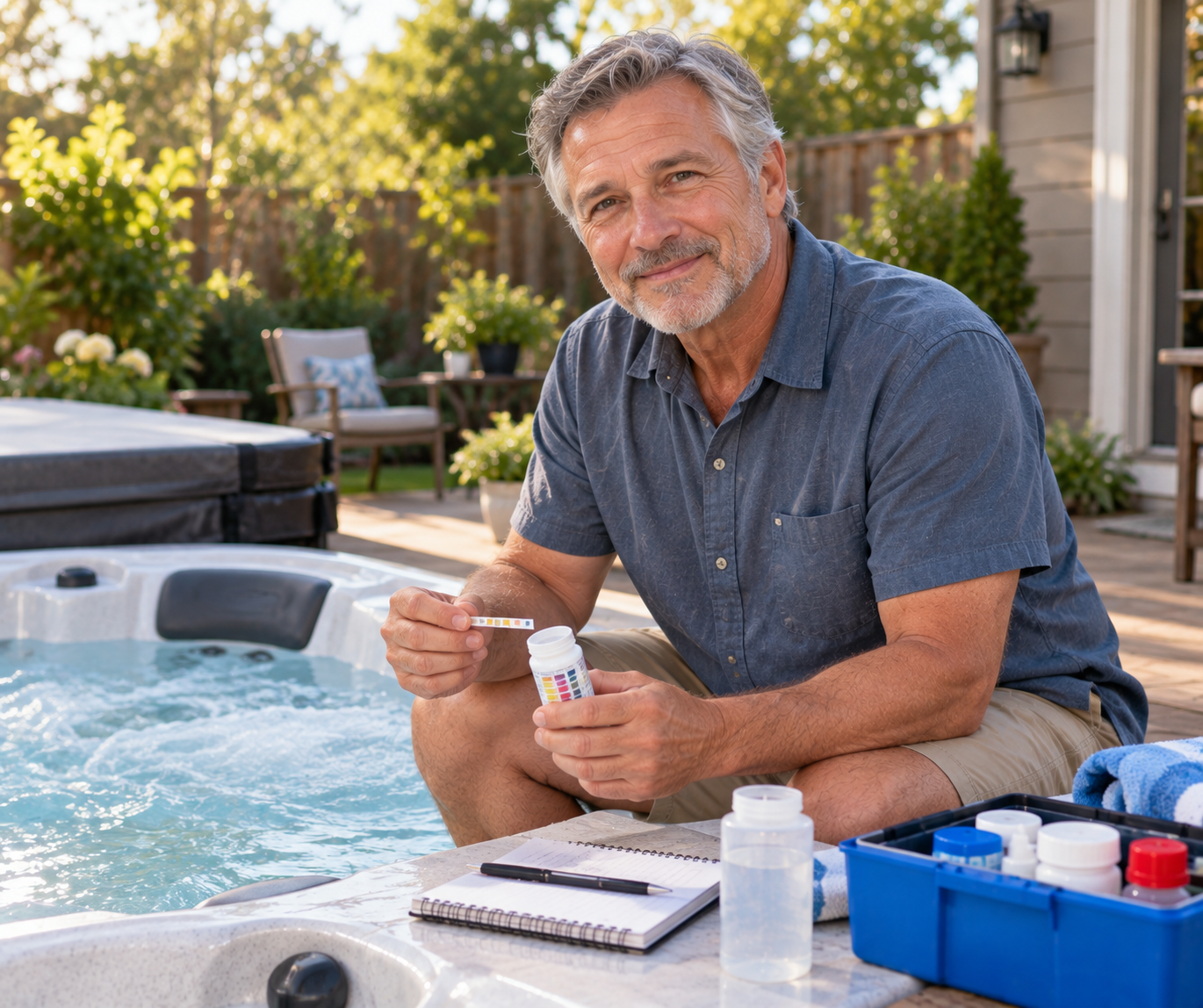

Transforming a backyard into a year-round personal retreat often begins with understanding how to build your own outdoor hot tub from the ground up. Whether you plan to frame a cedar timber soaking vessel, pour a custom masonry basin, or build an integrated surround around a manufactured spa shell, careful engineering makes all the difference. Site preparation requires accurate weight calculations that account for water volume, structural framing, and bather capacity. Paired with a durable protective yard patio hot tub cover, a properly engineered installation retains heat efficiently and shields internal plumbing from harsh seasonal weather.
Beyond structural framing, DIY spa builders must manage hydraulic flow, dedicated high-voltage wiring, and balanced water sanitization to prevent equipment failure. National Electrical Code guidelines mandate strict clearances and dedicated ground-fault protection to ensure safe operation near standing water. Overlooking critical elements like plumbing line slopes, pump head pressure, or insulation thermal retention can lead to high electric bills and chronic water clarity headaches. Taking a methodical approach to design and assembly ensures your outdoor spa delivers dependable hydrotherapy and lasting relaxation for years to come.

Pros
- Complete setup includes both an inflatable insulating bladder and a locking thermal outer cover.
- External heater pump simplifies maintenance and keeps mechanical components outside the water chamber.
- Spacious 57-inch by 57-inch interior floor offers ample foot space for small families or couples.
- Includes replacement filter cartridges and setup accessories directly in the box.
Cons
- Inflatable PVC construction requires a flat, debris-free foundation to prevent surface punctures.
- Comfortably fits 4 adults, though seating 6 full-sized adults will feel tight on the 57-inch inner floor.
- External pump unit requires dedicated dry clearance next to the tub footprint.
The UHOMEPRO 73-Inch Square Inflatable Hot Tub is a self-contained portable spa designed for homeowners, renters, and families seeking backyard hydrotherapy without the commitment of a hardwired acrylic tub. Built with an exterior footprint measuring approximately 73 inches square by 26 inches tall, this spa incorporates an independent external heater and pump console, 130 air massage jets, and an integrated dual-layer cover. It primarily caters to budget-conscious households and patio owners who desire flexible seasonal soaking, straightforward assembly, and family-friendly relaxation.
Daily operation relies on an external heater pump unit capable of warming spa water up to 104 degrees Fahrenheit via a top-mounted control panel. The 600-watt air blower channels bubbling action through 130 soothing perimeter jets, delivering full-body water agitation for tension relief. Water retention and safety are managed by a dual-layer covering arrangement that pairs an internal inflatable bladder insert with an exterior thermal cover equipped with child safety locks. The inflatable core rests on the water surface to minimize evaporative heat loss, while the locking outer skin prevents wind lift and secures the perimeter against accidental intrusion.
Structural integrity is delivered through multi-layer laminated PVC walls finished with an exterior printed basketweave pattern in a neutral tone. The puncture-resistant material helps resist everyday friction against deck boards or ground cloths when properly situated. Because the pump, heater, and filtration system reside inside an external console rather than an integrated internal wall compartment, servicing access is clear, and the internal floor space remains entirely dedicated to bathers. The set also includes essential maintenance items, including replacement filter cartridges, an inflation hose, a servicing wrench, and repair material.
Setting up the spa requires a flat, level surface capable of supporting water weight alongside access to a standard electrical supply. Inflation is managed directly from the pump assembly using the provided hose, bringing the 26-inch walls to structural rigidity within minutes. Routine ownership involves rinsing or swapping the included cartridge filters regularly to preserve pump circulation and clarity. The dual-cover system requires unbuckling the outer safety straps and setting aside the lightweight inflatable bladder before each soak, a routine that remains manageable for a single person.
Prospective buyers should account for the physical realities of inflatable portable spas before purchasing. While marketed for 4 to 6 people, the 57-inch by 57-inch interior floor provides optimal comfort for 2 to 4 adults, with 6 occupants creating a crowded footwell. In addition, ambient outdoor temperatures significantly dictate heating rates; in colder northern climates, heat loss occurs more rapidly during open soaking despite the dual-layer cover. The PVC exterior also requires conscientious placement away from sharp patio stones, pet claws, and rough ground textures.
For buyers seeking an affordable backyard retreat, the UHOMEPRO Inflatable Hot Tub Set presents a versatile, feature-packed entry point into spa ownership. Its combination of an external modular heater, 130 massage jets, and a dedicated dual-layer locking cover makes it a sensible choice for small families, couples, and seasonal outdoor leisure. Before ordering, verify that your patio or deck provides a minimum 8-foot by 8-foot level clearance to accommodate both the 73-inch tub shell and the external pump console.
Heat retention in the UHOMEPRO Inflatable Hot Tub is handled by a two-stage cover design consisting of an inflatable inner bladder and a fitted outer thermal cover. The inflatable bladder floats directly on the water surface when the spa is idle, creating an insulating air cushion that reduces evaporation and keeps heat trapped within the water column.
The outer thermal cover shields the top rim and fastens securely to the spa walls with integrated child safety buckles. This perimeter locking system prevents wind from lifting the cover during stormy conditions while providing an added level of access control. While these locking straps enhance everyday safety, users must maintain physical supervision around children and pets at all times.
The spa measures 72.83 inches long by 72.83 inches wide with an outer height of 25.59 inches (listed as 73 by 73 by 26 inches). This square exterior footprint provides structured corners that make positioning against deck rails or patio edges straightforward compared to traditional round inflatables.
Inside the spa, the bathing area measures 57 inches by 57 inches across the floor. The 26-inch wall profile makes entering and exiting the tub accessible for most adults while maintaining adequate water depth for seated chest-level submersion. While listed for 4 to 6 bathers, the interior dimension is best suited for 2 to 4 adults seeking spacious legroom, or families with small children.
Pros
- Effectively dislodges stubborn pipe residue and organic buildup prior to draining
- Improves jet performance and circulation efficiency throughout the entire plumbing system
- Helps eliminate recurring foam and chemical demand caused by dirty internal lines
- Compatible with both indoor and outdoor hot tubs as well as larger swim spas
Cons
- Requires a full water drain and shell wipe-down after the cleaning cycle is completed
- Not an in-use water treatment, so the hot tub cannot be used while the cleaner is circulating
- Very large swim spas or heavily neglected plumbing may require more than one 16-ounce bottle depending on dosing instructions
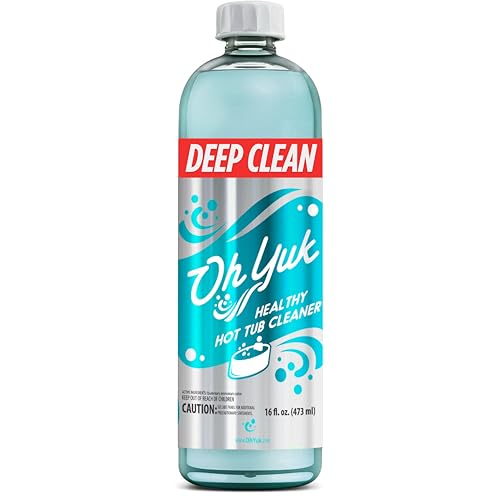
Oh Yuk Healthy Hot Tub Cleaner is a concentrated 16-fluid-ounce plumbing flush formulated to purge interior pipe walls, jet lines, and circulation fittings in indoor and outdoor hot tubs, portable spas, and swim spas. It is engineered specifically for homeowners, vacation rental operators, and regular spa owners preparing for a scheduled drain-and-refill cycle who want to eliminate the hidden organic waste that normal filtration and sanitizing tablets leave behind.
Hidden pipe buildup and accumulated body oils inside circulation lines are frequent culprits behind recurring cloudy water, surface foaming, and weakened jet pressure. By penetrating the interior plumbing pathways, this cleaner lifts and suspends embedded contaminants so they circulate out into the main footwell. This deep purge enables fresh water treatments to work much more effectively after refilling, since sanitizers no longer have to expend oxidation power fighting hidden line residue.
Circulation line maintenance directly benefits mechanical equipment by helping water move freely through pumps, heaters, and filter manifolds. When plumbing lines remain free of restrictive film and buildup, circulation pumps operate with less backpressure, allowing filter cartridges to trap suspended solids cleanly and consistently without unnecessary mechanical strain.
Using a plumbing cleaner requires timing your application around a complete water change, as the dislodged residue must be drained from the spa shell after running the jets. Hot tub owners should expect to wipe down the acrylic surface and water line once the tub empties, removing any residual oils before rinsing and refilling with fresh tap water.
While the 16-ounce bottle provides convenient handling for standard backyard spas, owners of oversized swim spas or tubs with years of neglected plumbing should check manufacturer dosage directions to ensure adequate volume. Furthermore, this product is designed purely as an evacuation flush before draining, meaning bathers must wait until the tub is emptied, rinsed, and refilled with fresh, balanced water before soaking.
For spa owners battling persistent water cloudiness or those establishing a dependable seasonal maintenance schedule, Oh Yuk Healthy Hot Tub Cleaner delivers a practical way to reset circulation lines. Verifying your spa water capacity and having clean towels or sponges ready to wipe the shell after draining ensures a smooth cleaning process and pristine water for your next soak.
Using Oh Yuk Healthy Hot Tub Cleaner is most effective when coordinated with your regular quarterly drain-and-refill schedule. Remove your filter cartridges prior to running the cleaner through the system to avoid trapping heavy dislodged gunk inside your primary filter pleats.
Turn on all jet pumps and allow the cleaner to circulate thoroughly through all plumbing lines according to the manufacturer label directions. Once the cleaning cycle finishes, drain the spa completely and wipe down the acrylic shell to remove any lifted oils and residue before refilling with fresh water.

Pros
- 3D honeycomb woven mesh helps trap oils, lotions, and surface slime effectively
- Machine washable on cold delicate cycle or rinsable in cold water for repeated use
- Can float freely during regular spa filtration cycles or when the spa is covered
- Decorative turtle design makes it easy to spot and remove before soaking
Cons
- Requires periodic manual rinsing or washing after 1 to 2 uses to maintain absorption performance
- Comes as a single sponge pack, meaning you may lack a backup while one is being washed and air dried
- Does not replace chemical sanitizers, water testing, or routine cartridge filter cleanings
The ANSLCA Hot Tub Scum Absorber is a floating, oil-absorbing spa accessory shaped like a turtle, engineered to reduce surface slime, cosmetics, and body oils in residential spas, swim spas, and small pools. Hot tub owners frequently battle oily scum lines along the waterline caused by sunscreens, natural skin oils, and cosmetics. This reusable accessory suits hot tub owners, vacation rental hosts, and busy homeowners seeking an uncomplicated preventive tool to cut down on acrylic shell scrubbing and prolong water clarity between chemical treatments.
Operating on a passive absorption concept, the turtle sponge utilizes a 3D honeycomb woven construction that grabs suspended oils from the water surface. Spa owners can drop the sponge into the water when the tub is idle or leave it floating during scheduled filtration cycles where circulating water directs surface film toward the mesh. By trapping oils early, the sponge helps keep residues from adhering to the acrylic shell or prematurely loading up the pleats of your main spa filter cartridge.
The unit features a textured 3D honeycomb weave structured in a recognizable blue turtle shape. Unlike traditional disposable foam blocks that can break down quickly or flake into pump impellers, this woven design is made to withstand repeated moisture exposure. The exterior fabric design maintains structural shape while floating, allowing oils to permeate the interior while staying intact throughout prolonged soaking periods.
Using the sponge requires virtually no installation or tools. Simply place the turtle into your hot tub or outdoor spa water, where it floats freely and collects unwanted debris and oils. Routine maintenance is straightforward: manufacturer instructions suggest rinsing it with cold tap water after one to two uses or placing it in a washing machine on a delicate cold cycle. It should be air dried thoroughly before reuse, making it practical to keep in regular rotation for everyday water care.
While a scum absorber reduces surface oils, it is not a cure-all for overall water balance or heavy particulate matter. It does not replace chlorine, bromine, mineral sanitizers, or regular filter cleanings. Because this product is sold as a single unit, owners must remove and wash it frequently, which means you will not have an active sponge in the spa while the unit is washing or drying. Additionally, if the sponge becomes saturated with heavy body lotions, its absorption rate slows down until it is thoroughly laundered.
The ANSLCA turtle scum absorber is well-suited for spa owners who want an affordable, reusable solution to limit scum lines without adding harsh clarifying chemicals. Before purchasing, verify that a floating sponge fits your routine and consider whether keeping an extra sponge on hand will be helpful during laundering cycles. When paired with proper sanitizer levels and consistent filter care, this little accessory offers genuine practical value for routine hot tub maintenance.
Proper cleaning intervals help maintain the absorption capacity of the 3D honeycomb weave. According to product guidelines, rinsing the turtle sponge under cold running water after one or two spa sessions removes loose oils and prevents lotion buildup from hardening within the fibers. For deeper cleaning, it can be run through a washing machine on a cold, delicate cycle without harsh detergents or fabric softeners that might introduce unwanted foaming agents into your spa water.
Air drying is recommended after washing to preserve the integrity of the woven structure. Avoid using high heat in a tumble dryer, as extreme temperatures can degrade synthetic fibers over time. Keeping the sponge clean not only ensures effective oil capture during each soak but also prevents the transfer of old residues back into freshly balanced hot tub water.
Integrating the scum absorber into daily hot tub ownership requires minimal effort. Spa owners can leave the turtle floating in the water while the tub is covered between uses or allow it to float freely during automatic filtration cycles. Circulating water from the jets naturally directs floating lotions, body oils, and cosmetic residues into contact with the 3D honeycomb surface.
For safety and comfort, remove the floating turtle and place it on a clean spa-side tray before bathers enter the hot tub. This keeps the sponge from being pushed against high-pressure jet grates or submerged under seat cushions, ensuring it remains intact and ready to drop back into the tub once your soaking session is finished.

Planning and Executing Your DIY Outdoor Hot Tub Build
Planning an outdoor spa build requires a clear understanding of structural engineering, hydraulic flow, and electrical safety before cutting timber or pouring concrete. Homeowners often underestimate the physical stresses and thermal demands that high-temperature water places on construction materials. A comprehensive installation strategy balances foundation design, equipment sizing, and water sanitization to create a safe, durable hydrotherapy haven.
Evaluating Build Approaches: Custom Vessels vs. Drop-In Shells
Selecting the right construction approach determines the complexity and technical demands of the entire project. True ground-up custom installations frequently feature cedar wood staves, insulated concrete forms, or heavy-gauge galvanized stock tanks fitted with custom plumbing bulkheads. In contrast, many homeowners prefer to build a custom timber surround around a factory-plumbed acrylic shell, such as the Comfort Hot Tubs 6-Person Luxury Outdoor spa. This hybrid method unites the beauty of handcrafted exterior woodwork with the proven hydraulic engineering and sealed massage jets of an engineered unit.
For temporary installations or budget-conscious setups, portable options like the UHOMEPRO Inflatable Hot Tub Spa Set offer an accessible alternative to permanent construction. These portable units utilize an external heater pump system capable of heating water up to 104 degrees Fahrenheit while offering soothing bubble massage through integrated air jets. Deciding whether your property requires a permanent hardwired spa or a flexible surface-mounted unit helps define your excavation, electrical, and plumbing scope from the beginning.
Site Preparation and Structural Foundation Engineering
Calculating total structural load is the most crucial engineering step during site preparation. Water weighs approximately 8.34 pounds per gallon, meaning a four-hundred-gallon spa carries over three thousand three hundred pounds in water volume alone. When factoring in the dry weight of the shell and cabinet plus several adult occupants averaging one hundred seventy-five pounds each, the total weight easily exceeds four thousand five hundred pounds. Dividing this total operating weight by the footprint square footage yields structural load requirements that far surpass standard residential deck framing limits.
Pouring a flat, reinforced concrete pad remains the most dependable foundation choice for any outdoor spa installation. The slab requires a minimum thickness of four inches, reinforced with welded wire mesh or rebar, and poured over a compacted crushed-gravel base. While modular high-density composite pads or well-compacted crushed-stone bases can work on stable ground, the surface must remain level within one-half inch across the entire footprint. An uneven foundation creates localized stress points across the spa shell, causing acrylic cracking, warped cabinet panels, and plumbing leaks over time.
Placing a hot tub on an existing or new elevated wooden deck requires professional structural verification and upgraded framing support. Standard residential exterior decks are built to support thirty to fifty pounds per square foot of uniform live load, whereas a filled spa demands one hundred pounds per square foot or more. Reinforcing an existing deck typically requires doubling or tripling support girders, reducing joist spacing to eight or twelve inches on center, and installing dedicated vertical support posts set on concrete footings poured below the frost line.
National Electrical Code Rules and Power Supply Layout
Electrical safety for outdoor water installations is strictly regulated under National Electrical Code Article 680 guidelines. Water and electricity present severe hazards when paired incorrectly, making dedicated circuit planning an essential safety requirement. Standard household extension cords must never be used to supply power to a hot tub due to excessive voltage drop and fire hazards. High-capacity hydrotherapy systems demand a dedicated 220-volt to 240-volt electrical circuit equipped with a fifty-amp or sixty-amp double-pole ground-fault circuit interrupter breaker.
The emergency maintenance disconnect switch must be located in a visible, easily accessible spot at least five feet away from the inside water edge. This mandatory five-foot clearance prevents bathers from reaching the electrical switch while touching the water, eliminating electrocution hazards. All wiring connecting the main electrical subpanel, the disconnect switch, and the spa control box must run through rigid conduit or liquid-tight flexible non-metallic conduit buried at code-specified depths.
Entry-level plug-and-play spas operating on 110-volt or 120-volt systems require an isolated, dedicated fifteen-amp or twenty-amp receptacle with integrated GFCI protection. These lower-voltage systems come with operational tradeoffs because their heating elements cannot run concurrently with high-speed jet pumps. Homeowners planning cold-weather soaking installations generally benefit from 220-volt hardwired setups, which deliver enough power to operate multi-kilowatt heating elements and dual-speed pump motors simultaneously during freezing winter conditions.
Hydraulic Circuit Design, Plumbing Lines, and Jet Manifolds
Designing an effective hydraulic circuit involves balancing pump flow rates with pipe friction to prevent pressure drops. Most spa builders utilize schedule forty rigid or flexible PVC pipe measuring one and one-half to two inches in diameter to maximize water velocity and minimize head loss. Flexible PVC makes routing around shell curves significantly easier, while rigid PVC provides higher resistance to vacuum collapse under strong pump suction. Every plumbing joint must be properly reamed, treated with PVC primer, and glued with heavy-duty solvent cement formulated for pressurized hot water systems.
Suction fittings must adhere to strict anti-entrapment standards to prevent suction entrapment hazards. Installing dual main suction drains plumbed in parallel at least three feet apart ensures that blocking one drain will not create an inescapable vacuum seal. The pressurized return line should route through directional diverter valves into zoned jet manifolds. Distributing water volume evenly across targeted hydrotherapy nozzles maintains steady massage pressure without placing excessive backpressure on the pump motor.
Air induction controls introduce ambient air into the pressurized jet streams, amplifying hydrotherapy sensations through the venturi effect. Placing topside air control valves along the upper spa rim gives bathers simple control over jet pressure across individual seating zones. Incorporating threaded plumbing unions and quick-shutoff slice valves on both sides of the pump and heater pack simplifies future maintenance, allowing equipment removal without draining the entire vessel.
Heating Systems, Pump Horsepower, and Filtration Sizing
Selecting the right heating and circulation equipment depends on your tub water capacity and local climate extremes. Electric spa heaters typically feature flow-through metal tubes containing titanium or alloy heating elements rated between one and five kilowatts. A four-kilowatt heater operating on a 220-volt line can raise water temperatures by three to five degrees Fahrenheit per hour, whereas a smaller 110-volt heater recovers far more slowly. Alternative heating solutions for off-grid or remote setups include wood-fired stainless steel heat coils or external high-efficiency propane tankless heaters.
Hydrotherapy pumps are categorized by continuous-duty horsepower and flow capacity measured in gallons per minute. Many builders mistakenly focus on high jet counts rather than water flow rates, but water displacement per jet dictates real massage quality. A dual-speed pump offers an energy-conscious solution, running on low speed for continuous filtration and heating while switching to high speed when bathers activate the hydrotherapy jets. The pump wet end must sit below the water level line so the intake impeller stays naturally primed to prevent seal damage.
Mechanical filtration keeps water clear and sanitary by trapping hair, dirt, and suspended particles before water enters the heating element. Cartridge filters containing pleated polyester media rated between twenty-five and fifty square feet offer generous surface area in a compact housing. Topside skim filters continuously pull floating surface oils and organic debris into an accessible collection basket. Routine filter cleaning involves rinsing the pleated cartridge with fresh water every few weeks to prevent low-flow error codes on the digital control pack.
Shell Construction, Waterproofing, and Thermal Insulation
Fabricating a custom spa vessel requires materials capable of withstanding continuous contact with hot, sanitized water. Cedar wood staves remain a classic choice for round soaking tubs because the wood naturally expands when wet to form watertight joints. Builders constructing rectangular framed basins often install an insulated framework lined with marine-grade vinyl, heavy-duty fiberglass-reinforced epoxy, or durable drop-stitch panels. Every interior surface must resist chemical fading and surface erosion caused by sanitizer treatments.
Thermal insulation determines how much energy your hot tub consumes to maintain baseline water temperatures in cold weather. Uninsulated cabinets lose tremendous amounts of heat through sidewalls and flooring, causing sharp increases in monthly power bills. Applying high-density closed-cell polyurethane spray foam directly to the shell exterior provides excellent heat retention while supporting plumbing lines against vibration. Builders can also install multi-layer reflective foil barriers inside the cabinet frame to bounce radiant warmth back toward the internal plumbing lines.
Service access panels must be integrated into the cabinet framing around all mechanical components. Enclosing pumps, control boards, and plumbing valves behind solid exterior cladding makes diagnosing leaks or replacing parts nearly impossible. Removable louvered panels provide necessary ventilation to cool operating pump motors while granting convenient access for regular inspections. Maintaining at least two to three feet of clear space around the equipment side of the cabinet prevents major headaches during future servicing.
Initial Commissioning, Line Purging, and Water Chemistry Setup
Filling a freshly constructed or newly delivered spa requires careful technique to prevent air locks in the pump and heater manifold. Place your garden hose directly inside the filter compartment rather than filling the basin from the footwell. This procedure pushes water through the internal plumbing lines, driving trapped air outward through the jet nozzles as the tub fills. Powering up the spa before water completely fills the heating tube can cause dry-fire conditions that immediately destroy sensitive heating elements.
Before taking your first soak, flushing the plumbing lines with a dedicated cleaner like Oh Yuk Healthy Hot Tub Cleaner removes manufacturing oils, pipe shavings, and hidden residues. Running the jets for twenty minutes with a specialized purge treatment clears pipe interiors where biofilm and cloudy water often originate. After draining the purge water and refilling the vessel with fresh tap water, use reliable test strips to verify baseline water chemistry before heating.
Balancing spa chemistry starts with adjusting total alkalinity between eighty and one hundred twenty parts per million before setting pH levels. Total alkalinity acts as a buffer against rapid pH fluctuations, which should remain between 7.2 and 7.8 for skin comfort and equipment longevity. Add an EPA-registered sanitizer like chlorine granules or bromine tablets to establish required sanitizing levels, and float an accessory like the Hot Tub Scum Absorber to collect surface oils and lotions naturally.
Thermal Covers and Standby Efficiency Optimization
The vast majority of heat loss from an outdoor spa occurs through the water surface due to open evaporation. Adding an insulated marine-grade vinyl cover prevents this heat loss and significantly reduces standby power consumption. For dependable cold-weather protection, outfitting your spa with a weatherproof hot tub cover with warranty ensures the closed-cell foam core stays dry and retains its insulating ability over multiple seasons.
Well-built thermal covers incorporate a tapered design from center to edge that encourages rain and melting snow to run off smoothly. A continuous vapor barrier and full-length hinge seal prevent heat from escaping along the central fold line. Child-resistant locking straps secure the cover against high winds and prevent accidental access when the spa is unattended. Adding a mechanical cover lifter reduces manual lifting strain and protects the cover vinyl from ground abrasion during daily use.
Ongoing Maintenance and Seasonal Freeze Protection
Consistent maintenance protects your investment and ensures crystal-clear water throughout the year. Test sanitizer and pH levels two to three times each week, adding non-chlorine oxidizer shock weekly to break down organic bather waste. Every three to four months, completely drain the spa, wipe down the interior shell, and inspect plumbing unions for subtle leaks. Replacing worn filter cartridges according to manufacturer recommendations maintains proper water flow and protects the heater from low-flow shutdowns.
Freezing winter weather presents severe risks to outdoor spa plumbing if a power outage or heater malfunction occurs. Expanding ice can easily split PVC manifolds, crack pump volutes, and destroy heater housings within a few cold hours. If you plan to close the tub for the winter, clear all water from the jet lines using a high-velocity wet vacuum and add non-toxic propylene glycol spa antifreeze to the plumbing. Keeping the spa filled and operating with automated freeze protection active is generally the simplest and most reliable cold-weather strategy.
Building an outdoor hot tub provides homeowners with a rewarding hydrotherapy retreat customized to their backyard layout and lifestyle. Combining a solid concrete foundation, code-compliant electrical wiring, and high-efficiency insulation ensures reliable performance across every season. With thoughtful plumbing design and diligent water care, your outdoor spa will deliver relaxing, therapeutic soaks for years to come.




Write Your Review
No reviews yet. Be the first to share your experience!