

Setting up a private hydrotherapy retreat requires looking past initial retail estimates to understand all the physical and logistical requirements involved. Determining how much is a 4 person hot tub means accounting for equipment engineering tiers, dedicated electrical delivery lines, structural foundation pads, and ongoing water treatment consumables. An entry-level inflatable model offers immediate convenience, while a dedicated hard-shell spa delivers long-term durability and continuous thermal retention.
Beyond the initial purchase, operating expenses like standby heat loss in sub-freezing weather and routine sanitation balance can significantly shift your annual household budget. Investing in a dense, durable patio hot tub cover helps trap heat efficiently and lowers monthly kilowatt consumption. Evaluating the balance between plug-and-play convenience and hardwired hydrotherapy performance ensures you choose a four-person spa that matches both your backyard layout and financial expectations.


Pros
- Dual-layer cover system helps reduce heat loss and keeps blowing debris out of the spa water.
- Integrated GFCI plug adds essential electrical safety protection for outdoor 110-120V household outlets.
- Comes with practical ownership accessories including a protective PE ground mat and slide-on drink holder.
- Laminated PVC sidewalls feel firm and stable when properly inflated on a level base.
Cons
- Blower-driven air jets pull in ambient air, which causes water temperature to decline faster during active massage sessions in cool weather.
- The 73-inch square dimension comfortably fits 2 to 4 adults for extended soaking, despite the 4 to 6-person maximum rating.
- Requires frequent filter cartridge rinsing and manual water chemical testing to keep portable spa water balanced.
The SunSwell 73-inch inflatable hot tub is an all-in-one portable square spa designed for budget-conscious homeowners, renters, couples, and families who want backyard relaxation without committing to permanent plumbing or high installation costs. With its 73 x 73 x 25.6-inch footprint and 4 to 6-person listed capacity, this freestanding unit provides an approachable option for personal hydrotherapy. Rather than requiring dedicated 220V hardwiring, the system operates on standard electrical connections with built-in GFCI safety protection, making it convenient for setting up on a patio, reinforced deck, or level gravel pad.
Heat management is a critical factor in operating an outdoor portable spa, and this model addresses thermal efficiency through a dual-cover configuration. The package includes an inflatable inner bladder that floats directly on the water surface to block evaporation and speed up preheating, paired with a fitted exterior insulated cover equipped with safety locking buckles. This layered approach helps reduce ambient heat loss between soaking sessions and prevents leaves, windblown dirt, and rainwater from clouding the water. Combined with a 600W motor powering 120 to 130 soothing air jets and an integrated heater capable of reaching 104 degrees Fahrenheit, users can easily set their preferred soaking temperature for evening unwinding.
SunSwell builds the spa body from multi-layer laminated PVC material, which provides improved puncture resistance and dimensional stability compared to basic single-ply vinyl alternatives. The integrated vertical wall construction keeps the sidewalls firm enough to support bathers leaning back along the rim without structural collapse. Beyond the spa body, the manufacturer includes a thoughtful accessory bundle to simplify ownership. A dedicated PE ground mat protects the tub floor from abrasive concrete or rough ground, while a slide-on PU drink holder keeps beverages within easy reach. Ongoing water maintenance is supported by a detachable filtration unit that works with replaceable cartridges to continually circulate and clarify the water.
Installation is relatively straightforward and requires no specialized tools, utilizing the integrated motor to inflate the spa shell within minutes through the provided connection hose. Before filling, owners should confirm that the chosen site is completely level, free of sharp stones, and capable of bearing the heavy combined load of water and occupants. Daily ownership involves checking water sanitizer levels, rinsing the replaceable filter cartridge every few days, and securing the locking buckles on the exterior cover whenever the spa is not in use to preserve heat and prevent unwanted access.
Prospective buyers should keep realistic operational tradeoffs in mind. Because the bubble massage system utilizes ambient air fed through perimeter air holes rather than high-pressure water jets, running the bubbles during cool outdoor weather will cause the water temperature to drop more rapidly. Furthermore, while the manufacturer lists a 4 to 6-person capacity, comfortable soaking typically suits two to four adults with ample legroom. In freezing winter climates, operating a vinyl-walled portable tub requires extra attention to prevent water lines from freezing and to manage electrical heating demands.
For homeowners and patio entertainers looking for an affordable, movable spa complete with an effective thermal cover system, the SunSwell 73-inch portable hot tub represents an attractive entry point. It eliminates the complexity of permanent site preparation while delivering relaxing bubble massage and solid heat-retention accessories. Before buying, verify your exterior dimensions to ensure adequate clearance around the perimeter for walking, cover removal, and access to a grounded electrical outlet.
The dual-cover system is a standout feature for energy conservation on the SunSwell 73-inch portable spa. The first layer consists of an inflatable bladder that rests directly upon the water surface, minimizing dead air space, trapping steam, and cutting initial heat-up times.
The secondary outer cover fits over the tub rim and secures with adjustable locking buckles. This exterior barrier protects the vinyl rim from direct sun exposure, stops leaves and garden debris, and provides a physical closure latch to prevent the cover from blowing away in windy conditions.
Setting up the SunSwell spa requires selecting a smooth, completely level surface capable of bearing the full weight of water and bathers. Laying down the included PE ground sheet provides a protective barrier against punctures from tiny debris on concrete or patio pavers before inflating the tub with the supplied air hose.
Long-term water hygiene relies on the detachable filtration housing and replaceable filter cartridges included in the kit. Rinsing the filter pleats frequently with a garden hose and maintaining proper water sanitizer chemistry prevents scale accumulation on the internal heating element and keeps the 120-jet system running smoothly.


Pros
- Complies with strict Title 20 and APSP-14 energy standards across California, Oregon, Washington, and New York
- Includes a dedicated insulated thermal cover that minimizes evaporative heat loss and blocks yard debris
- Freeze Shield automatic warming function guards water channels and the pump assembly against freezing weather
- Rugged 3-layer Tritech vinyl and internal MaxHold beam bracing resist punctures and structural sagging
Cons
- Exterior 71-inch diameter provides a comfortable soak for two adults, though rated for up to four people
- Gradual 110V water heating rate requires advance planning before the initial soak or after refilling
- Inflatable vinyl structure requires placement on a smooth, debris-free pad to prevent accidental punctures
The Coleman SaluSpa Miami Energy-Efficient 2.0 Inflatable Hot Tub provides an accessible, portable hydrotherapy solution for couples, small families, and first-time spa owners seeking relaxation without the permanence of a hard-sided acrylic unit. With an exterior measurement of 71 x 71 x 26 inches, this compact round spa accommodates two to four people comfortably on level patios, decks, or backyard pads. It combines a dedicated digital pump, an integrated 120-bubble AirJet massage ring, and an insulated cover system engineered specifically for lower energy consumption.
Thermal retention and regulatory compliance serve as central design priorities for this updated Miami model. Unlike standard entry-level inflatable hot tubs that rapidly lose heat through thin sidewalls, this unit features insulated walls and an insulated top cover engineered to improve heat retention by up to 40 percent. This design satisfies strict APSP-14 and Title 20 energy efficiency standards, making it fully compliant for purchase and operation in regulated states such as California, New York, Oregon, and Washington. The included cover helps lock in water temperatures up to 104 degrees Fahrenheit while keeping outdoor leaves, dirt, and airborne debris out of the water basin.
Structural durability relies on a puncture-resistant three-layer Tritech outer skin paired with MaxHold internal fabric beam architecture. The Tritech material utilizes a polyester mesh core encased between two layers of laminated PVC, providing resistance against surface abrasions, pet claws, and general patio wear. Internally, the MaxHold fabric beams maintain structural firmness and side-wall integrity, preventing the spa from bulging or sagging when occupants sit against the rim. While sturdy, owners must still place the tub on a smooth, debris-free ground cloth or protective mat to avoid sharp puncture hazards on concrete or gravel.
Routine operation and water care are streamlined through the multi-function pump and built-in maintenance components. The digital pump handles full inflation without requiring auxiliary air compressors, while also managing filtration, rapid heating, and massage blower functions from an easy-to-reach seated position. Water sanitization is supported by the ChemConnect chemical dispenser, which attaches directly to an internal jet nozzle to uniformly disperse chlorine or bromine tablets across the spa. Furthermore, the built-in Power-Saving Timer allows users to schedule heating cycles up to 40 days in advance to conserve electricity between planned soaking sessions.
Cold-weather functionality and space constraints represent the primary operational tradeoffs of this portable system. The Freeze Shield automatic heating system continuously monitors temperatures to prevent the pump, filtration housing, and vinyl liner from freezing in cold conditions. However, like most 110-120V plug-and-play inflatable hot tubs, heating times are gradual, and the water temperature may dip during extended use in sub-freezing weather when the bubble jets draw in cool ambient air. In addition, while rated for up to four individuals, the 71-inch exterior diameter offers the most comfortable, uncrowded soaking experience for two adults at a time.
Prospective buyers seeking an affordable, energy-compliant backyard spa will find the Coleman SaluSpa Miami 2.0 an attractive balance of comfort, convenience, and operating efficiency. Before purchasing, verify that your proposed setup site offers a level, weight-bearing surface close to a dedicated electrical outlet and measures at least six feet across to ensure adequate clearance for the tub and external pump housing.
The insulated cover and reinforced sidewalls of the Coleman SaluSpa Miami Energy-Efficient 2.0 play an essential role in keeping everyday electrical consumption manageable. By meeting APSP-14 and California Title 20 appliance standards, this spa is certified to retain heat up to 40 percent more efficiently than traditional non-insulated inflatable models.
Keeping the thermal cover properly latched between uses is critical to maintaining water temperature and preventing unnecessary cycling of the heating element. The fitted cover fastens securely around the rim to limit evaporative heat loss, deter outdoor wind uplift, and protect clean water from falling yard debris.
Proper site preparation ensures optimal longevity and stability for the 71 x 71 x 26-inch inflatable spa. Ensure the ground surface is completely flat, clear of sharp rocks or roots, and rated to bear the full weight of water and occupants.
Routine water care requires checking the filter cartridge and maintaining sanitizer levels via the integrated ChemConnect dispenser. Using the 40-day power-saving timer allows you to plan heating intervals around your lifestyle, while Freeze Shield mode safeguards pump plumbing when outdoor temperatures drop near freezing.
Understanding the True Costs of Owning a 4-Person Hot Tub
Calculating the true investment required for a home spa involves much more than browsing retail equipment listings. A realistic assessment of how much is a 4 person hot tub combines the initial hardware tier with site engineering, electrical infrastructure, monthly energy demands, and regular chemical maintenance. Breaking down these individual financial stages helps prospective buyers choose an appropriate model without encountering unpleasant surprises after delivery.
Upfront Equipment Tiers and Shell Construction
The market for four-person spas divides primarily into entry-level inflatables, rotomolded plug-and-play units, and traditional acrylic hard-shell models. Inflatable options constructed from reinforced laminated PVC or drop-stitch fabrics offer the lowest entry threshold. These portable units feature integrated air blowers and multi-function pumps that inflate the basin and generate soothing bubble streams. While highly accessible and simple to relocate, their thinner walls provide minimal thermal resistance compared to rigid alternatives.
Rotomolded thermoplastic spas occupy the middle tier, delivering a rigid structure produced from durable polyethylene resin. These models frequently utilize a plug-and-play electrical design that operates on standard household current, avoiding complex wiring renovations. Their unibody construction resists physical impact, weather exposure, and surface chipping, making them attractive for outdoor patios and rental cabins. However, their interior ergonomics usually feature open bench layouts or simplified contour bucket seating rather than complex sculpted lounges.
Cast acrylic spas reinforced with fiberglass or ABS backing represent the premium category for home hydrotherapy. These hard-shell hot tubs boast complex ergonomic seating molds, dedicated high-volume water therapy jets, and multiple continuous-duty pump circuits. They also feature dense cabinet insulation packages that dramatically slow ambient heat loss in cold weather. While they demand a higher initial financial commitment, their structural longevity and therapeutic water pressure far exceed portable fabric or entry-level plastic alternatives.
Electrical Service Hookup and Wiring Infrastructure Requirements
Electrical configuration represents one of the most substantial supplementary expenses in hot tub ownership. Plug-and-play spas operate on dedicated 110-volt or 120-volt circuits pulling 15 to 20 amps, plugging directly into outdoor GFCI-protected household outlets. This configuration eliminates the immediate expense of professional panel rewiring. However, a major operational tradeoff exists because 110-volt heaters cannot run concurrently with high-speed hydrotherapy pumps, causing water temperatures to decline gradually during extended soaking sessions.
Traditional hardwired spas require a dedicated 230-volt or 240-volt electrical service drawing 40 to 60 amps. This high-capacity line powers multi-kilowatt heating elements simultaneously with multiple continuous-duty jet pumps, maintaining a steady 104-degree soak in freezing weather. Installing this setup mandates hiring a licensed electrician to run heavy-gauge copper conductors from your main service panel to an exterior subpanel. Depending on panel capacity and the distance to your installation site, this professional electrical rough-in can represent a major portion of your initial setup budget.
Compliance with the National Electrical Code is critical for homeowner safety and municipal permitting. Article 680 of the electrical code mandates that an emergency maintenance disconnect switch must be installed within line of sight of the spa, positioned at least five feet away from the water edge. This safety barrier ensures bathers cannot reach the electrical disconnect switch while in the water, preventing dangerous shock hazards. Permitting fees, trenching requirements, and outdoor conduit installation must always be factored into your total installation budget.
Site Preparation and Structural Foundation Engineering
A filled hot tub places tremendous downward force on its supporting surface, making proper site preparation essential. Calculating structural weight requires combining the dry weight of the spa, the total water volume multiplied by 8.34 pounds per gallon, and the anticipated bather load estimated at 175 pounds per person. Dividing this cumulative operating weight by the square footage of the spa footprint yields the structural load rating in pounds per square foot. Standard four-person spas easily generate loads between 90 and 120 pounds per square foot.
Placing a hot tub on a reinforced four-inch poured concrete slab provides the most stable, level, and durable foundation. Ground preparation involves excavating topsoil, compacting a crushed gravel sub-base, and pouring reinforced concrete pitched slightly for water runoff. While pouring a concrete pad requires professional labor and material expenses, it prevents structural shifting that can crack internal plumbing manifolds or warp the spa frame. Neglecting foundation preparation can cause uneven settling, leading to motor vibration stress and voided manufacturer warranties.
Homeowners planning to install a spa on an elevated wooden deck must consult a structural engineer or licensed general contractor before delivery. Standard residential decks are typically framed to support 40 to 50 pounds per square foot, which is entirely inadequate for a filled hot tub. Reinforcing joists, adding heavy-duty support posts, and installing solid footings will add notable construction expenses to the project. Alternatively, modular composite spa pads placed over a compacted crushed-stone bed offer a cost-effective ground-level solution without requiring poured concrete.
Standby Energy Consumption and Cold-Weather Thermal Efficiency
Ongoing utility costs represent a major recurring financial obligation that varies heavily by climate and cabinet insulation design. Spas built with dense, closed-cell full-foam insulation lock heat directly around the plumbing lines and shell wall, minimizing thermal dissipation. In contrast, open-cavity cabinets or inflatable PVC models allow heat to radiate quickly into the cool exterior air, forcing electric heating elements to cycle continuously. Choosing energy-efficient models certified under standards like Title 20 or APSP-14 keeps monthly electricity bills predictable.
The thermal cover serves as the primary barrier against evaporative heat loss, which accounts for the vast majority of spa energy waste. Investing in a high-density tapered foam cover with an unbroken vapor seal prevents steam from escaping and protects the cabinet structure. Utilizing a foldable hot tub thermal cover ensures that water retains its set soaking temperature between uses without draining your electrical budget. Locking tie-down straps also safeguard against ambient wind lifting the cover edges during winter storms.
Cold-weather functionality requires specific mechanical safeguards to avoid catastrophic plumbing failure. Inflatable spas equipped with automatic freeze-prevention systems, such as Freeze Shield technology, circulate warm water when temperatures drop near freezing. Without these automatic warming cycles, standing water inside the external pump housing and internal PVC lines will freeze and rupture. Operating an outdoor spa throughout harsh winter conditions inevitably increases kilowatt consumption, making efficient insulation and snug-fitting covers essential for controlling winter energy bills.
Water Care Supplies, Chemical Balancing, and Routine Filtration
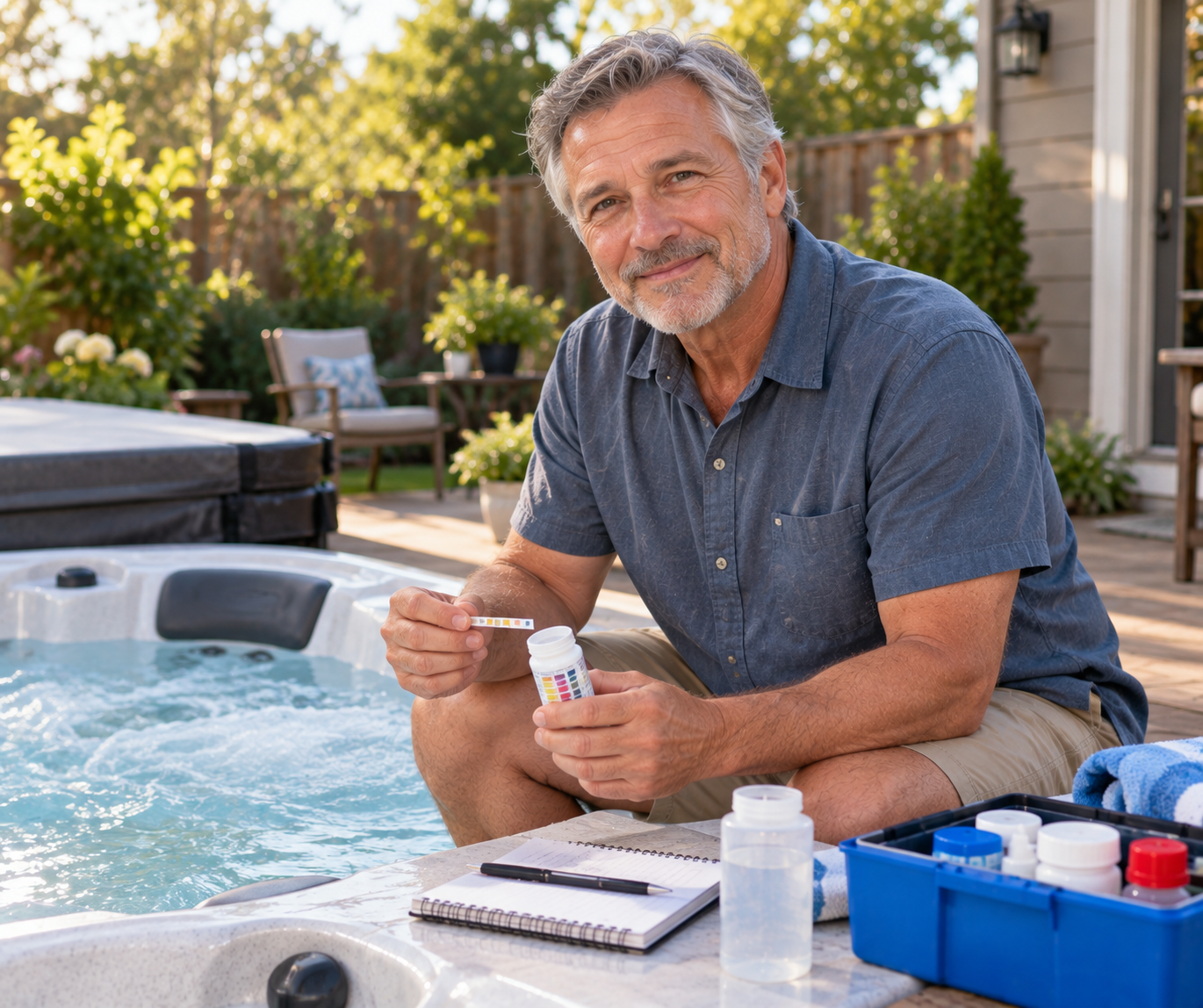
Maintaining safe, balanced water chemistry requires a continuous investment in sanitizers, balancers, and testing supplies. Water balance parameters require maintaining pH levels between 7.2 and 7.8, total alkalinity between 80 and 120 parts per million, and calcium hardness between 150 and 250 parts per million. Failing to balance total alkalinity first will result in severe pH bounce, irritating bathers and causing corrosive damage to heater elements. Ongoing purchases of pH increasers, decreasers, and calcium stabilizers represent standard quarterly maintenance costs.
Sanitizing routines rely on EPA-registered biocides such as free chlorine or bromine to eliminate bacteria and organic bather waste. While supplemental devices like built-in hard water treatment hardware, automatic chemical dispensers, and ozone injectors reduce chemical demand, they do not eliminate primary sanitizers. Weekly non-chlorine shock oxidizers are also required to break down accumulated chloramines and restore water clarity. Budgeting for chemical testing strips, liquid reagent test kits, and sanitizer tablets ensures a clean, foam-free soaking environment.
Filtration upkeep involves both routine cleaning routines and periodic cartridge replacements. Pleated filter cartridges trap suspended particulates, organic debris, and hair, requiring bi-weekly rinsing and monthly degreasing soaks to preserve adequate water flow. Constricted filters restrict water circulation, triggering flow error messages on digital topside controls and putting unnecessary strain on circulation pumps. Replacing worn filter cartridges every twelve to twenty-four months guarantees optimal filtration performance and prevents expensive pump motor failures.
Delivery Logistics, Site Clearance, and Spatial Planning
Moving a large, rigid four-person hot tub from the manufacturer to its final resting position introduces several overlooked logistical expenses. Standard freight deliveries typically provide curbside drop-off, leaving homeowners responsible for transporting an eight-hundred-pound empty shell into their backyard. Moving a spa requires inspecting side yard pathways, measuring gate clearances, and trimming overhanging trees along the delivery route. If backyard access is blocked by fences or steep grade changes, hiring a specialized spa moving crew or crane service becomes necessary.
Spatial planning around the spa perimeter is equally critical for long-term accessibility and local building code adherence. Municipal regulations frequently mandate specific property setback lines, separating outdoor water features from property boundaries and overhead power lines. Furthermore, homeowners must preserve at least three feet of open clearance around equipment access panels to allow future technician maintenance. Failing to plan for service clearances can turn simple heater or pump repairs into costly operations requiring the entire spa to be drained and shifted.
Accessories that enhance usability also demand spatial consideration and setup funding. Adding safety steps, entry handrails, and hydraulic cover lifters dramatically improves convenience and prevents physical strain during daily use. Selecting a budget oversized spa cover or an integrated lifter requires sufficient fold-back clearance behind the tub skirt. Factoring these physical additions into your initial patio layout avoids awkward positioning and preserves a clean, inviting backyard aesthetic.
Long-Term Component Lifespan and Replacement Costs
Understanding the expected lifespan of major mechanical components helps homeowners plan for mid-life repair expenses. Circulation and jet pumps generally operate reliably for five to eight years before mechanical shaft seals wear out or motor bearings begin to fail. Electric titanium heating elements face continuous exposure to water chemicals, often requiring replacement after several seasons of rigorous thermal duty. Replacing individual mechanical components is relatively straightforward, provided the cabinet provides adequate service access and standard plumbing union fittings.
Cabinet skirts and exterior covers also degrade under continuous exposure to sun, rain, and snow. Vinyl covers gradually absorb moisture through microscopic vapor barrier pores, becoming waterlogged and heavy over three to five years of service. A waterlogged cover loses its insulating R-value and exerts extreme mechanical strain on lifter brackets, requiring eventual replacement. Inflatable tubs, while economical upfront, typically have a shorter service life than rotationally molded or acrylic units due to gradual seam wear and material fatigue.
Preventative seasonal maintenance protects your mechanical components from premature failure and extends their operational lifespan. Performing quarterly plumbing line flushes with enzymatic cleaners purges bio-film and mineral scale from internal manifold lines. Proper winterization procedures, including blowing residual water out of jet lines with a wet-dry vacuum, prevent freeze-cracked plumbing during sub-zero shutdowns. Taking these routine protective steps prevents expensive emergency plumbing repairs and protects your initial financial investment.
Strategic Decision Principles for Prospective Buyers
Selecting the best four-person hot tub ultimately depends on balancing your upfront budget against your expectations for therapeutic performance and longevity. Cost-conscious buyers and renters benefit immensely from inflatable or entry-level plug-and-play spas, which provide pleasant warm-water relaxation without requiring permanent electrical or masonry investments. These portable units provide immediate hydrotherapy benefits, easy seasonal storage, and minimal site disruption. Their trade-offs involve lighter hydrotherapy jet action, slower thermal recovery, and shorter expected product lifespans.
Homeowners seeking a permanent backyard wellness retreat with powerful deep-tissue massage are better served by hard-shell acrylic or premium rotomolded spas. The higher initial financial outlay for dedicated 230-volt wiring, reinforced concrete foundations, and advanced full-foam insulation yields superior energy efficiency and multi-year durability. By evaluating the complete scope of site preparation, electrical infrastructure, utility consumption, and chemical maintenance, you can comfortably select a four-person hot tub that satisfies both your hydrotherapy goals and long-term financial plan.





Write Your Review
No reviews yet. Be the first to share your experience!