


Stepping onto the backyard patio for a restorative hydrotherapy session should always reveal a sparkling, inviting basin. Many spa owners find themselves wondering exactly how clear should hot tub water be when the water starts looking slightly dull or veiled under the internal LED lights. Hot tub water must always remain completely crystal clear, allowing you to easily inspect the bottom drain screws, footwell jets, and acrylic contours without any milky haze or floating particulate matter. Securing the spa with a durable patio hot tub cover protects this pristine environment by blocking airborne debris and organic matter between soaking sessions.
Maintaining this high standard of transparency is not merely an aesthetic preference; it serves as your first visual defense against pathogenic bacteria and imbalanced water chemistry. When organic bather waste, dead skin cells, cosmetic lotions, or dissolved minerals saturate the water, clarity deteriorates rapidly and compromises biocide performance. Understanding proper visual clarity benchmarks empowers you to catch sanitization shortfalls early, protect your internal plumbing manifolds, and ensure every soak remains hygienic and safe.

Pros
- Compatible with all major spa sanitizers including chlorine, bromine, and biguanide
- Improves filter media efficiency by binding fine particles that normal cartridges miss
- Concentrated formula requires relatively small doses per treatment
- Compact bottle footprint fits easily into standard outdoor storage cabinets
Cons
- Requires clean filter cartridges to capture coagulated debris without restricting water flow
- Does not resolve cloudiness caused by severely unbalanced pH, total alkalinity, or zero sanitizer
- Liquid format requires careful measuring to prevent accidental over-treatment
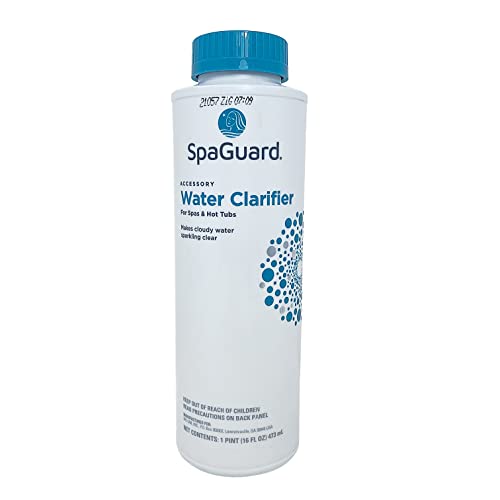
HTH Spa 86121 Clarifier is a concentrated liquid water-care treatment designed to clear dull, hazy water in portable and built-in hot tubs. This maintenance product serves first-time hot tub owners, busy families, and vacation rental managers who need a dependable way to restore water clarity after heavy bather loads without having to perform an immediate, water-wasting drain and refill.
Microscopic particles such as dead algae, lotions, cosmetic residues, and fine environmental dust often bypass standard hot tub cartridge filters due to their tiny particle size. HTH Spa Clarifier acts as a coagulant, combining those microscopic floaters into larger masses that your filtration system can easily snare during standard circulation cycles. This action directly supports filter efficiency and helps keep water looking transparent and inviting.
Chemical compatibility is a critical consideration for any spa additive, and this formula is designed to work across diverse sanitation programs. HTH lists compatibility with chlorine, bromine, and biguanide sanitizers, making it versatile for virtually any residential spa setup. The 16-ounce bottle weighs approximately one pound and measures 2.46 by 2.46 by 7.85 inches, allowing it to fit neatly inside outdoor storage bins, hot tub steps with storage compartments, or utility shelves.
Application fits easily into standard spa care routines. Adding the recommended dose while the circulation pump or low-speed jets are active distributes the liquid evenly across the spa volume. After the clarifier binds suspended debris and directs it toward the filter, owners should plan to rinse or chemically wash their filter cartridges within a day or two to remove the collected solids and maintain optimal circulation pressure.
While clarifiers are effective at targeting physical haze, they cannot substitute for fundamental water balancing. If cloudy water is driven by incorrect total alkalinity, skewed pH levels, or an absence of active sanitizer, those underlying chemistry issues must be corrected first. Furthermore, overdosing clarifier can occasionally cause foaming or reverse cloudiness, meaning precise measurement remains necessary during application.
For owners seeking a low-cost, straightforward tool to maintain polished, sparkling water between scheduled drain intervals, HTH Spa Clarifier is a practical addition to the maintenance cabinet. Verifying that your spa filter is clean and that water balance parameters are within normal ranges before pouring will deliver the clearest results.
HTH Spa Clarifier is formulated for broad chemical compatibility, allowing safe use alongside chlorine, bromine, and biguanide sanitizing programs. This flexibility prevents chemical conflict and makes it suitable for both standard residential tubs and rental property installations utilizing different sanitation preferences.
For optimal results, ensure the hot tub water has balanced pH and active sanitizer levels before adding the clarifier. Activating low-speed filtration jets while dosing ensures the liquid disperses thoroughly across the water column to bind tiny particles uniformly.
Because this clarifier gathers microscopic contaminants so that the spa filter can catch them, regular filter maintenance is essential after treatment. Thoroughly rinsing your cartridge pleats with clean water after running the cycle prevents coagulated debris from causing filter restriction.
Store the 16-ounce bottle in a cool, dry, and well-ventilated area away from direct sunlight. Ensuring the cap is tightly secured after each use preserves chemical potency and prevents accidental leakage inside your spa storage box or cabinet.

Pros
- Combines cleaner, clarifier, and conditioner to reduce the number of separate specialty chemical bottles needed
- Does not require draining the spa, making it practical for cold-weather maintenance when draining is risky
- Compatible with standard chlorine and bromine sanitizing systems
- Helps dislodge hidden oils and line buildup that standard sanitizers alone may struggle to clear
Cons
- Does not replace primary sanitizers such as chlorine or bromine and must be used as a supplement
- Initial treatment can release accumulated plumbing grime, requiring extra filter rinsing and waterline wiping
- At 16 fluid ounces per bottle, owners of larger spas may need frequent reorders for year-round weekly dosing
Oh Yuk 5-in-1 Hot Tub Cleaner, Clarifier, and Conditioner is a multi-purpose liquid water treatment designed to streamline routine spa maintenance without draining the tub. It serves spa owners, rental property operators, and busy households who want to prevent cloudy water and line buildup alongside their regular sanitation routine. Rather than managing separate bottles of clarifier, plumbing line maintenance, and water softeners, this single 16-ounce formulation tackles multiple water quality challenges at once.
In daily hot tub ownership, bather loads introduce body oils, lotions, and organic residues that coat plumbing walls and create dull, cloudy water. This 5-in-1 formula actively suspends and lifts those trapped residues, allowing the built-in clarifier to coagulate fine debris so your filter cartridge can capture it. It also conditions the water to improve overall water feel, making soaks feel noticeably smoother without altering primary sanitizer baselines. Because it works without requiring a water drain, it proves especially valuable during freezing winter months when draining and refilling a spa is inconvenient or hazardous.
A crucial factor in hot tub water chemistry is chemical compatibility, and this product is engineered strictly as a supportive supplement rather than an EPA-registered sanitizer. It is formulated to work seamlessly with standard chlorine or bromine maintenance systems. It will not eliminate the need to test and balance free sanitizer, pH, or total alkalinity. Instead, by neutralizing organic residues and keeping plumbing lines clearer, it helps your primary sanitizer work more efficiently without being consumed prematurely by hidden organic contaminants.
Applying the treatment is straightforward, but users should prepare for the way deep-cleaning additives interact with existing buildup. During the first few doses, especially in older spas or tubs with heavy bather traffic, the formula may purge accumulated oils and residue from the plumbing into the main footwell. Spa owners should anticipate wiping down the waterline with a clean cloth and removing the filter cartridge for a thorough rinse 24 to 48 hours after application to prevent dislodged debris from re-circulating.
While the formula simplifies maintenance, it comes with practical limitations that every hot tub owner should understand. The 16-ounce bottle size provides a compact footprint for spa caddies, but frequent weekly dosing across large multi-person hot tubs means a single bottle may deplete quickly. Furthermore, this maintenance product is not an emergency purge flush intended for complete tub draining, nor will it correct severe chemical imbalances caused by neglected calcium hardness or erratic pH levels.
Oh Yuk 5-in-1 Hot Tub Cleaner is best suited for hot tub owners who want to minimize weekly water care steps and preserve water clarity without dumping their water. Before purchasing, verify your spa sanitation setup to confirm you have an established chlorine or bromine routine in place, and ensure you have spare filter cartridges or cleaning tools ready to handle any dislodged residue from the initial treatment.
Using this 5-in-1 treatment on a weekly schedule helps control the organic film and cosmetic oils that normally accumulate on hot tub acrylic and inside internal jet lines. Regular use prevents stubborn waterline rings from setting, which reduces the need for aggressive scrubbing pads that could scratch spa shell surfaces.
Because the built-in clarifier groups micro-particles together for mechanical removal, filter care is directly tied to the success of this treatment. Hot tub owners should inspect and rinse their pleated filter cartridges with clean water shortly after dosing, as the filter media will trap an increased amount of suspended matter once the clarifier takes effect.
Oh Yuk 5-in-1 is formulated to work in harmony with traditional hot tub sanitizers, specifically standard chlorine and bromine water care regimens. It does not replace residual sanitizers, oxidizers, or shock treatments, meaning regular testing of free available sanitizer levels remains necessary.
Adding this conditioner and clarifier assists in maintaining consistent water chemistry by reducing organic demand on the sanitizer. Always ensure your hot tub water is properly balanced for pH and total alkalinity before introducing specialty water conditioners to achieve the best clarity and water feel.

Pros
- Coagulates micro-particles so standard spa cartridge filters can trap fine debris
- Designed to clarify cloudy water without altering overall pH balance
- Simple application procedure using active spa jets for rapid circulation
- Compact 1-pint bottle is easy to store alongside routine hot tub chemicals
Cons
- Requires a clean, functioning filter cartridge to physically remove the clumped debris
- Over-dosing can lead to temporary haziness, requiring careful measurement based on spa gallon capacity
- Does not replace primary sanitizers or shock treatments for bacteria and heavy organic buildup
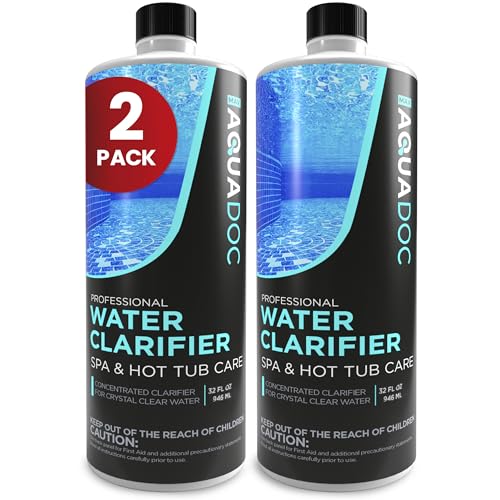
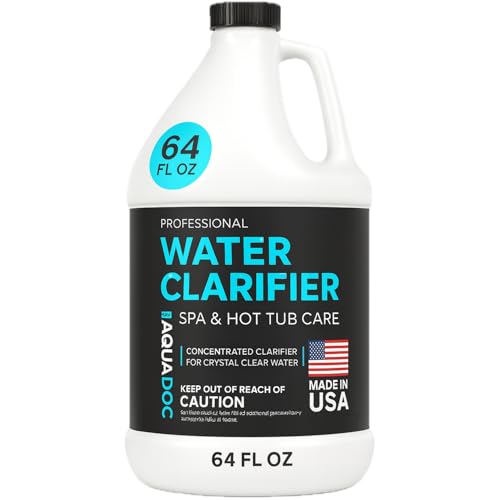
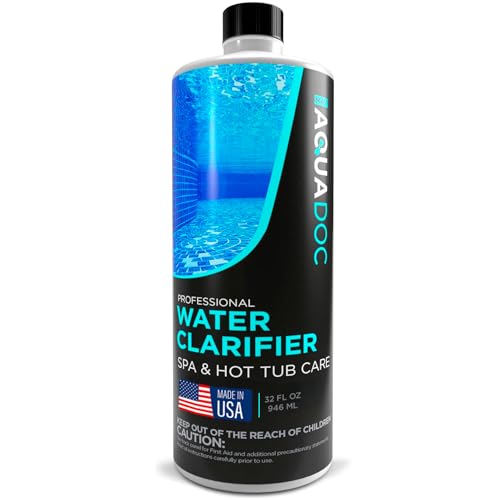
AquaDoc Hot Tub Clarifier is a concentrated liquid treatment designed to clear cloudy water and support routine cartridge filtration. It best suits hot tub owners, vacation rental hosts, and busy homeowners who experience dull or hazy water resulting from bather load, body lotions, or fine airborne debris. Instead of waiting for microscopic suspended solids to slowly cycle out through standard circulation, this formula acts as a coagulant to bundle tiny particles together so spa filters can trap them efficiently.
Microscopic dirt particles are frequently smaller than the micron rating of standard hot tub cartridge filters, allowing them to bypass filter pleats and keep the water looking hazy. AquaDoc works by attracting these micro-particles like a magnet, creating larger agglomerations that the filter media can physically catch. Running spa jets and blowers during application accelerates circulation, allowing the treatment to disperse evenly throughout the tub and push debris toward the skimmer intake.
Maintaining water balance is a central part of spa ownership, and chemical additions that swing pH can trigger scale or skin irritation. This clarifier is formulated to clear water without upsetting established pH levels, which helps avoid cascading chemical adjustments. By pulling floating debris out of suspension, it helps cartridge filters capture dirt effectively, though regular filter rinsing remains essential to flush away the collected material.
Applying the clarifier fits easily into weekly spa care routines without complicated steps. The manufacturer directions suggest adding 2 ounces for every 800 gallons of water while the jets or blowers are active, continuing filtration until the water turns clear. For standard residential tubs, which often hold between 300 and 450 gallons, measuring out roughly 1 ounce twice a week provides consistent water maintenance without over-treating.
While clarifiers improve mechanical filtration, they are not a substitute for proper sanitizer levels, oxidizers, or routine filter cleaning. If a hot tub filter cartridge is already loaded with oils or scale, adding a clarifier will yield limited results until the filter is thoroughly rinsed or degreased. Additionally, overdosing clarifier can have an inverted effect, where excess polymers temporarily cloud the water, making accurate measurement essential.
AquaDoc Hot Tub Clarifier is a reliable, practical addition to any spa chemical cabinet for clearing minor haziness and supporting regular filtration. Before adding it to your spa, verify your water sanitizer levels, test baseline pH, and inspect your cartridge filter to ensure it is clean and ready to trap the gathered particles. Hot tub owners looking for a low-fuss way to preserve water clarity between water changes will find good everyday value here.
Using AquaDoc Hot Tub Clarifier effectively requires basic attention to spa capacity and filtration cycles. The listed dosage is 2 ounces for every 800 gallons of water, meaning most typical residential hot tubs holding 350 to 400 gallons require approximately 1 ounce per application. Adding the measured dose twice weekly with the circulation jets running ensures thorough dispersion across the entire spa shell.
Because the clarifier works by grouping tiny particles into larger debris, your spa filter cartridge does the physical work of removing the cloudiness from the water. Running the filtration cycle until the water clears is essential, followed by a quick garden-hose rinse of the filter pleats to prevent the trapped coagulants from restricting water flow.
The Complete Visual and Chemical Guide to Hot Tub Water Clarity
Hot tub water should always be as transparent as fresh bottled drinking water, displaying complete optical clarity from the waterline down to the deepest footwell. If you stand over the spa and look downward, you must be able to view every contour of the shell, the intake covers, and individual screw heads on the bottom suction fittings without squinting. Any level of cloudiness, haziness, or milkiness indicates that suspended micro-particles or dissolved contaminants are interfering with light refraction. Achieving and sustaining this level of diamond-grade clarity requires an understanding of how physical filtration, balanced water chemistry, and clarifying treatments work together.
The Visual Clarity Standard: What Ideal Spa Water Looks Like
Visual clarity serves as an immediate, reliable diagnostic indicator of the overall biological safety inside your hot tub. Under direct sunlight or crisp ambient daylight, properly balanced spa water looks virtually invisible, revealing only the subtle reflections across the water surface. When you turn on internal LED spa lights during an evening soak, the beam should cut cleanly through the water column without illuminating floating particulate clouds or dense haze. If the light beam appears milky or foggy, colloidal suspensions are present that standard cartridge filters cannot immediately trap.
In addition to complete transparency, pristine hot tub water should exhibit a total absence of surface films, persistent foam, or greasy waterlines. Bubbles generated by running hydrotherapy jets ought to pop and dissipate within three to five seconds after turning off the air controls. If bubbles linger as a dense, soapy froth, surfactants from skin lotions or laundry detergent residues have begun to accumulate. A quick visual inspection of the waterline should also reveal smooth, spotless acrylic rather than a sticky scum line or sandpaper-like mineral scaling.
Primary Chemical Parameters That Govern Water Transparency
Chemical equilibrium is the foundation of clear water, beginning with total alkalinity and pH regulation. Total alkalinity acts as a chemical buffer and should be maintained between 80 and 120 parts per million to keep your pH stable between 7.2 and 7.8. When pH drifts above 7.8, minerals like calcium become insoluble, precipitating out of solution to create a cloudy, milky haze across the entire tub. Conversely, low pH makes water acidic and corrosive, which damages heating elements and internal pump seals while irritating the eyes and skin of bathers.
Sanitizer levels dictate whether organic waste and bacterial populations can thrive, directly influencing water transparency. Free available chlorine should be kept between 3 and 5 parts per million, or bromine between 3 and 5 parts per million, to effectively oxidize bather contaminants. When sanitizer levels plunge near zero, living microorganisms and dead organic residues accumulate faster than the filter can process them, creating a dull gray cloud. Regular oxidation using non-chlorine shock breaks down these spent compounds, converting chloramines back into inert gases that vent away.
Calcium hardness also requires close monitoring, ideally sitting within the 150 to 250 parts per million window for acrylic spas. If calcium hardness climbs too high, particularly in hard water regions, heating cycles cause mineral crystals to dislodge and cloud the water column. Over time, these mineral deposits adhere to internal heating elements, reducing thermal efficiency and triggering low-flow sensor errors. Managing these baseline chemical parameters ensures that clarifying additives can do their job without fighting an underlying chemical imbalance.
Distinguishing Between Hazy, Foamy, and Discolored Water
Different water clarity issues stem from distinct root causes, requiring specific diagnostic paths rather than generic chemical additions. Milky or hazy white water typically points to high pH, elevated calcium precipitation, early-stage bacterial blooms, or severe filter clogging. This milky appearance occurs when microscopic particles scatter light rays throughout the water column, preventing deep optical penetration. Checking your test strips for sanitizer residual and pH levels provides the fastest way to confirm whether the haze is chemical or biological in nature.
Green tint in hot tub water presents two separate challenges depending on whether the liquid remains clear or turns turbid. If the water is bright emerald green yet entirely transparent, dissolved copper ions from source water or corroding heat exchangers have oxidized under high sanitizer levels. If the water is murky, slimy, and dull green, active algae has taken hold due to a complete failure of the primary sanitizer residual. While true algae is rare in hot spas operating at elevated temperatures, neglected tubs with low sanitizer levels can quickly cultivate green blooms.
Foaming represents an entirely mechanical symptom caused by foreign chemicals altering the surface tension of the water. When bather sweat, body oils, cosmetics, or laundry detergents from swimsuits mix with vigorous hydrotherapy aeration, thick white foam forms on the surface. While anti-foam silicone drops offer a temporary visual fix before guests arrive, they do not remove the underlying organic surfactants. Truly eliminating persistent foam requires oxidizing the organic load with shock, utilizing specialized water clarifiers, and cleaning filter cartridges thoroughly.
How Water Clarifiers Work to Restore Brilliant Clarity
Standard spa cartridge filters use pleated polyester media engineered to capture particles down to roughly 20 to 50 microns in size. However, dead skin cells, cosmetic oils, and tiny mineral crystals often measure between 0.5 and 5 microns, allowing them to pass directly through the filter pleats indefinitely. Specialized hot tub clarifiers, such as HTH Spa Clarifier or SpaGuard Spa Water Clarifier, solve this limitation through chemical coagulation. These formulas introduce positively charged polymers into the water, attracting negatively charged microscopic debris like a magnetic net.
As these micro-particles bond together, they form larger flocs that your cartridge filter can easily trap during standard circulation cycles. SpaGuard Water Clarifier is specifically formulated to coagulate these floating contaminants without disturbing your carefully balanced pH levels, protecting overall water stability. Similarly, AquaDoc Hot Tub Clarifier provides a concentrated formula where just two ounces treat up to 800 gallons of water. Adding this clarifier while running the jets ensures rapid distribution, helping the filtration system pull suspended cloudiness out of the water column within hours.
Using a clarifier requires strict adherence to manufacturer dosing instructions, as adding too much product creates the opposite effect. Over-dosing a polymeric clarifier can oversaturate the water, causing an excess of positive electrical charges that actually repel debris particles from one another. This mistake leads to persistent, gummy water cloudiness that clogs filter cartridges and proves difficult to filter out. Always measure clarifying doses carefully, turn on circulation pumps, and permit the filter to capture the coagulated particles over a full 12 to 24-hour window.
Purging Plumbing Biofilm and Deep Organic Residue
Cloudy water issues frequently originate deep within the hidden flexible PVC plumbing lines rather than the main open tub basin. Over months of regular soaking, body oils, bacteria, and dead skin form a slimy matrix known as biofilm along the interior walls of your jet manifolds. Standard chlorine or bromine doses cannot penetrate this protective biofilm shell, causing the colony to periodically slough off cloudy debris into the water. Products like Oh Yuk 5-in-1 Hot Tub Cleaner, Clarifier, and Conditioner actively scour these internal plumbing lines without requiring an immediate drain.
During an initial application of a multi-action cleaner, loosened biofilm and pipe residues often rise to the surface, creating a temporary scum ring around the perimeter. Spa owners should simply wipe down the acrylic waterline with a clean microfiber cloth and rinse their cartridge filters to remove this dislodged material. The built-in water conditioners in Oh Yuk also soften the tactile feel of the water, improving bather comfort while reducing future pipe buildup. Combining regular line maintenance with routine clarifying treatments keeps both hidden plumbing circuits and visible water impeccably clean.
Mechanical Filtration and Circulation Troubleshooting
Even the highest quality chemical clarifiers cannot restore crystal water if your mechanical filtration system is compromised or neglected. Cartridge filters act as the mechanical lungs of your spa, trapping coagulated debris and hair continuously during programmed filtration sweeps. Most modern hot tubs require at least two daily filtration cycles lasting two to four hours each, or a dedicated circulation pump moving water constantly. If your control pack is programmed for short filtration cycles, suspended matter will accumulate faster than your filter can physically extract it.
Pleated filter cartridges require weekly rinsing with a high-pressure hose nozzle to dislodge loose grit, hair, and surface debris from between the folds. Once a month, soak the cartridge in a dedicated chemical filter degreaser to strip away oily bather residues that regular water pressure cannot dissolve. Never use household dishwashing soap or laundry detergents to clean filters, as these agents introduce foaming surfactants that severely degrade water clarity. Replacing pleated cartridges every 12 to 24 months ensures that the filter fabric retains optimal pore geometry and flow dynamics.
Environmental Contamination and Cover Maintenance
Backyard spas are continuously exposed to environmental contaminants, including airborne pollen, tree sap, dust, and windblown soil particles. Installing a foldable hot tub cover creates a tight barrier that stops outdoor contaminants from settling into the water column when the tub sits idle. A well-fitting cover also prevents sunlight from entering the basin, which inhibits photosynthetic algae growth and preserves sanitizer life during hot summer afternoons. Without an effective cover barrier, atmospheric pollutants will consume your sanitizer residual rapidly, leaving the water dull and murky.
The underside of an aging thermal cover can also become a stealthy source of biological contamination that ruins water transparency. Over years of steam exposure, internal foam cores can absorb moisture, cultivating mold, mildew, and foul-smelling bacterial colonies inside the vinyl jacket. When condensation forms on the vinyl underside, it drips these fungal spores and organic acids directly back into your freshly balanced water. Investing in a high-density, protective hot tub cover with warranty ensures that your insulating barrier remains vapor-sealed, preventing mold washback from ruining water clarity.
Step-by-Step Recovery Plan for Cloudy Spa Water
Restoring brilliant clarity to cloudy spa water requires a methodical, step-by-step approach rather than haphazardly pouring in multiple chemicals at once. Begin by pulling your cartridge filter out of the housing to inspect it for heavy debris, grease accumulation, or torn pleated fabric. Rinse the cartridge thoroughly with clean water, reinstall it, and verify that all jet valves and intake suction points remain unobstructed. Run a comprehensive chemical test using fresh test strips or a liquid test kit to record your exact total alkalinity, pH, and sanitizer levels.
Adjust total alkalinity first to establish a stable buffer, then bring your pH into the ideal 7.2 to 7.8 range using standard spa balancers. Once the pH is balanced, apply a heavy shock treatment using either non-chlorine shock or concentrated spa chlorine granules to destroy organic contaminants. Leave the spa cover open for at least twenty minutes following the shock treatment to allow oxidized gases and chloramines to vent safely into the air. Ensure the primary jet pumps run on low speed to distribute the oxidizer evenly throughout the internal plumbing manifold.
After the shock treatment has circulated for two hours, add your chosen clarifier, such as AquaDoc Hot Tub Clarifier or HTH Spa Clarifier, according to the bottle directions. Keep the filtration cycle running continuously for the next 12 to 24 hours so the filter can capture every coagulated floc particle as it circulates. Once the water clears, remove the filter cartridge once more to rinse out the trapped debris, preventing captured particles from dissolving back into the water column. If cloudiness persists after 48 hours of continuous filtration, elevated total dissolved solids may indicate the need for a fresh water change.
When to Drain, Refill, and Start Fresh
Every body of hot tub water has a finite operational lifespan, regardless of how meticulously you balance chemicals and apply clarifying treatments. Over months of use, dissolved body salts, residual chemicals, stabilizer byproducts, and dead organic matter raise the total dissolved solids level. When total dissolved solids climb more than 1,500 parts per million above your initial source fill water, the liquid becomes chemically saturated. At this saturation threshold, clarifiers lose efficacy, sanitizers struggle to kill bacteria, and the water takes on a stubborn, dull haze that cannot be filtered out.
To calculate when your spa needs a fresh refill, divide your total water volume in gallons by three, then divide that result by your average daily bathers. For example, a 300-gallon hot tub used by two people daily should be drained and refilled roughly every 50 days to maintain pristine clarity. When refilling, always place your garden hose directly down into the empty filter standpipe rather than filling into the open footwell. Filling through the filter housing forces water into the internal plumbing manifolds, purging trapped air pockets and preventing frustrating pump air locks upon startup.
Practical Takeaways for Daily Water Transparency
Maintaining sparkling, diamond-clear hot tub water is ultimately an exercise in proactive prevention rather than emergency chemical correction. Encouraging bathers to take a quick rinse before soaking eliminates skin lotions, deodorants, perfumes, and hair conditioners before they ever enter the water. Additionally, washing swimwear in warm water without laundry detergent prevents sudsing surfactants from causing persistent surface foam during hydrotherapy sessions. Keeping a floating scum sponge in the skimmer well also captures body oils continuously before they can coat the filter pleats.
Visual clarity should be assessed every single time you lift the spa cover, serving as your immediate benchmark for bather safety and equipment longevity. Clear, shimmering water confirms that your sanitizer residual is actively neutralizing pathogens, your pH remains non-corrosive, and your filtration system is operating at peak efficiency. By combining disciplined weekly water testing, monthly filter degreasing, and targeted clarifiers when bather loads spike, you protect your hydrotherapy investment for years to come. Clean water ensures that every soak remains a relaxing, therapeutic escape rather than a stressful maintenance chore.


Write Your Review
No reviews yet. Be the first to share your experience!