

Stepping into a warm spa after a long day offers unmatched relaxation, but cloudy water and sharp chemical smells can quickly ruin the experience. Many hot tub owners assume that maintaining a steady sanitizer level with chlorine or bromine tablets is enough to keep the water pure. Over time, bather waste such as sweat, skin cells, and cosmetic oils accumulates in the warm water, binding with sanitizers and creating irritating chloramines. Knowing whether do i need to shock my hot tub is a fundamental part of proper water care that every spa owner must address to maintain clean, inviting water.
Routine shocking oxidizes built-up organic contaminants, reactivates inactive sanitizers, and restores clarity without requiring frequent draining and refilling. When paired with a tight-fitting weatherproof patio hot tub cover that keeps out leaves and debris, consistent oxidation preserves overall water balance and protects internal plumbing components. Using the proper shock treatment at regular intervals prevents persistent algae growth, breaks down pungent chemical odors, and ensures a safer environment for every bather. Understanding how different shock formulas work makes spa ownership much simpler and significantly more enjoyable.





Everything You Need to Know About Shocking a Hot Tub
The short answer is yes, you absolutely need to shock your hot tub on a consistent schedule. Even if your daily sanitizer readings appear normal on test strips, regular oxidation is essential for breaking down non-living waste and combined chlorine compounds. Without regular shock treatments, hot tub water quickly turns dull, develops stubborn foam, and produces harsh fumes that irritate eyes and skin. Establishing a clear routine keeps your spa clean, clear, and ready for use throughout the entire year.
The Difference Between Sanitizing and Shocking Spa Water
Many new spa owners confuse sanitizing with shocking, but these two maintenance tasks perform distinct chemical functions. Primary sanitizers such as free chlorine or bromine continuously kill living microorganisms, bacteria, and pathogens in the water. As these sanitizers neutralize organic material, they attach to nitrogen and ammonia molecules from sweat and lotions, creating combined compounds known as chloramines or bromamines. These spent chemical bonds lose their sanitizing effectiveness and cause the unpleasant bleach smell often mistaken for excess sanitizer.
Shocking, or oxidation, introduces a concentrated dose of active oxidizer that breaks those chemical bonds apart. This process destroys accumulated chloramines and converts spent sanitizer back into its active, free-floating state. Shocking also eliminates non-filterable microscopic debris that causes cloudy water conditions. While a daily sanitizer works slowly in small parts per million, a shock treatment delivers rapid chemical power to clear the water profile completely.
Non-Chlorine Oxidizers Versus Chlorinated Shock Treatments
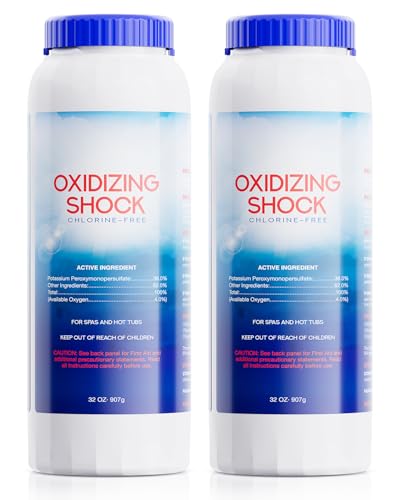
When selecting a shock treatment, spa owners generally choose between non-chlorine oxidizers and concentrated chlorine-based shock formulas. Non-chlorine shocks use potassium monopersulfate (MPS) to oxidize organic matter without raising free chlorine levels. Products such as AquaDoc Non Chlorine Hot Tub Shock and POOLHOUR 32 Oz Chlorine-Free Hot Tub Shock are popular for weekly maintenance because they dissolve rapidly and do not introduce harsh chemical scents. These oxygen-based formulas work alongside both chlorine and bromine sanitization systems to reduce chloramine buildup efficiently.
Another benefit of non-chlorine oxidizers like 2LB Chlorine-Free Hot Tub Shock Oxidizer and SpaGuard Spa Shock Oxidizer for Spas & Hot Tubs is the brief waiting window before soaking. Because MPS does not increase sanitizer residuals above recommended limits, bathers can safely enter the spa approximately fifteen minutes after application. This makes non-chlorine oxidizers an ideal solution for post-soak treatments or quick water freshening before hosting guests.
Chlorinated shock treatments, such as SpaGuard Enhanced Shock, 2 lb, Single Pack or the larger AquaDoc Non Chlorine Hot Tub Shock counterpart when pairing sanitizers, provide dual action by oxidizing waste and elevating free chlorine simultaneously. Multi-function chlorinated formulas like SpaGuard Enhanced Spa Shock 6lbs include clarifiers, flocculants, and pH buffers to treat stubborn algae, restore sparkle, and neutralize severe contamination. These heavy-duty chlorinated options are best suited for spa startups, water recovery after heavy parties, or treating noticeable bacterial bloom.
Clear Indicators That Your Hot Tub Needs an Immediate Shock
Observing changes in your hot tub water provides clear warning signs that organic waste levels have exceeded your sanitizer capacity. Water that looks hazy, milky, or loses its natural sparkle indicates suspended micro-particles that the pleated filter cartridge cannot capture alone. If your water displays a persistent layer of foam that does not dissipate when the jet pumps shut off, dissolved body oils and cosmetic residues are present and require immediate oxidation.
Strong, pungent chemical odors are another telltale sign that your spa needs to be shocked rather than diluted. When bathers notice burning eyes or a sharp chlorine smell, total chlorine levels have outpaced free available chlorine, signaling heavy chloramine formation. A rapid drop in sanitizer readings shortly after dosing also suggests a high organic load consuming free chlorine faster than normal. Shocking the spa eliminates this underlying waste and stabilizes sanitizer consumption.
Essential Water Balance Steps Before Applying Shock
Adding shock chemicals to unbalanced spa water severely limits their oxidizing efficiency and can trigger water cloudiness or surface scaling. Before measuring any oxidizer, use reliable test strips or a liquid testing kit to verify total alkalinity and pH levels. Total alkalinity acts as a buffer for your pH and should sit securely between 80 and 120 parts per million (ppm). If alkalinity drifts too low, pH bounces erratically, while elevated alkalinity makes adjusting water acidity difficult.
Your spa pH must be maintained between 7.2 and 7.8 to create an optimal chemical environment for shocking. When pH rises above 7.8, oxidizers and chlorine sanitizers become sluggish and lose more than half of their active oxidizing power. Conversely, applying shock to acidic water with a pH below 7.2 can corrode internal heater elements, damage jet seals, and cause severe skin irritation. Adjusting alkalinity and pH first ensures that your shock treatment delivers maximum potency with every dose.
Step-by-Step Procedure for Shocking Spa Water Safely
Proper application technique ensures uniform chemical distribution and protects your spa components from localized chemical damage. Begin by removing the hot tub cover entirely and setting water temperature to normal operating levels. Turn on the primary jet circulation pumps to low or high speed, but keep the air induction valves turned off to minimize unnecessary chemical aeration. Never mix dry chemicals in a bucket or pre-dilute granular shock unless explicitly instructed by the product label.
Carefully measure the required dosage of shock granules based on your hot tub water capacity, typically found in your owner manual. Broadcast the granules evenly across the center of the circulating water surface, staying close to the water level to prevent airborne chemical dust. Many modern products, such as POOLHOUR and AquaDoc oxidizers, dissolve rapidly without leaving chalky sediment on the acrylic floor. Allow the circulation pumps to run for at least twenty minutes with the cover completely open to circulate the oxidizer thoroughly.
Always avoid handling chemical granules in windy conditions or adding multiple chemicals at the exact same moment. If you need to add pH adjusters, calcium hardness increasers, or clarifiers, allow at least thirty minutes between applications. Giving each treatment time to circulate prevents unpredictable chemical interactions that could cause cloudiness or reduce product efficiency.
Protecting Spa Covers and Equipment from Chemical Off-Gassing
One of the most frequent mistakes hot tub owners make is immediately closing the spa cover after adding shock chemicals. During the oxidation process, volatile organic compounds, nitrogen gases, and acidic chemical vapors are released from the water surface. Trapping these aggressive chemical vapors beneath a closed cover accelerates the breakdown of the underside vinyl lining, degrades stitching, and corrodes plastic topside control bezels.
Leaving the cover fully open for at least fifteen to thirty minutes protects your investment in a high-grade protective hot tub cover and allows corrosive vapors to dissipate into the open air. This simple habit also protects the foam core vapor barrier from premature moisture absorption and chemical bleaching. Owners using an affordable foldable hot tub cover will find that consistent off-gassing ventilation prevents waterlogging, keeping the cover lightweight and thermally efficient for years of reliable service.
Establishing a Consistent Weekly and Post-Soak Shock Schedule
Creating a dependable maintenance calendar prevents chemical imbalances before they transform into water quality issues. For average residential spa usage involving two to three soaks per week, dosing with a non-chlorine oxidizer once every seven days is standard practice. This routine weekly dose systematically burns off cosmetic residue, body perspiration, and airborne contaminants before they can accumulate into visible cloudiness.
Adjust your shocking frequency dynamically whenever bather loads increase beyond your normal household routine. If four or five guests soak during an evening gathering, add an oxidizer dose immediately after everyone exits the tub to neutralize organic waste promptly. In addition, always perform a thorough chlorinated shock whenever refilling your spa with fresh tap water, after fixing a plumbing issue, or following extended periods of non-use to establish a clean sanitization baseline.
Safe Waiting Intervals and Testing Free Sanitizer Levels
Determining when it is safe to re-enter your spa depends entirely on the type of shock treatment applied to the water. Non-chlorine oxidizing treatments that rely on potassium monopersulfate do not elevate active sanitizer levels, meaning bathers can usually soak safely fifteen to twenty minutes after dosing once the granules have dissolved. Confirm that the water is circulating clearly and that no undissolved granules remain resting on the seats before stepping in.
If you treat your spa with a chlorinated shock formula, wait times are significantly longer because free chlorine spikes well above standard soaking parameters. Test your water before entering to confirm that free available chlorine has returned to the safe target range of 1 to 3 ppm, or that bromine levels measure between 3 and 5 ppm. Soaking in water with free chlorine exceeding 5 ppm can cause skin rashes, trigger respiratory discomfort, and fade swimwear fabric. Taking a few moments to verify readings guarantees a comfortable, therapeutic soak every single time.


Write Your Review
No reviews yet. Be the first to share your experience!