


Maintaining balanced spa water feels impossible when you realize you can’t keep chlorine in hot tub plumbing and filtration circuits despite adding sanitizer daily. Hot water temperatures between 100°F and 104°F create a demanding environment where chemical sanitizers degrade much faster than in typical swimming pools. When chlorine vanishes within hours, the issue usually stems from heavy chemical demand rather than faulty chemicals. Organic contaminants, sweat, skin care residues, and invisible biofilm colonies inside internal hoses consume active hypochlorous acid as quickly as you add it.
Failing to hold a steady free chlorine residual of 3 to 5 parts per million puts both water clarity and bather health at risk. Neglected water allows bacteria to multiply, leading to cloudy water, slimy shell surfaces, and stubborn chloramine odors. Protecting your spa with a durable hot tub cover with warranty shields the water from sunlight and outdoor debris, but internal chemical dynamics require targeted correction. Understanding the difference between active sanitizer and combined waste helps restore water clarity while establishing lasting sanitizer stability.


Understanding Why Sanitizer Depletes and Restoring Hot Tub Water Balance
When you discover that you can’t keep chlorine in hot tub water, the root problem is almost always an overwhelming sanitizer demand consuming free chlorine faster than it can circulate. Chlorine molecules work tirelessly to oxidize bather waste, neutralize microscopic pathogens, and break down organic materials introduced during every soak. If the volume of organic waste exceeds the available free sanitizer, your chlorine reading drops to zero almost immediately after dosing. Restoring a reliable sanitizer baseline requires diagnosing whether the culprit is bather waste, plumbing biofilm, cyanuric acid saturation, or improper pH balance.
Distinguishing Between Free Chlorine and Combined Chloramines
Many hot tub owners test their water, see a total chlorine reading, and wonder why the water smells pungent and irritates their eyes. Free chlorine is the active, unattached hypochlorous acid ready to sanitize pathogens, whereas combined chlorine represents sanitizer already bound to nitrogen and ammonia waste. When chlorine combines with contaminants, it forms chloramines, which lose sanitizing capability and generate the classic harsh chemical odor. A standard test strip often reveals zero parts per million of free chlorine even though combined chlorine levels remain elevated.
Targeting an ideal free chlorine range of 3.0 to 5.0 parts per million ensures the water possesses enough residual biocide to neutralize new contaminants. When total chlorine exceeds free chlorine by more than 0.5 parts per million, the water has accumulated excessive chloramines that require immediate oxidation. If you continue adding routine daily doses of sanitizer without addressing the underlying chloramine load, those fresh additions get absorbed immediately by persistent organic bonds. Breaking this cycle requires elevating chemical concentration to breakpoint chlorination or utilizing an oxygen-based shock to liberate active sanitizer molecules.
Organic Bather Load and the Sudden Sanitizer Drop
A single bather soaking in a four-hundred-gallon hot tub introduces a substantial volume of organic matter through perspiration, natural body oils, deodorant, and laundry detergent residue trapped in swimwear. Because hot water opens pores and accelerates sweating, a twenty-minute soak can consume an entire maintenance dose of chlorine in minutes. If multiple guests use the spa without showering beforehand, the sudden spike in biological waste immediately depletes any free sanitizer present in the system. High bather loads quickly turn clean water cloudy, creating an insatiable chemical appetite that standard daily sanitizer doses cannot overcome.
Using an oxygen-based oxidizer like AquaDoc Non Chlorine Hot Tub Shock helps manage heavy organic accumulation without spiking chlorine levels. This quick-dissolving spa shock breaks down non-living organic buildup, cosmetic residue, and oils that cause cloudy water, allowing your primary sanitizer to focus on microbial control. Because potassium peroxymonosulfate shocks dissolve rapidly without pre-mixing, adding them directly after social soaking sessions spares your primary biocide from premature exhaustion. Regular post-soak oxidation keeps bather contaminants from creating an insurmountable chemical demand in compact water volumes.
Hidden Plumbing Biofilm Inside Internal Waterlines
Biofilm represents one of the most stubborn reasons a spa owner cannot maintain a measurable sanitizer residual. Inside the hundreds of feet of flexible PVC hoses and jet manifolds hidden beneath the cabinet, bacteria secrete a protective, slimy matrix that adheres tightly to pipe walls. This polysaccharide shield prevents standard chemical doses from reaching the bacteria nesting inside, while constantly consuming any free chlorine moving through the circulation path. As circulation pumps cycle water across this bacterial lining, the active chlorine gets exhausted long before it can build a measurable residual in the main footwell.
Even when water looks completely clear to the naked eye, mature biofilm colonies can continuously pull free chlorine readings down to zero within hours of dosing. Standard surface wipe-downs and routine filter rinses do not disturb the internal slime layer lurking within the plumbing. Purging the system with a concentrated plumbing line cleaner before a full drain and refill is essential to stripping away this biological barrier. Once the internal manifolds are thoroughly purged and flushed, fresh chlorine can circulate without being instantly destroyed by hidden bacterial colonies.
The Critical Relationship Between pH, Alkalinity, and Chlorine Strength
Water balance parameters govern the chemical efficacy of every sanitizer added to your spa. When you add chlorine to water, it splits into hypochlorous acid, which is a powerful sanitizer, and hypochlorite ion, which is significantly weaker and slower to disinfect. The distribution between these two forms depends almost entirely on the water pH, which should ideally remain balanced between 7.2 and 7.8. Allowing pH to drift outside this narrow corridor drastically reduces chlorine efficiency, rendering normal sanitizer additions virtually useless.
If your water pH drifts upward to 8.0 or higher, less than twenty percent of your chlorine remains in the active hypochlorous acid state. In high-pH water, chlorine becomes sluggish and largely ineffective, giving the false impression that the sanitizer has evaporated or vanished. Total alkalinity serves as the chemical buffer that prevents pH from fluctuating erratically, so stabilizing total alkalinity between 80 and 120 parts per million is mandatory before attempting to correct chlorine levels. Adjusting alkalinity first allows pH to settle into the proper range, instantly restoring the chemical potency of your sanitizer.
Cyanuric Acid Saturation and Chlorine Lock
Most portable hot tub owners sanitize their water using granular sodium dichlor, which combines active chlorine with cyanuric acid as a stabilizing agent. In outdoor swimming pools, cyanuric acid shields chlorine from ultraviolet sun degradation, but in covered hot tubs, it accumulates rapidly with every single granular dose. Because cyanuric acid never evaporates or breaks down naturally, its concentration climbs steadily over weeks of regular maintenance. Frequent top-offs and chemical additions continue driving cyanuric acid concentrations higher until the water reaches saturation.
Once cyanuric acid levels climb past fifty parts per million, and especially when they exceed eighty to one hundred parts per million, a condition known as chlorine lock occurs. In this state, cyanuric acid binds so tightly to chlorine molecules that it refuses to release them for sanitation tasks, causing test strips to show zero free chlorine regardless of how much powder you add. The only reliable method to eliminate excessive cyanuric acid is draining the spa and refilling it with fresh source water. Hot tub manufacturers generally suggest draining and refilling acrylic and portable spas every three to four months to prevent cyanuric acid lock.
Leveraging Chlorine-Free Oxidizers for Sanitizer Preservation
Relying exclusively on chlorinated products to oxidize bather waste often leads to the cyanuric acid accumulation that causes chlorine lock. Incorporating a non-chlorine oxidizer like AquaJoyer Non-Chlorine Spa Shock for Hot Tub provides a practical solution for breaking down chloramines without adding unwanted stabilizer. These chlorine-free granules dissolve quickly in circulating spa water and are suitable for use alongside bromine, chlorine, or saltwater systems. Adding an oxidizer regularly eliminates organic buildup before it binds with free chlorine to form stubborn chloramines.
By deploying a non-chlorine shock weekly, you chemically oxidize lotions, dead skin cells, and sweat before they bind to active chlorine molecules. This proactive oxidation frees up your actual sanitizer to focus purely on biocide action, preventing the rapid sanitizer crashes that plague unshocked hot tubs. Furthermore, because oxygen-based oxidizers do not contain chlorine, bathers can safely resume soaking much sooner than after aggressive chlorinated shock treatments. Balancing regular biocide dosing with routine non-chlorine oxidation creates a durable chemical equilibrium in compact water volumes.
Utilizing Multi-Action Shock Treatments for Stubborn Water Demand
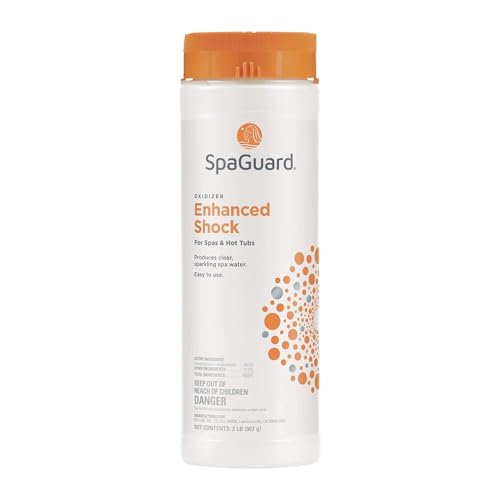
When water clarity deteriorates alongside zero sanitizer readings, a multi-purpose chlorinated shock provides the intense oxidation necessary to reset chemical equilibrium. Products like SpaGuard Enhanced Shock, 2 lb, Single Pack deliver a four-in-one approach by combining a concentrated oxidizer with a clarifier, flocculant, and pH buffer. This multi-functional formula attacks persistent non-living impurities and destroys accumulated chloramines while keeping water pH steady. The buffered nature of enhanced shock ensures that heavy treatment cycles do not cause drastic swings in your baseline water balance.
The integrated clarifier and flocculant in an enhanced shock help the spa filtration system coagulate microscopic debris into larger particles that the cartridge can capture efficiently. Because SpaGuard Enhanced Shock is pH buffered, it prevents sudden acidity drops that typically occur when adding high concentrations of oxidizers to hot water. When dealing with extreme sanitizer depletion where standard doses produce zero results, applying a robust chlorinated shock helps achieve breakpoint chlorination, effectively burning away accumulated organic compounds and unlocking free chlorine availability. Routine use of an enhanced shock treatment restores water sparkle while relieving the baseline chemical demand burdening your circulation system.
Filter Cartridge Cleaning and Circulation Cycle Calibration
A filthy, oil-saturated cartridge filter acts as a persistent reservoir of contaminants that continuously consumes your sanitizer. As the hot tub circulation pump pulls water through pleated fabric coated in trapped body oils and biofilm residue, free chlorine gets exhausted before the water ever returns through the therapy jets. Rinsing your filter cartridge weekly with high-pressure hose water removes surface debris, but regular chemical degreasing is essential to extract embedded oils. Clogged filter pleats also restrict water flow, which reduces chemical circulation and allows pockets of stagnant water to deplete sanitizer reserves.
Soaking the filter cartridge in an authorized spa filter cleaner every three to four weeks breaks down the grease layer that simple water rinses leave behind. Additionally, check your topside control settings to confirm that your programmed filtration cycles run long enough to clear the water body. Most portable spas require at least four to eight hours of daily filtration circulation to ensure proper sanitizer distribution and chemical contact time. Operating an under-filtered spa guarantees rapid chemical degradation and premature water cloudiness.
Systematic Step-by-Step Recovery Procedure
If your hot tub cannot maintain chlorine, begin your recovery protocol by testing the baseline parameters of your source water. Use fresh test strips or a liquid test kit to measure pH, total alkalinity, calcium hardness, and cyanuric acid levels. If cyanuric acid exceeds eighty parts per million or the water has been in the spa for more than four months, complete a line flush with a plumbing purge chemical, drain the spa completely, and refill with fresh water. Starting with fresh water resets total dissolved solids, ensuring your chemical additions work efficiently without fighting accumulated chemical residues.
If your cyanuric acid is within an acceptable range, adjust your total alkalinity first using sodium bicarbonate to bring it between 80 and 120 parts per million. Once alkalinity stabilizes, use sodium bisulfate or sodium carbonate to adjust pH into the optimal 7.2 to 7.8 window. With the chemical foundation balanced, introduce an enhanced shock to oxidize existing chloramines and satisfy lingering chemical demand. Keep the spa cover open for at least twenty minutes with the jet pumps running on low speed to allow off-gassing of oxidized waste products.
Wait twelve to twenty-four hours after shocking, then test the water to confirm whether a free chlorine residual has finally registered. If the reading remains at zero, the chemical demand was higher than anticipated, requiring a second shock treatment to reach breakpoint chlorination. Once a residual between three and five parts per million holds overnight, transition to your normal maintenance dosing schedule. Maintaining this steady residual prevents the sudden bacterial blooms that restart the vicious cycle of chemical depletion.
Environmental Influences, Sunlight Exposure, and Cover Sealing
Outdoor environmental elements play a significant secondary role in accelerating sanitizer dissipation. Ultraviolet radiation from direct sunlight degrades unstabilized free chlorine at an astonishing rate, breaking down sanitizing molecules within a couple of hours of daytime exposure. Rainwater runoff, airborne pollen, lawn fertilizers, and decaying leaves that blow into an uncovered spa also introduce massive organic loads that exhaust chemical reserves. Leaving a spa uncovered during sunny afternoons can completely deplete an otherwise adequate chlorine residual before evening use.
Investing in a well-fitted yard patio hot tub cover creates an airtight physical barrier that locks in heat while keeping outdoor contaminants and UV rays away from the water. A dense, high-taper foam core with a marine-grade vapor seal protects the chemical balance from fluctuating due to environmental exposure. Inspect the cover perimeter gasket regularly to ensure it seals tightly against the acrylic lip, as loose gaps allow airborne spores and debris to enter continuously. Keeping your spa securely covered whenever it is not in use preserves chemical longevity and substantially lowers routine sanitizer consumption.
Resolving persistent chlorine loss requires looking beyond the chemical bottle and evaluating the entire water ecosystem. By balancing alkalinity and pH, purging hidden plumbing biofilm, avoiding cyanuric acid saturation, and pairing primary biocides with non-chlorine oxidizers, you eliminate the hidden demand that devours sanitizer. Consistently maintaining these chemical parameters ensures your hot tub stays clean, safe, and ready for relaxation whenever you decide to open the cover.




Write Your Review
No reviews yet. Be the first to share your experience!