


Bringing hydrotherapy inside protects bathers from freezing rain and sub-zero temperatures, turning an ordinary room into a dedicated year-round wellness retreat. Homeowners often ask whether can you use a hot tub indoors safely without damaging their home foundation or framing. While bringing a spa inside is entirely achievable, the process requires substantially more engineering than standard outdoor hot tub installations. You must carefully account for immense water weight, constant steam evaporation, electrical safety protocols, and room drainage before moving any unit through the doorway.
A standard filled portable spa can weigh several thousand pounds while releasing gallons of evaporated water into the surrounding air every week. Without proper air exchange and a non-porous floor base, indoor humidity quickly leads to mold growth, drywall deterioration, and structural floor sagging. Planning an indoor installation involves evaluating floor weight capacity, dedicated mechanical ventilation, moisture-resistant building materials, and reliable water drainage pathways. Addressing these core site preparation challenges upfront ensures a safe, relaxing indoor soaking experience that protects your property value for years to come.

Pros
- Generous 80 x 80 inch square footprint accommodates many popular inflatable hot tubs and step accessories
- Waterproof PVC backing prevents absorbed water and surface moisture from soaking directly into underlying wood or patio stone
- Felt top layer cushions bare feet when stepping out and absorbs splashing water
- Trimmable design allows owners to easily customize the shape for tighter patio corners or specific base profiles
Cons
- At 2 to 2.5 mm thick, it functions as a surface protector rather than heavy structural or thick thermal foam insulation
- Manufacturer specifies spot cleaning only, as machine washing can degrade the felt bond and non-slip backing
- Arrives folded, which may leave temporary creases that take time to flatten under the weight of the spa
The FACAINCXS 80x80-inch square hot tub mat is a multi-purpose ground protector designed specifically for portable, inflatable, and compact above-ground spas. It serves patio owners, deck users, and indoor spa operators who need a protective barrier between the spa base and rigid flooring surfaces like concrete, pavers, or wood decking. By covering a broad 80-inch square area, it establishes a clean perimeter that helps prevent direct friction against the bottom of your tub.
Placing a dedicated ground pad beneath a spa helps reduce direct abrasion caused by ground friction, minor shifting, and grit. The dual-layer design features an absorbent felt upper layer that captures splashes when exiting the tub, reducing puddle accumulation around your steps. Beneath that, an impermeable PVC barrier keeps trapped water from settling directly against timber or sensitive patio materials, helping preserve the integrity of your deck over time.
This mat features a listed thickness of 2 to 2.5 mm, engineered using heat-press bonding that secures the dense felt to the slip-resistant PVC backing. While it is lightweight at approximately 4 pounds, the backing provides adequate friction against slick decking to stay in position. The felt top provides a comfortable, warm landing for bare feet, while also offering a slight thermal break between cold concrete and the floor of your tub.
Setting up the mat involves sweeping the installation area clean of sharp pebbles and unrolling the pad flat before placing the spa on top. Because the felt and PVC layers can be cut with standard utility shears, owners can easily trim edges to fit tight patio corners or align with spa steps. Maintenance is straightforward: spot clean any dirt or chemical spills with mild soapy water and let the pad air-dry in a well-ventilated spot, making sure to avoid washing machines that could damage the laminated layers.
Hot tub owners should recognize that a 2.5 mm mat is intended for scratch, splash, and friction protection rather than structural ground leveling or heavy rigid insulation. For buyers with inflatable or portable spas up to 80 inches across who want to keep their decks clean, reduce friction wear, and provide a soft step-out surface, the FACAINCXS mat offers an affordable, easy-to-manage solution. Before purchasing, verify your spa's total exterior footprint and step placement to ensure the 80x80-inch dimensions provide your desired margin of coverage.
With dimensions measuring 80 inches by 80 inches, this square pad is scaled to accommodate standard round or square inflatable hot tubs up to 80 inches wide. Hot tub owners should measure the flat base of their spa and any exterior steps to verify full base coverage before setup.
Because the felt and PVC composite material can be trimmed with standard household scissors or a utility knife, you can easily tailor the perimeter to match custom deck borders, rounded spa profiles, or narrow patio clearances without fraying.
Routine maintenance for the FACAINCXS mat involves spot cleaning soiled areas using a soft sponge, warm water, and mild dish soap. The manufacturer advises against machine washing, as agitation and spin cycles can delaminate the PVC backing and weaken the felt fibers.
After cleaning or exposure to heavy rainfall, allow the mat to air dry thoroughly in a shaded, well-ventilated area before rolling or folding it for seasonal storage. Keeping both sides clean helps maintain the backing grip and prevents trapped debris from scratching your deck surface.

Pros
- Effectively dislodges stubborn pipe residue and organic buildup prior to draining
- Improves jet performance and circulation efficiency throughout the entire plumbing system
- Helps eliminate recurring foam and chemical demand caused by dirty internal lines
- Compatible with both indoor and outdoor hot tubs as well as larger swim spas
Cons
- Requires a full water drain and shell wipe-down after the cleaning cycle is completed
- Not an in-use water treatment, so the hot tub cannot be used while the cleaner is circulating
- Very large swim spas or heavily neglected plumbing may require more than one 16-ounce bottle depending on dosing instructions
Oh Yuk Healthy Hot Tub Cleaner is a concentrated 16-fluid-ounce plumbing flush formulated to purge interior pipe walls, jet lines, and circulation fittings in indoor and outdoor hot tubs, portable spas, and swim spas. It is engineered specifically for homeowners, vacation rental operators, and regular spa owners preparing for a scheduled drain-and-refill cycle who want to eliminate the hidden organic waste that normal filtration and sanitizing tablets leave behind.
Hidden pipe buildup and accumulated body oils inside circulation lines are frequent culprits behind recurring cloudy water, surface foaming, and weakened jet pressure. By penetrating the interior plumbing pathways, this cleaner lifts and suspends embedded contaminants so they circulate out into the main footwell. This deep purge enables fresh water treatments to work much more effectively after refilling, since sanitizers no longer have to expend oxidation power fighting hidden line residue.
Circulation line maintenance directly benefits mechanical equipment by helping water move freely through pumps, heaters, and filter manifolds. When plumbing lines remain free of restrictive film and buildup, circulation pumps operate with less backpressure, allowing filter cartridges to trap suspended solids cleanly and consistently without unnecessary mechanical strain.
Using a plumbing cleaner requires timing your application around a complete water change, as the dislodged residue must be drained from the spa shell after running the jets. Hot tub owners should expect to wipe down the acrylic surface and water line once the tub empties, removing any residual oils before rinsing and refilling with fresh tap water.
While the 16-ounce bottle provides convenient handling for standard backyard spas, owners of oversized swim spas or tubs with years of neglected plumbing should check manufacturer dosage directions to ensure adequate volume. Furthermore, this product is designed purely as an evacuation flush before draining, meaning bathers must wait until the tub is emptied, rinsed, and refilled with fresh, balanced water before soaking.
For spa owners battling persistent water cloudiness or those establishing a dependable seasonal maintenance schedule, Oh Yuk Healthy Hot Tub Cleaner delivers a practical way to reset circulation lines. Verifying your spa water capacity and having clean towels or sponges ready to wipe the shell after draining ensures a smooth cleaning process and pristine water for your next soak.
Using Oh Yuk Healthy Hot Tub Cleaner is most effective when coordinated with your regular quarterly drain-and-refill schedule. Remove your filter cartridges prior to running the cleaner through the system to avoid trapping heavy dislodged gunk inside your primary filter pleats.
Turn on all jet pumps and allow the cleaner to circulate thoroughly through all plumbing lines according to the manufacturer label directions. Once the cleaning cycle finishes, drain the spa completely and wipe down the acrylic shell to remove any lifted oils and residue before refilling with fresh water.
Pros
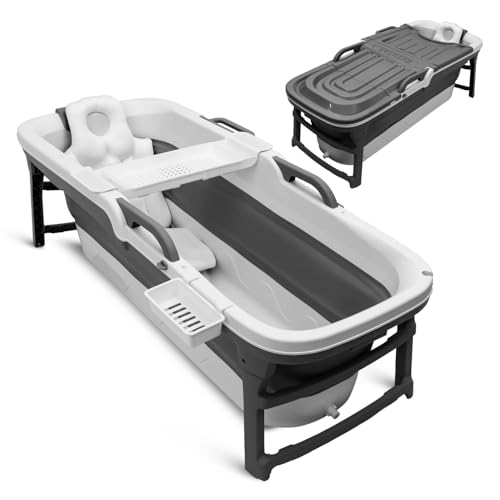
- Complete accessory bundle includes the tub, 3-piece insulated lid, bath tray, side tray, bath cushion, headrest cover, drain hose, and storage bag - reducing the need for separate purchases
- Folds flat for storage, making it a practical option for small apartments, RVs, and seasonal outdoor setups where a permanent tub isn't feasible
- Full 59-inch length allows adults to stretch out for a genuine full-body soak rather than a cramped seated bath
- The insulated lid set addresses a common complaint with portable tubs by helping maintain water temperature during both hot and cold sessions
- Extendable drain hose up to approximately 117 inches offers flexible drainage options for various indoor and outdoor locations
Cons
- This is a portable soaking tub without jets, heaters, or filtration - it does not replicate the functionality of a traditional hot tub or spa system
- Water must be filled and heated separately using a faucet, hose, or heated water, which adds time and effort compared to a plumbed spa
- At 59 inches long, taller adults may find full submersion limited, and the foldable construction may feel less rigid than a permanent freestanding tub
The SereneLife 59-inch portable bathtub is a foldable soaking tub designed for adults who want a full-body bath or cold plunge experience without permanent installation. This is not a traditional hot tub or spa with jets, heaters, or filtration. Instead, it functions as a standalone, fill-and-drain tub that can serve as a warm soaking bath, a cold plunge or ice bath for athletic recovery, or even a large pet washing station. It's best suited for apartment renters, RV owners, campers, athletes focused on recovery protocols, and homeowners who want an occasional soak without dedicating permanent space to a tub.
The 59-inch length is the standout practical feature here, as many portable tubs on the market are significantly shorter and force users into an upright seated position. This length allows most adults to recline for a more complete soak. The 3-piece insulated lid set is a meaningful inclusion because temperature loss is one of the biggest frustrations with portable tubs. The lid helps trap warmth during hot soaks and maintain cold temperatures during ice bath sessions, though buyers should understand that an insulated lid slows heat loss rather than eliminating it entirely. Without a built-in heater, hot water will cool over time, and ice will eventually melt.
SereneLife lists the construction as PP+TPE materials with slip-resistant properties and non-slip legs. The listed load capacity is 440 lbs. The foldable design collapses the tub to approximately 8.66 inches thick with dimensions of roughly 59.06 x 23.62 x 8.66 inches when folded, which is compact enough to slide behind a door or into a closet using the included storage bag. This portability makes it genuinely practical for people who move frequently, travel in RVs, or only want a tub available seasonally on a patio or deck.
Setup is straightforward since the tub unfolds and stands on its own legs without tools or plumbing connections. The extendable drain hose, listed at up to approximately 117 inches, is a thoughtful detail that allows drainage into a nearby floor drain, bucket, or outdoor area without having to physically move a full tub. The included accessories - bath cushion, headrest cover, extended bath tray for books or tablets, and a side tray for soap or candles - add comfort and convenience that would otherwise require separate purchases. These accessories position the tub as a relaxation setup rather than just a basic basin.
Buyers should be realistic about what this product is and is not. It does not replace a permanent hot tub with jets, circulation, filtration, or automatic heating. Water temperature management requires manual effort. The foldable construction, while convenient for storage, may not feel as rigid or stable as a solid freestanding tub. Taller users above six feet may find the 59-inch interior length limiting for full submersion. And because there's no filtration system, the water is intended for single-use sessions rather than being maintained over days like a traditional spa.
The SereneLife 59-inch portable bathtub is a strong option for anyone who wants an affordable, storable soaking or cold plunge solution without permanent installation. Athletes looking for a dedicated ice bath setup, apartment dwellers without a bathtub, RV travelers, and families who want occasional outdoor soaking on a patio or campsite will find the most value here. Before purchasing, measure your intended setup area to confirm the unfolded dimensions fit comfortably, and verify that you have a practical water source and drainage path for your specific location.
The SereneLife 59-inch portable bathtub ships as a complete kit rather than a bare tub. The package includes the foldable tub itself, a 3-piece insulated lid set, an extended bath tray sized for books or tablets, a side tray for soap or candles, a bath cushion, a headrest cover, a storage bag for the folded tub, and an extendable drain hose listed at up to approximately 117 inches. This bundled approach means most buyers won't need to source comfort or drainage accessories separately.
The 3-piece insulated lid is particularly relevant for cold plunge and ice bath users, as maintaining consistent cold temperatures is critical for effective recovery sessions. For hot soak users, the lid helps slow natural heat loss from the water surface. The bath tray and side tray add a spa-like organizational element, keeping personal items accessible without balancing them on the tub rim. The storage bag is a practical touch for renters, travelers, and seasonal users who need to stow the tub compactly between uses.
Setting up the SereneLife portable tub requires no tools or plumbing work. The tub unfolds from its collapsed storage position and stands on its built-in non-slip legs. Buyers should confirm their intended location - whether a bathroom floor, patio, deck, or campsite - can support the combined weight of the tub, water, and user within the listed 440 lbs capacity. A level, stable surface is important for preventing shifting during use.
Drainage is handled through the extendable drain hose, which SereneLife lists at up to approximately 117 inches in length. This reach allows the hose to extend to a floor drain, bathtub drain, bucket, or outdoor area without requiring the user to move the full tub. For RV setups, the hose length may be sufficient to reach an exterior drain point depending on the RV layout. Before filling, it's worth doing a dry run to confirm your drainage path works with the hose length and your specific setup.

Engineering and Practical Requirements for Indoor Hot Tub Installations
Installing a hot tub indoors is entirely possible, but it requires thorough engineering planning long before delivery day arrives. Unlike an outdoor patio setup, an indoor spa enclosure alters the environmental dynamics of your home by introducing concentrated weight and continuous moisture. Successfully operating an indoor spa depends on mastering structural support, room ventilation, electrical safety, and spill drainage. When executed properly, an indoor spa room delivers exceptional privacy, year-round comfort, and protection from harsh outdoor weather.
Evaluating the Feasibility of Indoor Spa Placement
A homeowner must first evaluate whether their chosen space can physically support and accommodate a functioning hydrotherapy vessel. While basements and ground-floor additions with concrete slab foundations provide the easiest path forward, upper-level rooms require significant framing reinforcement. You also need to confirm that interior hallways, doors, and stairwells offer enough physical clearance to bring the spa into the room. If standard access routes are too narrow, structural modifications or alternative portable spa styles become necessary.
Beyond physical access, the room must function as a self-contained wet area similar to an oversized bathroom or indoor swimming pool enclosure. Standard drywall, non-treated baseboards, and typical residential carpet will deteriorate rapidly in a high-humidity environment. Successful indoor installations isolate the spa room from the rest of the home using vapor barriers, sealed doors, and specialized wall paneling. Planning these structural transitions in advance prevents moisture migration into neighboring living spaces.
Structural Floor Capacity and Weight Load Calculations
Weight is the most critical structural consideration when evaluating whether an indoor room can safely support a spa. A hot tub does not simply weigh its dry factory specification; the total load includes water weight and full bather occupancy. Water weighs approximately 8.34 pounds per gallon, meaning a 350-gallon spa holds nearly 3,000 pounds of water alone. When you combine dry vessel weight, water volume, and multiple seated bathers, the total operational load often exceeds 4,000 to 5,000 pounds.
Residential floors built over traditional wooden joists are generally rated for live loads of 30 to 40 pounds per square foot, which is entirely inadequate for a filled hot tub. A standard hard-shell spa exerts between 100 and 150 pounds per square foot across its footprint. Placing a unit like the Comfort Hot Tubs – 6 Person Luxury Outdoor spa on an unreinforced wooden floor can cause severe structural joist deflection. Ground-level poured concrete slabs measuring at least 4 inches thick provide the safest indoor foundation because they handle high static loads without sagging.
If you position a spa on a framed floor above a crawlspace, consult a licensed structural engineer before delivery. Reinforcing the floor typically requires sistering existing joists or adding steel support columns beneath the room. For spaces where structural modifications are impossible, lightweight options like the Serenelife 59″ Portable Bathtub for Adults offer a practical alternative. Foldable designs hold much less water, keeping floor loading well within standard residential construction limits.
Managing Indoor Humidity and Mechanical Ventilation Requirements
An uncovered or active hot tub operates between 100 and 104 degrees Fahrenheit, releasing substantial amounts of warm moisture into the indoor air. Without dedicated mechanical ventilation, relative humidity levels quickly spike above 60 percent, creating ideal conditions for mold, mildew, and rot. Condensation will collect on cold window glass, metal fasteners, and exterior-facing walls, leading to peeling paint and rusted drywall screws. Maintaining indoor relative humidity between 40 and 50 percent is essential for preserving the building envelope.
Standard residential bathroom exhaust fans cannot handle the continuous moisture output of an indoor hydrotherapy spa. You need an engineered ventilation system, such as a dedicated exhaust fan rated for continuous operation or an energy recovery ventilator. Pairing mechanical ventilation with a commercial-grade dehumidifier ensures the room stays dry even during extended soaking sessions with the cover removed. Moisture sensors can be wired to activate exhaust fans automatically whenever relative humidity climbs above target thresholds.
The walls and ceiling of an indoor spa room require moisture-resistant building materials. Cement backer board or water-resistant drywall should replace standard gypsum board on surfaces exposed to warm vapor. Applying a continuous 6-mil vapor barrier behind wall panels stops humidity from migrating into wall cavities. Ceiling paint must also be mold-resistant to prevent surface discoloration and mildew growth.
Water Drainage, Splash Containment, and Protective Flooring
Water inevitably escapes the spa whenever bathers enter, exit, or operate high-powered massage jets. In an outdoor setting, splashed water simply runs off into the grass or patio joints, but indoor installations must actively manage every drop. Installing a dedicated floor drain sloped toward the lowest point of the room is the single best defense against water accumulation. Without a functioning floor drain, routine splashing can pool against baseboards and seep into subflooring.
Flooring materials inside the spa room must be completely non-porous, slip-resistant, and water-impervious. Glazed ceramic tile with textured grout, sealed concrete, or commercial rubberized flooring perform exceptionally well under wet conditions. Hardwood flooring, laminate planks, and wall-to-wall carpeting must never be installed in an indoor spa room because they trap moisture and rot. Applying a liquid waterproofing membrane beneath your tile layer provides an extra barrier of protection against subfloor saturation.
Placing a protective barrier such as the Upgraded 80 * 80inch Square Hot Tub Mat under the spa adds an extra layer of acoustic damping and floor protection. This felt-topped mat features a waterproof, slip-resistant backing designed to catch splashing water and reduce motor vibration. Protective mats also guard delicate tile from abrasion caused by the spa base. Keeping an absorbent mat near the steps provides stable footing for bathers exiting the tub.
Electrical Safety Standards and NEC Article 680 Compliance
Water and high-voltage electricity present serious safety risks that require strict adherence to the National Electrical Code. According to NEC Article 680, all hot tubs and spas require dedicated ground-fault circuit interrupter protection to prevent dangerous electrical shock. The emergency manual disconnect switch must be located within sight of the spa but at least 5 feet away from the inside water wall. This spatial buffer ensures bathers cannot touch the electrical disconnect switch while remaining in contact with the water.
Indoor electrical planning also dictates specific rules for overhead lighting fixtures, ceiling fans, and wall receptacles. Standard wall outlets cannot be installed within 6 feet of the hot tub perimeter unless they are GFCI protected and designed for damp environments. Any light fixture installed directly above the spa must be elevated at least 7.5 feet above the maximum water level and enclosed in a moisture-rated housing. Hiring a licensed electrician ensures your indoor wiring satisfies municipal codes and passes building safety inspections.
Electrical capacity depends heavily on the model you install. Plug-and-play units often run on a dedicated 110V or 120V 15-amp circuit, which simplifies setup but limits simultaneous heater and pump operation. Larger hydrotherapy units, like the Comfort Hot Tubs – 6 Person Luxury Outdoor model, require a dedicated 220V hardwired line with a 40-amp to 60-amp subpanel. Hardwired 220V systems allow heating elements and therapy pumps to run concurrently, maintaining water heat during extended soaking sessions.
Delivery Access, Turning Radiuses, and Doorway Sizing
Getting a rigid hard-shell hot tub into an indoor room is often the most physically challenging part of the entire project. Factory-built acrylic spas are bulky, heavy, and cannot be disassembled to fit through standard residential openings. Standard interior door frames typically measure between 30 and 36 inches wide, whereas rigid spa cabinets often measure 34 to 38 inches deep when turned on edge. Before purchasing a spa, map out the entire delivery path from your driveway through exterior doors, hallways, and interior entryways.
Sharp hallway turns and low overhead ductwork frequently block rigid spas from reaching indoor rooms. In existing homes, replacing an exterior window with French doors can create the necessary opening for delivery. Always measure diagonal corner clearances along your delivery path to confirm the spa cart can turn. For homes with narrow doorways, portable options like the Serenelife 59″ Portable Bathtub for Adults fold flat, eliminating delivery complications.
Indoor Water Sanitization, Off-Gassing, and Plumbing Maintenance
Water chemistry behaves differently in an indoor environment because the water is shielded from sunlight and outdoor wind. Outdoor hot tubs benefit from sunlight breaking down certain chemical byproducts, but indoor spas hold all evaporation and off-gassed chemicals inside the room. Using traditional chlorine in an enclosed indoor space can produce strong chloramine odors that cause eye stinging and throat irritation. Many indoor spa owners prefer bromine sanitization because bromine remains stable at higher temperatures and produces less pungent odors when reacting with bather waste.
Supplemental sanitation devices such as built-in ozone generators and UV-C purification systems work exceptionally well for indoor spas. These secondary systems actively reduce organic contaminants and bacteria as water circulates through the internal plumbing lines. By oxidizing bather oils and sweat automatically, supplemental purifiers reduce your reliance on heavy chemical doses, keeping the indoor air fresher. However, supplemental purifiers cannot replace EPA-registered sanitizers entirely, meaning you must still maintain proper free sanitizer residuals and balanced pH between 7.2 and 7.8.
Because an indoor spa cannot be drained as easily as an outdoor unit, keeping internal plumbing clean is vital. Over time, bather oils and minerals form stubborn biofilm inside jet lines that standard chemical shocks cannot dissolve. Performing a quarterly plumbing purge with foldable hot tub thermal covers removed and using Oh Yuk Healthy Hot Tub Cleaner breaks down hidden plumbing buildup. Running a specialized pipe flush before refilling ensures fresh water stays clear and odor-free.
Thermal Covers and Condensation Control in Climate-Controlled Rooms
Even though an indoor spa is shielded from freezing outdoor winter air, an insulated spa cover remains an indispensable piece of equipment. An open hot tub acts like an active boiler, continuously pumping gallons of evaporated moisture into the room atmosphere while driving up indoor heating costs. High-density insulated spa covers with tapered foam cores and marine-grade vinyl vapor seals trap heat and vapor inside the shell. Keeping the cover securely latched whenever the tub is unoccupied cuts standby electrical consumption and protects your drywall from moisture saturation.
When selecting an indoor cover, prioritize a tight perimeter seal and an unbroken center hinge gasket to prevent steam leaks. If warm vapor escapes through the center hinge, condensation quickly drips down the sides of the cabinet onto your flooring. You should also verify that your room ceiling has adequate clearance for cover removal or hydraulic cover lifter operation. Most mechanical lifters require at least 18 to 24 inches of clearance behind the spa and several feet of vertical headspace to fold back smoothly.
Draining Logistics and Refilling Procedures Indoors
Draining a hot tub outdoors is as simple as attaching a garden hose and opening the gravity drain valve onto the lawn. Indoors, however, gravity draining is exceptionally slow and risks flooding if a hose fitting slips or leaks. Because standard residential floor drains are often slightly elevated or slow-running, draining several hundred gallons of water requires a controlled disposal strategy. Connecting a submersible utility pump to a heavy-duty discharge hose allows you to pump water directly into a utility sink, toilet, or exterior sewer cleanout in less than an hour.
Refilling an indoor spa requires equal care to avoid water damage and mechanical air locks in the pump circulation system. Always monitor the filling process closely rather than leaving a running hose unattended in the spa shell. Inserting the garden hose directly into the central filter standpipe forces water through the internal plumbing lines first, expelling trapped air pockets from the pump wet ends. Filling through the filter well prevents stubborn pump air locks that could trigger topside flow error codes or heater dry fires on startup.
Indoor Installation Verification and Long-Term Ownership Takeaways
Operating an indoor hot tub offers unmatched convenience, complete privacy, and total independence from adverse weather conditions. Achieving this luxury requires respecting the building sciences of load distribution, moisture containment, and electrical separation. Before placing your order, walk through your installation checklist to verify that floor capacity, ventilation ratings, electrical breaker sizes, and delivery access routes are fully confirmed. Taking the time to properly prepare your space ensures your indoor spa provides restorative hydrotherapy for years without compromising your home.


Write Your Review
No reviews yet. Be the first to share your experience!