
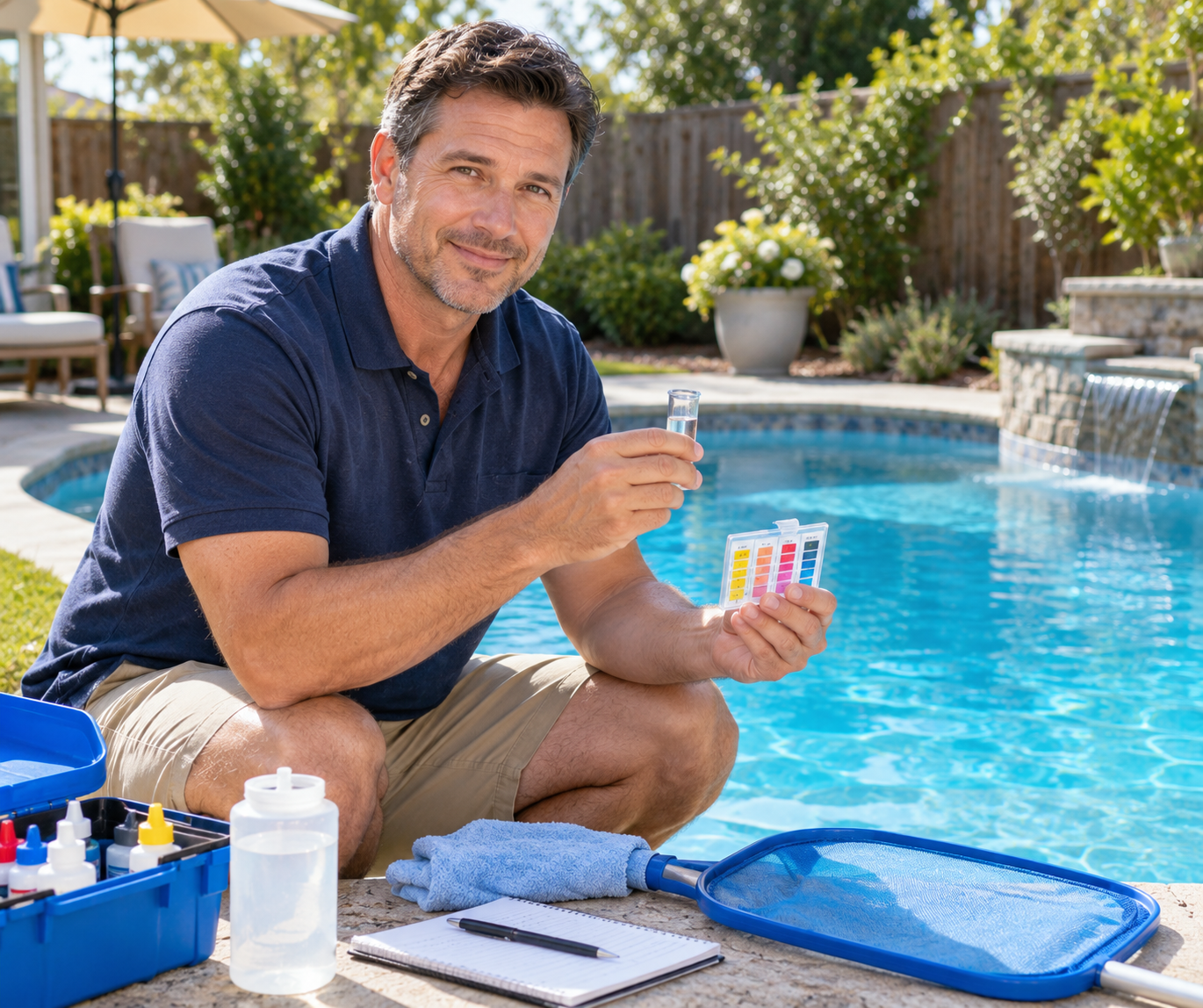

Manual vacuuming and brushing can turn routine pool care into a recurring chore, especially after leaves, sand, or pollen collect on the floor. A robotic cleaner can take on some of that work, but the right choice depends on more than the brand name. If you’re asking who makes the best robotic pool cleaner, compare each model’s pool-size rating, cleaning coverage, filtration setup, and power source against your actual pool and debris.
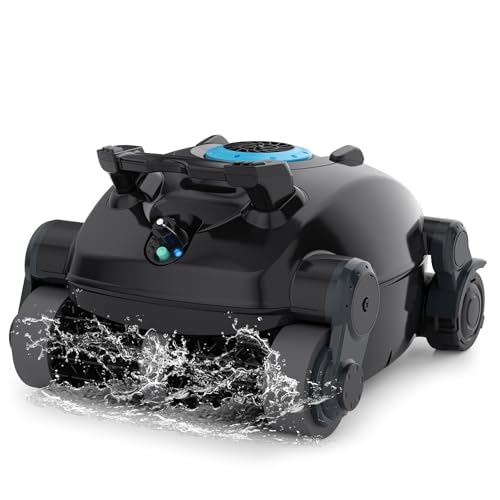
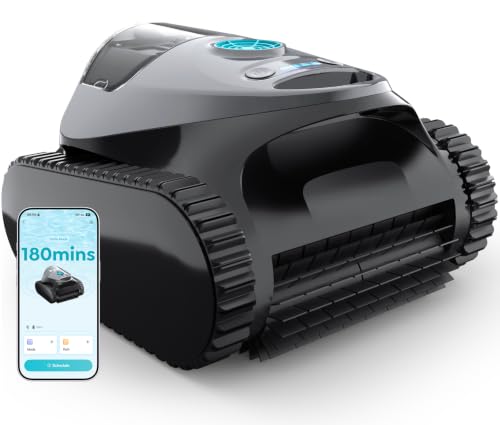
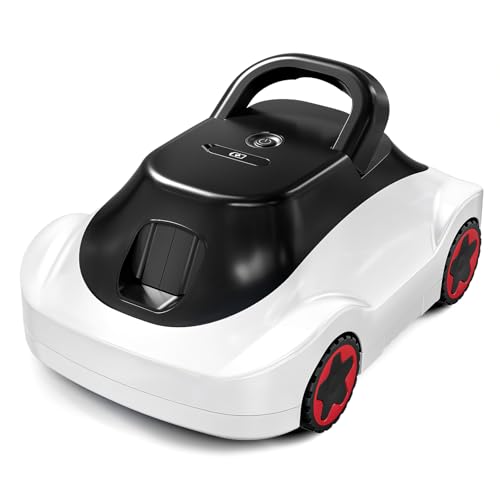
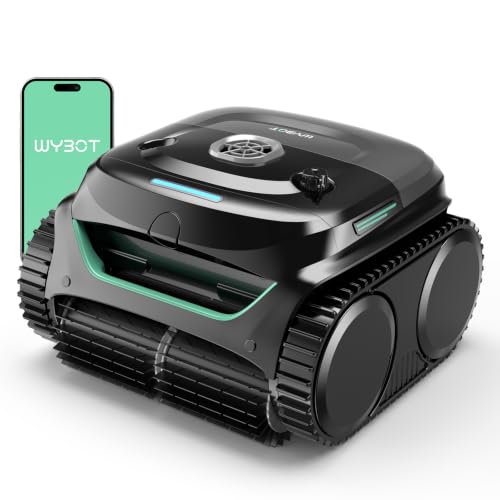
The options below include cordless units from brands such as ROBOKLEEN, Lodoba, and WYBOT, along with a corded Dolphin model. Their listed features vary: some focus on flat-floor cleaning, while others are designed for walls and the waterline. Treat stated coverage and runtimes as manufacturer specifications, and check the current manual for surface compatibility, safe operation, and care instructions before buying.
Top Products





Who Makes the Best Robotic Pool Cleaner for Your Pool?
There isn’t one best maker for every pool. The strongest match depends on whether you need floor-only pickup or wall and waterline coverage, how much pool area a cleaner is listed to handle, and whether you want a cordless battery unit or a corded plug-and-play model. Product descriptions provide useful comparison points, but they don’t establish that one brand will outperform another in every pool.
Start with coverage, not the brand name
A cleaner that handles only the floor may suit a flat-bottom pool where debris settles mostly below, but it won’t replace wall or waterline scrubbing. Some options here are described as cleaning floors, walls, and waterlines, while the C5 is specifically listed for full-floor cleaning in flat-bottom pools. That difference matters if you regularly deal with a scum line or debris that clings above the floor.
Pool-size figures are another useful filter. The listed specifications range from models intended for pools up to 1,100 square feet to options stating coverage as high as 3,229 square feet. These are manufacturer-listed limits, not a promise of identical coverage in every shape or under every debris load. Check both the area rating and any stated pool-type restrictions against your own installation.
Pool geometry can complicate a simple square-foot comparison. A freeform outline, steep transition, raised drain cover, ladder, or narrow step can interrupt a robot’s route, and the supplied specifications do not confirm that every model will handle those obstacles. Above-ground compatibility also doesn’t automatically mean a cleaner can climb vertical walls; confirm the exact coverage claim and pool design before relying on wall cleaning.
Match filtration and basket capacity to the debris
Large leaves and fine dust place different demands on a filter. A debris basket with more capacity may mean fewer interruptions when leaves are falling, while a finer filter can be useful when sand or silt is the persistent nuisance. The products listed describe dual-layer or dual filtration on some models, and the WYBOT C2 lists a primary filter and a 10-micron fine filter. Those details are model-specific and shouldn’t be assumed for other cleaners.
Basket volume can also affect routine handling. The Beatbot Sora 10 lists a 5-liter debris basket, while the C5 lists a 2.7-liter basket. Capacity alone doesn’t tell you how easily a basket opens, how quickly it rinses, or how much debris your yard produces in a cycle. If your pool gets acorns, pine needles, or heavy leaf fall, look for clear information about the filter access and emptying process in the manual.
Fine filtration is not a substitute for treating a pool problem. A robot can collect debris that reaches its filter, but the product information here doesn’t establish that any model can clear a severe algae bloom or correct cloudy water. Follow pool-care guidance for water balance and algae treatment, and confirm whether the selected filter is intended for the type of material you need to capture.
Choose cordless convenience with realistic expectations
Cordless models avoid a floating power cable during a cleaning cycle, which removes one source of cord management. That convenience comes with a battery runtime and recharge interval to consider. The listed runtimes range from 100 minutes for the ROBOKLEEN X1 to 300 minutes for the Beatbot Sora 10, while other options state runtimes between those figures. These are advertised specifications, not a guarantee that a particular pool will be cleaned completely in one cycle.
Charging time and pool area should be considered together. The Lodoba option lists up to 190 minutes of runtime and a three-hour recharge, while the WYBOT C1 lists up to 160 minutes and a four-hour charge. A larger pool or frequent heavy debris may make a longer cycle more useful, but the shape, obstacles, filter loading, and selected cleaning mode can affect what a cycle accomplishes. Check the model’s manual for charging and operating limits.
Retrieval is a practical part of cordless ownership, especially when a unit finishes in deep water. Some listed designs describe automatic parking near a wall or at the waterline, including the Beatbot Sora 10’s waterline parking feature and the C5’s auto-parking description. Those details may make retrieval more convenient, but don’t assume every robot returns to an accessible position. Use only the retrieval method specified by the manufacturer, and don’t enter deep water to recover equipment.
Weight and draining deserve a look too. The ROBOKLEEN X1 is listed at 8.6 pounds, and the WYBOT B1 at 14.3 pounds; those figures describe the products as listed, not necessarily the effort required to lift them after a cycle. Water can remain in a cleaner as it is removed. Follow the manual’s lifting and drainage directions, use an included retrieval aid as instructed, and avoid pulling a cord or cable to haul a unit out.
Know what the cordless modes and controls actually offer
Mode selection varies by model. The Lodoba product lists floor, wall, and full-coverage modes, while the BRINBO C1 description lists seven cleaning modes and paths with settings that should be preset before the robot enters the water. The WYBOT B1 lists five modes. More selections can be helpful if you want to target a particular area, but they also make it important to understand which setting matches your pool and what areas it covers.
App control is not universal, and connectivity should be treated as a feature rather than a substitute for checking the cleaner. The Letexpool C1 description lists app control and says settings should be set before entering the water. WYBOT models and the Beatbot Sora 10 also list app features, though the specific controls differ. Confirm whether a model uses Wi-Fi, Bluetooth, or another connection, and whether scheduling or mode changes are available in the way you expect.
Navigation claims also vary. The Lodoba listing describes sonar navigation, and the WYBOT C1 describes gyroscope-based path planning. Such features are intended to organize movement, but the supplied information does not prove that a robot will avoid every drain, ladder, or tight step. If your pool has awkward transitions, check the stated slope limits and pool-layout guidance, then keep an eye on the first cleaning cycles to see whether the route suits your setup.
When a corded Dolphin may be the better fit
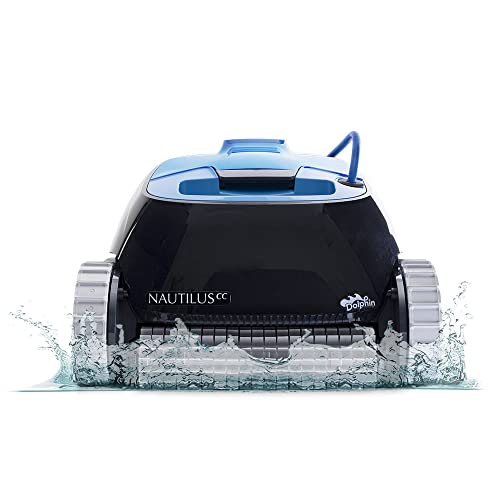
The Dolphin Nautilus CC offers a different tradeoff: it is a corded robotic cleaner rather than a battery-powered unit. Its listing describes plug-and-play operation, wall climbing, an active scrubbing brush, a top-load filter basket, and suitability for pools up to 33 feet in length. The supplied details don’t specify a cable length or an anti-tangle swivel, so verify those details with the manufacturer if cable reach and cord management are central to your decision.
A corded unit avoids planning a battery recharge between cycles, but its floating cable needs sensible management and enough reach for the pool. Keep the power supply and cable arrangement within the product’s safety instructions, and use an appropriate GFCI-protected electrical setup as directed by the manufacturer and local requirements. Never pull the cleaner from the water by its electrical cable, and disconnect power as instructed before cleaning or servicing the unit.
The Nautilus CC’s listed two-hour cleaning cycle is a product specification, not a guarantee that every pool will be fully cleaned in that time. Its top-load basket may be appealing if easy access matters, but the listing does not provide a filter micron rating. Buyers focused on fine silt should verify the available filter options rather than assuming that a standard basket captures very small particles.
Surface compatibility and obstacle limits need confirmation
Surface claims should be checked model by model. The C5 listing names vinyl liner, concrete, fiberglass, and mosaic tile surfaces, while other product descriptions provide broader pool-type or navigation claims without a full list of finishes. Don’t transfer one model’s surface compatibility to a different brand or product line. If your pool has delicate liner seams, slick fiberglass, or glazed tile, confirm the manufacturer’s approved surfaces and brush guidance before purchase.
Wall climbing is not the same as cleaning every step, ledge, or waterline equally well. A robot’s ability to travel on a wall can depend on its listed design and the pool’s slope, surface, and geometry, and the product information here doesn’t promise complete coverage of every feature. The Beatbot Sora 10 specifically lists shallow-area cleaning down to 12 inches, but that claim should not be applied to the other models.
Raised main drains, ladders, and sharp transitions can still interrupt a route. The descriptions include claims about traction, climbing slopes, and navigation, but they do not guarantee that a unit will never get stuck. Remove obstacles only when it is safe and practical, and follow the cleaner’s instructions for drain covers, steps, and pool fixtures rather than modifying equipment or bypassing safety features.
Compare ownership details, not just headline features
A cleaner needs routine filter care regardless of whether it is cordless or corded. Check how the basket or filter is accessed, whether the listed components are washable, and what the manufacturer says about rinsing and storage. The BRINBO C1 description says its filters are washable and reusable, while other listings do not provide the same detail. Avoid assuming that replacement filters, brushes, tracks, or other parts are interchangeable across brands.
Warranty and support can shape the ownership experience, but available details vary. The BRINBO C1 listing states a two-year warranty, and the Beatbot Sora 10 also describes two-year protection. Those statements should be confirmed in the current warranty terms, including coverage exclusions, registration steps, and the process for obtaining service or replacement parts. For other models, review the product documentation rather than assuming comparable coverage.
Pool chemicals and storage conditions can matter to cleaner materials. The supplied listings do not give one universal chemical limit or shock-treatment procedure for every model, so follow the specific manual on when to remove the unit and when it can safely return to the pool. Store the cleaner and battery as directed, protect electrical components from water exposure, and disconnect the power source before routine service when the manufacturer instructs you to do so.
Before committing to a model, compare the cost of compatible replacement filters and wear parts as well as the stated warranty. The product data doesn’t establish long-term parts availability or repair costs for every brand. Checking those details ahead of time is more useful than assuming that a low-maintenance claim means no ongoing care or that all brands offer the same support.
A practical shortlist by pool and cleaning priority
For a flat-bottom pool where the priority is floor pickup, the C5’s listing emphasizes flat-floor cleaning, a 2.7-liter basket, and an advertised runtime of up to 180 minutes. Its description also names several surface types, a useful detail for buyers who want to confirm compatibility. It is not the right choice if you require a product specifically listed for wall and waterline cleaning.
For broader coverage, the Lodoba, WYBOT C1, BRINBO C1, and Beatbot Sora 10 descriptions include floor and wall cleaning, with some also listing waterline or shallow-area coverage. Their runtimes, pool-area claims, control options, and stated navigation features differ. Compare the exact model’s limits to your pool rather than treating the shared word “robotic” as proof that these units work alike.
For buyers who prefer a well-known corded model with a top-load filter and wall-scrubbing claim, the Dolphin Nautilus CC is a candidate to investigate. Its listing identifies pool length suitability and a stated cycle duration, but it does not provide every detail a buyer may need about filtration fineness, cable management, or surface-specific use. Confirm those points in current manufacturer documentation before deciding.
Routine pool care may also involve equipment beyond a robot, such as a hot tub in a separate relaxation area. If that is part of your backyard planning, the site’s guide to comparing Jacuzzi-style hot tubs covers a different purchase decision without changing the cleaner requirements for your swimming pool.
In the end, no single brand is the best choice for every pool. Pick a model whose listed coverage, filter setup, pool-area rating, and power arrangement match your actual needs, then verify surface and obstacle guidance in its manual. That comparison is a more reliable starting point than choosing by brand reputation or headline runtime alone.



Write Your Review
No reviews yet. Be the first to share your experience!