
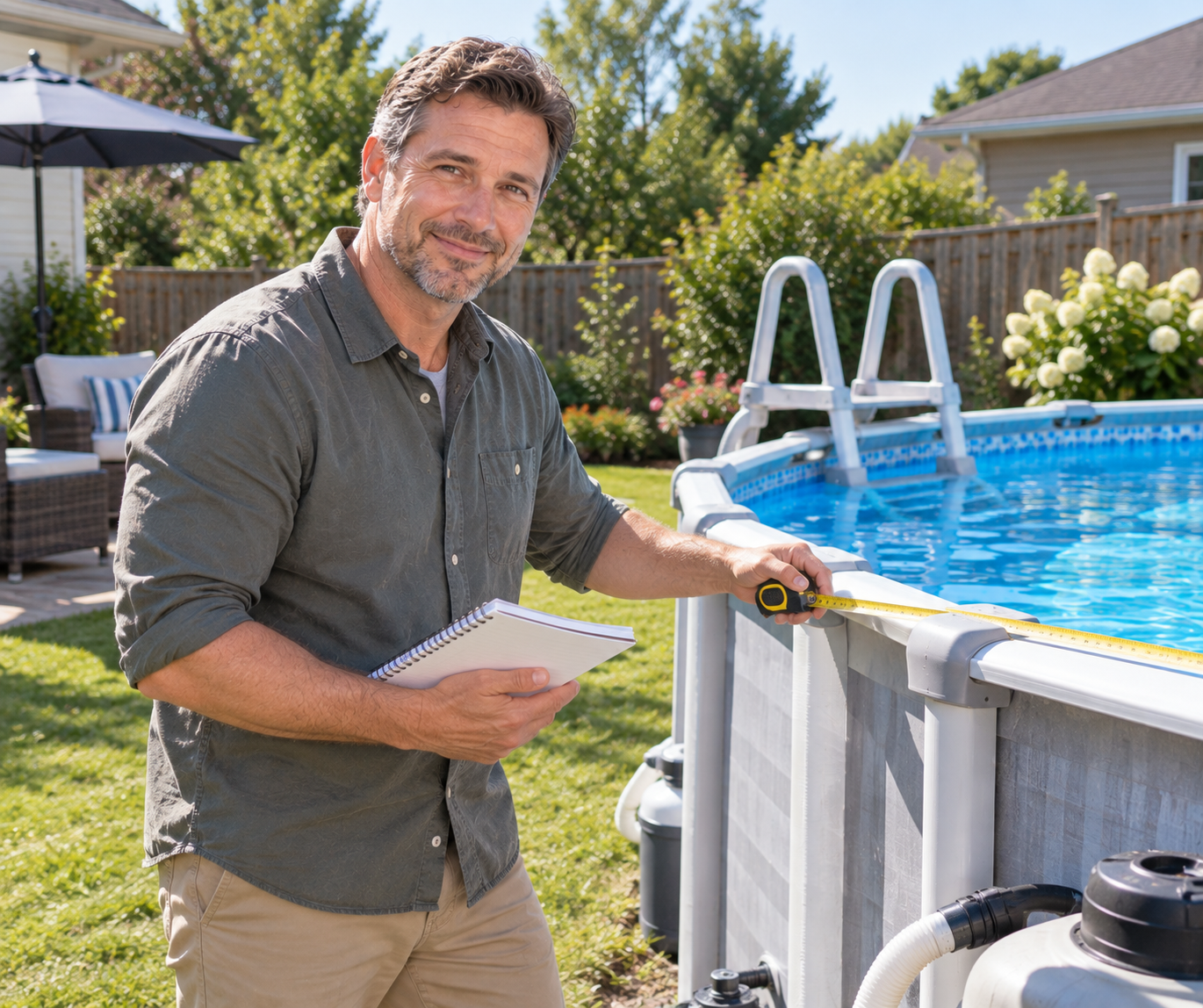

Dragging a full-size pool vacuum out for a patch of sand or a few leaves can make routine cleanup feel like a bigger job than it needs to be. The products here take different approaches: one uses garden-hose water pressure to collect debris, while the others are rechargeable handheld vacuums for targeted cleaning. That distinction matters if you want a simple tool for a hot tub, an above-ground pool, or steps and corners a larger cleaner may miss.
So, what is the best rated pool vacuum cleaner among these options? The answer depends less on a single rating and more on your debris, power preference, and cleaning area. The Sepetrel uses a hose-driven venturi effect and includes two collection bags; the Kokido and Hushlight are cordless and list runtimes of up to 60 minutes. If a spa is part of your setup, our guide to protecting an outdoor hot tub offers related upkeep context. Product descriptions provide useful specifications, but they do not establish that any one vacuum suits every pool or surface.


How to Choose a Pool Vacuum for Targeted Cleaning
These handheld and hose-powered options are best understood as tools for spot cleaning, not replacements for every kind of automatic pool cleaner. None of the supplied specifications describes wall-climbing or automated whole-pool coverage. Matching the mechanism to the debris and the area you need to reach is a more useful way to choose than treating a rating as a universal verdict.
Start with the cleaning job, not the rating
A high rating can be a helpful signal, but the supplied listings show ratings alongside a review count of zero, so there is no user-feedback sample here to interpret. Treat those displayed scores cautiously rather than as verified evidence of long-term performance. The available specifications are more useful for distinguishing the three designs: garden-hose-powered collection, rechargeable cordless suction, and different debris collection arrangements.
Consider where debris gathers. A small pile of sand on a spa floor, leaves in an above-ground pool, and insects near a fountain call for different collection approaches. A handheld vacuum lets you direct the head toward a particular spot, while a hose-powered unit uses a garden hose to draw debris into its bag. Neither description means the tool will independently map a pool, climb walls, or remove stubborn waterline buildup.
Pool size and access matter too. The Kokido listing describes use for spot cleaning small pools up to 20 feet, along with above-ground pools, hot tubs, spas, and small inground pools. The Sepetrel is listed for above-ground pools, inflatable pools, ponds, spas, lakes, and fountains. The Hushlight description also names pools, hot tubs, ponds, and inflatable pools, but does not supply a maximum pool size.
Choose between hose pressure and rechargeable suction
The Sepetrel is a water-powered jet vacuum. Connect it to a garden hose using the supplied adapter, and water pressure creates a venturi effect that draws debris into the collection bag. The listing says it needs no electricity, which avoids charging a battery, but it does rely on a garden hose and a suitable water supply. The product description does not provide a measured suction rate, so avoid assuming it will handle every debris load or pool condition.
Its two bags help make debris type a direct part of the choice. The regular mesh bag is described for larger material such as leaves, while the fine mesh bag is intended for small insects and other tiny debris. Those descriptions do not specify a micron rating or guarantee capture of fine silt, suspended dust, or dead algae. Pool owners dealing mostly with leaves may value the larger-debris bag; anyone focused on very fine particles should look for explicit filtration details before buying.
The Kokido and Hushlight use rechargeable batteries, so there is no garden-hose connection to manage while cleaning. Both listings state up to 60 minutes of runtime, but actual runtime can vary with use and battery condition, and the supplied details do not give a charging duration. Cordless operation can be convenient for moving around a spa or pool edge, though it makes charging and battery readiness part of the routine.
Battery-powered equipment should be used and charged according to its manufacturer instructions. Keep electrical charging equipment away from pool water, and do not handle a charger or battery with wet hands near the water. The Kokido listing describes IPX8 waterproofing for the vacuum itself, but that does not mean its charger or other electrical components should be immersed or exposed to water.
Compare the handheld designs and reach
The Kokido is listed at under three pounds and measures 17 inches without its pole. Its product details specify a 72-inch aluminum pole and two interchangeable vacuum heads, and say it is compatible with standard pool poles. This combination may help with corners and narrow areas, although the listing does not establish how well either head fits every step profile or pool finish. Its stated water-depth range is 12 inches to 9.8 feet, which is a useful compatibility point to check against your intended cleaning area.
The Hushlight listing describes a 2.4-pound vacuum with a four-piece aluminum pole that extends up to 7.5 feet. It has an adjustable suction head and a removable filter basket, which the product description says can be rinsed clean. A longer pole may help reach areas without leaning over the edge, but the listing does not give a pole length for each segment or a maximum pool dimension. Confirm the assembled reach and cleaning-head fit against your pool before relying on it for a distant corner.
The Sepetrel includes a 56-inch pole and brushes, as well as the two mesh bags. Its hose-powered setup differs from both rechargeable choices, so compare the available hose connection and the distance from the hose source to the cleaning area. The product data describes an upgraded hose adapter for improved connectivity, but does not specify a hose length, water pressure requirement, or flow rate. Those missing details make it sensible to verify setup requirements with the manufacturer if your pool arrangement is unusual.
Match collection to leaves, sand, and small debris
Debris size is one of the clearest distinctions in these listings. Sepetrel explicitly supplies separate regular and fine mesh bags for larger leaves and tiny debris such as insects. Kokido is described as picking up sand and light debris, as well as leftover leaves and particles, while cautioning against leaves or debris larger than three inches. Hushlight lists leaves, sand, dirt, and small debris as intended pickup.
These descriptions are not interchangeable filtration specifications. None supplies a micron rating, and the Hushlight listing does not state a maximum debris size. If fine dust or silt is your main concern, ask whether the filter is designed to retain those particles rather than assuming that the word “sand” means all fine material will be captured. If leaves dominate, check the collection capacity and emptying routine as well as the stated debris limit.
Small handheld vacuums also require sensible expectations around large organic debris. The Kokido listing specifically excludes material larger than three inches, and a small vacuum head or collection container may need frequent clearing when debris is heavy. A surface skimmer or larger pool-cleaning system may be more appropriate for a major leaf drop. These products are more naturally considered for spot cleanup and residual debris than as a complete substitute for skimming, brushing, and broader pool maintenance.
After cleaning, inspect and empty the collection component according to its instructions. Rinse the Sepetrel bag or the Kokido and Hushlight filter components as directed, and let parts dry as recommended before storage. Disconnect power sources before servicing rechargeable equipment, and do not force debris out of a mesh bag or basket in a way that could damage it. Keeping the collection path clear helps the next cleaning session start with an unobstructed filter.
Think through pool finish, steps, and access
The supplied descriptions do not list specific surface approvals for plaster, gunite, vinyl liner, fiberglass, or tile. That missing information matters because pool surfaces and seams differ, and a brush or vacuum head suitable for one finish may not be appropriate for another. Before use, check the manufacturer’s surface guidance and inspect the head and brushes for rough edges or trapped debris that could mark a delicate finish.
Small vacuums can be useful around stairs, corners, and spa floors because an operator can direct the head to a specific patch. The Hushlight listing explicitly mentions corners, steps, walls, and waterline areas, but this is a product-description claim, not a guarantee of complete wall or waterline cleaning. None of these supplied descriptions explains how the heads behave on steep slopes, raised drains, narrow ledges, or every kind of ladder. Watch the tool during use and reposition it if it catches or fails to reach the debris.
For a vinyl liner, avoid dragging a head across a fold or exposed seam with force. For tile or fiberglass, do not assume a generic brush is suitable simply because the vacuum is marketed for pools or spas. Follow the product instructions for compatible surfaces and use gentle, controlled movements until you know the head can be used safely on your finish. If the manufacturer does not clearly address your surface, ask before purchasing.
Reach is a practical limitation, especially when cleaning from the deck. Compare the supplied pole length with the depth and shape of the area you need to reach, and consider whether the vacuum head can be maneuvered around steps without placing strain on the pole. The listed Kokido pole length is 72 inches, the Sepetrel pole is 56 inches, and the Hushlight pole extends up to 7.5 feet. These figures describe different setups, so compare them with the actual assembled configuration rather than assuming all measurements mean the same thing.
Runtime, setup, and upkeep affect convenience
The Kokido and Hushlight both advertise up to 60 minutes of runtime. That is a listed maximum, not a promise that every cleaning session will last exactly that long. The supplied information does not state charge time, battery replacement cost, or how runtime changes with debris load. If you need to clean multiple areas in one session, ask about charging and battery support before making the cordless format your only vacuum.
The Kokido listing says the vacuum powers off automatically when it is not submerged and describes quiet operation, but those manufacturer details do not replace careful use around water. The Hushlight listing highlights a 20-watt motor and a 4000mAh rechargeable battery. Those specifications help identify the design, but they do not allow a reliable comparison of suction strength because the supplied data gives no measured flow or pickup test.
Assembly and maintenance differ as well. Sepetrel is described as easy to assemble and disassemble, with a snap-lock collection bag and hose adapter. Kokido supplies interchangeable heads and a pole, while Hushlight has a removable filter basket. Check that the bag, basket, and connections are seated as instructed before cleaning; a loose collection component can undermine the purpose of collecting debris, even though the listings do not specify a troubleshooting procedure.
Routine care should stay within the manufacturer’s directions. Remove debris from the collection bag or basket, rinse washable parts as directed, and store the pole and vacuum where they will not be damaged. Keep rechargeable equipment and chargers in the locations specified by the manufacturer, and do not leave electrical charging components exposed to pool water. For the hose-powered Sepetrel, disconnect and store the hose connection safely after use rather than leaving equipment where it can become a trip hazard.
Which option fits the likely use case?
Choose the Sepetrel if avoiding batteries is a priority and you want a garden-hose-powered tool with separate bags for larger and smaller debris. It may suit owners cleaning above-ground pools, spas, fountains, or ponds who have convenient hose access. Its setup depends on water pressure, and the product data does not give a flow requirement or a precise filtration rating, so those points deserve attention if your debris is especially fine.
The Kokido may suit someone who wants a cordless handheld vacuum for spot cleaning and values its listed small-pool scope, interchangeable heads, and stated 60-minute maximum runtime. Its explicit warning about debris larger than three inches is important if leaves are common. The Hushlight may appeal to buyers who prioritize a longer listed pole reach, a lightweight handheld body, and a removable filter basket. The available descriptions do not provide enough measured evidence to claim that either cordless model has stronger suction than the other.
A pool owner with a larger inground pool, complicated shape, or persistent wall and waterline buildup may need a different category of cleaner for routine coverage. A handheld vacuum can still serve as a supplement, but these listings do not establish automated navigation or full-pool cleaning. For a hot tub, a related spa protection and upkeep guide can help with the broader care routine, while the vacuum decision should still be based on the debris and cleaning access.
In practical terms, start with the debris you need to collect, then compare power source, pole reach, collection style, and confirmed surface guidance. Sepetrel stands apart for hose-powered operation and two mesh bags; Kokido and Hushlight offer cordless handheld formats with listed runtimes of up to 60 minutes. Verify compatibility and charging or water-pressure requirements with the manufacturer before buying, and choose the option whose limits fit the job rather than relying on a rating alone.




Write Your Review
No reviews yet. Be the first to share your experience!