


Leaves collect in corners, fine sand settles across the floor, and brushing the waterline can turn routine pool care into a regular chore. A robotic cleaner can handle much of that work, but models differ in pool coverage, filtration, navigation, and how they get power. The question of what is the best robotic inground pool cleaner has no single answer for every pool. The right match depends on your pool’s layout, the debris you deal with, and whether cordless operation matters more than continuous power.
The product information here covers cordless options with different runtimes and pool-area ratings, plus a corded Dolphin model. Some are listed for floor, wall, and waterline cleaning, while others focus on flat-bottom pools or smaller areas. Those distinctions matter if your pool has a deep end, slopes, steps, or a shallow ledge. Compare the listed specifications with your pool and review each manufacturer’s instructions for surface compatibility, operation, and care.
Top Products





What Makes a Robotic Inground Cleaner a Good Match?
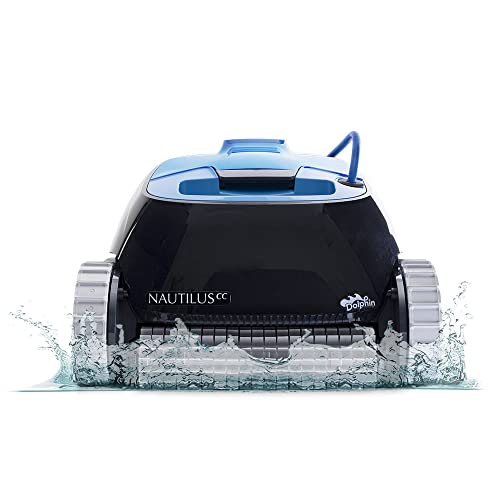
A useful choice starts with matching the cleaner’s stated coverage to the pool, rather than assuming that every robotic model handles every surface and feature equally well. Floor-only cleaning may suit a simple, flat-bottom pool, but a pool with walls and a waterline to maintain calls for a model listed for those areas. The supplied product details describe several cordless units as cleaning floors, walls, and waterlines, while the OUCAXIA C5 is specified for flat-bottom pools. The Dolphin Nautilus CC is described as a corded, plug-and-play model with wall-climbing and an active scrubbing brush.
Those differences are more consequential than a long feature list. A cleaner that reaches walls may still not be the best match for a pool with awkward steps, tight corners, raised drain covers, or a shallow shelf. Product descriptions don’t establish that any one model will negotiate every obstruction or reach every shallow area. Check the pool profile and the manufacturer’s coverage guidance, then treat claims about modes and navigation as listed capabilities rather than a promise that every area will be cleaned in every cycle.
Coverage, slopes, and pool shape
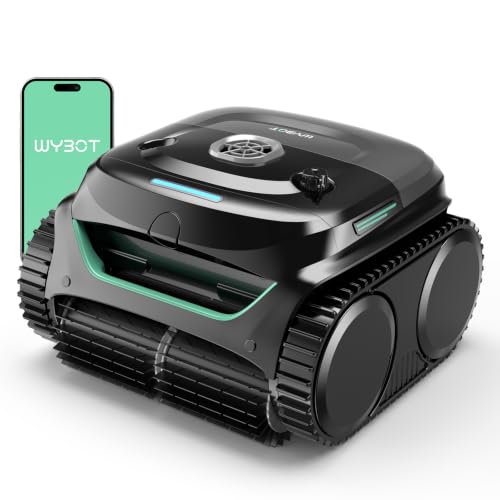
Pool-area ratings give a useful starting point, but square footage alone does not describe how demanding a pool is to clean. A larger pool with a simple floor may present a different task from a smaller pool with steep transitions, steps, and a waterline that collects residue. The Lodoba cleaner is listed for pools up to 2,150 square feet and slopes up to 40 degrees. The WYBOT C1 is listed for inground pools up to 1,618 square feet and slopes up to 45 degrees, according to its product information.
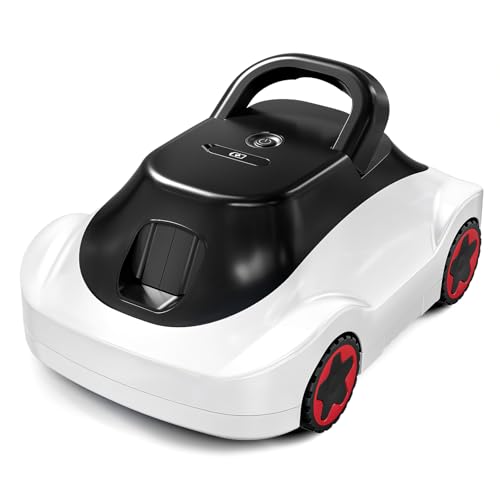
Other listings emphasize different operating limits. The Beatbot Sora 10 is specified for pools up to 3,229 square feet and calls out shallow-area cleaning down to 12 inches. The OUCAXIA C5 is described for flat-bottom pools up to 2,200 square feet, with inclined surfaces up to 10 degrees. These specifications should not be treated as interchangeable: a flat-floor rating does not establish suitability for a steep inground pool, and a shallow-area feature does not guarantee access to every step or ledge.
Surface compatibility needs a careful check
The supplied descriptions do not provide a complete surface-compatibility list for every cleaner. The C5 listing names vinyl liner, concrete, fiberglass, and mosaic tile, but that claim should not be extended to other products. Other models mention tile, vinyl, or multiple surfaces without spelling out every finish or pool construction detail. Before buying, verify the exact model’s instructions for your pool surface, especially if you have a delicate liner or smooth finish.
Wall climbing also depends on more than the phrase appearing in a listing. Surface texture, wall transitions, water conditions, and pool geometry can affect how a cleaner moves, but the supplied information does not quantify performance on each combination. A listed climbing angle is not the same as a guarantee for every wall or waterline. If your pool has slick tile or unusual transitions, look for explicit manufacturer guidance rather than assuming that a general wall-cleaning claim settles compatibility.
Battery Convenience Versus Corded Operation
Cordless robotic cleaners avoid a floating power cable during cleaning, which can be appealing when a cord might cross a deck or become inconvenient to manage. Their practical limit is the battery cycle: the listed runtime, pool size, and charging time all matter. The supplied options range from models listing up to 120 minutes to the Beatbot Sora 10, which lists up to 300 minutes. Those are manufacturer specifications, not a guarantee of the same runtime in every pool or cleaning mode.
A shorter listed runtime may still suit a smaller pool or a targeted cleaning cycle, while a larger pool may call for more operating time. Recharge periods also affect how quickly the cleaner can be used again. Lodoba lists up to 190 minutes of runtime and a three-hour recharge, while the WYBOT C1 lists up to 160 minutes and a four-hour charge. Compare the complete operating schedule with your routine instead of focusing on the largest runtime number in isolation.
Retrieval is part of the cordless decision
A cordless cleaner still has to be retrieved after it finishes. Several product descriptions mention automatic parking near an edge or wall, and the Sora 10 is listed as returning to the waterline and remaining there for a short period. BOTLIFE lists self-parking and an included retrieval hook. These features may make retrieval more convenient, but they do not remove the need to follow the product instructions and use a safe handling method.
Consider the pool’s depth and who will handle the unit. A robot that stops at the edge may be easier to reach than one that remains on the deep floor, but listings do not promise a particular parking position in every pool. Don’t enter deep water simply to recover a disabled cleaner. Use only the retrieval method supplied or approved by the manufacturer, and avoid pulling any unit out by a power cord or other component not designated for lifting.
The Dolphin Nautilus CC takes a different approach: the supplied listing describes a corded cleaner with plug-and-play operation and a two-hour cleaning cycle. A corded unit does not depend on the listed battery runtimes that define cordless choices, but it does require sensible power-supply and cable management. Follow the manufacturer’s placement and electrical-safety instructions, including applicable GFCI protection. Never handle electrical connections with wet hands or modify a cord or power supply.
Debris, Filtration, and the Work After Each Cycle
Debris type should shape your expectations. Leaves and larger particles can fill a basket quickly, while fine dust and sand may call for a finer filtration option if the specific model offers one. Most supplied product descriptions identify baskets or dual filtration but do not provide a particle-size rating. The WYBOT C2 is a notable exception: its listing specifies a 10-micron filter alongside a 180-micron primary filter. Those numbers apply to that model’s stated filtration, not to the other cleaners.
Filter capacity and access matter because every collected load has to be emptied. The Sora 10 lists a five-liter debris basket, while BOTLIFE lists a four-liter basket. A larger stated capacity may mean less frequent emptying in some conditions, but actual debris volume varies by pool and season. A heavy leaf drop can fill a basket faster than routine maintenance, so inspect the filter after a cycle and clean it according to the manufacturer’s directions.
Washable, reusable filters are mentioned in the BRINBO C1 listing, which also describes dual-layer filtration. The C5 listing calls its mesh filter washable and reusable. Those features can simplify routine care, but they do not mean every filter handles fine silt equally well. If dead algae or very fine material is a recurring concern, check the exact filtration specifications and whether an optional finer filter is available for that model before relying on a general “fine debris” description.
Brushes, tracks, and suction are other pieces of the debris picture. The product descriptions mention dual brushes, active brushes, triple motors, and different suction figures for specific models, but those claims are not consistent across the lineup. Don’t assume that one model’s motor count or suction rating applies to another. After cleaning, check the filter and accessible brush or track areas for caught leaves, hair, and grit, following the manual and disconnecting power sources before servicing any equipment.
Navigation, Modes, and Obstacles in Real Pools
Navigation claims help distinguish a cleaner designed to follow planned routes from one whose movement is less explicitly described. The WYBOT C1 listing identifies gyroscope-guided N-path and S-path patterns, and the WYBOT C2 description mentions a gyroscope and optimized paths. The Lodoba product listing describes sonar navigation. These are product-specific descriptions, not evidence that every pathing system will avoid every obstacle or cover every surface without missed areas.
Raised main drains, ladders, steps, and abrupt floor transitions can interrupt a cleaning route. The available specifications do not state that the listed cleaners are immune to getting stuck on those features. If your pool has an obstruction that has trapped past cleaners, examine manufacturer guidance and the product’s coverage limitations before purchasing. A mode selection or navigation feature may help tailor a cycle, but it cannot substitute for checking whether the unit is approved for the pool’s geometry.
Mode counts deserve the same scrutiny. The BRINBO C1 listing describes seven cleaning modes and seven paths, while the WYBOT B1 lists five modes. More choices can provide flexibility, but the number alone doesn’t tell you whether a cleaner can handle your priority area. Look at what each mode actually covers, whether app setup is required, and whether settings must be selected before the unit enters the water, as the BRINBO description specifies.
Waterline cleaning is not the same as stain removal
Several models are listed for waterline cleaning, which can help address routine debris around the pool’s perimeter. That description does not establish that a robot will remove stubborn algae, scale, or a persistent ring from every tile finish. Brush contact, wall traction, and the nature of the buildup all matter, and the product data does not provide controlled results for those conditions. Keep manual spot-cleaning in mind if waterline deposits are already established or require a specific treatment.
App control may be useful for owners who want to select modes or schedules remotely. The supplied listings identify app control for several models, while the Dolphin description emphasizes plug-and-play operation. App features, connectivity type, and available controls differ by product, so verify what the exact listing supports. A phone connection should be treated as a convenience feature, not a replacement for basic checks of the filter, battery, or cleaning coverage.
Making the Choice Without Overreading the Listings
Start by writing down the pool’s dimensions, surface, depth profile, and recurring debris. Then compare those facts with each product’s stated pool type, coverage area, runtime, and cleaning modes. Inground compatibility should be explicit, especially if the same cleaner is also marketed for above-ground use. A model described as suitable for both pool types may be flexible, but its listed coverage and surface limits still need to fit your installation.
Next, decide which tradeoff matters more: avoiding a cable, maximizing a stated battery cycle, or using a corded plug-and-play design. Cordless convenience comes with charging intervals and a retrieval question; a corded model requires safe power setup and attention to cable placement. Neither approach removes routine filter care. A pool with lots of leaves may make basket capacity and easy access especially relevant, while fine sediment makes filtration specifications more important.
Use independent specifications rather than marketing adjectives to compare claims. Pool-area limits, listed runtimes, filter ratings, and named cleaning zones are easier to assess than phrases such as “powerful” or “smart.” Even a detailed specification has limits: a stated square-foot capacity does not tell you how the robot will manage a particular drain cover, ladder, or sharp transition. Manufacturer support can clarify compatibility questions that a product listing leaves open.
Warranty and service details can also affect ownership, but they vary by model. The BRINBO description lists a two-year warranty, and the Sora 10 description lists two-year protection. Those statements should be verified in the current product documentation, including what is covered and how claims are handled. Replacement filters, brushes, tracks, and other wear items are worth checking before purchase, although the supplied data does not provide a complete parts-availability comparison.
Once the cleaner arrives, confirm that its supplied documentation matches the pool and operating conditions before use. Keep the water balanced and follow the manufacturer’s directions about chemical treatments, storage, charging, and maintenance. The provided product data does not specify universal shock-treatment instructions, so don’t assume a robot can remain in the water during a treatment. Remove or protect equipment as directed by its manufacturer, and disconnect power before cleaning or inspecting components.
Which Options Fit Different Pool Priorities?
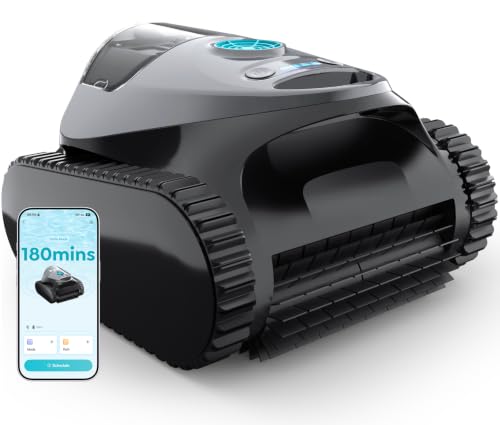
For a buyer prioritizing long cordless runtime and a large stated coverage area, the Beatbot Sora 10 stands out in the supplied specifications, with up to 300 minutes and a listed capacity of 3,229 square feet. It also lists floor, wall, waterline, and shallow-area cleaning. Those figures may make it worth closer consideration for a large pool, but they do not resolve whether its dimensions, route, surface compatibility, or price at the time of purchase suit a particular owner.
A buyer focused on filtration detail may want to examine the WYBOT C2 because its listing supplies two filter ratings, 10 and 180 microns. Someone seeking a straightforward corded option can compare the Dolphin Nautilus CC’s stated two-hour cycle, wall climbing, and top-load filter access. A buyer with a flat-bottom pool may consider the OUCAXIA C5, while noting its stated flat-bottom limitation. These are distinct matches, not a universal ranking.
The Lodoba, WYBOT C1, BRINBO C1, WYBOT B1, BOTLIFE, and Letexpool listings each emphasize different combinations of coverage, runtime, modes, navigation, and control. Their specifications should be compared directly rather than blended into one generalized claim about cordless cleaners. For example, the WYBOT B1 lists up to 120 minutes and a 1,150-square-foot pool area, while Letexpool describes up to 180 minutes and coverage up to 1,615 square feet. Confirm current details on the product page before relying on any specification.
The most suitable choice is the model whose stated pool compatibility and coverage align with your own pool, while its power arrangement and maintenance demands fit your routine. Prioritize the details that solve your actual problem, whether that is cordless operation, wall coverage, fine filtration, or a corded cleaning cycle. If a key question about your finish, steps, drain, or ledge remains unanswered, verify it with the manufacturer before buying. That check is more useful than assuming a broad “inground” label covers every pool configuration.



Write Your Review
No reviews yet. Be the first to share your experience!