


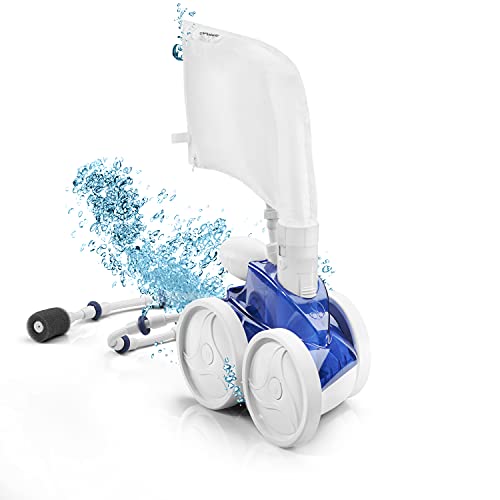
Leaves, acorns, and grit can turn routine pool care into repeated skimming and vacuuming, especially after windy weather. A pressure-side cleaner can collect debris in its own bag or tray while moving around the pool, but its plumbing needs matter as much as its cleaning path. Some models use a separate booster pump, while others connect to a pool return line or are designed for above-ground pool inlets.
So, what is the best pressure side pool cleaner? The practical answer depends on whether the pool is above ground or inground, what return plumbing is available, and whether the cleaner is intended for a booster-pump setup. The products listed here range from Intex models for specified above-ground pool sizes to Polaris and Pentair options listed for inground pools. Checking those distinctions before buying can help prevent a mismatch between cleaner, pool, and equipment pad.




What Makes a Pressure-Side Cleaner the Best Fit?
There isn’t one pressure-side cleaner that suits every pool. The most important first distinction is installation type: an above-ground pool with a compatible inlet is a different setup from an inground pool with a dedicated cleaner return. A model that needs a booster pump may be a poor match for an equipment pad without one, even if its debris bag and cleaning coverage look appealing.
Product descriptions support a useful shortlist, not a universal winner. The Polaris Vac-Sweep 280 and 380 are listed for inground pools and require a separate Polaris booster pump; the 380 uses three venturi jets, while the 280 uses two. The Polaris 360 is a notable alternative because its description says it operates from pool return-line pressure without a booster pump, although it still needs a suitable dedicated cleaner return or an appropriate retrofit setup.
For above-ground pools, the Intex ZX100 and ZX300 are designed around a pool inlet connection and specified pump-flow ranges. The ZX100 is listed for certain pools up to 26 feet in diameter or a rectangular size of 36 by 12 feet, and pumps rated from 2,100 to 3,500 gallons per hour. The ZX300 lists a different pump range, 1,600 to 3,500 gallons per minute in the supplied description; because that unit is unusual and appears inconsistent with typical pool-pump labeling, confirm the current manufacturer specification before relying on it.
Booster pump or return-line power?
A booster-pump cleaner has a dedicated equipment requirement that should be checked before purchase. Polaris describes the 280 and 380 as booster-pump powered, and the Black Max version of the 280 also requires a booster pump. The Amptyhub and MAKHOON pressure sweepers likewise state that a separate booster pump is required, so their lower purchase complexity should not be assumed if that equipment and plumbing are absent.
The Polaris 360 avoids that specific booster-pump requirement by using pressure from the pool return line, but the installation still needs suitable propulsion and hose connections. Its product information notes that a dedicated return line is appropriate and that a standard return may require a retrofit kit. Verify the pool configuration with the manufacturer or a qualified pool professional rather than assuming any return fitting will power it correctly.
These arrangements affect more than installation. A booster pump adds another piece of equipment to coordinate and maintain, while a return-line cleaner depends on the pool’s circulation setup and compatible fittings. Above-ground Intex cleaners have another compatibility path: they connect to the pool inlet and depend on the specified circulation-pump range. Match the cleaner to the existing system before comparing features.
Match the cleaner to pool type and surface
Pool type is a firm filter, not a minor preference. The Intex ZX100 and ZX300 are specified for above-ground pools within stated size limits, while the Polaris 280 and 380 are described for inground pools. The 360 is also listed for inground pools and its product information names vinyl, fiberglass, gunite, pebble, and tile surfaces.
The Pentair Kreepy Krauly Platinum is listed for inground pools and for concrete or gunite, vinyl-lined, and fiberglass surfaces. The Polaris 280 and 380 descriptions also list several surface types, including vinyl, fiberglass, gunite, pebble, and tile. These manufacturer-listed compatibility details are useful starting points, but check the instructions for the exact model and pool finish, particularly if the liner is delicate or the pool has unusual transitions.
Pressure-side models in this selection aren’t all designed to scrub the same areas. The Polaris 280 and 380 descriptions say they sweep and scrub floors and walls; Pentair lists floor and wall cleaning for the Kreepy Krauly Platinum. By contrast, the Intex ZX100 is described as a floor cleaner, and the ZX300 information emphasizes floor cleaning and scrubbing up to the waterline. Don’t assume that a pressure-side label means every model reaches every wall or the waterline.
Debris Capacity, Coverage, and Pool Obstacles
Pressure-side cleaners are often attractive when a pool collects larger debris, because several of these options use a dedicated bag or collection tray. Polaris lists a single-chamber bag with the 280, 380, and 360, and describes the 280 and 380 as able to pick up large debris through a 2.25-inch inlet. That design may suit leaves, acorns, and similar material, but the supplied details don’t establish a fine-particle micron rating.
The bag’s separate collection path can keep captured debris from going directly into the pool’s pump basket or filter, as the 360 description notes. That doesn’t mean the pool’s main filtration system needs no care; check and maintain the pool filter and baskets as usual. For fine silt, sand, or dead algae, don’t infer that a large debris inlet or leaf bag provides fine filtration. Confirm the specific filtration capability if small particles are the main concern.
Intex takes a different approach on the ZX100: its listed components include a removable debris tray with a carry handle, an elbow, a swivel joint, and a 21-foot hose. The ZX300 includes a 21-foot hose and dual dirt scrubbers, with the description stating that it cleans up to the waterline. These details make the two models easier to distinguish, but they don’t establish that either cleaner will handle every step, ledge, or tight corner.
Pool shapes can create practical navigation problems for any automatic cleaner. Raised main drains, ladders, sharp step transitions, and steep floor slopes can interrupt a cleaner’s path or leave a patch that needs manual attention. The supplied descriptions don’t claim that these models avoid every obstacle, so consider the pool’s layout and be prepared to observe the first cleaning cycles according to the product instructions.
A cleaner that travels the floor and climbs walls still may not scrub a stubborn waterline ring or fit narrow steps. Waterline buildup can need separate brushing and water-chemistry attention. A pressure-side unit is best viewed as a way to reduce routine debris work, not as a promise that manual brushing or spot cleaning will never be necessary.
Hose reach and collection access
Hose length matters because the cleaner must reach the far parts of the pool without excess slack interfering with movement. Polaris lists a 31-foot feed hose with the 280, 380, and 360, while Pentair lists a 33-foot hose for its Kreepy Krauly Platinum. Intex includes a 21-foot hose with each ZX model, so compare that length with the pool dimensions and the manufacturer’s setup directions.
Hose connections and swivels can help manage movement, but a listed swivel joint shouldn’t be interpreted as a guarantee against tangles or kinks. Lay out and connect hoses as the manual directs, and check that the cleaner can move freely without the hose pulling it toward one side. If coverage repeatedly stops short, verify hose setup and pool compatibility before assuming the cleaner itself is defective.
Collection access also affects routine ownership. A removable Intex tray is handled differently from a Polaris filter bag, and the product descriptions identify the Polaris units as using a single-chamber bag. Empty collection components before they become heavily loaded, and follow the manufacturer’s instructions for rinsing or replacing them. A full or obstructed collection component can undermine practical cleaning even when the cleaner is otherwise connected correctly.
How the Available Models Differ
For a booster-pump inground setup, the Polaris 280 is a familiar two-jet option, and the 380 is described with three venturi jets. Both list floor and wall coverage, a large debris inlet, a filter bag, and a 31-foot hose. The 380’s additional jet is a product distinction, not proof that it will be the better match for every pool or installation.
The Polaris 360 may be more relevant when a booster pump isn’t part of the plan, because the manufacturer describes it as powered by the pool return line. Its installation still needs the correct return arrangement, and buyers should confirm that the existing plumbing can provide the intended propulsion. The Zodiac F5B Polaris Vac-Sweep 280 Black Max is another booster-pump-dependent option, with a 31-foot feed hose and listed inground-pool use.
The Intex ZX100 is the simpler floor-focused choice among the specified above-ground models, with a debris tray and defined pool size and pump-flow limits. The ZX300 is also for above-ground pools, and its description adds dual scrubbers and wall-climbing language, but its listed flow unit should be verified before purchase. Both require matching the pool’s dimensions and inlet arrangement to the manufacturer’s directions.
The MAKHOON and Amptyhub sweepers use four-wheel designs and are described for inground pools, but both require a separate booster pump. Their listings mention adjustment of jet direction if coverage is incomplete, so installation and setup may require more attention than a basic connection. The Pentair Kreepy Krauly Platinum is a higher-feature inground option in the supplied information, with floor and wall coverage, a 33-foot hose, and several listed surface types.
Polaris Vac-Sweep 65 is listed for above-ground vinyl pools and described as using clean return water, with a filter bag that captures debris before it reaches the pump basket. Its product information also mentions floor cleaning and sweeping the sides. Check that its installation directions match the specific pool and filtration system, since product titles and descriptions can vary in how they characterize compatible pool types.
Installation Checks That Prevent a Mismatch
Before ordering, identify the pool’s cleaner connection, circulation arrangement, and whether a booster pump is already installed. Check the model’s stated pool type, surface compatibility, hose length, and pump requirements against the equipment you actually have. For a dedicated pressure line or a proposed plumbing change, use the manufacturer’s instructions and consult a pool professional if the setup is unclear.
For above-ground cleaners, compare the pool dimensions and pump rating with the specific model limits. Don’t rely on a listing that uses an unusual unit or ambiguous wording without confirming it with the manufacturer. A unit that connects physically may still be unsuitable if the pump flow or pool size falls outside the stated range.
After installation, observe the cleaner’s movement and check whether it reaches the areas its description says it covers. Note repeated hang-ups at drains, ladders, or steps, and check that the hose isn’t kinked or pulling the cleaner off course. If a booster-pump cleaner moves poorly, follow its manual and have the pressure-side plumbing assessed rather than altering valves or pressurizing equipment by guesswork.
Keep people out of the pool while powered pool equipment is operating whenever required by the product instructions and applicable pool-safety guidance. Use appropriate GFCI protection for electrical pool equipment, and disconnect power sources before servicing equipment. Never bypass safety devices or improvise electrical or pressure plumbing connections.
Maintenance and seasonal care
Pressure-side cleaning shifts some debris collection away from the main filter, but the cleaner’s bag or tray still needs regular attention. Empty it when loaded, inspect the hose and connections for damage, and look for debris caught around moving parts. Follow the model manual for cleaning, storage, and replacement components rather than assuming parts are interchangeable across brands.
Balanced pool water matters for equipment longevity, but product-specific chemical limits should come from the manufacturer. Remove or protect the cleaner during shock treatment if its instructions call for that precaution, since concentrated chemicals can be harsh on plastics and seals. Don’t run equipment in conditions that the manufacturer excludes, and avoid making assumptions about low-temperature limits that aren’t listed for the model.
At season’s end, clean and dry the cleaner as directed, then store hoses and the unit in a suitable location. Protect components from freezing where winter conditions make that a concern. A booster pump and its plumbing may also have separate winterizing requirements, which should be handled according to the equipment instructions or by a qualified pool professional.
Making the Final Choice
The best pressure-side cleaner is the one that matches the pool’s construction and existing plumbing without relying on unsupported assumptions. For an above-ground pool, start with the Intex or Polaris model whose stated pool dimensions, inlet connection, and circulation requirements match the installation. For an inground pool, decide whether a booster pump is available or whether a return-line model such as the Polaris 360 is compatible with the plumbing.
Then weigh the kind of debris and coverage the product actually lists. A bag and large inlet are useful distinctions for leaves and larger debris, while floor-and-wall coverage may matter more when dirt accumulates along the sides. If fine dust or algae is the primary concern, verify filtration details rather than assuming a pressure-side bag will capture it.
Finally, consider maintenance access, hose reach, and obstacles in the pool. A cleaner can reduce regular hands-on vacuuming, but no supplied specification promises complete coverage of every ledge, step, drain, or waterline. Confirm model-specific requirements before purchase, then judge the setup by whether it moves freely and collects the debris your pool produces.




Write Your Review
No reviews yet. Be the first to share your experience!