


Leaves in the skimmer, fine grit on the floor, and a waterline that needs regular brushing can turn pool care into a recurring chore. The what is the best in ground pool cleaner question doesn’t have one answer for every pool: the right choice depends on what you need picked up, how much coverage you expect, and whether you want a cleaner connected to pool plumbing or a self-contained robot.
The options here include cordless robots, suction-side cleaners, a pressure-side model, and a pool chemical that supports water care but does not vacuum debris. Product descriptions list different coverage, runtime, pool-size, and connection details, so compare those claims with your pool’s actual layout and equipment. A cleaner that works on the floor may not scrub the waterline, and a suction-side unit relies on compatible pool plumbing. Check the manufacturer’s guidance for your finish and setup before buying.






What Is the Best In Ground Pool Cleaner for Your Pool?
There is no single best cleaner for every inground pool. A cordless robot may suit an owner who wants floor, wall, and waterline coverage without a hose connection, while a suction cleaner may make sense when the existing circulation system and plumbing are suitable. A pressure-side cleaner offers another setup, but the Polaris Vac-Sweep 280 is listed as requiring a separate booster pump. Start by matching the cleaning system to the pool and equipment, then compare the debris and coverage needs the product information actually addresses.
Match the cleaner type to the pool equipment
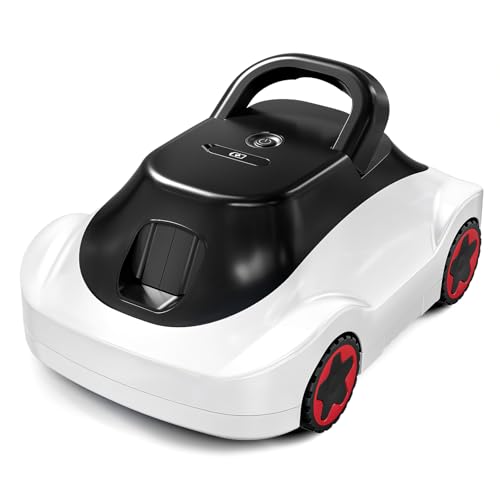
Robotic cleaners operate as pool-cleaning units rather than relying on a suction hose connected to the skimmer or a dedicated suction line. The cordless robots in this selection list rechargeable batteries, so their runtime and recharge duration matter alongside their coverage claims. Several describe cleaning the floor, walls, and waterline, while the C5 is specified for full-floor cleaning in flat-bottom pools. Read those distinctions closely: a robot marketed for wall climbing is not the same as a model whose description limits its job to the floor.
Suction-side cleaners connect to a dedicated suction line or the skimmer and send debris into the pool’s filtration system. The Zodiac MX6 lists both connection options and includes a 32-foot hose; the Zodiac G3 lists a 39-foot hose and a skimmer or dedicated-line connection. These specifications help identify what comes in the box, but they do not establish that a particular pool pump will provide suitable flow. Check the cleaner instructions and pool equipment documentation before connecting one, especially if the pool uses a variable-speed pump or a dedicated suction port.
Pressure-side cleaning has different plumbing needs. The Polaris Vac-Sweep 280 product information says it is powered by a separate booster pump and comes with a 31-foot feed hose and filter bag. That can be a poor match for an owner who does not have the required setup and does not want to assess installation requirements. Follow the manufacturer’s plumbing and safety instructions rather than improvising a connection or operating a pump outside its intended arrangement.
Decide whether floor-only cleaning is enough
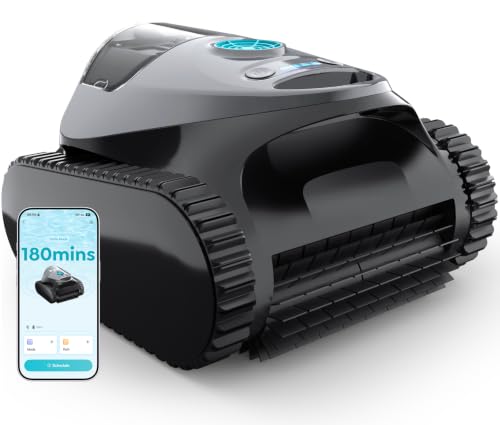
Coverage is a major difference among the listed choices. The Letexpool C1, WYBOT C1, and BRINBO C1 descriptions specify floor, wall, and waterline cleaning, with multiple modes or paths listed for those models. The BOTLIFE cleaner also lists floor, wall, and waterline modes. By contrast, the OUCAXIA C5 is described for full-floor cleaning in flat-bottom pools, so it should not be treated as a waterline scrubber based on the supplied information.
Pool shape and built-in features can complicate coverage even when a cleaner’s description sounds broad. Steps, ladders, raised main drains, tight corners, and sharp slope transitions may interrupt a cleaning path or leave areas for manual attention. The WYBOT C1 lists navigation paths and climbing slopes up to 45 degrees, while the BOTLIFE description lists tracks for slopes up to 30 degrees. Those stated limits are product-specific details, not a promise that either unit can navigate every pool feature.
Above-ground compatibility claims do not automatically make a cleaner a good match for every inground pool, and vice versa. The WYBOT B1 is described for above-ground and small inground pools, with a listed maximum area of 1,150 square feet. The C5 is described for above-ground and inground flat pools up to 2,200 square feet, while the Letexpool C1 and WYBOT C1 list inground pool areas around 1,600 square feet. Compare the stated pool type and area with your installation, and confirm any questions about pool depth, geometry, and surface with the product maker.
Choose filtration for the debris you actually have
Large leaves, acorns, and other visible debris call for capacity and a practical emptying routine. The Polaris 280’s filter bag is described as collecting small and large debris, including leaves, acorns, and pebbles, and its inlet is listed as 2.25 inches. Several cordless models instead use internal baskets or dual filtration systems, but the supplied specifications do not provide a particle-size rating for those filters. Don’t assume that a product captures microscopic silt simply because its description uses phrases such as fine filtration.
The BRINBO C1 lists a washable, reusable dual filtration system, and the Letexpool C1 also describes dual-layer filtration. The C5 lists a washable 180-micron mesh filter and a 2.7-liter basket, which gives a buyer a clearer description of its filter and debris capacity. Its manufacturer description specifically discusses leaves, dirt, sand, and fine debris, but that wording should not be converted into a guaranteed result for every pool condition. Severe algae, dense sediment, and unusually heavy debris may still require additional pool maintenance.
Suction-side cleaners direct collected debris into the pool’s filtration system, so their convenience depends partly on the existing filter and circulation setup. A full or dirty filter can affect normal pool operation, even though the available product descriptions do not specify a universal flow requirement. Keep the skimmer and pump baskets maintained according to their instructions, and monitor how the pool system behaves after a cleaner is connected. If suction seems weak, consult the cleaner and pump manuals before adjusting plumbing or changing pump settings.
Weigh battery runtime against retrieving the robot
Cordless robots avoid a floating power cable during cleaning, but each model has a finite listed runtime and needs charging between cycles. The Letexpool C1 and BRINBO C1 list up to 180 minutes, while the WYBOT C1 lists up to 160 minutes and a four-hour charge. The BOTLIFE model lists up to 120 minutes and a roughly 2.5-hour recharge, and the WYBOT B1 lists up to 120 minutes. These are manufacturer-stated specifications, not guaranteed runtimes in every pool or debris condition.
Pool area ratings provide another point of comparison, but a complicated shape or extensive wall cleaning can make a pool more demanding than its surface area alone suggests. The C5 lists up to 180 minutes of runtime and a 2,200-square-foot maximum for flat-bottom pools; its description does not claim wall or waterline cleaning. A more modest area rating can still be suitable for a compact pool if its coverage matches the task. Consider how the cleaner will be retrieved if it stops away from the edge, particularly in a deep end.
Retrieval and handling deserve attention before purchase, not after a robot is stranded underwater. The BOTLIFE model lists self-parking near the edge and includes a retrieval hook, while the C5 description also mentions auto-parking near a pool wall and an included hook. The WYBOT B1 is listed at 14.3 pounds, which is useful context for lifting, though it does not establish the weight of other models. Use the supplied retrieval equipment as directed, lift carefully, and don’t pull a cleaner out by a power cable or handle electrical equipment with wet hands.
Consider surface and plumbing compatibility carefully
The Polaris 280 is listed for vinyl, fiberglass, gunite, pebble, and tile surfaces. The Zodiac G3 description also lists tile, vinyl, gunite, and fiberglass, while the C5 lists vinyl liner, concrete, fiberglass, and mosaic tile. These are product-specific compatibility statements. They do not replace checking the complete manual for restrictions involving finish condition, steps, fittings, or pool geometry.
Pool owners with delicate vinyl liners should avoid assuming that every brush, track, or suction cleaner is appropriate just because a product is described for inground use. Confirm the maker’s surface guidance and inspect the pool finish if it is already worn or damaged. Slick fiberglass or tile transitions may also challenge traction, but the supplied data does not identify specialized PVA rollers for these options. If the cleaner repeatedly slips or marks a surface, stop using it and seek manufacturer guidance rather than increasing force or altering parts.
The suction models can be convenient when their plumbing connection is available, but installation depends on the pool’s layout. The MX6 includes accessories for either a dedicated suction line or skimmer installation, and the G3 is described for those same connection types. A skimmer hookup and a dedicated line are not interchangeable assumptions for every pool. Follow the applicable equipment instructions, preserve any required safety devices, and do not bypass suction protection systems.
Separate useful automation from marketing language
App control can matter if you want to select cleaning modes or schedule a cycle remotely. The Letexpool C1, WYBOT C1, BRINBO C1, and WYBOT B1 descriptions list app controls, and some also mention over-the-air software updates. Check which functions are actually specified for the model you are considering, and whether setup must happen before the cleaner enters the water. App connectivity does not remove the need to inspect filters, charge a battery, or verify that the pool layout suits the unit.
Navigation claims also vary. The WYBOT C1 lists gyroscope-based N-path and S-path routing, while the BRINBO C1 describes AI navigation and multiple preset paths. These features suggest that the units are designed to follow planned routes rather than relying only on random movement, but no supplied information proves complete coverage in every pool. Raised drains, steps, narrow ledges, and unusual shapes can remain practical obstacles regardless of the advertised navigation system.
Ratings and review counts supplied for these products show no reviews, so they do not provide a useful body of verified customer feedback for assessing long-term ownership. Treat the stated specifications as manufacturer-provided information and look for current documentation on warranty, replacement filters, brushes, tracks, and service before deciding. Parts availability matters because a battery robot, suction cleaner, and pressure cleaner have different components and maintenance needs. Avoid assuming that a replacement part from one model fits another.
Understand where the non-cleaner option fits
The Clorox Pool&Spa algaecide listed here is not a pool vacuum or automatic cleaner. Its description presents it as an algaecide and clarifier for treating and helping prevent algae, so it addresses water treatment rather than picking up leaves, grit, or settled debris. Pool chemicals should be selected and dosed according to the product label and the pool’s measured water conditions. Never treat a chemical product as a replacement for filtration or physical debris removal.
Water clarity depends on more than the cleaner. A robot can collect some debris while an algae problem still requires correct diagnosis, water balance, circulation, and chemical treatment. Follow label directions and pool-equipment manuals, and check whether a cleaner should be removed during chemical treatment or shock procedures. The supplied descriptions do not establish a universal chemical-exposure limit for these cleaners, so use the specific manufacturer guidance rather than guessing.
Make the final choice from your pool’s hardest task
For broad robotic coverage without plumbing hookups, compare the listed cordless models by pool-area rating, runtime, charging time, filter design, and stated floor or wall coverage. For a pool with suitable suction plumbing, the MX6 and G3 offer alternatives that use the circulation system, with different hose lengths and product descriptions. For a pool already equipped for a separate booster pump, the Polaris 280 provides a pressure-side option with a debris bag. These distinctions are more useful than choosing a model based on a broad claim that it suits every pool.
Give the greatest weight to the problem that creates the most work: heavy leaves, fine sand, routine floor debris, or brushing the walls and waterline. Then verify pool-surface compatibility, connection requirements, and whether the cleaner can reach the areas that matter in your pool. Keep electrical protection and chemical safety in view, and follow the product manual for installation, operation, cleaning, and storage. The best fit is the option whose documented coverage and setup match your pool, with realistic expectations about obstacles and remaining manual care.




Write Your Review
No reviews yet. Be the first to share your experience!