


Leaves collecting on the floor, fine grit slipping past a basic basket, and repeated brushing can turn pool care into a regular chore. The right automatic cleaner can reduce that workload, but the best choice depends on how your pool is built and what debris it collects. For anyone asking what is the best inground pool cleaner, the practical answer starts with matching the cleaner type to the pool, not choosing by feature count alone.
The products listed below include cordless robotic units and suction-side cleaners, so their installation needs and day-to-day tradeoffs differ. Robotic models have their own filtration and battery, while suction-side models rely on the pool circulation system and send debris into its filtration setup. Check pool shape, surface, pump requirements, cleaning coverage, and how you will retrieve and maintain the unit before buying.
Top Products





How to Match an Inground Cleaner to Your Pool
There isn’t one best inground pool cleaner for every installation. The strongest starting point is to identify whether you want a self-contained robot or a suction cleaner connected to your pool plumbing. Then compare the product’s stated pool type, coverage, runtime or pump dependency, and debris handling with your actual pool conditions.
Robotic convenience versus suction-side simplicity
A cordless robotic cleaner uses an internal battery and filter, so it doesn’t need a suction hose connected to a skimmer or dedicated suction line. That can be appealing if you want a separate cleaning system, but runtime and charging time determine how much work it can complete per cycle. The listings here give rated runtimes and pool-area limits for some models, but those figures are manufacturer-provided specifications, not a promise of identical results in every pool.
A suction-side cleaner such as the Zodiac MX6 or Zodiac G3 connects to the skimmer or a dedicated suction line and relies on the pool’s circulation system. That arrangement avoids charging a battery, but the cleaner’s operation depends on suitable pool plumbing and circulation. The VINGLI listing specifies a minimum 3/4-horsepower pool pump or 1,600 gallons per hour, so owners should verify their setup against that requirement rather than assume the cleaner will work with any pump.
The MX6 includes 32 feet of twist-lock hose, while the G3 listing includes 39 feet of push-fit hose. Those supplied lengths are useful details to check against the route from the connection point to the far end of your pool. A hose that cannot reach the pool’s full working area limits useful coverage, while an unsuitable hose layout can interfere with movement.
Suction cleaners also direct debris toward the pool filtration system, so a full basket or dirty filter can affect the overall cleaning setup. A robotic unit collects debris in its own filter, which means you empty and rinse that filter separately. Neither approach is maintenance-free; the difference is where debris is collected and which equipment you’ll need to inspect after a cleaning cycle.
Match coverage claims to pool shape and cleaning needs
Floor-only cleaning can be adequate when the main concern is settled debris, but it won’t address wall deposits or the line where water meets tile. Several cordless models in this selection are described as cleaning floors and walls, and some include waterline coverage. The WYBOT C1 listing specifies floor, walls, waterline, and steps, while the C1 robotic cleaner from Letexpool lists seven cleaning modes and paths.
Coverage descriptions don’t establish that a cleaner can reach every narrow step, shelf, corner, or waterline section in every pool. Built-in stairs and tanning ledges can create a different navigation challenge from an open floor, and no supplied listing establishes complete coverage of every pool profile. Consider your layout and obstacles, and check the manufacturer’s instructions for the exact model before relying on a specific feature.
Navigation claims can help distinguish products, but they should be read as design information rather than a guarantee of a particular result. The WYBOT C1 description lists gyroscope navigation with N-shaped and S-shaped paths. BRINBO describes AI navigation and seven modes, while the Zodiac MX6 uses hydraulic suction and internal gears for navigation. These are different approaches, and pool shape, pump setup, and obstacles remain relevant.
A cleaner can also pause at raised drains, steps, ladders, or transitions between floor and wall. No model in the supplied data is described as incapable of getting stuck. If your pool has prominent obstacles, look for clear guidance on navigation and retrieval, and be prepared to reposition a unit if its path is interrupted.
Runtime, charging, and retrieval for cordless models
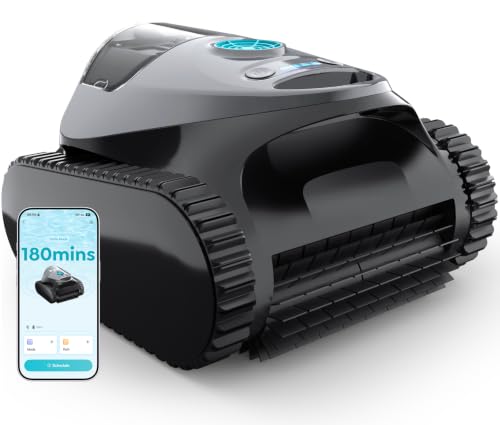
Battery figures can help estimate whether a cordless robot suits the pool’s size and cleaning schedule. The Letexpool C1 and BRINBO C1 listings state up to 180 minutes, while the WYBOT C1 listing states up to 160 minutes and a four-hour charge. BOTLIFE lists up to 120 minutes and about two and a half hours to recharge. These are listed maximums, so actual operation may vary with conditions and selected settings.
Compare the manufacturer’s pool-area guidance with the size and shape of your pool, not just the headline runtime. The WYBOT C1 is listed for pools up to 1,618 square feet, and the BOTLIFE unit for up to 1,830 square feet. The C5 listing describes flat pools up to 2,200 square feet, while also specifying a maximum incline of 10 degrees. That last limitation matters if your inground pool has a pronounced slope or irregular floor.
Retrieval matters as much as the cycle itself. BOTLIFE describes self-parking near the edge and includes a retrieval hook; the C5 listing also describes auto-parking and an included hook. Those features may simplify removal, but follow the model’s instructions and use the supplied retrieval method. Don’t pull a powered robotic cleaner out by its power cable, and use safe lifting technique when handling a waterlogged unit.
App control can be useful for selecting modes or scheduling, but it isn’t essential for every pool owner. The WYBOT C1 and BRINBO C1 descriptions list app controls and over-the-air updates, while other products emphasize one-touch operation or basic automatic cleaning. Consider whether you’ll use scheduling and mode selection enough to value them, and confirm setup requirements before the cleaner enters the water.
Debris capacity and filtration affect upkeep
Large leaves and small particles place different demands on a filter. BRINBO describes a dual filtration system intended for larger debris and fine dust, and the Letexpool C1 also lists dual-layer filtration. The C5 listing specifies a 180-micron mesh filter and a 2.7-liter basket. These stated details help compare the designs, but they do not provide a shared, independently measured filtration standard across the products.
For a yard with heavy leaf drop, basket capacity and easy access may matter because a cleaner can stop collecting effectively when its filter fills. Fine sand, silt, and pollen can be more demanding than visible leaves, so look for explicit filtration information instead of assuming that every mesh filter captures particles equally. None of the supplied product descriptions gives a 2-to-20-micron rating, so don’t infer ultra-fine filtration for these options.
Top-loading baskets can make removal straightforward when the product description specifies that arrangement. The C5 listing identifies a top-loading basket, and BOTLIFE describes a top-loading filter basket that can be rinsed with a garden hose. Follow the manufacturer’s maintenance instructions, disconnect power before servicing a robotic unit, and avoid putting a dirty filter back in place.
Suction-side models send debris into the pool’s circulation and filtration equipment instead of a separate robotic basket. That means the cleaner and the pool filter share the debris burden. Check the skimmer and pump baskets and maintain the filter according to its instructions, especially after a cleaning session with substantial debris.
Pool surface and pump compatibility deserve a close check
Do not assume that a product listed for inground pools is suitable for every surface or finish. The C5 listing names vinyl liner, concrete, fiberglass, and mosaic tile, but other supplied descriptions don’t provide an equally detailed surface list. Confirm compatibility for your exact finish with the manufacturer, especially for a delicate liner or smooth fiberglass surface.
A pool surface can influence traction and the risk of unwanted abrasion. The supplied data does not specify PVA foam rollers or a surface-specific track material for these models, so it would be misleading to claim that any one option is best for slick tile or especially gentle on every liner. Inspect the product documentation and stop using a cleaner if you notice surface damage or unusual wear.
For suction cleaners, pump suitability is a separate decision from surface suitability. The VINGLI requirement is explicit, but the Zodiac descriptions provided here do not give a minimum horsepower or flow-rate figure. Ask the manufacturer or consult the unit’s manual if your pool uses a variable-speed pump or has low circulation settings; don’t guess that a cleaner will operate correctly at every pump speed.
The Zodiac MX6 is described as compatible with a dedicated suction line or skimmer connection and as suitable for variable-speed pumps and lower flow rates when properly set up. That is useful manufacturer information, not a universal flow specification. Confirm the installation details for your pool and cleaner, and do not bypass suction safety equipment or alter plumbing in a way that conflicts with the pool system’s instructions.
What the listed models offer, and what they leave unclear
The product selection spans robotic and suction-side designs, so the relevant comparison is how each fits a particular installation. The WYBOT C1 and BRINBO C1 offer stated wall and waterline cleaning, app controls, and cordless operation. The Letexpool C1 also lists app control, multiple modes, and a stated runtime of up to 180 minutes. Those features may appeal to owners who want to avoid hoses in the pool, provided the pool dimensions and charging routine suit the unit.
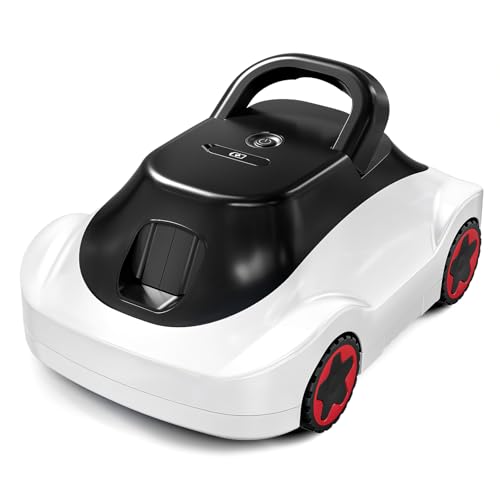
The WYBOT B1 is described as weighing 14.3 pounds, with up to 120 minutes of runtime and five cleaning modes. Its listing says it suits above-ground and small inground pools, which is more limited than a model explicitly sized for a larger pool. BOTLIFE lists a 4-liter filter basket, three cleaning modes, and up to 120 minutes of operation, while its stated pool-area limit is 1,830 square feet.
The C5 may suit owners prioritizing flat-floor cleaning and a larger listed pool area, but its stated incline limit is 10 degrees. It is also described for above-ground and inground pools, not as a wall-climbing model. That distinction is important: don’t buy it expecting floor, wall, and waterline coverage when the supplied description focuses on floor cleaning.
The Zodiac MX6 and G3 are suction-side options rather than battery robots. The MX6 description highlights cyclonic suction, X-Trax, and wall climbing when set to proper flow; the G3 listing emphasizes a disc, wheel deflector, and compatibility with several inground surfaces. Neither description supplies a battery runtime because these units depend on pool plumbing. Their suitability therefore hinges on the circulation setup, hose arrangement, and maintenance of the pool filter.
The VINGLI cleaner is the lowest-complexity suction option in the supplied descriptions, with 33 feet of hose and a stated pump requirement. That pump requirement is a key caveat, not a minor detail. The replacement two-wheel head listed as The Pool Cleaner 2 Wheel Head ONLY PBS20JSTHBX is a component, not a complete automatic cleaner, so it should only be considered by someone seeking a compatible replacement head for the relevant cleaner system.
Listings also leave meaningful questions unanswered. They don’t consistently specify filtration particle ratings, exact surface restrictions, replacement-part availability, or detailed navigation performance. Check warranty terms, service support, and consumable-part availability before purchase, and verify the product’s current manual rather than treating marketing descriptions as a substitute for installation guidance.
Keep the cleaning routine and equipment safe
After each cycle, remove and clean the filter or basket as directed, then check for trapped leaves or debris around moving parts that are accessible to the owner. Keep suction cleaner hoses arranged without kinks and inspect connections if movement or suction appears abnormal. For robotic models, store the unit and charging equipment as the manufacturer directs, and don’t service electrical components while connected to power.
Electrical pool equipment requires particular care. Use the manufacturer’s placement and GFCI guidance for any power supply, keep electrical connections protected as specified, and never handle plugs or controls with wet hands. Don’t operate a pool cleaner while people are swimming unless the product instructions explicitly permit it; follow all warnings supplied with the cleaner and pool equipment.
Pool chemistry also affects equipment care. Remove cleaners before shock treatments unless the manufacturer specifically says otherwise, since concentrated chemicals can damage plastics, seals, brushes, or other components. Keep water balanced within the product’s stated limits, and consult the manual before using a cleaner during unusual water conditions or treatment procedures.
For owners comparing pool maintenance equipment, consider whether an inflatable hot tub is a worthwhile addition to the outdoor setup, but treat that decision separately from pool cleaner compatibility. A hot tub purchase won’t resolve pool floor debris or circulation requirements, so keep the budgets and maintenance demands distinct.
Ultimately, the best fit is the cleaner whose stated pool coverage, surface compatibility, debris system, and power requirements match your installation. Choose a cordless robot if separate filtration and hose-free operation suit your routine; choose suction-side equipment only after confirming the pump and plumbing requirements. Verify the exact model details, plan for routine filter care, and use the manufacturer’s safety and retrieval instructions.




Write Your Review
No reviews yet. Be the first to share your experience!