


Leaves, acorns, and fine dirt can turn routine pool care into repeated skimming, vacuuming, and brushing. A cleaner that suits the pool’s plumbing and debris load can reduce that workload, but the wrong type may depend on equipment you don’t have or miss the surfaces you want cleaned. The question of which is the best polaris pool cleaner has no single answer for every pool: the supplied options include robotic and pressure-side cleaners as well as replacement parts for existing Polaris equipment.
Start by separating a complete cleaner from a repair or wear item. The Polaris VRXIQ+ and PCX 868 iQ are corded robotic models with app features, while the Vac-Sweep 280 is a pressure-side cleaner that uses a dedicated booster pump. The Polaris MAXX is a suction-side option, and the remaining products listed are replacement bags, a hose, tires, scrubbers, or a backup valve. Matching that distinction to your pool setup is more useful than treating every result as a direct competitor.




Which Polaris Cleaner Fits Your Pool?
The best match depends first on whether you need a whole cleaner or a specific replacement part. Among the complete units listed, the robotic models offer self-contained cleaning and app controls, the Vac-Sweep 280 relies on a booster pump, and the MAXX connects to the pool’s suction system. The replacement products serve owners maintaining compatible pressure-side equipment rather than shoppers seeking a standalone cleaner.
Robotic cleaning with app controls
The Polaris VRXIQ+ Smart Robotic Pool Cleaner is the feature-rich option in this group for an owner who wants remote scheduling and multiple cycle choices. Its listed features include iAquaLink control, seven cleaning cycles, a 70-foot cable with a swivel intended to reduce tangling, and cleaning from the floor to the waterline. The SMART Cycle mode is described as assessing the pool’s shape, size, and surface material to determine a cleaning time, but the supplied details don’t provide a cycle duration or a pool-size limit.
The illuminated debris canister has a transparent window, which makes it possible to see when it needs attention without guessing from the outside. A waterline-only mode can be useful when the main concern is buildup along the tile band rather than a full-floor cleanup. Still, an app doesn’t remove the need to empty the canister, check the cable, and confirm that the cleaner is appropriate for the pool in question. Owners who prefer scheduled operation may value the controls, while someone seeking a simpler setup may not need every connected feature.
The Polaris PCX 868 iQ Smart Robotic Pool Cleaner is another app-connected corded choice. Its listed functions include starting and stopping cycles, viewing a timer, choosing a cleaning mode, remote control, lift-system activation, and troubleshooting access through iAquaLink. Double Helix rubber-blade brushes agitate debris toward the inlet, and the transparent filter canister is removable for shaking and rinsing.
One practical distinction is the PCX 868 iQ’s lift system: the product information says it climbs to the waterline and expels water to make removal lighter. That may help with retrieval, although the cleaner still needs to be handled carefully and the information doesn’t give a dry or wet weight. Its 4WD agility and 70-foot cable are stated product features, not a guarantee that it will avoid every step, drain cover, ladder, or difficult pool transition. Consider where the power supply can be placed and how the cord will reach the far end without being stretched.
Hydraulic cleaners need compatible pool plumbing
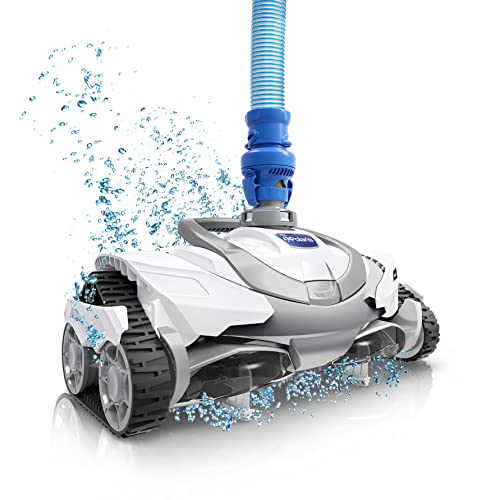
The Polaris MAXX Premium Suction-Side Automatic Pool uses pool circulation suction rather than operating as a separate robotic unit. It is listed for in-ground pool surfaces and is designed to scrub from floor to waterline with active brushes, HALO debris handling, multidirectional navigation, and turbines intended to support climbing. Those are meaningful features for owners who want an automatic cleaner integrated with the pool’s suction system, but the supplied information doesn’t state a minimum pump flow rate or explain every plumbing configuration.
That missing flow specification matters. A suction cleaner’s movement depends on the pool’s hydraulic setup, so don’t assume the MAXX will perform as intended with every variable-speed schedule, skimmer arrangement, or dedicated suction line. Check the manufacturer’s current installation and pump guidance before purchase, and avoid changing plumbing or operating a pump outside its instructions just to force cleaner movement. Empty pump and skimmer baskets and clean or backwash the filter as the product information recommends, since restricted filtration can reduce cleaning power.
The Polaris Vac-Sweep 280 Pressure-Side In-ground Pool is a different system. The listing says it is powered by a separate Polaris booster pump and includes a 31-foot feed hose and single-chamber filter bag. Its large inlet and bag are intended to collect common large debris such as leaves, acorns, and pebbles, while the cleaner sweeps and scrubs the floor and walls.
A booster-pump requirement is a purchase constraint, not a small accessory detail. If the pool equipment pad doesn’t already have the appropriate setup, determine installation needs and costs before choosing this pressure-side model. The product listing describes it for in-ground pools and names vinyl, fiberglass, gunite, pebble, and tile surfaces; owners should still confirm suitability with the manufacturer for their particular finish and installation. Follow the cleaner and booster-pump instructions, including any required operating sequence, rather than improvising connections.
Match debris handling to the pool’s main cleanup burden
Large leaves and twigs create a different cleaning problem from fine dust or silt. The Vac-Sweep 280’s bag and large inlet are a relevant distinction for visible, bulky debris, while the robotic models use removable canisters that the supplied information describes as easy to inspect and clean. No micron rating is provided for these robotic canisters, so it would be misleading to promise that they capture a particular grade of fine particles or dead algae.
For a pool that regularly collects pine needles, acorns, or heavy leaf fall, estimate how often you’re willing to empty a bag or canister. A cleaner can collect debris only while its filter chamber has room and water can pass through the system as intended. Check the bag or canister after a heavy cleanup instead of assuming that an automatic cycle can run unattended through an unusually large load. A full bag or dirty filter also makes it harder to distinguish a capacity issue from a navigation or suction problem.
Fine sand and silt call for more caution in product comparisons. The MAXX listing specifically mentions fine silt and sand handling through HALO Technology, but it does not give a particle-size rating or measured capture data. The robotic product details supplied here also don’t give micron ratings. If fine debris is the recurring problem, compare the current manufacturer specifications for filtration and debris capacity rather than relying on broad terms such as “fine” or “large.”
Waterline buildup deserves its own expectation check. The VRXIQ+ includes a waterline-only mode, and both the MAXX and robotic descriptions mention cleaning up to the waterline. That doesn’t establish that any of them will remove stubborn calcium deposits or a persistent algae ring without manual brushing and suitable water care. Owners dealing with a fixed waterline mark should identify whether it is debris, algae, or mineral scale before expecting a cleaner to solve it.
Replacement Parts for Existing Polaris Cleaners
Several listings are not competing automatic cleaners at all. They are aftermarket replacement components for specific Polaris or Vac-Sweep models, and compatibility is the deciding factor. Read the model list and part description carefully, compare the existing component, and confirm fit with the seller or manufacturer when model versions are unclear.
Backup valve, hose, and tail scrubber
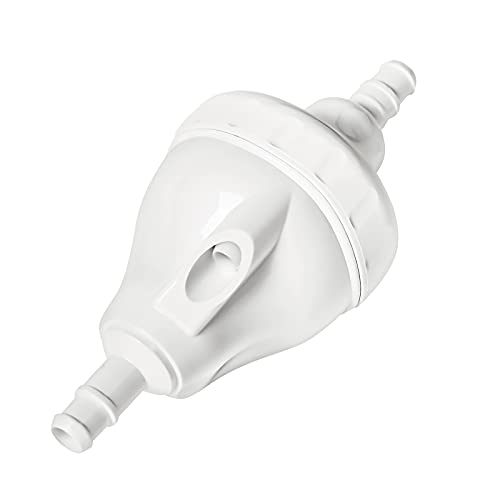
The MAKHOON Upgraded G52 Backup Valve Replacement is listed for models including the Polaris 180, 280, 380, 480 Pro, and 3900 Sport, among others. Its description says the shell uses a crack-resistant polymer blend and includes a G53 gear mechanism made from POM. The function described is to help a cleaner move away from an obstacle by redirecting water, which is relevant if an older backup valve no longer cycles as expected.
Don’t diagnose every cleaner that remains against a drain or step as a failed backup valve. A tangled hose, blocked movement, worn component, or unsuitable pool layout could also contribute, and the listing alone cannot identify the cause. Inspect the cleaner according to its manual and check that the replacement is intended for the exact model. Disconnect the relevant equipment and follow manufacturer safety guidance before servicing any pool cleaner parts.
The ATIE 280 380 480 180 Pool Cleaner Sweep Hose is listed as a complete replacement hose kit with tail scrubber and clamp for the 180, 280, 380, and 480. The description explicitly excludes the Polaris 360, so owners of that model should not assume it will fit. Its stated length is 3 1/2 inches, which appears to describe the supplied hose item; verify the listing and product details before ordering if that measurement seems inconsistent with the part you need.
The MUSCCCM for Polaris Pool Cleaner Parts listing is for a 12-pack of tail scrubbers described as polyurethane foam. It lists compatibility with Polaris 180, 280, 360, 380, 480, and 3900 Sport cleaners, as well as a tail washer reference. A pack of replacement scrubbers can be useful for routine part replacement, but check that the existing tail assembly matches the listed models and follow the cleaner’s instructions for installation.
Debris bags and drive tires are model-specific
The ATIE K13 Pool Cleaner All Purpose Bag with Zipper is listed as a two-pack replacement for Polaris 280 and 480 cleaners. Its description identifies the zipper opening, pocket, snap-in clip, and K13 designation, so compare those details against the old bag rather than ordering based only on appearance. A bag that doesn’t seat securely can interfere with normal debris collection or detach during operation.
The Pool Spa Part Nylon Mesh Pool Cleaner All Purpose is another replacement bag listing for Polaris 280 and 480 models, identified as fitting K13 and K16 bags. It highlights a wider zipper opening and nylon mesh construction. Since the two bag options overlap in intended models, choose by the specific bag reference, closure, and fit details your cleaner requires, not by a general assumption that all Polaris bags interchange.
The ATIE Pool Cleaner All Purpose Tire C10 Replacement is a three-pack listed for Polaris 180, 280, 360, and 380 cleaners. The product description identifies C10 or C-10 as the replacement part reference. Compare the worn tire and part number before ordering, because a tire meant for one cleaner family should not be presumed compatible with another.
Replacement components can be a sensible route when the cleaner body and drive system remain serviceable. They are less useful if the underlying problem is a failed motor, damaged plumbing, or a cleaner that is unsuitable for the pool. Check whether the needed wear items are available and whether the repair cost and effort make sense relative to replacing the complete unit. Use the proper manual and disconnect power sources before servicing equipment; don’t handle electrical components around water while energized.
How to Make the Final Choice
Begin with the pool’s existing equipment. If there is no booster pump, the Vac-Sweep 280 may require more setup than expected; if the pool’s pump and suction arrangement are not confirmed, verify compatibility before selecting the MAXX. A robotic model may avoid those particular hydraulic dependencies, but it still needs a safe, suitable power-supply location and enough cable reach for the pool. Follow the manufacturer’s guidance for electrical protection and power-supply placement.
Next, decide what “clean” means for your pool. Owners focused on floors and walls with heavy leaves may prioritize debris capacity and convenient bag emptying, while those concerned about waterline buildup may value the listed waterline modes or coverage. A pool with complex steps, raised drains, ladders, or narrow ledges can challenge automated movement, and none of the supplied descriptions guarantees it will navigate every obstruction. Plan to inspect coverage during early operating cycles and adjust expectations for areas that may still need manual attention.
Pool finish also matters, but avoid treating a broad compatibility statement as a promise for every surface condition. The Vac-Sweep 280 listing names several in-ground finishes, and the MAXX is described for in-ground surfaces; confirm the exact model guidance for a delicate vinyl liner, slick fiberglass, or specialty tile. Don’t infer that a brush or track is safe for a particular surface unless the manufacturer specifically says so for that cleaner. Balanced pool water and proper equipment care also matter for the longevity of plastic and rubber components.
For owners deciding between the two robotic models, compare the specific conveniences rather than assuming that their shared brand means identical features. The VRXIQ+ lists seven cycles, SMART Cycle cleaning, a transparent illuminated canister, and an extra-long 70-foot swivel cable. The PCX 868 iQ lists remote controls, double helix brushes, a transparent canister, and a lift feature that expels water at the waterline. Review current model documentation for warranty, replacement-part availability, pool-size limits, and any surface restrictions because those details aren’t established by the supplied descriptions.
Before purchase, check the exact model name, installation needs, and what comes in the package. The Vac-Sweep 280 listing includes its feed hose and filter bag, while the replacement-part listings specify particular models and quantities. Product names can be truncated in store displays, so use the model identifiers and full compatibility information rather than relying on a shortened title. Keep receipts and product documentation, and contact the seller or manufacturer if your cleaner’s revision or part number is uncertain.
During ownership, empty debris containers before they become packed, rinse reusable components as directed, and inspect hoses, cables, tires, brushes, or bags for visible wear. Remove equipment for chemical shock treatment unless the manufacturer expressly permits otherwise, and maintain pool chemistry within the pool and cleaner manufacturers’ guidance. Store cleaners and electrical components as directed during the off-season, especially where freezing conditions are possible. These steps won’t correct a mismatched cleaner, but they help separate ordinary upkeep from a compatibility or equipment fault.
For an app-connected robotic cleaner, the VRXIQ+ stands out for its listed cycle variety and smart scheduling features, while the PCX 868 iQ adds a described water-expelling lift system and remote control functions. The pressure-side 280 makes sense only when its booster-pump requirement fits the pool setup, and the MAXX depends on suitable suction plumbing and circulation. If the existing Polaris cleaner is otherwise sound, a model-matched bag, hose, tire, scrubber, or backup valve may address a narrower maintenance need. Choose by cleaner type, pool equipment, debris, and verified compatibility, not by the Polaris name alone.




Write Your Review
No reviews yet. Be the first to share your experience!