
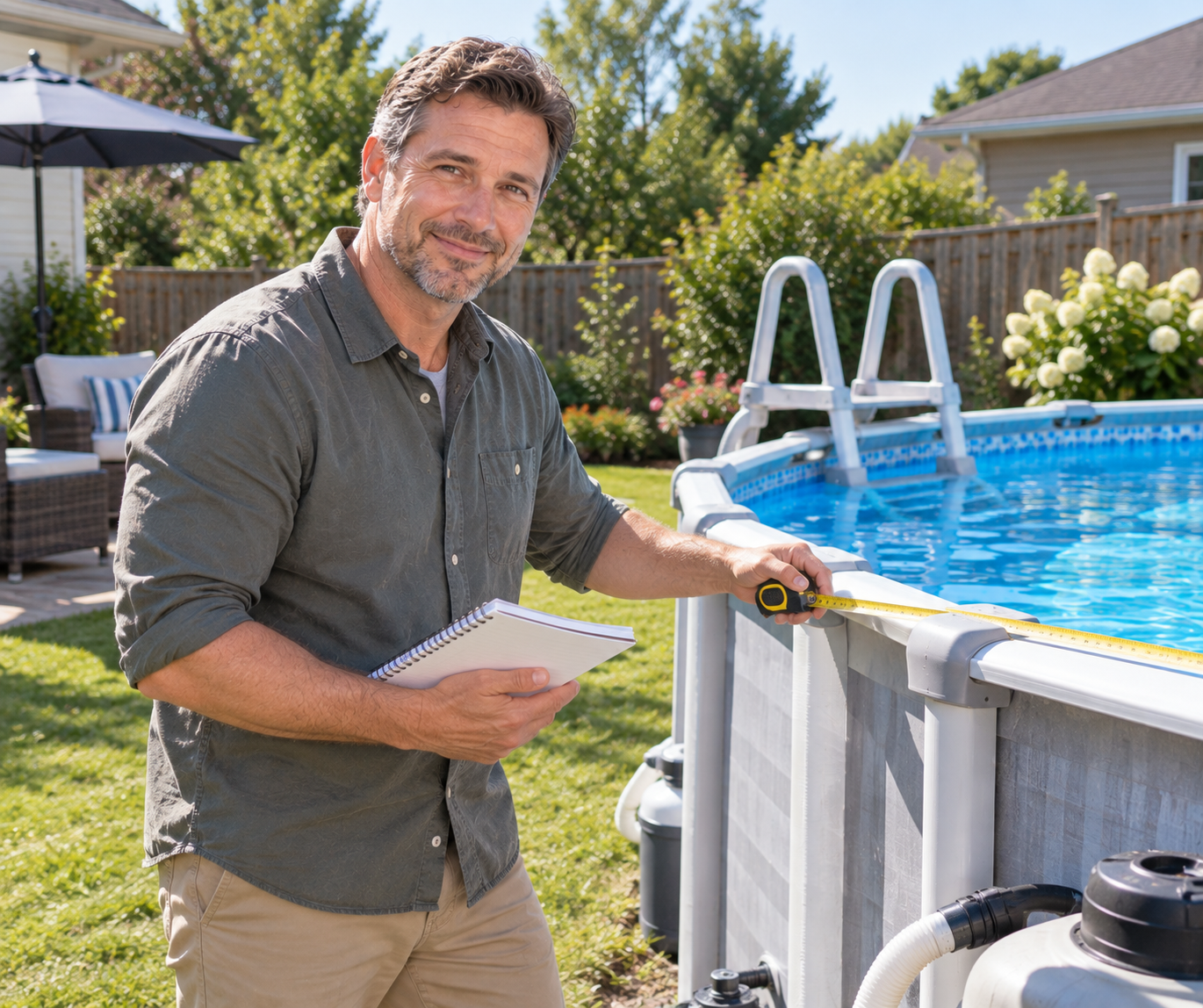

Leaves, sand, and fine dust can turn routine pool care into a cycle of skimming, brushing, and vacuuming. A robotic cleaner may take on much of that floor and wall work, but the right choice depends on your pool’s size, shape, surfaces, and the debris you need to collect. The question what is the best pool cleaner robot has no single answer for every pool: the useful comparison is between each model’s stated coverage, filtration, power setup, and handling needs.
The products listed below include cordless robots, a corded above-ground model, and a solar surface skimmer. Those designs do different jobs, so a surface skimmer should not be mistaken for a pool-floor vacuum. Product descriptions also vary in how clearly they identify pool compatibility and limitations. Check the current manufacturer information for your pool and surface before buying, especially if your pool has a delicate liner, unusual steps, or a raised main drain.




What the best robotic cleaner means for your pool
For routine pool cleaning, the best robot is the one whose stated cleaning area, coverage, and debris handling match your actual pool. Many cordless options in this collection are described as cleaning floors, walls, and waterlines, while the Dolphin Nautilus AG is listed for above-ground pools up to 33 feet and explicitly does not clean walls or the waterline. The BRINBO solar skimmer is a different category: it collects floating debris at the surface rather than scrubbing the pool interior. These distinctions matter more than a headline claim of smart navigation or strong suction.
Start with coverage, not feature count
A floor-only robot may suit a pool where debris mostly settles on the bottom, but it will not replace brushing the walls or addressing a visible waterline band. If the walls and waterline need attention, look for those areas to be named explicitly in the product description. The Letexpool C1, BRINBO C1, WYBOT C1, BOTLIFE cordless model, AIPER Scuba V3, and WYBOT C2 list some form of floor, wall, or waterline coverage, though their modes and operating details differ.
Coverage claims do not mean a robot can clean every feature in a pool equally well. Steps, narrow corners, ladders, shallow shelves, and raised drains can interrupt a route or leave areas for manual attention. The product information supplied here does not establish that any model reliably handles every such obstacle. Consider your pool’s layout and check the maker’s compatibility guidance rather than assuming a cleaner will reach every ledge or tight corner.
Match pool dimensions and installation type
Published size limits give a useful first screen, but they are not a guarantee of complete cleaning in every pool shape. The Dolphin Nautilus AG is listed for above-ground pools up to 33 feet in length. Lodoba’s cordless model is described for pools up to 2,150 square feet, and the WYBOT C1 is listed for inground pools up to 1,618 square feet. The BOTLIFE model is described for pools up to 1,830 square feet, while the WYBOT B1 is listed for pools up to 1,150 square feet.
Several product names and descriptions refer to inground pools, above-ground pools, or both, but those labels should not replace checking the model’s full instructions. Pool depth, contours, transition slopes, and finish can affect whether a robot moves as intended. The Nautilus AG is the clearest above-ground-specific option in the supplied descriptions, while the cordless options generally emphasize broader coverage or inground use. Confirm that the model’s stated pool type matches yours before placing an order.
How these robot designs differ in everyday use
Cordless freedom trades cable handling for charging
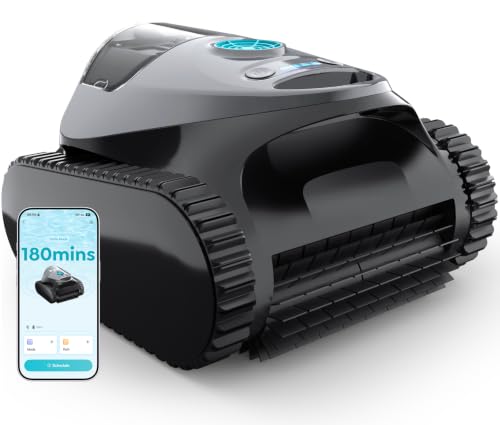
A cordless cleaner avoids a floating power cable, which removes one possible source of tangles around ladders and pool fittings. It also makes charging and cycle planning part of regular use. The Lodoba listing states up to 190 minutes of runtime and a three-hour recharge; the Letexpool C1 lists up to 180 minutes and a 2.5-hour charge. WYBOT C1 lists up to 160 minutes with a four-hour charge, while the WYBOT B1 and BOTLIFE descriptions list up to 120 minutes.
Those figures are manufacturer-listed specifications, not a promise that every pool will be cleaned in one cycle. Pool shape, debris, cleaning mode, and operating conditions can matter, and the provided descriptions do not give comparable runtime test conditions. A large or complicated pool may make a shorter listed runtime less convenient, even if the robot offers an appealing feature set. Think about whether you prefer managing a charge schedule or handling a corded unit’s cable and power supply.
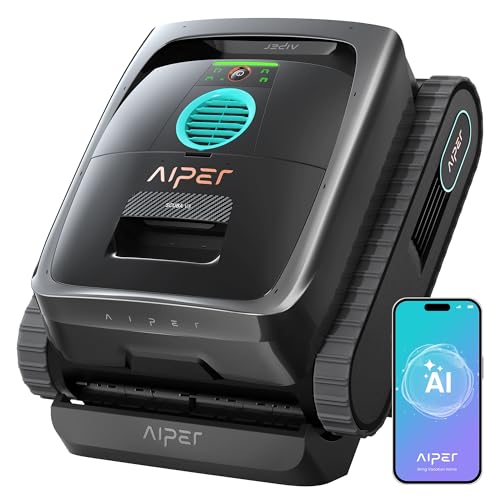
The AIPER Scuba V3 lists up to 240 minutes in Eco mode and up to 180 minutes in its other described cleaning modes. It also lists a wireless charging dock and says the robot returns to the waterline after cleaning for retrieval. That retrieval feature may be useful for someone who does not want to reach down into the water, but follow the manufacturer’s instructions for removal and charging. Do not enter the pool to retrieve a powered cleaner, and do not lift a unit by a power cable.
Navigation claims deserve a practical reading
Navigation features can help a robot follow a planned route, but they cannot establish that every pool obstacle will be negotiated without interruption. Lodoba lists sonar navigation and floor, wall, or full-coverage modes. WYBOT C1 describes gyroscope-based N- and S-path navigation, while WYBOT C2 lists a gyroscope and optimized routes. BRINBO C1 describes AI navigation and seven modes, and the Letexpool C1 lists app control and seven cleaning modes.
App controls may make it easier to select a mode or schedule a cycle, but they do not remove the need to check pool coverage. The Letexpool description notes that settings should be made before the robot enters the water. BRINBO similarly says its settings should be preset on shore. These are useful operating details to confirm in the full instructions, particularly if you expect to change a route or mode during a cycle.
Raised main drains, ladders, and abrupt floor transitions can be trouble spots for robotic cleaners generally, but the supplied product information does not establish that any listed model is immune to getting stuck. A robot that repeatedly stops in one place may need its route, pool layout, or manufacturer guidance reviewed. Avoid assuming that a navigation label means the unit will clear every obstruction. For a complicated pool, check the return and retrieval instructions before relying on unattended cycles.
Filtration and debris type shape the result
Look for details about the filter system
Leaves and larger debris place different demands on a filter than fine sand or dust. Several listings describe dual-layer or dual-stage filtration, including Letexpool C1, BRINBO C1, BOTLIFE, and WYBOT C2. The WYBOT C2 description specifically lists a 10-micron fine filter alongside a 180-micron primary filter. Those details provide more useful context than a broad phrase such as deep filtration, but they do not establish that the robot will remove every fine particle in every pool.
The BOTLIFE description lists a 4-liter filter basket with 150-micron mesh. BRINBO C1 says its filters are washable and reusable, while the Nautilus AG has a top-loading filter basket designed for access and rinsing. A top-access basket can be convenient if you want to remove collected debris without turning the robot over. Check how the basket or filter is accessed, cleaned, and replaced before buying, because routine emptying is part of ownership.
Fine silt, pollen, and dead algae can be harder to collect than leaves, and filter descriptions do not tell the whole story about particle capture in real pool conditions. If fine debris is your main problem, compare the stated filter details and ask the manufacturer whether the unit is suitable for that material. Do not infer a micron rating for a product whose description does not provide one. A pool robot also does not replace appropriate water testing, circulation, or other pool maintenance.
Keep a surface skimmer in its own category
The BRINBO SK01 is a solar-powered surface skimmer, not a submerged robotic vacuum. Its description lists collection of floating leaves, hair, dust, and petals, plus app controls and a large filter basket. That can help with debris moving across the surface, but it should not be selected as a substitute for a floor-cleaning robot when settled dirt or wall deposits are the issue. Some pool owners may prefer a surface skimmer alongside a separate cleaner because the devices address different areas.
The SK01 lists solar charging and an adapter for charging on cloudy days, as well as obstacle sensors and two cleaning speeds. These features address surface operation and charging, not underwater wall climbing or waterline scrubbing. Compare the task first, then compare features within the appropriate category. This simple distinction prevents buying a product that is well equipped for a different cleaning job.
Surface, handling, and safety checks before purchase
Do not assume every brush suits every finish
Pool finishes vary, and the supplied listings do not give a complete surface compatibility chart for every model. Lodoba says its robot navigates tile, vinyl, and concrete, but that statement should not be generalized to every cleaner in this guide. If your pool has a vinyl liner, fiberglass finish, or delicate waterline tile, confirm suitability with the product maker before use. A feature described as wall climbing does not by itself verify compatibility with a particular surface.
Brush type and traction also matter, but details are uneven across these listings. The Nautilus AG describes an active scrubber brush and says it is gentle on surfaces, while other descriptions mention rolling brushes or tracks without fully specifying surface guidance. Do not assume that a brush or track is harmless on every liner or finish. Read the current instructions for approved surfaces and discontinue use if you notice unusual scuffing or damage.
Plan for lifting, storage, and upkeep
A pool cleaner can hold water and debris when removed, so retrieval deserves practical consideration. WYBOT B1 is listed at 14.3 pounds, and AIPER Scuba V3 at 8.2 kilograms, but the descriptions do not specify their water-filled lifting weight. BOTLIFE lists self-parking near the pool edge and an included hook for retrieval. These features may make handling easier, but use a safe lifting posture and follow the maker’s guidance rather than pulling a unit by its cable or app controls.
Filter baskets and brushes need inspection as debris accumulates. Empty and rinse filters as directed, and check for tangled hair or leaves around moving parts only after following the manufacturer’s shutdown and service instructions. Disconnect the appropriate power source before servicing equipment, and never open sealed electrical components unless the instructions authorize it. Keep charging equipment and power supplies used near a pool in the locations and conditions specified by the manufacturer, with suitable GFCI protection for electrical equipment.
Pool chemistry and seasonal storage also affect equipment care. Follow the cleaner maker’s instructions about removing the robot during shock treatment or other chemical adjustments, and do not expose equipment to conditions the instructions prohibit. Store cordless units and chargers as directed, especially when the pool is closed or temperatures may fall. These precautions cannot guarantee a longer service life, but they help avoid using equipment outside its stated conditions.
Which option may fit your cleaning priorities?
For an above-ground pool within the listed length limit, the Dolphin Nautilus AG is a straightforward corded option with a top-load basket and a stated 1.5-hour cleaning cycle. Its key limitation is explicit: it does not clean walls or the waterline. A buyer who wants cordless floor, wall, and waterline coverage may instead compare the models that list those areas, while checking pool size, runtime, and filtration details individually.
For a longer listed cordless runtime, Lodoba describes up to 190 minutes and coverage up to 2,150 square feet, with selectable floor, wall, and full-coverage modes. For app-led controls and multiple settings, Letexpool C1 and BRINBO C1 list seven modes; BRINBO also lists a two-year warranty in its product description. Warranty terms and coverage can change, so confirm them with the seller and manufacturer. Do not treat a long feature list as proof of better cleaning in your particular pool.
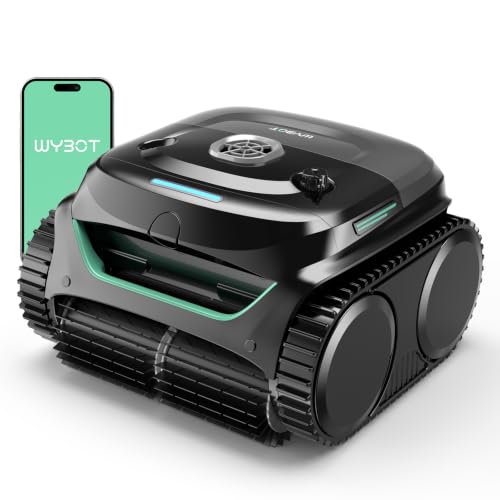
WYBOT C1 emphasizes inground coverage, gyroscope navigation, and up to 160 minutes of operation, while WYBOT C2 lists up to 180 minutes and a two-part filter specification. The WYBOT B1 is lighter by its listed dry weight and is described for above-ground and small inground pools, with up to 120 minutes of runtime. BOTLIFE lists a 120-minute runtime, a 4-liter basket, and self-parking. These are different tradeoffs rather than a universal ranking, so weigh the details that address your pool’s actual workload.
AIPER Scuba V3 sits at the feature-rich end of the supplied descriptions, with an AI camera, multiple cleaning modes, fine filtration layers, waterline retrieval, and wireless charging. The listed specifications may appeal to someone prioritizing app features and easier retrieval, but the available details do not establish that it is the right value for every pool. Consider whether those features solve a real problem in your setup, and confirm the manufacturer’s pool and surface guidance before purchase.
The practical answer to what is the best pool cleaner robot is the model that covers the areas you need, fits your pool type and surface, and has filtration and power arrangements you can maintain. Choose a surface skimmer only for floating debris, and account for charging or cord handling with submerged robots. Before buying, verify pool dimensions, cleaning coverage, filter care, retrieval method, and the maker’s safety instructions. Those checks are more useful than assuming one robot can handle every pool and every kind of debris.



Write Your Review
No reviews yet. Be the first to share your experience!