

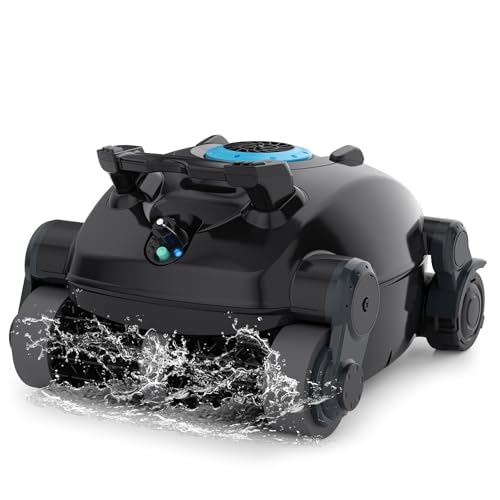
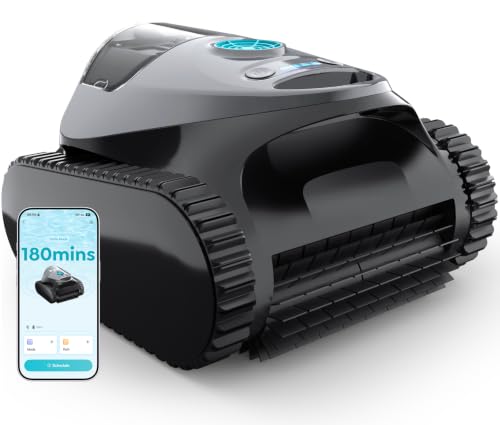
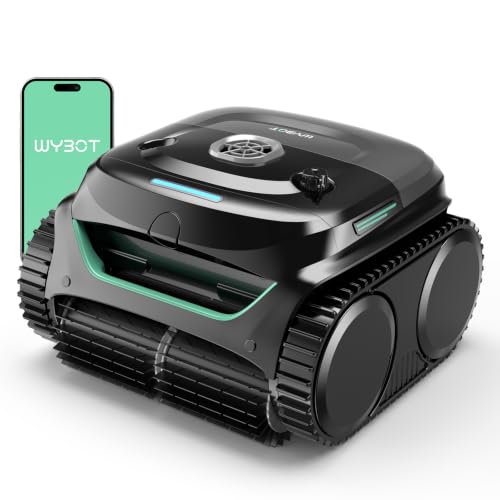
Sand and fine grit love to settle on shallow entryway stairs, leaving pool owners stuck with constant manual brushing. Most standard vacuums simply tumble off narrow treads or stall on steep vertical risers, turning routine pool care into a frustrating chore. Investing in the best robotic pool cleaner for steps gives you a dedicated machine equipped with dual active scrubbing brushes, responsive gyroscope tracking, and high-traction continuous tracks capable of scaling transitions without getting stranded. For homeowners who balance multiple backyard aquatic systems, learning what is the best jacuzzi hot tub alongside automated pool equipment helps streamline outdoor chores and saves valuable weekend downtime.
Modern cordless cleaners feature upgraded triple-motor drivetrains and smart sonar navigation that map out stair corners and shallow sun shelves effortlessly. Based on product specifications and user feedback regarding climbing angles up to 45 degrees, selecting the right machine eliminates unsightly waterline scum lines and stubborn algae in hard-to-reach pockets. The right unit captures everything from decaying oak leaves to microscopic silt using top-loading filter baskets, so your swimming pool remains swim-ready all season long without taxing your main pump basket.






Frequently Asked Questions About Pool Step Cleaning
Can a robotic pool cleaner clean steps and tanning ledges effectively?
Yes, units with multi-axis gyroscopes, rubber tracks, and triple-motor power can climb onto wide steps and shallow ledges. Cleaners generally require at least nine to ten inches of water depth and sufficient step width so their drive tracks maintain continuous surface grip. If a step tread is too narrow for the chassis, the robot will safely reverse back down to the pool floor to continue its cleaning path.
Why do some robotic vacuums get stuck on pool steps or main drains?
Low bottom clearance, slick wheel drives, and high-profile drain covers cause most cleaner hang-ups. Models built with high-grip tracks and intelligent obstacle navigation sense elevation shifts and reverse their drive motors automatically. Upgrading to a cleaner with active obstacle avoidance prevents drive tracks from spinning fruitlessly against steep step edges.
Are cordless robotic cleaners safe for vinyl liners and fiberglass pool stairs?
Yes, modern cordless cleaners utilize soft PVC roller brushes and non-marring rubber tracks engineered to protect delicate vinyl liners and smooth fiberglass gel coats. They scrub away slick biofilm without scratching or scuffing delicate materials. Pool owners who operate backyard swim spas or a 2 3 person hot tub appreciate the same gentle, non-abrasive care for their acrylic and composite surfaces.
How does a top-loading filter basket handle fine sand and stair silt?
Dual-layer filtration cartridges with ultra-fine mesh capture silt down to fine micron levels before it settles back into stair crevices. The top-access design allows you to lift out the basket and rinse it clean with a standard garden hose in seconds. This self-contained filtration prevents dirt from recycling into your swimming pool water and protects your skimmer system from clogs.
What battery runtime is needed for an automated cleaner to finish pool steps and walls?
A runtime between 120 and 180 minutes ensures the cleaner completes both deep-end floor passes and vertical step climbing on a single charge. Lithium-ion batteries recharge in roughly two to three hours, providing ample power to tackle floor, wall, and waterline scrubbing cycles. Selecting floor-only modes can also stretch battery duration during light maintenance days in 2026.
Will a robotic cleaner tip over when climbing sharp pool steps?
Most advanced cleaners will simply roll backward down the riser if a step angle exceeds 40 to 45 degrees. Internal tilt sensors cut drive track propulsion when the cleaner detects an excessive incline, guiding the chassis smoothly back to the floor. This safety feature protects internal motor seals and ensures the robot resumes systematic cleaning paths without manual intervention.



Write Your Review
No reviews yet. Be the first to share your experience!