
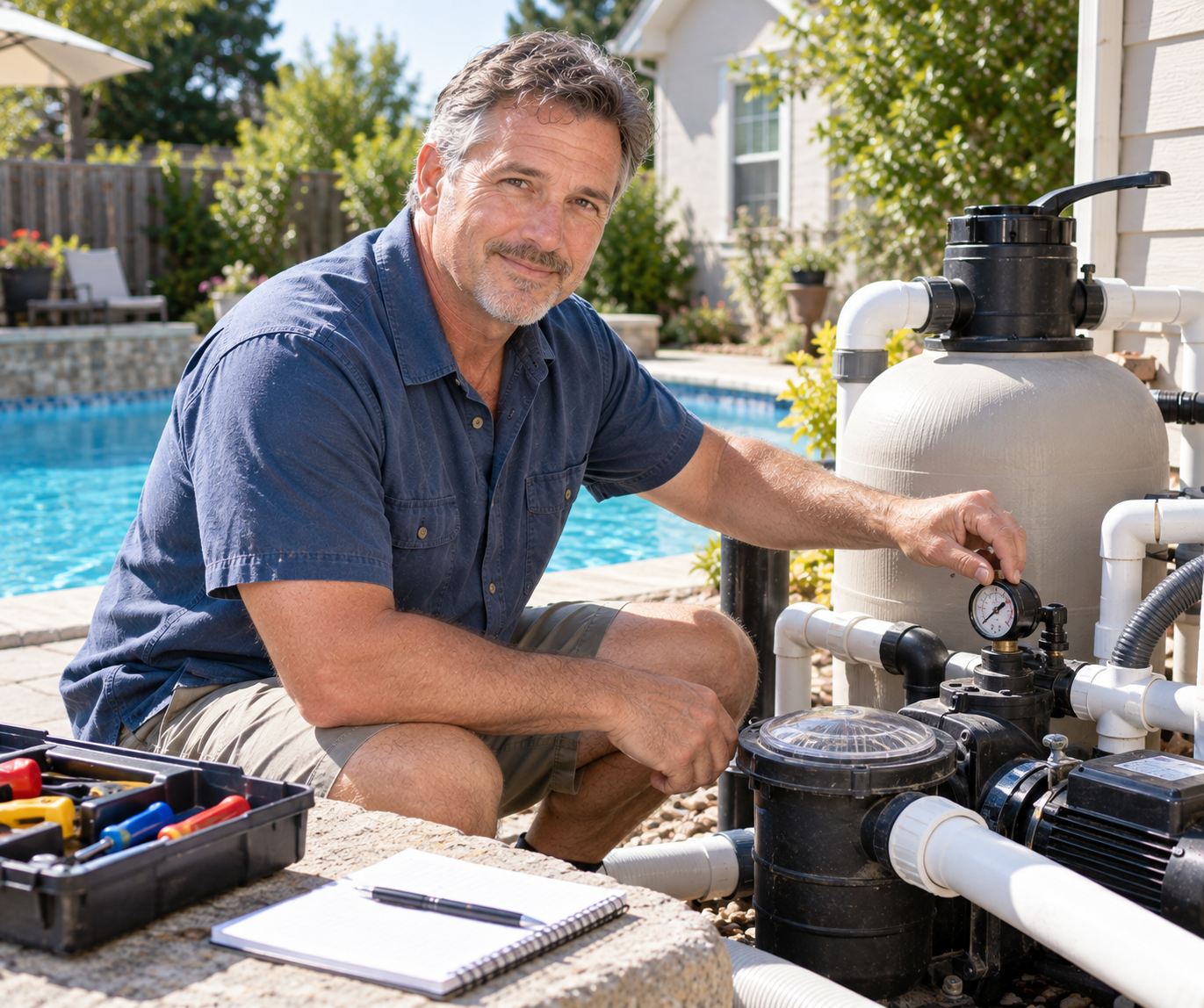

Rough plaster finishes and porous concrete surfaces love to grab onto windblown dirt, creating stubborn algae spots along the deep end slopes. Pushing a heavy manual brush across those abrasive walls under the blazing sun gets old fast, and standard vacuum heads often scuff or drag unevenly. Equipping your backyard with the best automatic pool cleaner for gunite pool helps maintain sparkling water without draining your weekend hours. Based on manufacturer specifications and customer feedback, units engineered with durable rubber tracks, heavy-duty suction seals, or dedicated scrubbing rollers handle abrasive masonry basins far better than basic wheeled vacuums.
Abrasive gunite surfaces wear down moving components rapidly if equipment lacks rugged construction. Suction-side cleaners with simple diaphragms or turbine assemblies pull grit directly into filtration baskets, while advanced robotic cleaners capture micro-particles inside independent canisters to protect pump impellers. Keeping your overall backyard relaxation effortless, much like maintaining a winter hot tub setup, relies on matching cleaner mechanics to your pool layout. Reviewing mechanical drive gears, flow rate demands, and wall-climbing traction ensures your pool equipment runs smoothly all season long.


Common Questions About Gunite Pool Cleaners
Can suction-side cleaners climb steep gunite walls effectively?
Yes, suction-side units can climb steep masonry walls if your pool pump delivers sufficient water flow. Most suction cleaners require at least a 3/4 horsepower pump or a minimum flow rate around 1,600 to 1,700 gallons per hour to generate the required suction seal against rough plaster. Adjusting regulator valves and hose counterweights helps the vacuum climb without losing surface contact.
Do robotic pool cleaners wear out faster on rough plaster or gunite surfaces?
No, robotic pool cleaners do not wear out prematurely if they feature heavy-duty rubber tracks and durable rolling brushes. While abrasive gunite surfaces produce more friction than smooth vinyl or fiberglass, tracked units spread traction evenly to prevent localized tread wear. Selecting the best automatic pool cleaner for gunite pool in 2026 with robust drive tracks ensures reliable floor and wall climbing across textured plaster.
What pump flow rate is required to run a suction cleaner on gunite?
Most suction-side cleaners require between 1,600 and 1,700 gallons per hour or a pool pump rated at 3/4 to 1 horsepower. Inadequate flow prevents the turbine or pulsating diaphragm from driving the cleaner up walls or across main drain covers. Verifying your pump output and clearing skimmer baskets maintains strong, consistent vacuum power.
How do pressure-side cleaners compare to robotic vacuums for heavy leaf fall?
Pressure-side cleaners excel at collecting large leaves because they push debris directly into an onboard filter bag rather than choking your skimmer basket. Models equipped with wide 2.25-inch inlets collect acorns and heavy foliage without losing suction. However, units like pressure sweepers often require a dedicated booster pump, whereas self-contained robotic units run on low-voltage electricity independently.
Can you leave an automatic cleaner in the pool full time?
No, keeping automatic cleaners submerged continuously can degrade rubber seals, plastic skirts, and hoses under high sanitizer levels. Removing your cleaner during chemical shock treatments and storing it out of direct sunlight extends its operational lifespan, a principle highlighted in our inflatable hot tub maintenance advice. Storing the unit safely when not running protects the motor and tracks from premature wear.


Write Your Review
No reviews yet. Be the first to share your experience!