

Prospective spa buyers and new homeowners often ask whether does spa mean hot tub or if the two terms represent completely different hydrotherapy systems. In casual backyard conversations, people frequently use both words interchangeably to describe a heated vessel equipped with massaging water jets. However, understanding the exact terminology clarifies critical differences between portable self-contained vessels, inground pool-side installations, and commercial hydrotherapy facilities. Equipping an outdoor relaxation space also requires thoughtful planning around thermal efficiency, which is why many owners invest in protective outdoor patio spa covers to preserve water temperature and keep debris out.
Navigating the equipment market becomes far simpler once you recognize how modern hot tub engineering separates standalone vessels from general spa facilities. Standalone portable hot tubs contain their own dedicated circulation pumps, electric heating elements, filtration cartridges, and programmable topside control packs within a single insulated cabinet. Maintaining these systems requires balanced water chemistry, structural load preparation, and dedicated electrical hookups to ensure safe operation. Exploring the true relationship between spas and hot tubs helps buyers choose the right setup while avoiding costly installation mistakes and water balance headaches.



Pros
- Fast-dissolving sodium dichlor formula leaves minimal residue in heated spa water
- Specifically formulated for spa water temperatures and chlorine sanitizing systems
- Five-pound container provides a practical supply for ongoing routine water care
- EPA-approved formulation effectively targets algae growth and organic bather waste
Cons
- Designed strictly for chlorine-based setups and not compatible with non-chlorine or biguanide systems
- Continuous use gradually builds cyanuric acid in hot tub water, requiring standard periodic drain-and-refill cycles
- Requires careful dosing and routine water testing to avoid over-chlorination or chemical vapor buildup
Leisure Time Spa 56 Chlorinating Granules provide a dedicated sanitizing solution designed specifically for residential hot tubs and spas operating on chlorine water-care systems. Unlike standard swimming pool chemicals that may dissolve too slowly or alter chemistry unpredictably in small bodies of heated water, this formula is tailored for the high temperatures and rapid agitation of hot tubs. It suits first-time spa owners, vacation rental hosts, and established hot tub users seeking an EPA-approved sanitizer that maintains clean, clear water without complicated dosing steps.
Daily hot tub maintenance requires dependable control over organic waste introduced by bathers, including perspiration, body oils, and environmental residues. Spa 56 addresses these contaminants using fast-dissolving granules that disperse quickly across the water when circulation jets run. Rapid solubility is a significant advantage in acrylic spas because it minimizes the risk of undissolved chemical particles settling on the bottom shell or bleaching headrests and plastic fittings, helping to protect internal spa surfaces while re-establishing necessary sanitizer residual levels.
The active chemical agent in this formula is Sodium Dichloro-s-Triazinetrione Dihydrate, widely known as sodium dichlor. This stabilized chlorine compound resists degradation from heat and sunlight while providing active sanitizing power to clear cloudy water and inhibit algae growth. Packaged in a sturdy 5-pound bottle with exterior dimensions of 4.75 by 4.75 by 11.5 inches, this size offers an economical supply that minimizes frequent reordering for owners who use their spa regularly throughout the year.
Proper application habits are essential not only for water safety but also for the longevity of your hot tub cover and accessories. Whenever introducing chlorinating granules to the spa, the hot tub cover should remain fully off or folded back with circulation jets active for at least fifteen to twenty minutes. Allowing chemical vapors to off-gas freely prevents corrosive chloramine fumes from becoming trapped underneath the cover, which helps protect the underside vinyl, vapor barrier seals, and foam core from premature degradation.
While sodium dichlor provides reliable sanitizing performance, realistic chemical considerations come with its routine use. Dichlor naturally introduces cyanuric acid (CYA) as a stabilizing agent, meaning CYA levels will gradually rise over months of repeated dosing. Once stabilizer concentrations become elevated, chlorine efficiency drops, making periodic water drain-and-refill intervals necessary every three to four months. In addition, this product must never be mixed directly with alternative sanitizers such as bromine or biguanide systems.
Leisure Time Spa 56 is a reliable, practical choice for any hot tub owner maintaining a chlorine-sanitized spa environment. Before adding this product to your maintenance regimen, verify that your hot tub relies on a chlorine sanitizing routine, and keep a dependable test strip kit on hand to monitor free available chlorine, pH, and total alkalinity levels before dosing.
Consistent water sanitation with Leisure Time Spa 56 plays a key role in protecting the structural integrity of your hot tub accessories and cover. Unbalanced water or neglected sanitizing schedules can lead to organic buildup, scum lines, and mildew along cover skirts and headrests, while excessive chemical buildup can accelerate wear on acrylic surfaces and filtration media.
To ensure optimal water quality while safeguarding your spa components, always test water balance before adding granules and allow the tub to circulate with the cover open during initial dosing. Storing the 5-pound container in a cool, dry area away from direct sunlight will preserve granular potency and maintain reliable performance throughout the lifespan of the bottle.
Pros
- Effectively dislodges stubborn pipe residue and organic buildup prior to draining
- Improves jet performance and circulation efficiency throughout the entire plumbing system
- Helps eliminate recurring foam and chemical demand caused by dirty internal lines
- Compatible with both indoor and outdoor hot tubs as well as larger swim spas
Cons
- Requires a full water drain and shell wipe-down after the cleaning cycle is completed
- Not an in-use water treatment, so the hot tub cannot be used while the cleaner is circulating
- Very large swim spas or heavily neglected plumbing may require more than one 16-ounce bottle depending on dosing instructions
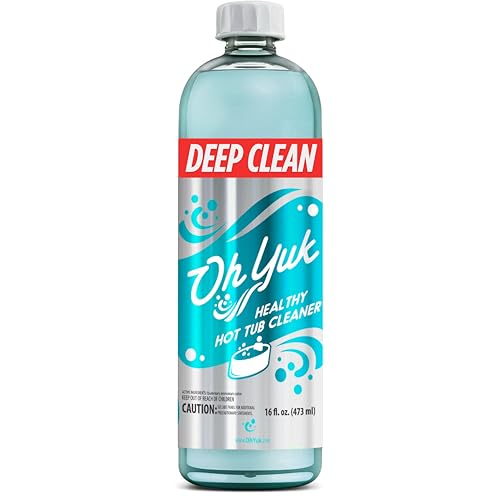
Oh Yuk Healthy Hot Tub Cleaner is a concentrated 16-fluid-ounce plumbing flush formulated to purge interior pipe walls, jet lines, and circulation fittings in indoor and outdoor hot tubs, portable spas, and swim spas. It is engineered specifically for homeowners, vacation rental operators, and regular spa owners preparing for a scheduled drain-and-refill cycle who want to eliminate the hidden organic waste that normal filtration and sanitizing tablets leave behind.
Hidden pipe buildup and accumulated body oils inside circulation lines are frequent culprits behind recurring cloudy water, surface foaming, and weakened jet pressure. By penetrating the interior plumbing pathways, this cleaner lifts and suspends embedded contaminants so they circulate out into the main footwell. This deep purge enables fresh water treatments to work much more effectively after refilling, since sanitizers no longer have to expend oxidation power fighting hidden line residue.
Circulation line maintenance directly benefits mechanical equipment by helping water move freely through pumps, heaters, and filter manifolds. When plumbing lines remain free of restrictive film and buildup, circulation pumps operate with less backpressure, allowing filter cartridges to trap suspended solids cleanly and consistently without unnecessary mechanical strain.
Using a plumbing cleaner requires timing your application around a complete water change, as the dislodged residue must be drained from the spa shell after running the jets. Hot tub owners should expect to wipe down the acrylic surface and water line once the tub empties, removing any residual oils before rinsing and refilling with fresh tap water.
While the 16-ounce bottle provides convenient handling for standard backyard spas, owners of oversized swim spas or tubs with years of neglected plumbing should check manufacturer dosage directions to ensure adequate volume. Furthermore, this product is designed purely as an evacuation flush before draining, meaning bathers must wait until the tub is emptied, rinsed, and refilled with fresh, balanced water before soaking.
For spa owners battling persistent water cloudiness or those establishing a dependable seasonal maintenance schedule, Oh Yuk Healthy Hot Tub Cleaner delivers a practical way to reset circulation lines. Verifying your spa water capacity and having clean towels or sponges ready to wipe the shell after draining ensures a smooth cleaning process and pristine water for your next soak.
Using Oh Yuk Healthy Hot Tub Cleaner is most effective when coordinated with your regular quarterly drain-and-refill schedule. Remove your filter cartridges prior to running the cleaner through the system to avoid trapping heavy dislodged gunk inside your primary filter pleats.
Turn on all jet pumps and allow the cleaner to circulate thoroughly through all plumbing lines according to the manufacturer label directions. Once the cleaning cycle finishes, drain the spa completely and wipe down the acrylic shell to remove any lifted oils and residue before refilling with fresh water.
Pros
- Compatible with all sanitizer types, removing the guesswork about whether it will work with your existing water-care system
- Fast-acting formula targets surface foam on contact, which can restore a pleasant soaking experience in minutes rather than hours
- Small, lightweight bottle is convenient to keep near the spa for immediate use whenever foam appears
- Straightforward application makes it accessible for first-time spa owners who may not yet be comfortable with complex chemical treatments
Cons
- Anti-foam products treat the symptom rather than the root cause - persistent foaming may indicate the need for a water change, filter cleaning, or adjusted bather habits
- A single 1-pint bottle may not last long for owners who use their hot tub frequently or have recurring foam issues from high bather loads
- The product listing does not specify exact dosing instructions per gallon of spa water, so buyers should check the bottle label carefully before applying
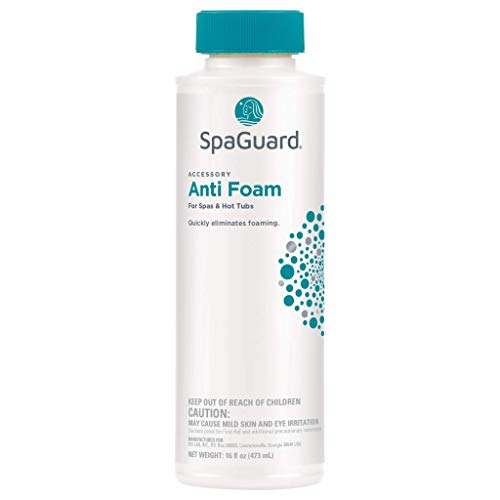
SpaGuard Spa Anti-Foam is a dedicated foam-elimination treatment sold in a 1-pint bottle and designed for use in all spas and hot tubs. It's best suited for hot tub owners who occasionally or regularly encounter surface foam - a common nuisance caused by residual detergents from swimwear, body lotions, cosmetics, deodorants, and other personal-care products that dissolve into warm, agitated water. Rather than requiring a full drain-and-refill, this product offers a fast, targeted way to clear foam and get back to enjoying a clean-looking soak.
The product is listed as compatible with all sanitizer types, which is a meaningful practical advantage. Whether a spa runs on chlorine, bromine, a saltwater chlorine generator, or a mineral-based system, SpaGuard Anti-Foam should integrate without conflicting with the existing water-care chemistry. This broad compatibility makes it a convenient shelf staple for households that may switch sanitizer methods over time, or for vacation-rental operators and property managers maintaining multiple spas with different setups.
From a day-to-day ownership standpoint, foam tends to appear most often after parties, after new bathers who haven't showered first, or when swimsuits have been washed with standard laundry detergent. A quick dose of anti-foam can restore the water's appearance without disrupting a planned soak. The compact bottle dimensions - roughly 7.6 x 2.3 x 2.3 inches and about 1 pound - mean it tucks easily into a spa-side storage bin, a maintenance caddy, or even a small outdoor cabinet. Older users or anyone who prefers minimal fuss with their water care will appreciate that there's no mixing or special equipment involved.
It's worth noting that anti-foam treatments address the visible symptom of foaming but don't resolve the underlying water-quality issue. If foam keeps returning quickly after treatment, that's typically a signal that total dissolved solids (TDS) are high, the water is overdue for a drain and refill, or the filter needs cleaning or replacement. Relying solely on anti-foam without investigating root causes can mask water-balance problems. Many experienced spa owners use anti-foam as a bridge solution - clearing foam for an evening soak while planning a water change for the weekend, for example.
For hot tub owners in any climate - whether dealing with heavy use in warm weather or maintaining a spa through cold-weather soaking season - foam can appear year-round. High-UV environments don't specifically cause foam, but increased sunscreen use among bathers certainly contributes. Families with kids who jump in without rinsing off, couples hosting friends, and rental operators with frequent guest turnover are all likely to encounter foam regularly enough to justify keeping a bottle on hand.
SpaGuard Spa Anti-Foam is a practical, low-cost maintenance product for any hot tub owner who wants a quick fix for surface foam. It's especially useful for first-time spa owners still learning water-care basics, busy families who want their spa ready on short notice, and property managers who need to keep rental spas looking inviting between guests. Before purchasing, consider how frequently foam appears in your spa - occasional users may find a single pint lasts a full season, while heavy-use spas may go through it faster. Pairing anti-foam with good bather habits like pre-soak rinsing and washing swimwear without detergent can reduce the need for repeated treatments.
SpaGuard Spa Anti-Foam is a reactive maintenance product rather than a preventive one. It works best as part of a broader water-care routine that includes regular filter cleaning or replacement, balanced sanitizer levels, and periodic water changes. When foam appears, a small dose applied directly to the water surface should begin dispersing foam quickly according to the product description.
To minimize how often anti-foam is needed, many spa owners encourage bathers to shower before entering the spa and avoid laundering swimwear with standard detergent - fabric softener and detergent residue are among the most common foam triggers. Keeping the spa filter clean also helps, since a clogged or degraded filter allows more contaminants to circulate. If foam persists even after treatment, testing total dissolved solids and considering a fresh water fill is a practical next step.
Store the bottle in a cool, dry location away from direct sunlight, consistent with standard chemical storage practices. The compact size makes it easy to keep alongside other water-care products without cluttering your storage area. Always check the product label for specific dosing guidance based on your spa's water volume before applying.

Pros
- Contains all four foundational water-balancing chemicals plus 50 test strips in one package
- Compatible with acrylic, inflatable, and wooden spas across chlorine, bromine, and salt systems
- Helps prevent cloudy water, foaming, mineral scale, and heater corrosion caused by imbalanced water
- Manufactured in the USA with reliable, fast-dissolving water-care formulas
Cons
- Does not include primary sanitizers such as chlorine or bromine granules, which must be purchased separately
- Source water with extreme hardness or alkalinity may deplete specific individual bottles faster than the rest of the kit
- Requires careful incremental dosing and testing rather than one-size-fits-all application
The Bio Ouster Hot Tub Water Balancing Kit is an all-in-one water adjustment bundle designed for acrylic, inflatable, and wooden hot tubs. Proper water balance is critical for preventing mineral scale, heater corrosion, and bather discomfort, making this starter collection well suited for new spa owners, seasonal refills, and vacation rental hosts who need foundational water-care essentials in a single convenient package.
Maintaining balanced water chemistry requires managing several interconnected parameters, which this kit addresses through dedicated pH Up, pH Down, Alkalinity Increaser, and Calcium Hardness Increaser formulas. By adjusting total alkalinity first to buffer pH fluctuations, and raising calcium levels to protect internal spa plumbing and heating elements, hot tub owners can maintain clear water and protect their equipment investments.
Routine monitoring is supported by the 50 included test strips, which allow quick checks of pH, total alkalinity, and calcium hardness levels before adding any adjustment chemicals. The formulas are designed to work alongside standard sanitizing systems, including chlorine, bromine, ozone, and salt water configurations, without interfering with filtration systems or causing unwanted cloudy precipitation when added properly.
Integrating this kit into a routine hot tub maintenance schedule requires testing freshly filled or top-off water before adding chemicals in gradual increments. Because chemical demand varies depending on municipal tap water characteristics, tub volume, and bather load, spa owners should add adjustments incrementally with the water jets running to ensure thorough circulation and avoid overshooting targets.
A practical limitation to keep in mind is that this bundle is strictly a water-balancing kit and does not contain primary sanitizers such as chlorine or bromine. Additionally, owners with particularly hard or soft source water may find that one specific chemical depletes faster than the others, eventually requiring individual bottle replacements down the road.
Hot tub owners seeking a straightforward, Made-in-USA foundational chemistry package will find practical everyday value in the Bio Ouster water balancing starter kit. Before purchasing, ensure you have your preferred sanitizer on hand and plan to test your tap water before initial dosing to establish an accurate chemical baseline for your spa volume.
Proper water balancing begins with testing total alkalinity, which serves as the chemical buffer that stabilizes pH levels in your spa water. Using the included test strips, hot tub owners should adjust total alkalinity into the recommended range before fine-tuning pH with either pH Up or pH Down to prevent rapid chemical bounce.
Calcium Hardness Increaser is included to ensure water does not become aggressive or corrosive toward spa heating elements, pump seals, and plumbing fixtures. This is particularly relevant for owners in soft-water areas or those filling spas using whole-house water-softener systems where low calcium levels can accelerate metallic component wear.
The formulas are chemically neutral relative to sanitizers, meaning they can be used safely in spas treated with standard chlorine granules, bromine tablets, saltwater chlorination systems, or ozone generators. Always allow chemicals to circulate for at least twenty to thirty minutes before re-testing water or adding secondary treatment products.
In everyday conversation, the short answer is yes: most homeowners and retailers use the words spa and hot tub interchangeably to describe a heated hydrotherapy vessel. Within professional design, commercial wellness, and hydraulic engineering sectors, however, spa functions as an expansive umbrella term representing health through water. A hot tub represents a specific, self-contained manufactured vessel designed explicitly for personal warm-water hydrotherapy. Recognizing these linguistic and technical boundaries helps homeowners make informed decisions regarding equipment selection, utility infrastructure, and water sanitization routines.
Etymology and Historical Evolution of Hydrotherapy Terms
The term spa originates from the Belgian town of Spa, renowned since Roman antiquity for its natural mineral healing springs. Historically, bathing in natural thermal waters was described by the Latin phrase salus per aquam, which translates directly to health through water. Over centuries, European and American medical institutions adopted the word to denote commercial health resorts, wellness clinics, and mineral water destination baths. Today, commercial hospitality facilities continue to use the term spa to describe full-body therapy, aesthetic services, and mineral soaking retreats.
The phrase hot tub emerged much later within mid-twentieth-century California, originating from repurposed redwood and cedar wine barrels used for communal backyard soaking. Early hot tub pioneers fitted these wooden tubs with basic residential water heaters and rudimentary agricultural circulation pumps. As hydrotherapy gained widespread consumer appeal, manufacturers transitioned from straight-sided wooden staves to molded fiberglass and acrylic contours. This technological evolution gave birth to the modern self-contained portable hot tub, which integrated automated filtration, therapeutic water jets, and digital topside controls.
Industry Classifications: Portable Spas Versus Inground Hot Tubs
Modern pool and spa manufacturers categorize residential hydrotherapy vessels into distinct mechanical configurations. A portable hot tub, often labeled a portable spa in marketing literature, is a standalone unit where the vessel, plumbing, pump pack, and electrical heating element reside within an exterior cabinet. Inground spas, conversely, are typically custom-built concrete or gunite vessels constructed adjacent to a backyard swimming pool. Inground installations usually share filtration systems and primary heaters with the main swimming pool rather than operating on independent, self-contained hydraulic packs.
Another growing sector within this category includes dedicated swim spas, which bridge the gap between stationary hydrotherapy hot tubs and residential exercise pools. Swim spas utilize high-volume counter-current propulsion jets or paddlewheels that allow bathers to swim continuously against an adjustable current. Unlike compact hot tubs designed purely for ergonomic seating and passive relaxation, swim spas feature extended open swim corridors alongside secondary therapy seats. Regardless of the marketing title attached to these units, each configuration demands specific foundation planning and tailored water treatment routines.
Structural Shell Materials and Cabinet Engineering
The structural integrity of a residential spa depends primarily on its shell composition and cabinet reinforcement. Premium hard-shell portable hot tubs utilize vacuum-formed continuous-cast acrylic sheets reinforced with multiple layers of chopped fiberglass and structural resin backing. This multi-layered composite shell delivers exceptional resistance against surface scratching, ultraviolet degradation, and chemical blistering over decades of continuous exposure. Lower-cost alternatives frequently utilize rotationally molded high-density polyethylene, which produces an unibody, matte-finished plastic shell that resists cracking while remaining highly portable.
Inflatable hot tubs occupy the entry-level tier of the market, utilizing puncture-resistant drop-stitch PVC layered walls with integrated internal air baffles. While inflatable models provide seasonal portability and lower upfront investment, their thermal retention properties and component durability remain substantially lower than hard-shell acrylic vessels. Cabinet engineering also dictates long-term thermal performance, particularly through insulation design. Premium manufacturers fill the internal cabinet cavity with dense closed-cell polyurethane foam, whereas budget units often rely on open-cavity insulation or reflective perimeter foil barriers.
Hydraulic Dynamics: Jet Performance and Pump Horsepower
Hydrotherapy effectiveness is determined by hydraulic efficiency and proper water displacement rather than superficial jet totals. Many first-time buyers mistakenly equate high jet counts with superior therapeutic massage, overlooking continuous pump capacity and plumbing manifold diameter. Commercial marketing materials often highlight peak brake horsepower, which represents the momentary maximum output a motor can produce under initial startup load. Discerning buyers should evaluate continuous-duty horsepower ratings, which accurately reflect the sustained hydraulic pressure delivered across all active hydrotherapy nozzles.
Advanced hot tub plumbing utilizes multi-port diverter valves and independent venturi air controls to modulate hydrotherapy intensity. Diverter valves allow bathers to channel water volume selectively between dedicated deep-tissue lounger seats and open barrier-free captain chairs. Independent air dials inject atmospheric oxygen into the pressurized water stream, generating a turbulent mixture that deepens muscle penetration without causing skin discomfort. Balanced hydraulic design ensures uniform flow across every nozzle, preventing pressure drops when secondary therapy seats are engaged.
Electrical Service Standards: 110V Plug-and-Play Versus Hardwired 230V Systems
Electrical infrastructure represents one of the most critical operational distinctions between entry-level and heavy-duty residential hot tubs. Plug-and-play spas operate on a standard 110V or 120V dedicated 15-amp to 20-amp household circuit equipped with an integrated inline GFCI cord. While convenient to install, these 110V systems feature modest 1 kW to 1.5 kW electric heaters that sequentially shut down whenever the two-speed jet pump shifts into high-speed therapy mode. Consequently, soaking in sub-freezing winter weather can cause water temperatures to drop steadily while the jets run.
Hardwired 230V or 240V systems require a dedicated 40-amp to 60-amp electrical supply routed through heavy-gauge copper wiring. These robust systems utilize 4 kW to 5.5 kW titanium heating elements capable of maintaining steady 104-degree Fahrenheit water temperatures even while multi-pump hydrotherapy arrays operate at full velocity. All permanent 230V installations must strictly satisfy National Electrical Code Article 680 safety requirements. This standard dictates that a dedicated emergency GFCI maintenance disconnect switch must be permanently mounted at least 5 feet away from the inside water edge.
Foundation Site Preparation and Structural Load Calculations
A completely filled hot tub represents an immense concentrated physical load that exceeds the bearing capacity of ordinary residential decks. Calculating total operating load requires adding the dry shell weight, the total water volume, and the estimated weight of maximum bathers. Because water weighs 8.34 pounds per gallon, a modest 350-gallon hot tub containing four average adults easily surpasses 4,000 pounds of operational mass. Dividing this total weight by the footprint square footage reveals the required pounds-per-square-foot rating, which commonly ranges between 90 and 125 PSF.
Placing a hot tub on an unreinforced wooden deck without verifying joist spans and support posts can result in severe structural framing sag or sudden structural failure. The gold standard for residential site preparation remains a level, four-inch-thick steel-reinforced poured concrete slab placed over compacted crushed gravel. Homeowners who prefer modular installations can utilize high-density structural interlocking polymer pads placed on a level pea-gravel subbase. Proper site leveling is essential, as even a minor slope exerts uneven hydraulic shear pressure across acrylic shell corners and plumbing joints.
Establishing Water Balance: Alkalinity, pH, and Calcium Hardness
Maintaining balanced water chemistry is vital to preserving internal components and ensuring bather comfort. Water testing begins by measuring total alkalinity, which functions as a chemical buffer against rapid fluctuations in pH. Total alkalinity should consistently register between 80 and 120 parts per million before any pH adjustments occur. Maintaining pH between 7.2 and 7.8 prevents skin irritation, burning eyes, and cloudy water while allowing chemical sanitizers to disinfect at maximum efficiency.
Calcium hardness represents the third pillar of water balance, with ideal concentrations falling between 150 and 250 parts per million. Water with deficient calcium becomes corrosive, pulling minerals directly out of internal copper or nickel heater element sheaths and degrading rubber pump seals. Conversely, excessively high calcium causes scale deposits to form on acrylic surfaces and inside heater tubes. Complete chemical balancing bundles such as the Bio Ouster Hot Tub Water Balancing Kit provide test strips alongside dedicated pH and alkalinity adjusters, allowing owners to stabilize fresh fill water systematically.
Primary Sanitization Systems and Shock Oxidation Protocols
Bacterial control in high-temperature hydrotherapy environments requires an EPA-registered primary biocide capable of maintaining a continuous residual. Sodium dichlor granules, represented by formulas like Leisure Time E5, Spa 56 Chlorinating Granules, dissolve rapidly without leaving behind unreacted sediment. Another trusted option is SpaGuard Spa Chlorinating Concentrate, which provides neutral-pH sanitization that will not destabilize baseline water balance during routine application. Spa owners must maintain a free available chlorine residual between 3 and 5 parts per million to eradicate harmful pathogens effectively.
Sanitizers consume themselves as they neutralize organic waste, transforming active chlorine into irritating combined chlorine compounds known as chloramines. Periodic shock oxidation is necessary to break these chemical bonds and restore sparkling water clarity. Multi-functional treatments like SpaGuard Enhanced Shock combine active oxidizing agents with clarifiers and buffers to destroy chloramines without destabilizing pH levels. While supplemental systems like ozone generators and UV-C chambers assist by destroying microbial contaminants in the plumbing loop, they cannot legally or biologically replace residual sanitizers.
Plumbing Maintenance, Biofilm Eradication, and Foam Prevention
Hot tub plumbing networks contain dozens of hidden internal flex-hoses, manifolds, and jet bodies where organic residues accumulate over months of use. Body lotions, cosmetic oils, and dead skin cells bond with residual minerals to construct stubborn biological slime known as biofilm. Standard chemical shocks cannot penetrate established biofilm layers inside circulation lines, leading to chronic sanitizer demand and dull water. Circulating a specialized plumbing flush like Oh Yuk Healthy Hot Tub Cleaner through the lines immediately before draining strips away hidden pipe buildup and restores jet velocity.
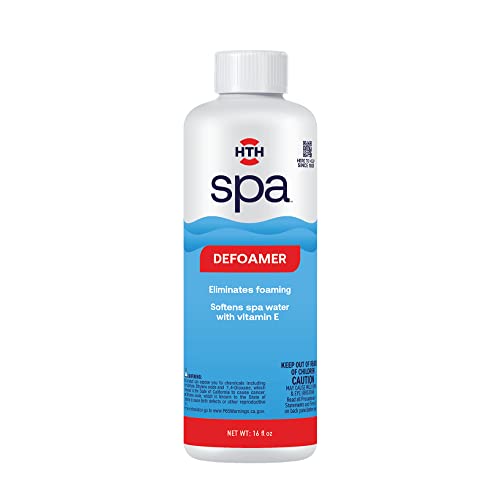
Organic contaminants and trapped laundry detergent residues frequently generate unsightly, persistent surface froth when aeration jets activate. While addressing total dissolved solids through a seasonal drain and refill remains the permanent remedy, temporary foaming can be knocked down immediately using surface-tension modifiers. Formulations such as HTH Spa 86116, Defoamer, 16 oz or SpaGuard Spa Anti-Foam for Spas & Hot Tubs suppress surface bubbles within seconds. However, owners should treat defoamers as emergency cosmetic aids rather than substitutes for disciplined filter cleaning and regular water replacement.
Thermal Efficiency, Cover Vapor Barriers, and Energy Conservation
Because thermal energy naturally rises, more than 60 percent of a hot tub’s standby heat loss occurs directly through the exposed water surface. Modern thermal covers combat this energy loss using dense expanded polystyrene foam cores tapered from center to edge to shed rainwater and snowmelt. Maintaining insulation value requires a puncture-resistant marine vinyl outer skin and an impervious internal vapor barrier that prevents moisture from saturating the foam core. Property owners managing large acrylic spas often select durable oversized hot tub covers designed to maintain a snug thermal seal around broad cabinet perimeters.
A waterlogged cover loses nearly all its thermal resistance, dramatically increasing monthly heating costs while placing dangerous mechanical strain on cabinet lifter brackets. Routine cover care involves cleaning vinyl surfaces with mild soap, conditioning against ultraviolet cracking, and regularly inspecting underside vapor seams. Homeowners seeking easy daily handling frequently prefer foldable thermal spa covers that combine manageable weight with heavy-duty structural hinge reinforcement. Ensuring the perimeter heat-seal skirt sits flat against the acrylic lip prevents costly standby thermal escaping during cold winter nights.
Preventative Maintenance Cycles and Safe Refill Procedures
Consistent maintenance prevents mechanical failures and extends the operational lifespan of expensive spa components. Filter cartridges should be removed weekly and rinsed thoroughly with high-pressure water to dislodge trapped hair, oils, and particulate debris. Once a month, cartridges benefit from soaking in a dedicated degreasing solution to strip embedded body oils that normal water rinsing leaves behind. Replacing pleated polyester filter cartridges annually ensures adequate flow rates, preventing low-flow topside error codes and protecting circulation pumps from overheating.
Homeowners should completely drain and refill their hot tub every three to four months to manage rising total dissolved solids. When refilling an empty vessel, always place the garden hose directly down into the filter standpipe rather than filling into the main footwell. This filling technique forces water through the internal plumbing lines and pump volutes, purging trapped pockets of air. Refilling through the footwell frequently causes a pump air lock, which prevents water circulation and triggers immediate heater dry-fire safety shutdowns.
Practical Takeaways for Hot Tub and Spa Buyers
Evaluating whether a spa means a hot tub ultimately depends on whether you are examining broad wellness culture or shopping for backyard hydrotherapy equipment. While commercial resorts and medical retreats use the word spa to encompass complete therapeutic services, residential shoppers can treat the terms as synonymous when evaluating portable heated hydrotherapy tubs. What truly matters is matching the vessel’s electrical requirements, shell composition, and structural foundation to your specific property constraints. Prioritizing continuous pump performance, dense cabinet insulation, and certified electrical safety ensures years of dependable relaxation.
Establishing a reliable chemical routine forms the cornerstone of hassle-free ownership, keeping water clean, balanced, and ready for use. By utilizing proven sanitizers, performing periodic plumbing line purges, and protecting thermal reserves with an airtight insulated cover, owners can enjoy optimal water clarity. Understanding these critical engineering and maintenance realities transforms hydrotherapy from an intimidating mechanical task into a revitalizing daily habit. Whether you call it a spa or a hot tub, diligent stewardship ensures safe, restorative soaking throughout every season.


Write Your Review
No reviews yet. Be the first to share your experience!