

Stepping into a warm spa should offer pure relaxation rather than the sting of chemical fumes or the worry of bacterial growth. Maintaining sanitary conditions hinges on understanding when to put chlorine in hot tub water rather than guessing after every soak. Adding sanitizer at the wrong moment can burn off active chemicals prematurely, damage acrylic surfaces, or leave bathers exposed to irritating contaminants like chloramines. Establishing a disciplined dosing routine keeps free chlorine within the safe target range of 3 to 5 parts per million while extending the life of internal plumbing seals and heating elements.
Water temperature, bather load, and aeration all influence how rapidly sanitizing chemicals deplete inside a portable or hard-shell spa. Pairing your chemical routine with a durable patio hot tub cover protects free chlorine residuals from direct sunlight degradation and stops airborne debris from exhausting your sanitizer. Balancing total alkalinity between 80 and 120 parts per million and stabilizing pH between 7.2 and 7.8 ensures that every dose of chlorine sanitizes efficiently without corroding delicate spa components. Learning the proper sequence for additions transforms daily water care from a stressful chore into a quick, predictable maintenance habit.





Pros
- Contains all four foundational water-balancing chemicals plus 50 test strips in one package
- Compatible with acrylic, inflatable, and wooden spas across chlorine, bromine, and salt systems
- Helps prevent cloudy water, foaming, mineral scale, and heater corrosion caused by imbalanced water
- Manufactured in the USA with reliable, fast-dissolving water-care formulas
Cons
- Does not include primary sanitizers such as chlorine or bromine granules, which must be purchased separately
- Source water with extreme hardness or alkalinity may deplete specific individual bottles faster than the rest of the kit
- Requires careful incremental dosing and testing rather than one-size-fits-all application
The Bio Ouster Hot Tub Water Balancing Kit is an all-in-one water adjustment bundle designed for acrylic, inflatable, and wooden hot tubs. Proper water balance is critical for preventing mineral scale, heater corrosion, and bather discomfort, making this starter collection well suited for new spa owners, seasonal refills, and vacation rental hosts who need foundational water-care essentials in a single convenient package.
Maintaining balanced water chemistry requires managing several interconnected parameters, which this kit addresses through dedicated pH Up, pH Down, Alkalinity Increaser, and Calcium Hardness Increaser formulas. By adjusting total alkalinity first to buffer pH fluctuations, and raising calcium levels to protect internal spa plumbing and heating elements, hot tub owners can maintain clear water and protect their equipment investments.
Routine monitoring is supported by the 50 included test strips, which allow quick checks of pH, total alkalinity, and calcium hardness levels before adding any adjustment chemicals. The formulas are designed to work alongside standard sanitizing systems, including chlorine, bromine, ozone, and salt water configurations, without interfering with filtration systems or causing unwanted cloudy precipitation when added properly.
Integrating this kit into a routine hot tub maintenance schedule requires testing freshly filled or top-off water before adding chemicals in gradual increments. Because chemical demand varies depending on municipal tap water characteristics, tub volume, and bather load, spa owners should add adjustments incrementally with the water jets running to ensure thorough circulation and avoid overshooting targets.
A practical limitation to keep in mind is that this bundle is strictly a water-balancing kit and does not contain primary sanitizers such as chlorine or bromine. Additionally, owners with particularly hard or soft source water may find that one specific chemical depletes faster than the others, eventually requiring individual bottle replacements down the road.
Hot tub owners seeking a straightforward, Made-in-USA foundational chemistry package will find practical everyday value in the Bio Ouster water balancing starter kit. Before purchasing, ensure you have your preferred sanitizer on hand and plan to test your tap water before initial dosing to establish an accurate chemical baseline for your spa volume.
Proper water balancing begins with testing total alkalinity, which serves as the chemical buffer that stabilizes pH levels in your spa water. Using the included test strips, hot tub owners should adjust total alkalinity into the recommended range before fine-tuning pH with either pH Up or pH Down to prevent rapid chemical bounce.
Calcium Hardness Increaser is included to ensure water does not become aggressive or corrosive toward spa heating elements, pump seals, and plumbing fixtures. This is particularly relevant for owners in soft-water areas or those filling spas using whole-house water-softener systems where low calcium levels can accelerate metallic component wear.
The formulas are chemically neutral relative to sanitizers, meaning they can be used safely in spas treated with standard chlorine granules, bromine tablets, saltwater chlorination systems, or ozone generators. Always allow chemicals to circulate for at least twenty to thirty minutes before re-testing water or adding secondary treatment products.
The Complete Timing and Maintenance Schedule for Hot Tub Chlorination
Knowing when to put chlorine in hot tub water comes down to three primary events: right after balancing a fresh water refill, immediately following every soak session, and once a week during maintenance shock treatments. Adding chlorine at these specific intervals guarantees that bacteria and organic bather waste are destroyed before they form resistant biofilms in internal plumbing lines. Maintaining this schedule keeps free chlorine steady between 3 and 5 parts per million while preventing chemical skin irritation and costly equipment damage.
Chemical Sequencing Following a Fresh Water Refill
Filling a hot tub with fresh tap or well water introduces unchlorinated, unbuffered liquid into an environment designed to operate at 100 degrees Fahrenheit or higher. Water directly from the garden hose contains variable mineral levels and trace metals that must be stabilized before introducing concentrated sanitizer. Pouring chlorine into imbalanced water can cause precipitation, mineral staining on acrylic shells, or rapid chemical dissipation. The most reliable procedure begins by running the garden hose directly down the filter well to purge air from internal plumbing manifolds and prevent circulation pump air locks.
Once the spa fills to the recommended waterline, power should be restored at the dedicated GFCI breaker panel so the circulation pump can mix the water. Homeowners should allow the water temperature to reach at least 80 degrees Fahrenheit before attempting to dissolve granular chemicals. Cold water slows chemical dissolution, which can cause heavy chlorine granules to settle onto the bottom surface and bleach the acrylic finish. Testing and adjusting total alkalinity between 80 and 120 parts per million must always precede pH adjustments and sanitizer addition.
After total alkalinity and pH fall within balanced parameters, adding the initial dose of chlorine establishes a protective sanitizer baseline. Fresh water requires a sanitizing shock dose, often utilizing sodium dichlor granules or a concentrated starter kit, to oxidize municipal treatment residues and pipe biofilm. The circulation pump should run on high speed with the aeration diverters closed for at least twenty minutes to disperse the chemical evenly. Testing the water after several hours verifies that free chlorine holds steady between 3 and 5 parts per million before anyone enters the tub.
Post-Soak Dosing as the Primary Routine
The most effective time to add chlorine during routine hot tub ownership is immediately after you finish soaking. Every person who uses the spa leaves behind microscopic organic debris, including perspiration, natural body oils, dead skin cells, and cosmetic residues. These contaminants rapidly consume active free chlorine, creating an environment where bacteria and algae can multiply overnight. Introducing sanitizer right after exiting ensures the chemical can neutralize waste products before they settle into plumbing lines and form stubborn biofilms.
Adding chlorine after soaking also provides the longest possible buffer window for chemical levels to stabilize before the next bathers enter. High water temperatures accelerate chemical reactions, allowing chlorine to attack organic matter quickly while the jets circulate. Homeowners typically add roughly one teaspoon to one tablespoon of dichlor granules per person per thirty minutes of soaking, depending on spa water volume. Running the jet pump on low or medium speed for fifteen to twenty minutes distributes the granules throughout the entire plumbing manifold without over-aerating the water.
Spa owners must remember to leave the cover off or propped open for at least fifteen to twenty minutes during this post-soak circulation cycle. Rapidly oxidizing organic materials generates chemical off-gas that can accumulate under a sealed lid. Trapped vapors can degrade the underside vinyl of your cover, weaken plastic headrests, and accelerate hinge corrosion. Once this short off-gassing period concludes, closing the cover locks in heat and prevents ambient dust or leaves from introducing new organic loads.
Pre-Soak Testing and Precautionary Safety Windows
Dosing a hot tub immediately before getting into the water is a common mistake that leads to unpleasant soaking conditions. Concentrated chlorine granules or liquid sanitizer require time to dissolve completely and distribute evenly across several hundred gallons of swirling water. Entering the water while sanitizer is still dissolving exposes skin, swimwear, and mucous membranes to harsh chemical hot spots. Furthermore, the active fumes released during initial dissolution can cause coughing, burning eyes, and throat irritation in the enclosed airspace just above the water surface.
The ideal pre-soak routine focuses on testing rather than heavy chemical dosing. Dipping a reliable test strip into the water thirty minutes before your planned soak reveals whether free chlorine sits in the safe target range of 3 to 5 parts per million. If the reading indicates adequate sanitizer, no chemical addition is needed prior to entering the water. Checking the water balance beforehand also confirms that pH remains between 7.2 and 7.8, ensuring the sanitizer remains potent and non-irritating to sensitive skin.
If a pre-soak test reveals zero parts per million of free chlorine, a small corrective dose becomes necessary to protect bathers from bacteria. In this situation, add a minimal maintenance dose of fast-dissolving dichlor granules and activate the primary pump for at least twenty to thirty minutes. Never enter the hot tub while free chlorine measures above 5 parts per million, as excessive sanitizer can trigger contact dermatitis and respiratory sensitivity. Waiting for the reading to settle into the safe 3 to 5 parts per million range ensures your soak remains both therapeutic and hygienic.
Weekly Maintenance Dosing and Non-Chlorine Oxidation
Weekly spa maintenance requires a clear understanding of the difference between routine sanitation and oxidizing shock treatments. Free chlorine binds with organic contaminants during everyday use to form combined chlorine molecules, commonly referred to as chloramines. Chloramines are responsible for the pungent bleach smell often mistaken for too much chlorine, and they possess virtually zero sanitizing power. A weekly shock treatment breaks the chemical bonds of chloramines, restoring water clarity and freeing up your sanitizer to fight fresh bacteria.
Many experienced spa caretakers utilize oxygen-based non-chlorine shock oxidizers, such as potassium peroxymonosulfate, for their weekly maintenance schedule. Products like AquaDoc Non Chlorine Hot Tub Shock or the 2LB Chlorine-Free Hot Tub Shock Oxidizer destroy organic matter without elevating free chlorine levels. Applying an oxidizer once per week allows homeowners to soak much sooner, often within fifteen to twenty minutes after circulation. Because non-chlorine shocks do not add cyanuric acid or heavy chlorine residuals, they help maintain clean water without throwing off delicate chemical ratios.
When water turns persistently cloudy or develops an unmistakable chloramine odor, a chlorinated shock like SpaGuard Enhanced Shock provides a more aggressive reset. Multipurpose shock formulas combine oxidizers, clarifiers, and buffering agents to burn through stubborn bather waste and coagulate tiny floating particles. After applying a heavy chlorinated shock, the spa water should be tested repeatedly until the free chlorine residual falls back below 5 parts per million. Keeping this weekly routine prevents the accumulation of resistant microorganisms and extends the interval between required water changes.
Continuous Sanitizer Delivery With Dispensers and In-Line Cartridges
Maintaining adequate sanitizer while traveling or managing a busy work schedule often requires continuous dosing systems rather than manual daily additions. Floating chemical dispensers, such as the Merkia mini floating dispenser, slowly release sanitizer as water flows past eroding tablets. However, hot tub owners must exercise caution regarding the specific tablet formulation placed inside floating dispensers. Trichloro-s-triazinetrione, commonly sold as standard pool trichlor tablets, dissolves too quickly in hot water and produces an intensely acidic solution that can pit acrylic surfaces and void manufacturer equipment warranties.
When using floating dispensers in portable spas, owners should choose tablets specifically formulated for hot tub operating temperatures and materials. Adjusting the dispenser vent ring allows you to fine-tune the erosion rate to match the baseline bather load of your spa. The dispenser should float freely in open water during standby heating cycles rather than getting pinned inside the skimmer weir or sitting directly over a jet. Removing the floating dispenser during active hydrotherapy sessions prevents bathers from brushing against concentrated chemical discharges.
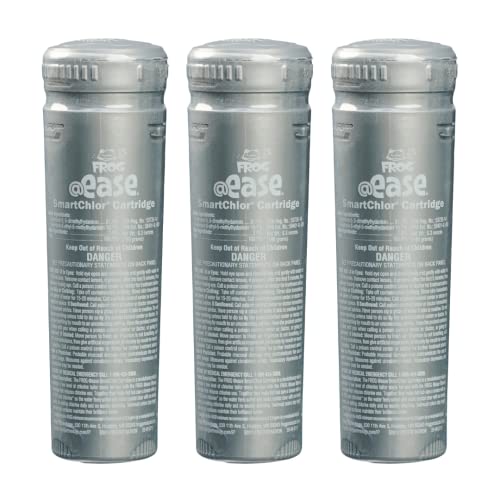
Integrated mineral and chlorine cartridge systems offer another practical alternative for continuous, low-maintenance sanitization. Systems like the Frog @Ease in-line cartridge utilize specialized SmartChlor technology combined with sanitizing minerals to maintain a consistent free chlorine level between 0.5 and 1.0 part per million. Because the cartridge self-regulates chemical release and contains no cyanuric acid, it reduces the risk of chemical overdosing while easing wear on skin and equipment. Inspecting cartridge indicator windows weekly ensures you replace depleted units before water protection lapses.
Water Chemistry Parameters That Dictate Chlorine Potency
Chlorine cannot sanitize water effectively if the surrounding chemical environment remains unbalanced. The most critical factor governing chlorine efficiency is water pH, which measures the acidity or alkalinity of the solution on a logarithmic scale. When pH drifts above 7.8, chlorine converts into an inactive chemical state, losing more than half of its germ-killing potential despite registering on test strips. Conversely, if pH drops below 7.2, chlorine becomes overly aggressive, causing eye sting and corroding metal heater elements and pump seals.
Controlling pH fluctuations requires stabilizing total alkalinity, which serves as a chemical buffer against rapid pH swings. High total alkalinity forces pH upward and makes adjustments difficult, while low alkalinity causes pH bounce and erratic sanitizer behavior. Utilizing a dedicated balancer kit, such as the Bio Ouster balancing kit or the Hot Tub Things maintenance kit, helps establish total alkalinity between 80 and 120 parts per million. Calcium hardness must also be maintained between 150 and 250 parts per million to prevent foaming and surface scale that can trap bacteria away from sanitizer contact.
Always complete water balancing adjustments in a specific chemical order to achieve predictable results. First, test and adjust total alkalinity using sodium bicarbonate to raise or sodium bisulfate to lower the reading. Second, balance pH into the optimal 7.2 to 7.8 comfort zone using appropriate decreaser or increaser compounds. Only after these two foundational metrics stabilize should you add your sanitizing dose of chlorine. This disciplined sequence ensures that every ounce of chlorine added performs at maximum sanitizing efficiency.
Heavy Bather Loads and Vacation Rental Turnover Protocols
Heavy hot tub use during weekend parties or family gatherings places an immense burden on the sanitizer reservoir. Four adults soaking in a four-hundred-gallon tub create a bather-to-water ratio comparable to dozens of swimmers sharing an average backyard swimming pool. In these high-demand situations, free chlorine can drop to zero parts per million in less than an hour of continuous jet operation. Waiting until the following morning to replenish sanitizer after a party invites rapid cloudiness, foaming, and bacterial colonization.
Property owners managing short-term vacation rentals must establish rigorous turnover procedures to ensure guest safety and water clarity. The turnover protocol begins immediately after guest departure by testing free chlorine, pH, and combined chloramine levels. Operators should dose the tub to achieve breakpoint chlorination, adding sufficient shock oxidizer to destroy ten times the concentration of measured combined chlorine. Running the filtration cycle while rinsing the pleated cartridge filter eliminates oils, hair products, and lotions extracted by the high-output jets.
Protecting your water quality between guest visits also requires securing the tub with a clean, well-insulated thermal cover. Pairing your sanitization routine with a well fitted hot tub cover keeps outside contaminants from exhausting the sanitizer while trapping heat during recovery cycles. If high bather traffic creates stubborn foam that resists chemical shock, adding a small amount of spa clarifier helps the filter capture ultra-fine particles. Maintaining high turnover standards prevents water degradation and ensures every incoming guest enjoys clean, inviting water.
Damaging Dosing Mistakes That Threaten Spa Equipment
One of the most damaging mistakes hot tub owners make is adding chlorine granules directly onto acrylic surfaces while the pump is turned off. Dense chemical granules sink straight to the floor of the footwell, where their concentrated oxidizing action can bleach, blister, or crack the acrylic shell. Homeowners must always switch the circulation pump to low or medium speed before broadcasting chemicals across the water surface. Broadcasting over active discharge jets ensures swift dissolution and prevents localized chemical hot spots from damaging equipment.
Another frequent error involves closing the heavy insulated spa cover immediately after scattering chlorine or shock into the water. Chemical oxidation releases acidic gases and chloramine vapors that need to dissipate freely into the ambient atmosphere. Trapping these corrosive vapors under an airtight vinyl skin causes accelerated deterioration of the cover backing, pillow headrests, and topside control bezels. Leaving the cover folded back for fifteen to twenty minutes during chemical mixing protects your investment and preserves thermal cover lifespan.
Spa owners must also monitor the accumulation of cyanuric acid that accompanies regular additions of sodium dichlor granules. Dichlor contains roughly fifty percent cyanuric acid by weight, which acts as a stabilizer in outdoor swimming pools to shield chlorine from solar degradation. However, in hot tubs, cyanuric acid does not break down and steadily accumulates with every weekly dose. Once cyanuric acid levels climb above fifty parts per million, it locks up free chlorine, rendering it unable to kill bacteria and necessitating a complete drain and refill of the spa.
Establishing a reliable schedule for chlorine additions ensures your spa remains an inviting retreat rather than a chemical puzzle. Testing free chlorine levels, shocking water weekly, and dosing immediately after each soak protects bathers from harmful pathogens while preserving acrylic shells and plumbing seals. When you align your chemical additions with balanced alkalinity and pH, hot tub maintenance becomes an efficient, predictable routine that keeps your water clear and comfortable all year.



Write Your Review
No reviews yet. Be the first to share your experience!