

Fitting a relaxing hydrotherapy spa onto a tight balcony, small patio, or compact deck often comes down to precise spatial planning. Homeowners and renters with limited outdoor square footage frequently wonder about what is the smallest inflatable hot tub options that still deliver genuine therapeutic comfort. Portable blow-up spas provide a versatile solution because they plug into standard household outlets and stow away when seasons change. Selecting the right compact model ensures you can enjoy soothing bubble jets without overcrowding your outdoor living space. Pairing a small tub with a proper yard patio hot tub cover can also help lock in thermal energy and protect the vinyl structure from external debris.
The most compact inflatable models generally feature specialized two-person oval designs or streamlined circular footprints measuring around six feet across. These smaller water volumes demand significantly less structural support and reduce initial heating times compared to larger family-sized units. However, compact spas require vigilant water chemistry management and careful ground base preparation to prevent heat loss through cold patio floors. Investing in a quality hot tub cover backed by a warranty further stabilizes water temperatures and preserves mechanical pumps against unnecessary strain. Understanding exact physical dimensions, structural filled weights, and equipment clearance guidelines will help you choose the ideal compact spa for your backyard layout.

Pros
- Included insulated cover supports heat retention during heating, which may help manage energy costs compared to uncovered inflatable spas
- Dual-filter system with automatic FC alert on the control panel simplifies filter maintenance for first-time spa owners
- Compact oval shape fits smaller outdoor spaces while still accommodating two or more users
- Deflates and folds for off-season storage or easy relocation, which suits renters, seasonal users, and vacation-rental operators
- Listed 1-year warranty for factory defects provides some buyer protection on a budget-friendly inflatable spa
Cons
- Heating rate of 1.8-3.6 degrees Fahrenheit per hour means reaching 104 degrees from a cold fill can take many hours, and cold environments will extend that time further
- Manufacturer notes that using bubble and heating functions simultaneously reduces heating effectiveness, so users may need to choose one function at a time
- Not recommended for use in environments below 50 degrees Fahrenheit (10 degrees Celsius), which limits cold-climate or winter outdoor use
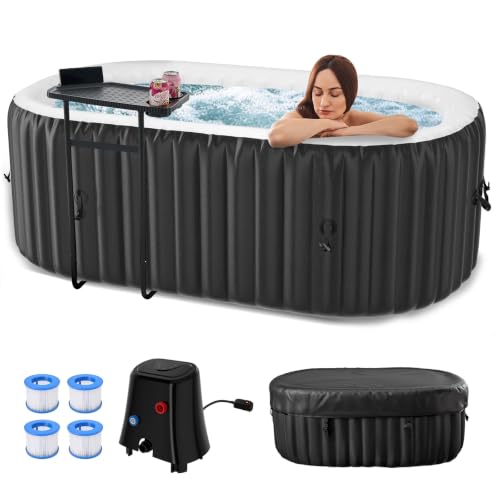
The DoCred inflatable hot tub is a portable, oval-shaped spa measuring 75x47x25 inches, bundled with an insulated cover, a 1350W double-tube heater pump, a bubble jet system, LED lights, and a dual-filter cartridge setup. This product is not a standalone hot tub cover or spa accessory - it's a complete inflatable spa package aimed at first-time spa owners, couples, small families, apartment or rental-home dwellers, and anyone who wants an affordable backyard soaking experience without permanent plumbing or electrical hookups. Vacation-rental operators and property managers looking for a seasonal amenity may also find the portable, deflatable format appealing.
The included insulated cover is designed to sit on top of the inflatable tub during heating to help retain warmth and improve the heater's efficiency. Because the 1350W heater raises water temperature at a listed rate of 1.8 to 3.6 degrees Fahrenheit per hour, keeping the cover on during the heating cycle is practically essential - especially in cooler weather. The thermostatic system is listed as maintaining the set temperature once reached, which may help with ongoing energy management. However, DoCred notes that running the bubble jets and heater at the same time will reduce heating performance, so many owners will likely heat first, then switch to bubbles for their soak.
Filtration is handled by two replaceable filter cartridges that capture sand, debris, and hair. The control panel includes an automatic alert (displaying "FC") after 120 hours of use to prompt filter replacement, which is a helpful feature for owners who might otherwise forget routine maintenance. Replacement filter cartridges will be an ongoing cost and availability consideration - buyers should confirm compatible replacement filters are readily available before purchasing. The three-layer PVC construction is described as resistant to piercing and tearing, and the pump connection is listed as tightly sealed to help prevent leaks. These are manufacturer-listed attributes, and real-world durability will depend on surface preparation, placement, and care.
Setup involves inflating the tub, connecting the heater pump, filling with water, and waiting for the heater to reach the desired temperature. Because heating takes several hours or more depending on starting water temperature and ambient conditions, planning ahead is important. The oval footprint should fit on most patios and decks, but buyers should verify that their intended surface is flat, smooth, and free of sharp objects. When not in use or at the end of the season, the tub deflates and folds for storage - a genuine advantage over rigid spas for renters or those with limited space.
There are real limitations to keep in mind. The manufacturer explicitly states the tub is not recommended for use below 50 degrees Fahrenheit (10 degrees Celsius), which rules out winter outdoor use in most northern U.S. states. The slow heating rate means spontaneous soaks aren't realistic unless the tub is kept heated and covered. The insulated cover included is a soft, lightweight type typical of inflatable spas - it should not be compared to rigid foam covers on permanent hot tubs in terms of insulation or weather protection. Owners in windy locations should secure the cover when not in use to prevent it from blowing off.
For budget-conscious buyers, couples, or small families who want a portable spa experience without a major investment, the DoCred inflatable hot tub offers a practical entry point. The included cover, dual-filter system with automatic replacement reminders, and LED lighting add convenience. Before purchasing, verify your intended placement surface, confirm replacement filter availability, and set realistic expectations about heating time - especially if you're in a cooler climate. The listed 1-year warranty covers factory defects, and DoCred's product listing encourages buyers to reach out promptly about missing parts or issues.
The DoCred inflatable hot tub package includes the inflatable spa body, a 1350W double-tube heater pump, an insulated cover, two replaceable filter cartridges, and LED lighting. The heater pump handles both water heating and bubble jet functions. The insulated cover is a soft-type cover designed to sit on the inflatable tub during heating to help retain warmth. Buyers should note that the cover is not a rigid foam spa cover and serves primarily as a heat-retention aid rather than a heavy-duty weather or debris barrier.
The two included filter cartridges are designed to work with the built-in filtration system, and the control panel will display an "FC" code after 120 hours of use to remind owners to replace them. Replacement cartridge availability and cost should be confirmed before purchase, as ongoing filter maintenance is essential for water clarity and pump protection. Check the product listing or contact DoCred directly for compatible replacement filter part numbers.
The DoCred inflatable hot tub uses two replaceable filter cartridges that are included with the initial purchase. The control panel features an automatic alert system that displays "FC" after 120 hours of cumulative use, signaling that it's time to replace the filters. This is a helpful maintenance reminder, especially for first-time spa owners who may not be familiar with filter replacement schedules.
Specific filter dimensions, part numbers, and cross-references are not detailed in the available product data. Before purchasing the tub, buyers should confirm that replacement filters are available through DoCred or compatible third-party sources. Running the spa with degraded or clogged filters can reduce water quality and potentially strain the pump, so reliable access to replacement cartridges is an important ownership consideration.
DoCred explicitly states that this inflatable hot tub is not recommended for use in environments below 10 degrees Celsius (50 degrees Fahrenheit). This is a significant consideration for buyers in northern U.S. states or anyone planning winter outdoor use. The 1350W heater raises water temperature at a listed rate of 1.8 to 3.6 degrees Fahrenheit per hour, and cold ambient temperatures will push heating times toward the slower end of that range or beyond.
The included insulated cover helps retain heat during the heating cycle, but it is a soft cover typical of inflatable spas - not a rigid foam cover with high insulation value. In cooler weather, keeping the cover on whenever the tub is not in active use is essential for maintaining temperature and managing energy consumption. Owners in mild or warm climates will get the most practical use from this spa, while those in colder regions should plan for extended heating times and seasonal-only outdoor use.
The DoCred inflatable hot tub comes with a listed 1-year warranty covering factory defects. The product listing encourages buyers to contact DoCred immediately if any parts are missing or if problems arise during use, with a commitment to resolve issues promptly. Specific warranty exclusions, claim procedures, and coverage details beyond factory defects are not detailed in the available product data, so buyers may want to confirm terms directly with DoCred before purchase.
For a portable, budget-friendly inflatable spa, a 1-year factory-defect warranty provides a baseline level of buyer protection. Owners should document any issues with photos and contact the seller through Amazon's messaging system for the most straightforward resolution process.


Pros
- Generous 80 x 80 inch square footprint accommodates many popular inflatable hot tubs and step accessories
- Waterproof PVC backing prevents absorbed water and surface moisture from soaking directly into underlying wood or patio stone
- Felt top layer cushions bare feet when stepping out and absorbs splashing water
- Trimmable design allows owners to easily customize the shape for tighter patio corners or specific base profiles
Cons
- At 2 to 2.5 mm thick, it functions as a surface protector rather than heavy structural or thick thermal foam insulation
- Manufacturer specifies spot cleaning only, as machine washing can degrade the felt bond and non-slip backing
- Arrives folded, which may leave temporary creases that take time to flatten under the weight of the spa
The FACAINCXS 80x80-inch square hot tub mat is a multi-purpose ground protector designed specifically for portable, inflatable, and compact above-ground spas. It serves patio owners, deck users, and indoor spa operators who need a protective barrier between the spa base and rigid flooring surfaces like concrete, pavers, or wood decking. By covering a broad 80-inch square area, it establishes a clean perimeter that helps prevent direct friction against the bottom of your tub.
Placing a dedicated ground pad beneath a spa helps reduce direct abrasion caused by ground friction, minor shifting, and grit. The dual-layer design features an absorbent felt upper layer that captures splashes when exiting the tub, reducing puddle accumulation around your steps. Beneath that, an impermeable PVC barrier keeps trapped water from settling directly against timber or sensitive patio materials, helping preserve the integrity of your deck over time.
This mat features a listed thickness of 2 to 2.5 mm, engineered using heat-press bonding that secures the dense felt to the slip-resistant PVC backing. While it is lightweight at approximately 4 pounds, the backing provides adequate friction against slick decking to stay in position. The felt top provides a comfortable, warm landing for bare feet, while also offering a slight thermal break between cold concrete and the floor of your tub.
Setting up the mat involves sweeping the installation area clean of sharp pebbles and unrolling the pad flat before placing the spa on top. Because the felt and PVC layers can be cut with standard utility shears, owners can easily trim edges to fit tight patio corners or align with spa steps. Maintenance is straightforward: spot clean any dirt or chemical spills with mild soapy water and let the pad air-dry in a well-ventilated spot, making sure to avoid washing machines that could damage the laminated layers.
Hot tub owners should recognize that a 2.5 mm mat is intended for scratch, splash, and friction protection rather than structural ground leveling or heavy rigid insulation. For buyers with inflatable or portable spas up to 80 inches across who want to keep their decks clean, reduce friction wear, and provide a soft step-out surface, the FACAINCXS mat offers an affordable, easy-to-manage solution. Before purchasing, verify your spa's total exterior footprint and step placement to ensure the 80x80-inch dimensions provide your desired margin of coverage.
With dimensions measuring 80 inches by 80 inches, this square pad is scaled to accommodate standard round or square inflatable hot tubs up to 80 inches wide. Hot tub owners should measure the flat base of their spa and any exterior steps to verify full base coverage before setup.
Because the felt and PVC composite material can be trimmed with standard household scissors or a utility knife, you can easily tailor the perimeter to match custom deck borders, rounded spa profiles, or narrow patio clearances without fraying.
Routine maintenance for the FACAINCXS mat involves spot cleaning soiled areas using a soft sponge, warm water, and mild dish soap. The manufacturer advises against machine washing, as agitation and spin cycles can delaminate the PVC backing and weaken the felt fibers.
After cleaning or exposure to heavy rainfall, allow the mat to air dry thoroughly in a shaded, well-ventilated area before rolling or folding it for seasonal storage. Keeping both sides clean helps maintain the backing grip and prevents trapped debris from scratching your deck surface.


Pros
- Includes a specialized insulated cover engineered to retain water heat and reduce electrical operating demand
- Integrated Freeze Shield protects internal pump mechanics and water channels when overnight temperatures drop
- Bestway Connect app integration allows remote water preheating and timer programming straight from a smartphone
- ChemConnect dispenser distributes chlorine or bromine evenly without needing a loose floating chemical dispenser
Cons
- Compact 71-inch square interior dimensions can feel crowded when occupied by six full-sized adults simultaneously
- Initial water heating to 104 degrees Fahrenheit takes several hours on a standard plug-in electrical supply
- Soft-sided inflatable structure requires a smooth, debris-free base to prevent accidental punctures or ground wear
The Coleman SaluSpa Hawaii Energy-Efficient Inflatable Hot Tub is a square 71 by 71 by 28-inch portable spa designed for homeowners, renters, and families wanting a warm soak without installing permanent electrical wiring. Sized for four to six people, this model suits first-time spa buyers who prioritize straightforward assembly, lower energy overhead, and modern conveniences like mobile app control. Its square layout offers comfortable corner seating that fits cleanly onto standard patios or outdoor decking.
Heat retention is often the biggest hurdle with soft-sided spas, but the Hawaii addresses this with insulated walls and an insulated thermal cover. According to manufacturer specifications, this combination retains up to 40 percent more heat than similar standard inflatable hot tubs. This thermal design allows the unit to comply with APSP-14 and California Title 20 standards, ensuring legal efficiency compliance in states like California, Oregon, and New York. Keeping the cover secured between uses significantly reduces heat dissipation and cuts down on cyclic heater runtime.
Structural durability is supported by internal MaxHold fabric beams that maintain rigid sidewalls when users sit or lean back, surrounded by a puncture-resistant three-layer Tritech outer shell. For transitional seasonal weather, the integrated Freeze Shield automatic heating function prevents internal water from freezing in the pump and liner when outdoor temperatures plummet. While not intended for deep sub-zero winter freezes, this safety feature guards against unexpected overnight frost damage during early spring and late autumn use.
Controlling the spa is intuitive via the top-mounted digital pump interface or through the Bestway Connect smartphone app. Users can adjust the water temperature up to 104 degrees Fahrenheit, initiate the 140 AirJet massage bubbles, or schedule the power-saving timer up to 40 days in advance. Water sanitation is equally hassle-free thanks to the included ChemConnect dispenser, which mounts directly to an internal wall outlet to circulate chlorine or bromine tablets evenly across the water volume.
Prospective owners should factor in realistic operational limitations typical of 110-120V portable hot tubs. Heating a full tub from garden hose temperatures to the maximum 104 degrees takes extended time, and turning on the bubble massage draws in ambient air that naturally cools the water during brisk evenings. In addition, while listed for up to six individuals, four adults will experience much better legroom and overall seating comfort inside the 71-inch basin.
For backyard owners seeking an accessible, feature-packed spa with tangible energy-saving insulation, the Coleman SaluSpa Hawaii delivers excellent practical value. Before purchasing, verify that your chosen site provides a completely level 71 by 71-inch flat base, access to a dedicated outdoor GFCI outlet, and adequate surrounding clearance to comfortably remove and reinstall the insulated cover.
The included cover for the Coleman SaluSpa Hawaii is an insulated thermal barrier engineered to curb rapid heat loss through the water surface. Paired with the insulated spa walls, this construction is rated to perform up to 40 percent more efficiently in retaining heat than comparable non-insulated inflatable spas.
Because the unit meets APSP-14 and Title 20 efficiency requirements, it satisfies strict appliance efficiency mandates in states such as California, Maine, Oregon, and Washington. Fastening the insulated cover tightly after each soak protects the water from debris while significantly reducing the workload on the internal heater.
Setting up the Coleman SaluSpa Hawaii is straightforward thanks to the included digital pump, which inflates the 71-inch square spa body in minutes without auxiliary air tools. The installation area must be flat, level, cleared of sharp stones or twigs, and capable of supporting the full weight of the filled tub and occupants.
Routine maintenance centers around regular filter cartridge cleaning and consistent chemical balancing. The integrated ChemConnect dispenser mounts directly to the internal return jet, steadily releasing sanitizer tablets into circulating water to maintain clarity without floating obstacles in the soaking area.

Pros
- Complies with strict Title 20 and APSP-14 energy standards across California, Oregon, Washington, and New York
- Includes a dedicated insulated thermal cover that minimizes evaporative heat loss and blocks yard debris
- Freeze Shield automatic warming function guards water channels and the pump assembly against freezing weather
- Rugged 3-layer Tritech vinyl and internal MaxHold beam bracing resist punctures and structural sagging
Cons
- Exterior 71-inch diameter provides a comfortable soak for two adults, though rated for up to four people
- Gradual 110V water heating rate requires advance planning before the initial soak or after refilling
- Inflatable vinyl structure requires placement on a smooth, debris-free pad to prevent accidental punctures
The Coleman SaluSpa Miami Energy-Efficient 2.0 Inflatable Hot Tub provides an accessible, portable hydrotherapy solution for couples, small families, and first-time spa owners seeking relaxation without the permanence of a hard-sided acrylic unit. With an exterior measurement of 71 x 71 x 26 inches, this compact round spa accommodates two to four people comfortably on level patios, decks, or backyard pads. It combines a dedicated digital pump, an integrated 120-bubble AirJet massage ring, and an insulated cover system engineered specifically for lower energy consumption.
Thermal retention and regulatory compliance serve as central design priorities for this updated Miami model. Unlike standard entry-level inflatable hot tubs that rapidly lose heat through thin sidewalls, this unit features insulated walls and an insulated top cover engineered to improve heat retention by up to 40 percent. This design satisfies strict APSP-14 and Title 20 energy efficiency standards, making it fully compliant for purchase and operation in regulated states such as California, New York, Oregon, and Washington. The included cover helps lock in water temperatures up to 104 degrees Fahrenheit while keeping outdoor leaves, dirt, and airborne debris out of the water basin.
Structural durability relies on a puncture-resistant three-layer Tritech outer skin paired with MaxHold internal fabric beam architecture. The Tritech material utilizes a polyester mesh core encased between two layers of laminated PVC, providing resistance against surface abrasions, pet claws, and general patio wear. Internally, the MaxHold fabric beams maintain structural firmness and side-wall integrity, preventing the spa from bulging or sagging when occupants sit against the rim. While sturdy, owners must still place the tub on a smooth, debris-free ground cloth or protective mat to avoid sharp puncture hazards on concrete or gravel.
Routine operation and water care are streamlined through the multi-function pump and built-in maintenance components. The digital pump handles full inflation without requiring auxiliary air compressors, while also managing filtration, rapid heating, and massage blower functions from an easy-to-reach seated position. Water sanitization is supported by the ChemConnect chemical dispenser, which attaches directly to an internal jet nozzle to uniformly disperse chlorine or bromine tablets across the spa. Furthermore, the built-in Power-Saving Timer allows users to schedule heating cycles up to 40 days in advance to conserve electricity between planned soaking sessions.
Cold-weather functionality and space constraints represent the primary operational tradeoffs of this portable system. The Freeze Shield automatic heating system continuously monitors temperatures to prevent the pump, filtration housing, and vinyl liner from freezing in cold conditions. However, like most 110-120V plug-and-play inflatable hot tubs, heating times are gradual, and the water temperature may dip during extended use in sub-freezing weather when the bubble jets draw in cool ambient air. In addition, while rated for up to four individuals, the 71-inch exterior diameter offers the most comfortable, uncrowded soaking experience for two adults at a time.
Prospective buyers seeking an affordable, energy-compliant backyard spa will find the Coleman SaluSpa Miami 2.0 an attractive balance of comfort, convenience, and operating efficiency. Before purchasing, verify that your proposed setup site offers a level, weight-bearing surface close to a dedicated electrical outlet and measures at least six feet across to ensure adequate clearance for the tub and external pump housing.
The insulated cover and reinforced sidewalls of the Coleman SaluSpa Miami Energy-Efficient 2.0 play an essential role in keeping everyday electrical consumption manageable. By meeting APSP-14 and California Title 20 appliance standards, this spa is certified to retain heat up to 40 percent more efficiently than traditional non-insulated inflatable models.
Keeping the thermal cover properly latched between uses is critical to maintaining water temperature and preventing unnecessary cycling of the heating element. The fitted cover fastens securely around the rim to limit evaporative heat loss, deter outdoor wind uplift, and protect clean water from falling yard debris.
Proper site preparation ensures optimal longevity and stability for the 71 x 71 x 26-inch inflatable spa. Ensure the ground surface is completely flat, clear of sharp rocks or roots, and rated to bear the full weight of water and occupants.
Routine water care requires checking the filter cartridge and maintaining sanitizer levels via the integrated ChemConnect dispenser. Using the 40-day power-saving timer allows you to plan heating intervals around your lifestyle, while Freeze Shield mode safeguards pump plumbing when outdoor temperatures drop near freezing.

Essential Dimensions and Practical Guide for Small Inflatable Hot Tubs
Identifying what is the smallest inflatable hot tub begins by comparing specialized two-person oval designs against standard circular compact spas. The most compact inflatable model currently available is typically a two-person oval tub measuring approximately 75 inches in length, 47 inches in width, and 25 inches in height. Standard small round spas generally measure around 71 inches in diameter, requiring a wider square footprint to accommodate bathers. Understanding these baseline dimensions ensures that you choose a portable spa that fits your patio boundaries while providing genuine soaking relief.
Physical Dimensions and Footprint Profiles of Compact Inflatable Spas
Two-person oval inflatable tubs represent the absolute smallest footprint in the portable spa market today. With an exterior length of 75 inches and a narrow width of 47 inches, these oval structures slide effortlessly into narrow patio breezeways or tight balcony alcoves. A depth of 25 inches allows two adults to sit comfortably with warm water reaching chest height without overwhelming the available space. In contrast, standard circular two-to-four-person tubs require at least 71 inches of clearance in all lateral directions. This structural difference makes the elongated oval layout uniquely advantageous for homeowners working with strict spatial constraints.
Internal water capacity directly reflects these physical dimensions and influences how the spa performs during daily use. An oval two-person model holds approximately 140 to 180 gallons of water when filled to the recommended waterline. Compact circular models typically require 170 to 220 gallons to submerge the air jet manifold and internal temperature sensors properly. Lower water volume reduces the total weight load on your foundation and accelerates initial heating cycles noticeably. However, it also means that displaced water when two adults enter the tub requires careful monitoring to prevent surface overflow.
Wall thickness also plays a decisive role in determining the true exterior footprint of small blow-up spas. The inflatable perimeter walls of high-grade models measure roughly 8 to 10 inches thick on each side to ensure rigid structural support. Consequently, a tub with a 75-inch exterior length provides an internal soaking basin of approximately 55 to 59 inches. This internal clearance offers ample room for an adult to stretch their legs while remaining seated in an upright soaking posture. Evaluating both interior bathing space and exterior perimeter measurements prevents unwelcome surprises once the spa is fully inflated.
Spatial Clearance, Ground Preparation, and Deck Load Calculations
Planning the total installation footprint requires accounting for more than just the inflated vinyl perimeter of the tub. Every inflatable hot tub relies on an external heater, filtration, and air blower pump module that connects directly to the side wall. This external equipment housing typically protrudes an additional 15 to 20 inches from the edge of the tub. Maintaining at least two feet of open space around all accessible sides allows you to replace pleated filter cartridges, inspect hose unions, and vacuum settled debris without difficulty. Positioning the tub away from tight exterior walls also prevents the vinyl skin from scraping against abrasive brick or stucco.
Placing an 80-inch by 80-inch felt and PVC protective ground pad beneath your tub shields the floor from punctures caused by stray aggregate. Investing in a foldable hot tub cover along with a ground protector creates an effective thermal envelope that blocks cold patio conduction. Calculating the total filled operating weight is a critical safety step before placing a spa on an elevated wooden deck. Water weighs approximately 8.34 pounds per gallon, turning a 160-gallon oval spa into roughly 1,334 pounds of pure liquid mass. Adding two adult occupants pushes the total operating weight near 1,760 pounds, which can exceed standard residential deck load limits of 40 to 50 pounds per square foot without proper joist reinforcement.
Ground-level installations on solid, level foundations provide the safest environment for compact inflatable hot tubs. A 4-inch reinforced poured concrete pad offers the gold standard in structural stability, ensuring the base remains flat without shifting over time. Compacted crushed stone gravel bases or level modular interlocking spa pads also provide reliable, load-bearing alternatives for backyard lawns. Avoid placing the tub on uneven pavers or bare dirt where soil erosion and ground settling can strain the internal seams. An unlevel base forces water to pool unevenly against one wall, leading to structural deformation and premature liner failure.
Electrical Specifications and 110V Heating Capabilities
Compact inflatable spas operate as true plug-and-play appliances, running on standard 110V to 120V alternating current household power. The factory power cord incorporates an integrated Ground Fault Circuit Interrupter to protect users against electrical surges and ground faults. This system draws approximately 12 to 15 amps during peak operation, requiring a dedicated outdoor circuit that does not share power with other appliances. National Electrical Code guidelines mandate that outdoor electrical receptacles feature weatherproof covers to protect against moisture intrusion. Running an inflatable tub on a shared circuit or an extension cord risks tripping breakers and damaging sensitive pump electronics.
Heater power ratings for small portable spas generally center around 1300 to 1350 watts through a double-tube heating element. This heating system warms the water at an average rate of 1.8 to 3.6 degrees Fahrenheit per hour under moderate ambient temperatures. Because a compact two-person tub contains significantly less water volume than a six-person tub, it reaches maximum temperature much quicker. Starting with fresh tap water at 60 degrees Fahrenheit, a small tub can achieve the maximum 104-degree soaking temperature within 12 to 18 hours. Keeping the insulated cover securely fastened during the heating cycle prevents thermal loss and cuts initial warmup time.
Operating dynamics on 110V circuits involve an important mechanical trade-off that every buyer must understand before purchasing. Standard 15-amp circuits lack the electrical capacity to power the 1350-watt heater and the high-output bubble massage blower simultaneously. When you engage the bubble jets for a therapeutic soak, the digital control system temporarily disengages the heating element. During cold evening soaks, the incoming unheated air drawn by the bubble jets causes the water temperature to drop steadily. Limiting bubble jet sessions to 15 or 20 minutes helps maintain your preferred soaking temperature on crisp nights.
Water Chemistry Precision and Sanitation in Small Water Volumes
Maintaining clean and sanitized water in a compact 150-gallon spa requires far greater chemical vigilance than caring for a large swimming pool. Because the water volume is so modest, body oils, sweat, and cosmetic residues concentrate rapidly following a single soaking session. This high bather-to-water ratio can deplete active sanitizer reserves in a matter of hours, allowing bacteria to multiply quickly. Imbalanced water can also cause unsightly foaming, skin irritation, and unpleasant chloramine smells that ruin your relaxation. Testing your water with reliable test strips two to three times each week prevents chemistry issues before they escalate.
Primary sanitization relies on establishing a stable residual of an EPA-registered biocide like free chlorine or bromine. A compact floating tablet dispenser designed for 1-inch tablets provides a controlled release mechanism that prevents sudden chemical spikes. Many modern units also feature an integrated ChemConnect dispenser that attaches directly to the water outlet fitting on the interior wall. Adjusting the dispenser dial regulates the flow of sanitizer into the circulation stream to keep free chlorine between 2 and 4 parts per million. Avoid tossing loose sanitizer tablets directly into the basin, as concentrated chemicals can bleach and weaken the vinyl floor.
Balancing total alkalinity and pH levels is the critical foundation that keeps your sanitizer active and prevents equipment corrosion. Keep total alkalinity stabilized between 80 and 120 parts per million to prevent erratic swings in your pH readings. Maintaining a pH level between 7.2 and 7.8 protects bathers against eye redness and ensures your pump seals remain intact. Incorporating a weekly dose of non-chlorine oxidizer shock eliminates accumulated organic bather waste without raising chlorine levels excessively. Shocking the water regularly keeps the soaking basin crystalline, fresh, and free of persistent chemical odors.
Liner Materials, Thermal Retention, and Cold Weather Resilience
Durability in compact inflatable hot tubs depends entirely on the multi-layer construction of the flexible PVC shell. High-grade models utilize three-ply laminated materials, such as Tritech or heavy-duty reinforced vinyl, featuring a polyester mesh core encased between dense PVC layers. This puncture-resistant matrix protects the sidewalls from claw scratches, gravel abrasions, and accidental scuffs during everyday backyard use. Internal horizontal I-beams or structural fabric baffles run throughout the interior walls to provide rigid vertical stability. This advanced internal webbing prevents the tub from sagging or deforming when bathers sit directly on the inflated top rim.
Cold-weather functionality has improved dramatically with the introduction of automated freeze protection engineering on compact portable spas. Systems like Bestway Freeze Shield automatically activate the circulation pump and low-level heating whenever ambient temperatures fall near 40 degrees Fahrenheit. This automated cycling prevents internal plumbing manifolds and water pumps from freezing solid, which could crack the plastic housing and cause catastrophic leaks. However, manufacturers generally caution against using inflatable spas in extreme environments where temperatures plunge below 14 degrees Fahrenheit. In sub-freezing conditions, the uninsulated PVC walls lose thermal energy faster than the 110V heater can replenish it.
Minimizing standby heat loss requires pairing your compact spa with an effective thermal cover that seals tightly against the rim. High-efficiency inflatable covers fit snugly inside the upper perimeter to trap rising steam and prevent convective thermal dissipation. Securing the outer vinyl safety cover with adjustable locking buckles keeps wind from lifting the edges and preserves stored warmth. Exploring specialized padded hot tub cover options provides extra insulation and convenient handling straps for quick removal before a soak. A well-fitted cover system drastically lowers monthly electrical consumption and keeps ambient debris out of the filter.
Filtration Care, Water Refresh Schedules, and Practical Trade-Offs
Routine filtration maintenance is essential for keeping compact hot tub water sparkling and protecting internal pump impellers from premature wear. Built-in circulation pumps pull water through a pleated paper cartridge filter to catch hair, airborne dust, and organic sediment. Because small tubs utilize compact filter cartridges with limited surface area, they clog much faster than large hard-shell cartridge systems. Rinsing your filter cartridge thoroughly with a high-pressure hose nozzle every few days removes surface debris and restores flow rates. Replacing the disposable filter cartridge every two to four weeks prevents strain on the pump motor and maintains water clarity.
Digital control panels on modern portable spas feature automated diagnostic sensors that monitor water flow and filter cleanliness. When the filter becomes saturated with sediment, the pump displays a flow warning or sounds an alarm to alert the owner. Running the spa with a dirty, clogged filter restricts water velocity through the heating chamber, which can trigger automatic safety shutdowns. Clearing the filter alert by cleaning or swapping the cartridge immediately restores proper circulation and allows heating to resume. Paying attention to these automated diagnostic alerts prevents frustrating heater lockouts and extends the operational lifespan of your spa pump.
Frequent water drainage and refilling represents a standard maintenance ritual for owners of compact inflatable spas. Over weeks of daily use, total dissolved solids and chemical byproducts accumulate in the water until sanitizers lose their biological effectiveness. A reliable rule of thumb suggests draining and refilling a small two-person tub every four to six weeks depending on usage frequency. Draining takes only 20 to 30 minutes through the built-in lower drain valve or by using a clean submersible utility pump. Deciding between an oval two-person layout and a circular four-person spa ultimately hinges on balancing your available deck space against your preferred bather capacity.





Write Your Review
No reviews yet. Be the first to share your experience!