

Planning a backyard spa requires careful attention to the foundation before the delivery crew arrives with heavy equipment. A filled hot tub easily weighs several thousand pounds, combining the dry vessel, hundreds of gallons of water, and active bathers into a concentrated footprint. Homeowners frequently ask how thick concrete pad for hot tub installations must be to prevent shifting, structural cracking, and unlevel waterlines. Selecting the proper slab depth ensures the weight distributes evenly across the ground, preserving the internal plumbing and acrylic shell against uneven stress fractures over decades of use.
A solid concrete slab also forms the baseline for protecting your overall investment, complementing components like a protective yard patio hot tub cover that shields the upper perimeter from weather exposure. Pouring an inadequate pad risks settling that can throw off sensitive circulation pumps and strain electrical conduit connections. Understanding the balance between poured slab thickness, steel rebar reinforcement, and sub-base aggregate gravel gives you complete confidence before mixing concrete or scheduling a local contractor.

Pros
- Eliminates the need to schedule, form, and pour expensive permanent concrete slabs
- Interlocking connectors keep the six individual panels firmly joined during placement
- Heavy-duty high-density polyethylene construction resists moisture, rot, and ground contact
- Rinses clean with a garden hose and can be relocated if you move or rearrange your patio
Cons
- Requires a meticulously leveled, compacted ground or gravel sub-base prior to assembly
- Fixed 8x8 foot total footprint requires purchasing add-on units for oversized hot tubs
- May shift if installed directly over uneven turf, soft lawns, or uncompacted soil
The Confer Plastics Handi Spa Pad 6-Pack is a modular, high-density polyethylene foundation system engineered as an immediate alternative to poured concrete slabs for residential hot tubs and portable spas. Designed for homeowners, DIYers, and vacation rental hosts who need a solid, level footing without the expense, permitting delays, and permanent footprint of wet cement, this kit covers an 8-foot by 8-foot area using six interlocking 32-inch by 48-inch panels.
Providing a reliable, flat foundation is crucial for any spa, as uneven stress can warp acrylic shells, strain internal plumbing, and cause water levels to sit off-center. The Handi Spa Pad creates a uniform platform that isolates the tub bottom from abrasive surfaces like coarse stone, aged wood decking, or damp soil. Its integrated locking connectors bind the panels together to minimize lateral shifting once the spa is positioned and filled with hundreds of gallons of water.
Manufactured from molded high-density polyethylene (HDPE) resin in a neutral gray finish, these pads offer notable resistance to rot, ground moisture, and common outdoor environmental conditions. Unlike wood platforms that can decay or split over time, HDPE handles constant contact with wet ground and water runoff from the tub without degrading. The textured surface also prevents the underside of portable spas from grinding against harsh sub-base materials.
While assembling the interlocking mats takes only minutes, overall stability depends heavily on sub-base preparation. The pad must be set on a completely flat, compacted surface-such as leveled pea gravel, crushed stone, tamped sand, or an existing patio-because flexible plastic mats will conform to underlying dips or slopes under the substantial weight of a filled hot tub. Taking the time to grade and tamp the site before laying the panels ensures a level, quiet, and secure resting place for your equipment.
Prospective buyers should note that this specific package yields an 8-foot by 8-foot footprint (96 inches by 96 inches), making it suitable for spas measuring up to 8 feet in length and width. If your tub dimensions exceed this footprint, or if you want extra space for hot tub steps and an external chemical caddy, you will need to purchase additional modular panels. Furthermore, the pad is not a structural bridge over unlevel or soft turf; improper grading will transfer irregularities directly to the spa bottom.
For hot tub owners seeking a fast, clean, and relocatable alternative to concrete contractors, the Confer Plastics Handi Spa Pad 6-Pack is a highly practical, cost-effective foundation choice. Before ordering, measure your spa exterior dimensions and assess your intended installation site to confirm that an 8x8 area accommodates the tub and that you have the materials ready to grade a level, compacted gravel or sand base.
Proper sub-base preparation is the most critical step when installing the Confer Plastics Handi Spa Pad system. Although the pads are molded from durable high-density polyethylene, they are designed to transfer the substantial load of a filled spa directly downward into the ground beneath them.
To ensure long-term stability, install the six panels over a thoroughly excavated, leveled, and tamped foundation of crushed gravel, stone dust, or sand, or place them directly across an existing level concrete or paver patio. Avoid placing the pads directly over uncompacted dirt, lawn, or sloped ground, as underlying soil settling can lead to an uneven spa base and stress on the tub shell.
Connecting the six 32-inch by 48-inch panels is straightforward thanks to built-in interlocking connectors that snap together securely. Once assembled into the complete 8-foot by 8-foot layout, the modular surface stays intact and resists separation during hot tub delivery and ongoing use.


Pros
- Generous 80 x 80 inch square footprint accommodates many popular inflatable hot tubs and step accessories
- Waterproof PVC backing prevents absorbed water and surface moisture from soaking directly into underlying wood or patio stone
- Felt top layer cushions bare feet when stepping out and absorbs splashing water
- Trimmable design allows owners to easily customize the shape for tighter patio corners or specific base profiles
Cons
- At 2 to 2.5 mm thick, it functions as a surface protector rather than heavy structural or thick thermal foam insulation
- Manufacturer specifies spot cleaning only, as machine washing can degrade the felt bond and non-slip backing
- Arrives folded, which may leave temporary creases that take time to flatten under the weight of the spa
The FACAINCXS 80x80-inch square hot tub mat is a multi-purpose ground protector designed specifically for portable, inflatable, and compact above-ground spas. It serves patio owners, deck users, and indoor spa operators who need a protective barrier between the spa base and rigid flooring surfaces like concrete, pavers, or wood decking. By covering a broad 80-inch square area, it establishes a clean perimeter that helps prevent direct friction against the bottom of your tub.
Placing a dedicated ground pad beneath a spa helps reduce direct abrasion caused by ground friction, minor shifting, and grit. The dual-layer design features an absorbent felt upper layer that captures splashes when exiting the tub, reducing puddle accumulation around your steps. Beneath that, an impermeable PVC barrier keeps trapped water from settling directly against timber or sensitive patio materials, helping preserve the integrity of your deck over time.
This mat features a listed thickness of 2 to 2.5 mm, engineered using heat-press bonding that secures the dense felt to the slip-resistant PVC backing. While it is lightweight at approximately 4 pounds, the backing provides adequate friction against slick decking to stay in position. The felt top provides a comfortable, warm landing for bare feet, while also offering a slight thermal break between cold concrete and the floor of your tub.
Setting up the mat involves sweeping the installation area clean of sharp pebbles and unrolling the pad flat before placing the spa on top. Because the felt and PVC layers can be cut with standard utility shears, owners can easily trim edges to fit tight patio corners or align with spa steps. Maintenance is straightforward: spot clean any dirt or chemical spills with mild soapy water and let the pad air-dry in a well-ventilated spot, making sure to avoid washing machines that could damage the laminated layers.
Hot tub owners should recognize that a 2.5 mm mat is intended for scratch, splash, and friction protection rather than structural ground leveling or heavy rigid insulation. For buyers with inflatable or portable spas up to 80 inches across who want to keep their decks clean, reduce friction wear, and provide a soft step-out surface, the FACAINCXS mat offers an affordable, easy-to-manage solution. Before purchasing, verify your spa's total exterior footprint and step placement to ensure the 80x80-inch dimensions provide your desired margin of coverage.
With dimensions measuring 80 inches by 80 inches, this square pad is scaled to accommodate standard round or square inflatable hot tubs up to 80 inches wide. Hot tub owners should measure the flat base of their spa and any exterior steps to verify full base coverage before setup.
Because the felt and PVC composite material can be trimmed with standard household scissors or a utility knife, you can easily tailor the perimeter to match custom deck borders, rounded spa profiles, or narrow patio clearances without fraying.
Routine maintenance for the FACAINCXS mat involves spot cleaning soiled areas using a soft sponge, warm water, and mild dish soap. The manufacturer advises against machine washing, as agitation and spin cycles can delaminate the PVC backing and weaken the felt fibers.
After cleaning or exposure to heavy rainfall, allow the mat to air dry thoroughly in a shaded, well-ventilated area before rolling or folding it for seasonal storage. Keeping both sides clean helps maintain the backing grip and prevents trapped debris from scratching your deck surface.


Pros
- Substantial half-inch thickness delivers superior floor cushioning compared to standard thin ground tarps.
- Includes a dedicated separate pump pad to keep filtration equipment level and isolated from wet ground.
- Double-sided frosted anti-slip texture provides reliable footing on slick concrete slabs and wooden decks.
- Modular interlocking tiles can be taken apart quickly for compact seasonal storage or transport.
Cons
- Tiles can shift or separate along interlocking seams if installed on uneven or unlevel terrain.
- High-density foam can develop permanent indents under concentrated, heavy focal points over long periods.
- The 85-inch square dimension will leave outer edges exposed if paired with oversized six-person or extra-large spas.
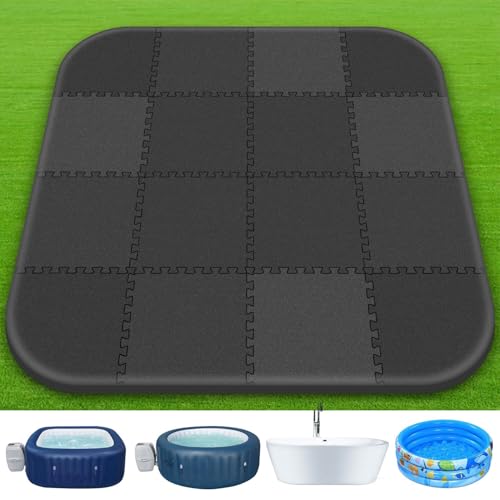
The VERVESYS 85-inch Hot Tub Mat is a modular, high-density EVA foam foundation pad engineered specifically to protect inflatable spas, portable hot tubs, and small above-ground pools from ground friction. Setting an inflatable spa directly on rough concrete, wooden decking, or pavers exposes the delicate vinyl bottom to punctures, friction tears, and rapid heat dissipation into the cold ground. This interlocking base creates a cushioned half-inch barrier that shields the tub bottom while improving comfort for bathers sitting directly on the spa floor.
Real-world usefulness centers on both surface protection and thermal separation. Cold slabs and stone patios quickly draw warmth out of an inflatable spa base, forcing the heating unit to work harder to maintain soaking temperatures. By providing a half-inch thick layer of dense EVA foam, this foundation limits direct conductive heat loss into cold subfloors. The 85 by 85 inch coverage fits standard round or square portable tubs, and the inclusion of an extra matching pad ensures the exterior pump and heating unit rests on a level, protected platform alongside the main body.
Build quality relies on closed-cell EVA foam molded with a frosted anti-slip texture on both sides. Unlike open-cell foam or cheap woven tarps, this closed-cell material will not absorb standing water, pool chemicals, or runoff, preventing waterlogging and foul mildew odors. The frosted finish on both top and bottom surfaces increases mechanical friction, helping prevent the tub from sliding when empty and offering stable traction on damp patio decking. The precision puzzle-cut interlocking edges fit snugly together to maintain a unified surface under the weight of water.
Setup and everyday ownership are straightforward and require no specialized tools. Assembly consists of linking the 16 primary square tiles into a broad pad on a flat, swept surface before positioning the dedicated pump pad adjacent to the water line connections. When routine maintenance or seasonal pack-down is required, the foam tiles wipe clean with mild soap and a garden hose. Once dry, the modular pieces pull apart quickly and stack flat, taking up minimal storage space in a shed or garage compared to bulky one-piece ground pads.
A realistic limitation of this foam pad is its dependence on proper subfloor preparation. While the half-inch EVA foam absorbs small surface irregularities, it cannot compensate for sloped ground, sharp gravel beds, or deep dips, which can cause the interlocking joints to pull apart under thousands of pounds of water weight. Additionally, constant heavy compression will leave indentations in the foam where the tub walls and seat areas press down hardest. Owners of extra-large or uniquely shaped spas must also measure their exterior footprint carefully, as any dimension exceeding 85 inches will overlap the edge.
For owners of inflatable and portable hot tubs seeking an affordable, easy-to-manage foundation that shields vinyl liners and adds underfoot comfort, the VERVESYS 85-inch mat is a practical, reliable upgrade. It serves budget-conscious spa owners, renters, and seasonal users looking to extend the working life of their portable tubs. Before buying, verify that your fully inflated spa diameter or width sits comfortably within the 85 by 85 inch boundary and ensure your installation site is thoroughly cleared and level.
Proper surface preparation is critical to getting the best performance from the VERVESYS interlocking foam pad. Before laying down the tiles, thoroughly sweep and clear the patio, deck, or compacted ground area of all loose gravel, twigs, glass, and sharp objects that could pierce through the foam under heavy water weight.
Assemble the 16 primary interlocking tiles on the leveled surface by aligning the puzzle tabs and pressing them firmly into place until the joints sit flush. Position the separate pump pad directly where your tub water ports and filter housing will rest to ensure the entire system stays properly aligned and elevated off wet ground.
The assembled VERVESYS foundation mat measures 85 inches long by 85 inches wide with an overall thickness of 0.5 inches (1/2 inch). This square footprint accommodates standard two-person, four-person, and most round or square six-person inflatable spas with an inflated base footprint under 84 inches.
The package contains 16 main interlocking EVA foam tiles along with one small auxiliary pad dedicated to supporting the external heater and filtration pump unit. Always measure the exterior footprint of your inflated spa, including any protruding fittings, to confirm complete coverage before setting up.
Structural Standards and Thickness Requirements for Hot Tub Concrete Slabs
Setting the correct foundation depth is the most critical structural decision you make when preparing a backyard site for hydrotherapy equipment. While soil conditions and spa capacities vary, building a flat, level, and crack-resistant base protects the tub frame and external cabinet joints from torsional strain. Taking time to evaluate your soil and equipment specs ensures your foundation remains rock solid over years of daily soaking.
The Standard Four-Inch Concrete Slab Standard
For the vast majority of residential acrylic and rotomolded hot tubs, a poured concrete pad measuring four inches in thickness serves as the industry benchmark. This four-inch depth provides ample compressive strength to support mid-sized spas holding between 300 and 450 gallons of water. When poured with an appropriate ready-mix formulation, a four-inch slab distributes concentrated downward force smoothly across the underlying sub-base. It prevents the localized soil depressions that commonly occur when heavy equipment sits on loose pavers or uncompacted turf.
Building code authorities and spa manufacturers routinely cite four inches of continuous poured concrete as the minimum acceptable permanent foundation. This thickness accommodates internal steel reinforcement while maintaining adequate concrete coverage above and below the metal elements. Without at least four inches of material, concrete remains vulnerable to surface spalling, edge crumbling, and perimeter cracking under heavy point loads. If your planned installation involves an average four-person to six-person portable spa on stable soil, four inches provides reliable long-term durability.
When to Upgrade to a Six-Inch Reinforced Foundation
Certain installation scenarios demand a thicker six-inch concrete slab to guarantee structural survival over time. Large eight-person party tubs, dual-temperature swim spas, and high-capacity hydrotherapy vessels exert immense gravitational force that can overwhelm thinner concrete. Similarly, properties located in northern climates subject to deep winter frost heave cycles benefit significantly from the increased rigidity of a six-inch slab. When the ground freezes and expands, a thicker pad resists upward flexing forces that could otherwise crack a lighter foundation.
Unstable soil compositions, such as expansive clay or loose sandy loam, also warrant stepping up to a six-inch poured pad. In these geographic zones, ground movement beneath the slab happens frequently during seasonal moisture shifts. A six-inch slab acts as a solid, monolithic raft that stays unified even if minor void spaces develop underneath. Investing in the extra two inches of concrete mix adds minimal material expense during the initial pour while providing vital insurance against expensive structural repairs down the road.
Calculating Total Hot Tub Weight and Ground Load
Understanding why concrete thickness matters begins with calculating the actual operational weight of your specific hot tub model. A spa never sits on a pad at its dry catalog weight, because water and occupants multiply that figure dramatically. The standard engineering formula accounts for every physical variable: total load equals the dry weight of the spa, plus water volume in gallons multiplied by 8.34 pounds, plus the combined weight of maximum bathers estimated at 175 pounds each. Dividing this grand total by the footprint square footage produces the critical pounds-per-square-foot rating.
Consider a typical six-person acrylic spa with a dry weight of 800 pounds that holds 400 gallons of water. The water alone adds 3,336 pounds, while six adult occupants contribute an additional 1,050 pounds to the vessel. The total operational mass exceeds 5,180 pounds resting on an eight-foot by eight-foot footprint of 64 square feet. This concentration translates to roughly 81 pounds per square foot of uniform pressure across the concrete surface. A properly cured four-inch slab easily withstands this load, but calculating the numbers beforehand ensures your foundation engineering matches the true physical demands.
Sub-Base Preparation and Soil Compaction
A concrete pad is only as dependable as the excavated ground resting directly beneath it. Pouring concrete directly onto untreated topsoil, sod, or organic debris invites premature cracking, because decaying plant matter creates hollow voids over time. Proper site preparation begins by excavating the installation footprint to a depth of roughly eight inches to accommodate both the concrete and an aggregate sub-base. Removing all grass, roots, and loose surface dirt exposes undisturbed, solid subsoil that can handle heavy mechanical compaction.
After leveling the native subgrade, spreading a four-inch layer of crushed aggregate gravel or crushed stone base is essential. Crushed rock with sharp, angular edges, such as three-quarter-inch road base, locks together tightly when compacted with a vibrating plate tamper. This porous aggregate sub-base provides a stable foundation that prevents capillary water from rising against the underside of the concrete. It also promotes rapid perimeter drainage away from the spa equipment bay, preventing standing water from damaging low-mounted circulation pumps or electrical junction boxes.
Rebar Reinforcement and Concrete Mix Specifications
Specifying the correct concrete mixture and internal reinforcement ensures your pad handles tensile stresses without fracturing. Homeowners should order or mix concrete rated between 3,000 and 4,000 pounds per square inch of compressive strength. Standard mixes in this range provide an ideal balance of workability, finishing characteristics, and structural hardness. Using a low-slump concrete prevents excessive shrinkage during drying, which is a leading cause of unsightly hairline surface cracks across fresh slabs.
Internal reinforcement transforms a brittle concrete slab into a high-tensile structural foundation capable of resisting dynamic shifting. Installing a grid of number three or number four steel rebar tied on twelve-inch to eighteen-inch centers offers superior structural integrity compared to unreinforced concrete. Alternatively, heavy-gauge welded wire reinforcement mesh can be used for standard four-inch residential installations. Crucially, contractors must elevate the rebar or mesh on plastic rebar chairs so the steel sits firmly within the center third of the slab depth rather than resting on the bottom gravel.
Curing Timelines and Structural Leveling Requirements
Patience during the curing phase prevents structural failure when the spa delivery team arrives with the heavy acrylic shell. Concrete does not dry through simple evaporation; it gains strength through a continuous chemical hydration reaction between water and Portland cement. Freshly poured concrete achieves roughly seventy percent of its design strength within seven days, but requires twenty-eight full days to attain complete structural cure. Placing a multi-thousand-pound filled hot tub onto a pad less than a week old can crush the internal crystalline bonds, causing permanent structural damage.
Leveling the concrete pad with precision is just as critical as achieving proper slab thickness. Spa manufacturers specify that a foundation must be level within one-half inch across the entire diagonal span, though aiming for dead level is best practice. An out-of-level pad causes water to tilt visibly toward one side, leaving shallow seats exposed while overflowing opposite skimmer weir doors. Uneven water distribution also concentrates dynamic hydraulic pressure against lower cabinet walls, warping internal framing and causing persistent leaks at plumbing fittings.
Modular Structural Pads as Practical Concrete Alternatives
Pouring wet concrete is not always feasible due to restrictive backyard access, strict homeowners association rules, or rental property limitations. In these situations, modular structural spa bases offer an engineered substitute that eliminates the need for concrete trucks, lumber formwork, and curing downtime. Products like the Confer Plastics Handi Spa Pad provide an innovative system formed from weatherproof, high-density polyethylene plastic. Available in modular configurations such as a three-pack for smaller layouts or a six-pack creating an eight-foot by eight-foot platform, these pads connect seamlessly using built-in interlocking tabs.
Engineered base pads feature underside strength pockets specifically molded to disperse heavy downward weight evenly across a flat gravel bed. Independent load assessments show these structural polyethylene panels can support up to 300 pounds of pressure per square foot, easily exceeding the operational load of modern hot tubs. They can be installed directly over a compacted sand or pea gravel bed in a single afternoon. Homeowners can place their hot tub immediately after snapping the panels together, skipping the mandatory multi-week curing waiting period associated with poured masonry.
High-Density Protective Mats for Vibration and Heat Retention
Even after curing a perfect concrete pad or assembling a modular synthetic foundation, placing a protective ground mat beneath the vessel provides noticeable ownership benefits. Hard concrete surfaces can cause abrasive friction against rotomolded plastic bottoms and inflatable hot tub liners as bathers shift inside the water. Installing a dense protective barrier, such as an extra-thick half-inch EVA foam interlocking foundation, creates a resilient cushion that prevents scrapes and tears. These modular foam panels, such as those made by Oyrlize, TIXANF, or VERVESYS, assemble with puzzle-style edges to create an eighty-five-inch protective footprint.
Beyond physical shell protection, high-density foam and heavy felt flooring materials, including square mats from FACAINCXS, deliver substantial thermal insulation. Cold concrete acts as a massive thermal heat sink during freezing winter weather, rapidly pulling heat through uninsulated spa footwells and increasing monthly utility draw. A closed-cell EVA foam mat acts as a thermal break that blocks ground conductivity, keeping soaking water warm longer while lowering heater cycling demand. Pairing an insulating ground mat with a durable hot tub cover with warranty protection creates a dual-barrier thermal envelope that keeps operational heating costs manageable.
Site Drainage and Electrical Conduit Integration
Pouring a concrete slab requires early coordination with local electrical requirements and backyard rainwater drainage pathways. The National Electrical Code mandates that any hot tub maintenance disconnect switch must be positioned at least five feet from the inside water edge to prevent accidental bather contact. Digging underground electrical trenches before pouring the concrete slab allows you to run rigid PVC conduit directly through the gravel subgrade. You can stub the electrical lines up directly into the mechanical cabinet area, eliminating tripping hazards and keeping wiring shielded from weather.
Managing water runoff around the perimeter of the concrete pad prevents soil erosion that could undermine the edges of the slab over time. Concrete should sit approximately one to two inches above the surrounding finished landscape grade so rain and splash-out water flow away freely. If your spa sits near a patio retaining wall, installing a French drain or perforated gravel trench alongside the pad prevents hydrostatic pressure from pooling water against the base. Keeping the foundation dry also preserves accessories like a foldable hot tub cover when it is removed and set aside during maintenance routines.
Taking the time to pour a true four-inch or six-inch reinforced concrete pad guarantees that your hot tub remains level, stable, and structurally sound for decades. Whether you choose traditional ready-mix concrete over compacted aggregate or opt for heavy-duty modular plastic pads, verified ground load capacity is non-negotiable. With proper subgrade excavation, steel reinforcement, and adequate curing time, your foundation will effortlessly support thousands of pounds of soothing hydrotherapy without shifting, settling, or cracking.






Write Your Review
No reviews yet. Be the first to share your experience!