

Every hot tub eventually reaches a point where regular sanitizing treatments and shock oxidizers lose their effectiveness due to high dissolved solids. Bathers introduce oils, personal cosmetics, and organic matter into the vessel during every soak, steadily elevating mineral saturation until the water feels heavy and refuses to clear. Knowing how to dispose of hot tub water protects residential landscaping, shields regional water ecosystems, and preserves neighborhood drainage infrastructure. Emptying several hundred gallons of chemically treated water requires thoughtful planning to avoid scorching grass or violating municipal environmental codes.
A full water evacuation should happen every three to four months depending on daily bather frequency and routine sanitation diligence. Protecting your surrounding patio foundation begins with covering the spa with an insulating patio hot tub cover while neutralizing lingering chemical residuals prior to drainage. Discharging your spa water responsibly ensures that aggressive biocides like chlorine or bromine dissipate completely before reaching soil or drainage channels. Following correct discharge procedures prevents foundation erosion around your pad while preparing the tub for an effortless refill cycle.
Pros
- Effectively dislodges stubborn pipe residue and organic buildup prior to draining
- Improves jet performance and circulation efficiency throughout the entire plumbing system
- Helps eliminate recurring foam and chemical demand caused by dirty internal lines
- Compatible with both indoor and outdoor hot tubs as well as larger swim spas
Cons
- Requires a full water drain and shell wipe-down after the cleaning cycle is completed
- Not an in-use water treatment, so the hot tub cannot be used while the cleaner is circulating
- Very large swim spas or heavily neglected plumbing may require more than one 16-ounce bottle depending on dosing instructions
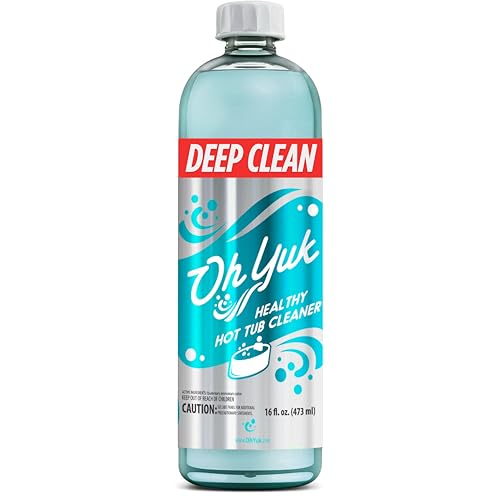
Oh Yuk Healthy Hot Tub Cleaner is a concentrated 16-fluid-ounce plumbing flush formulated to purge interior pipe walls, jet lines, and circulation fittings in indoor and outdoor hot tubs, portable spas, and swim spas. It is engineered specifically for homeowners, vacation rental operators, and regular spa owners preparing for a scheduled drain-and-refill cycle who want to eliminate the hidden organic waste that normal filtration and sanitizing tablets leave behind.
Hidden pipe buildup and accumulated body oils inside circulation lines are frequent culprits behind recurring cloudy water, surface foaming, and weakened jet pressure. By penetrating the interior plumbing pathways, this cleaner lifts and suspends embedded contaminants so they circulate out into the main footwell. This deep purge enables fresh water treatments to work much more effectively after refilling, since sanitizers no longer have to expend oxidation power fighting hidden line residue.
Circulation line maintenance directly benefits mechanical equipment by helping water move freely through pumps, heaters, and filter manifolds. When plumbing lines remain free of restrictive film and buildup, circulation pumps operate with less backpressure, allowing filter cartridges to trap suspended solids cleanly and consistently without unnecessary mechanical strain.
Using a plumbing cleaner requires timing your application around a complete water change, as the dislodged residue must be drained from the spa shell after running the jets. Hot tub owners should expect to wipe down the acrylic surface and water line once the tub empties, removing any residual oils before rinsing and refilling with fresh tap water.
While the 16-ounce bottle provides convenient handling for standard backyard spas, owners of oversized swim spas or tubs with years of neglected plumbing should check manufacturer dosage directions to ensure adequate volume. Furthermore, this product is designed purely as an evacuation flush before draining, meaning bathers must wait until the tub is emptied, rinsed, and refilled with fresh, balanced water before soaking.
For spa owners battling persistent water cloudiness or those establishing a dependable seasonal maintenance schedule, Oh Yuk Healthy Hot Tub Cleaner delivers a practical way to reset circulation lines. Verifying your spa water capacity and having clean towels or sponges ready to wipe the shell after draining ensures a smooth cleaning process and pristine water for your next soak.
Using Oh Yuk Healthy Hot Tub Cleaner is most effective when coordinated with your regular quarterly drain-and-refill schedule. Remove your filter cartridges prior to running the cleaner through the system to avoid trapping heavy dislodged gunk inside your primary filter pleats.
Turn on all jet pumps and allow the cleaner to circulate thoroughly through all plumbing lines according to the manufacturer label directions. Once the cleaning cycle finishes, drain the spa completely and wipe down the acrylic shell to remove any lifted oils and residue before refilling with fresh water.

Pros
- Combines cleaner, clarifier, and conditioner to reduce the number of separate specialty chemical bottles needed
- Does not require draining the spa, making it practical for cold-weather maintenance when draining is risky
- Compatible with standard chlorine and bromine sanitizing systems
- Helps dislodge hidden oils and line buildup that standard sanitizers alone may struggle to clear
Cons
- Does not replace primary sanitizers such as chlorine or bromine and must be used as a supplement
- Initial treatment can release accumulated plumbing grime, requiring extra filter rinsing and waterline wiping
- At 16 fluid ounces per bottle, owners of larger spas may need frequent reorders for year-round weekly dosing
Oh Yuk 5-in-1 Hot Tub Cleaner, Clarifier, and Conditioner is a multi-purpose liquid water treatment designed to streamline routine spa maintenance without draining the tub. It serves spa owners, rental property operators, and busy households who want to prevent cloudy water and line buildup alongside their regular sanitation routine. Rather than managing separate bottles of clarifier, plumbing line maintenance, and water softeners, this single 16-ounce formulation tackles multiple water quality challenges at once.
In daily hot tub ownership, bather loads introduce body oils, lotions, and organic residues that coat plumbing walls and create dull, cloudy water. This 5-in-1 formula actively suspends and lifts those trapped residues, allowing the built-in clarifier to coagulate fine debris so your filter cartridge can capture it. It also conditions the water to improve overall water feel, making soaks feel noticeably smoother without altering primary sanitizer baselines. Because it works without requiring a water drain, it proves especially valuable during freezing winter months when draining and refilling a spa is inconvenient or hazardous.
A crucial factor in hot tub water chemistry is chemical compatibility, and this product is engineered strictly as a supportive supplement rather than an EPA-registered sanitizer. It is formulated to work seamlessly with standard chlorine or bromine maintenance systems. It will not eliminate the need to test and balance free sanitizer, pH, or total alkalinity. Instead, by neutralizing organic residues and keeping plumbing lines clearer, it helps your primary sanitizer work more efficiently without being consumed prematurely by hidden organic contaminants.
Applying the treatment is straightforward, but users should prepare for the way deep-cleaning additives interact with existing buildup. During the first few doses, especially in older spas or tubs with heavy bather traffic, the formula may purge accumulated oils and residue from the plumbing into the main footwell. Spa owners should anticipate wiping down the waterline with a clean cloth and removing the filter cartridge for a thorough rinse 24 to 48 hours after application to prevent dislodged debris from re-circulating.
While the formula simplifies maintenance, it comes with practical limitations that every hot tub owner should understand. The 16-ounce bottle size provides a compact footprint for spa caddies, but frequent weekly dosing across large multi-person hot tubs means a single bottle may deplete quickly. Furthermore, this maintenance product is not an emergency purge flush intended for complete tub draining, nor will it correct severe chemical imbalances caused by neglected calcium hardness or erratic pH levels.
Oh Yuk 5-in-1 Hot Tub Cleaner is best suited for hot tub owners who want to minimize weekly water care steps and preserve water clarity without dumping their water. Before purchasing, verify your spa sanitation setup to confirm you have an established chlorine or bromine routine in place, and ensure you have spare filter cartridges or cleaning tools ready to handle any dislodged residue from the initial treatment.
Using this 5-in-1 treatment on a weekly schedule helps control the organic film and cosmetic oils that normally accumulate on hot tub acrylic and inside internal jet lines. Regular use prevents stubborn waterline rings from setting, which reduces the need for aggressive scrubbing pads that could scratch spa shell surfaces.
Because the built-in clarifier groups micro-particles together for mechanical removal, filter care is directly tied to the success of this treatment. Hot tub owners should inspect and rinse their pleated filter cartridges with clean water shortly after dosing, as the filter media will trap an increased amount of suspended matter once the clarifier takes effect.
Oh Yuk 5-in-1 is formulated to work in harmony with traditional hot tub sanitizers, specifically standard chlorine and bromine water care regimens. It does not replace residual sanitizers, oxidizers, or shock treatments, meaning regular testing of free available sanitizer levels remains necessary.
Adding this conditioner and clarifier assists in maintaining consistent water chemistry by reducing organic demand on the sanitizer. Always ensure your hot tub water is properly balanced for pH and total alkalinity before introducing specialty water conditioners to achieve the best clarity and water feel.

Pros
- 3D honeycomb woven mesh helps trap oils, lotions, and surface slime effectively
- Machine washable on cold delicate cycle or rinsable in cold water for repeated use
- Can float freely during regular spa filtration cycles or when the spa is covered
- Decorative turtle design makes it easy to spot and remove before soaking
Cons
- Requires periodic manual rinsing or washing after 1 to 2 uses to maintain absorption performance
- Comes as a single sponge pack, meaning you may lack a backup while one is being washed and air dried
- Does not replace chemical sanitizers, water testing, or routine cartridge filter cleanings
The ANSLCA Hot Tub Scum Absorber is a floating, oil-absorbing spa accessory shaped like a turtle, engineered to reduce surface slime, cosmetics, and body oils in residential spas, swim spas, and small pools. Hot tub owners frequently battle oily scum lines along the waterline caused by sunscreens, natural skin oils, and cosmetics. This reusable accessory suits hot tub owners, vacation rental hosts, and busy homeowners seeking an uncomplicated preventive tool to cut down on acrylic shell scrubbing and prolong water clarity between chemical treatments.
Operating on a passive absorption concept, the turtle sponge utilizes a 3D honeycomb woven construction that grabs suspended oils from the water surface. Spa owners can drop the sponge into the water when the tub is idle or leave it floating during scheduled filtration cycles where circulating water directs surface film toward the mesh. By trapping oils early, the sponge helps keep residues from adhering to the acrylic shell or prematurely loading up the pleats of your main spa filter cartridge.
The unit features a textured 3D honeycomb weave structured in a recognizable blue turtle shape. Unlike traditional disposable foam blocks that can break down quickly or flake into pump impellers, this woven design is made to withstand repeated moisture exposure. The exterior fabric design maintains structural shape while floating, allowing oils to permeate the interior while staying intact throughout prolonged soaking periods.
Using the sponge requires virtually no installation or tools. Simply place the turtle into your hot tub or outdoor spa water, where it floats freely and collects unwanted debris and oils. Routine maintenance is straightforward: manufacturer instructions suggest rinsing it with cold tap water after one to two uses or placing it in a washing machine on a delicate cold cycle. It should be air dried thoroughly before reuse, making it practical to keep in regular rotation for everyday water care.
While a scum absorber reduces surface oils, it is not a cure-all for overall water balance or heavy particulate matter. It does not replace chlorine, bromine, mineral sanitizers, or regular filter cleanings. Because this product is sold as a single unit, owners must remove and wash it frequently, which means you will not have an active sponge in the spa while the unit is washing or drying. Additionally, if the sponge becomes saturated with heavy body lotions, its absorption rate slows down until it is thoroughly laundered.
The ANSLCA turtle scum absorber is well-suited for spa owners who want an affordable, reusable solution to limit scum lines without adding harsh clarifying chemicals. Before purchasing, verify that a floating sponge fits your routine and consider whether keeping an extra sponge on hand will be helpful during laundering cycles. When paired with proper sanitizer levels and consistent filter care, this little accessory offers genuine practical value for routine hot tub maintenance.
Proper cleaning intervals help maintain the absorption capacity of the 3D honeycomb weave. According to product guidelines, rinsing the turtle sponge under cold running water after one or two spa sessions removes loose oils and prevents lotion buildup from hardening within the fibers. For deeper cleaning, it can be run through a washing machine on a cold, delicate cycle without harsh detergents or fabric softeners that might introduce unwanted foaming agents into your spa water.
Air drying is recommended after washing to preserve the integrity of the woven structure. Avoid using high heat in a tumble dryer, as extreme temperatures can degrade synthetic fibers over time. Keeping the sponge clean not only ensures effective oil capture during each soak but also prevents the transfer of old residues back into freshly balanced hot tub water.
Integrating the scum absorber into daily hot tub ownership requires minimal effort. Spa owners can leave the turtle floating in the water while the tub is covered between uses or allow it to float freely during automatic filtration cycles. Circulating water from the jets naturally directs floating lotions, body oils, and cosmetic residues into contact with the 3D honeycomb surface.
For safety and comfort, remove the floating turtle and place it on a clean spa-side tray before bathers enter the hot tub. This keeps the sponge from being pushed against high-pressure jet grates or submerged under seat cushions, ensuring it remains intact and ready to drop back into the tub once your soaking session is finished.
Pros
- Passively collects surface oils and cosmetic residues without requiring tools, power, or installation
- Helps reduce waterline scrubbing and keeps spa filter cartridges cleaner between deep rinses
- Simple to maintain by rinsing with fresh tap water and squeezing out trapped residues
- Includes two reusable sponges in a single package for rotation across routine soak cycles
Cons
- Naturally discolors and turns brownish-gray as it traps grime, which can look unsightly over time
- Requires frequent rinsing and manual squeezing during periods of heavy bather usage
- Does not replace fundamental water care, chemical sanitization, or periodic shock treatments
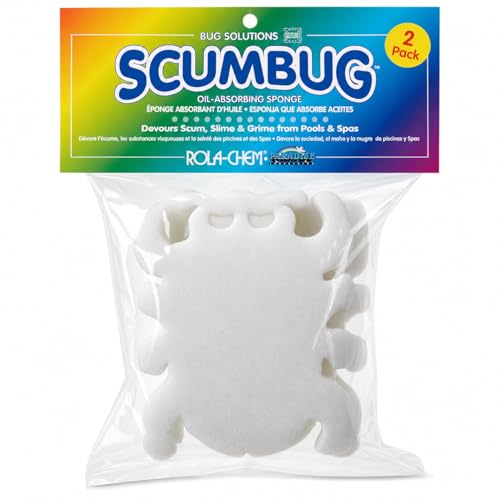
The Rola-Chem Scumbug 2-Pack is a passive surface-cleaning sponge designed to capture floating body oils, lotions, pollen, and environmental residues in residential hot tubs, swim spas, and pools. For spa owners, bather waste such as sunscreens, skin conditioners, and natural body oils quickly rises to the surface, creating an unsightly grime line along the acrylic shell. This floating bug-shaped absorber targets that floating residue immediately, making it a practical tool for families, vacation rental hosts, and daily spa users who want to keep water surfaces clean with minimal manual labor.
In daily hot tub maintenance, floating scum absorbers help protect both water clarity and filtration components. When oils collect on the surface, they eventually coat the cartridge pleats of your spa filter or bake onto the tub shell at the waterline, requiring abrasive scrub pads or specialized cleaning sprays. By floating freely on the water or sitting inside the skimmer well, the Scumbug collects these contaminants continuously. The manufacturer highlights that the absorber can hold up to 40 times its weight in oils and scum without obstructing water flow or restricting filtration plumbing.
The construction relies on a porous, oil-attracting sponge material fabricated in an identifiable bug silhouette. Weighing less than an ounce, the lightweight white sponge floats easily on top of turbulent or still water. Its open-cell matrix is engineered specifically to draw in oily hydrophobic substances while allowing water to pass through. While the listed shipping dimensions are approximately 8 x 8 x 8 inches for the two-pack packaging, the sponges themselves are sized to float unobtrusively in the corner of a spa without interfering with bathers during routine soaking sessions.
Day-to-day operation is straightforward and requires virtually no installation. Owners simply toss one Scumbug into the hot tub water or place it inside the skimmer weir where water flow naturally directs floating film. Routine maintenance involves pulling the sponge out periodically, rinsing it thoroughly with fresh tap water, squeezing out the trapped grime, and tossing it back into the spa. Because this package includes two absorbers, owners can easily keep one active in the water while the other is being cleaned and dried.
Hot tub owners should keep in mind that a scum absorber is a supplementary cleaning tool rather than a substitute for chemical sanitization. The Scumbug will not balance pH, sanitize bacteria, or eliminate heavy organic loads that require oxidizing shock treatments. Additionally, as the white sponge absorbs heavy cosmetics, tanning oils, and pollen, it will visibly discolor and turn dark, which is normal but may look unappealing if left floating during social gatherings. In tubs with strong surface suction, the sponge may occasionally drift over the drain grate if not kept inside a skimmer basket.
For spa owners seeking a simple way to minimize waterline scrubbing and keep filter cartridges cleaner between deep rinses, the Rola-Chem Scumbug two-pack offers excellent practical utility. It provides a low-cost, reusable defense against cosmetic film and scum rings in acrylic spas, cedar hot tubs, and inflatable models alike. Before purchasing, verify your preferred placement strategy, whether floating free in the bathing area or tucked safely inside your filter compartment for out-of-sight oil collection.
Maintaining the Rola-Chem Scumbug requires only a few minutes of attention during weekly hot tub water checks. When the sponge becomes discolored or feels slick with accumulated body oils, remove it from the spa and rinse it under warm running tap water. Squeeze the sponge firmly between your hands to release the trapped oils and grime, repeating the rinse cycle until the runoff runs clear.
Avoid washing the Scumbug with harsh laundry detergents, bleach, or automated washing machines, as household soaps can introduce residual foam into your hot tub water. Once thoroughly rinsed and gently squeezed dry, the sponge can be returned directly to the water. Rotating between the two sponges provided in the pack extends the functional life of each unit across an entire soaking season.
Using an oil-absorbing sponge works alongside your existing sanitizer routine to reduce the demand on chemical treatments. By passively removing organic oils, lotions, and environmental pollen from the surface, the Scumbug prevents these contaminants from reacting with chlorine or bromine sanitizers. This reduction in organic load can help keep your water clearer and reduce the formation of surface foam caused by cosmetic residues.
To get the best performance without interfering with bathers, place the Scumbug inside the skimmer basket or filter bay where water naturally circulates. If left floating free in the main tub, consider removing it temporarily while entertaining guests to prevent it from tangling in jet streams or drifting into bather seating areas.

Pros
- Coagulates micro-particles so standard spa cartridge filters can trap fine debris
- Designed to clarify cloudy water without altering overall pH balance
- Simple application procedure using active spa jets for rapid circulation
- Compact 1-pint bottle is easy to store alongside routine hot tub chemicals
Cons
- Requires a clean, functioning filter cartridge to physically remove the clumped debris
- Over-dosing can lead to temporary haziness, requiring careful measurement based on spa gallon capacity
- Does not replace primary sanitizers or shock treatments for bacteria and heavy organic buildup
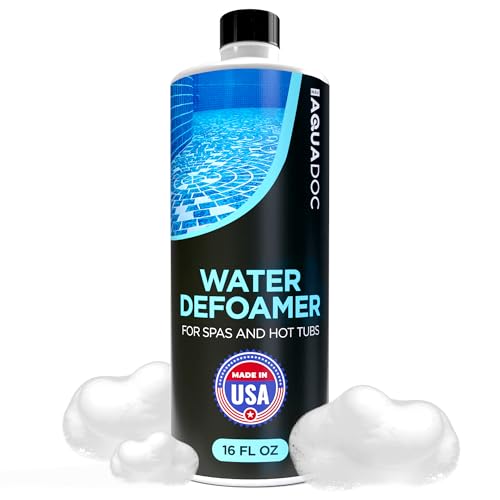
AquaDoc Hot Tub Clarifier is a concentrated liquid treatment designed to clear cloudy water and support routine cartridge filtration. It best suits hot tub owners, vacation rental hosts, and busy homeowners who experience dull or hazy water resulting from bather load, body lotions, or fine airborne debris. Instead of waiting for microscopic suspended solids to slowly cycle out through standard circulation, this formula acts as a coagulant to bundle tiny particles together so spa filters can trap them efficiently.
Microscopic dirt particles are frequently smaller than the micron rating of standard hot tub cartridge filters, allowing them to bypass filter pleats and keep the water looking hazy. AquaDoc works by attracting these micro-particles like a magnet, creating larger agglomerations that the filter media can physically catch. Running spa jets and blowers during application accelerates circulation, allowing the treatment to disperse evenly throughout the tub and push debris toward the skimmer intake.
Maintaining water balance is a central part of spa ownership, and chemical additions that swing pH can trigger scale or skin irritation. This clarifier is formulated to clear water without upsetting established pH levels, which helps avoid cascading chemical adjustments. By pulling floating debris out of suspension, it helps cartridge filters capture dirt effectively, though regular filter rinsing remains essential to flush away the collected material.
Applying the clarifier fits easily into weekly spa care routines without complicated steps. The manufacturer directions suggest adding 2 ounces for every 800 gallons of water while the jets or blowers are active, continuing filtration until the water turns clear. For standard residential tubs, which often hold between 300 and 450 gallons, measuring out roughly 1 ounce twice a week provides consistent water maintenance without over-treating.
While clarifiers improve mechanical filtration, they are not a substitute for proper sanitizer levels, oxidizers, or routine filter cleaning. If a hot tub filter cartridge is already loaded with oils or scale, adding a clarifier will yield limited results until the filter is thoroughly rinsed or degreased. Additionally, overdosing clarifier can have an inverted effect, where excess polymers temporarily cloud the water, making accurate measurement essential.
AquaDoc Hot Tub Clarifier is a reliable, practical addition to any spa chemical cabinet for clearing minor haziness and supporting regular filtration. Before adding it to your spa, verify your water sanitizer levels, test baseline pH, and inspect your cartridge filter to ensure it is clean and ready to trap the gathered particles. Hot tub owners looking for a low-fuss way to preserve water clarity between water changes will find good everyday value here.
Using AquaDoc Hot Tub Clarifier effectively requires basic attention to spa capacity and filtration cycles. The listed dosage is 2 ounces for every 800 gallons of water, meaning most typical residential hot tubs holding 350 to 400 gallons require approximately 1 ounce per application. Adding the measured dose twice weekly with the circulation jets running ensures thorough dispersion across the entire spa shell.
Because the clarifier works by grouping tiny particles into larger debris, your spa filter cartridge does the physical work of removing the cloudiness from the water. Running the filtration cycle until the water clears is essential, followed by a quick garden-hose rinse of the filter pleats to prevent the trapped coagulants from restricting water flow.

Pros
- Contains all four foundational water-balancing chemicals plus 50 test strips in one package
- Compatible with acrylic, inflatable, and wooden spas across chlorine, bromine, and salt systems
- Helps prevent cloudy water, foaming, mineral scale, and heater corrosion caused by imbalanced water
- Manufactured in the USA with reliable, fast-dissolving water-care formulas
Cons
- Does not include primary sanitizers such as chlorine or bromine granules, which must be purchased separately
- Source water with extreme hardness or alkalinity may deplete specific individual bottles faster than the rest of the kit
- Requires careful incremental dosing and testing rather than one-size-fits-all application
The Bio Ouster Hot Tub Water Balancing Kit is an all-in-one water adjustment bundle designed for acrylic, inflatable, and wooden hot tubs. Proper water balance is critical for preventing mineral scale, heater corrosion, and bather discomfort, making this starter collection well suited for new spa owners, seasonal refills, and vacation rental hosts who need foundational water-care essentials in a single convenient package.
Maintaining balanced water chemistry requires managing several interconnected parameters, which this kit addresses through dedicated pH Up, pH Down, Alkalinity Increaser, and Calcium Hardness Increaser formulas. By adjusting total alkalinity first to buffer pH fluctuations, and raising calcium levels to protect internal spa plumbing and heating elements, hot tub owners can maintain clear water and protect their equipment investments.
Routine monitoring is supported by the 50 included test strips, which allow quick checks of pH, total alkalinity, and calcium hardness levels before adding any adjustment chemicals. The formulas are designed to work alongside standard sanitizing systems, including chlorine, bromine, ozone, and salt water configurations, without interfering with filtration systems or causing unwanted cloudy precipitation when added properly.
Integrating this kit into a routine hot tub maintenance schedule requires testing freshly filled or top-off water before adding chemicals in gradual increments. Because chemical demand varies depending on municipal tap water characteristics, tub volume, and bather load, spa owners should add adjustments incrementally with the water jets running to ensure thorough circulation and avoid overshooting targets.
A practical limitation to keep in mind is that this bundle is strictly a water-balancing kit and does not contain primary sanitizers such as chlorine or bromine. Additionally, owners with particularly hard or soft source water may find that one specific chemical depletes faster than the others, eventually requiring individual bottle replacements down the road.
Hot tub owners seeking a straightforward, Made-in-USA foundational chemistry package will find practical everyday value in the Bio Ouster water balancing starter kit. Before purchasing, ensure you have your preferred sanitizer on hand and plan to test your tap water before initial dosing to establish an accurate chemical baseline for your spa volume.
Proper water balancing begins with testing total alkalinity, which serves as the chemical buffer that stabilizes pH levels in your spa water. Using the included test strips, hot tub owners should adjust total alkalinity into the recommended range before fine-tuning pH with either pH Up or pH Down to prevent rapid chemical bounce.
Calcium Hardness Increaser is included to ensure water does not become aggressive or corrosive toward spa heating elements, pump seals, and plumbing fixtures. This is particularly relevant for owners in soft-water areas or those filling spas using whole-house water-softener systems where low calcium levels can accelerate metallic component wear.
The formulas are chemically neutral relative to sanitizers, meaning they can be used safely in spas treated with standard chlorine granules, bromine tablets, saltwater chlorination systems, or ozone generators. Always allow chemicals to circulate for at least twenty to thirty minutes before re-testing water or adding secondary treatment products.
Technical Guide to Draining and Disposing of Spa Water
Emptying a home spa demands significantly more technical care than simply unscrewing a drain cap and letting water flood across your yard. Hot tub water contains high concentrations of chemical biocides, dissolved minerals, and bather waste that can severely damage turfgrass or pollute local waterways. Establishing a structured water evacuation plan protects the surrounding environment while preparing the spa interior and plumbing manifolds for fresh water. Mastering each drainage phase ensures your circulation pumps and heating assemblies operate reliably without suffering preventable mechanical failures.
Understanding When Spa Water Requires Complete Evacuation
Repeated chemical additions cause total dissolved solids to accumulate steadily within the confined volume of your hot tub shell. Every dose of sanitizer, shock oxidizer, pH buffer, and water clarifier leaves behind microscopic mineral residues that cannot evaporate into the atmosphere. As this mineral saturation climbs past fifteen hundred parts per million over starting tap water, sanitizers lose their oxidizing efficiency. The water develops a dull appearance, creates persistent foam at the surface, and produces noticeable chloramine odors that irritate skin and eyes. When regular chemical adjustments no longer restore sparkling clarity, draining the spa becomes the only practical technical remedy.
Owners who sanitize with stabilized chlorine granules face an additional compounding chemical limitation known as cyanuric acid buildup. Cyanuric acid protects free chlorine from solar degradation in outdoor environments, but it does not evaporate or breakdown over time. Once cyanuric acid concentrations climb beyond fifty to eighty parts per million, it creates a condition called chlorine lock. Under chlorine lock, active sanitizer molecules become chemically bound and can no longer sanitize water effectively. Complete water evacuation and disposal remains the only reliable method to eliminate excessive cyanuric acid and reset your sanitizer chemistry.
Navigating Environmental Regulations and Storm Sewer Restrictions
Municipal civil codes enforce rigid legal boundaries separating street storm drains from sanitary sewer collection networks. Outdoor curb drains and storm retention basins channel runoff directly into natural creeks, rivers, and groundwater reserves without industrial filtration. Discharging chemically active spa water into street gutters introduces concentrated oxidizers that destroy beneficial micro-flora and aquatic wildlife. Environmental protection agencies strictly prohibit the dumping of chlorinated pool and spa water into storm systems. Property owners face substantial civil citations and environmental fines when municipal inspection teams trace chemical runoff back to residential driveways.
Sanitary sewer cleanouts represent the most environmentally responsible disposal destination for large volumes of spent spa water. Connecting discharge hoses to an indoor utility sink, basement floor drain, or exterior sanitary inspection pipe directs water to municipal treatment plants. These municipal facilities employ complex filtration and biological processing stages engineered to eliminate suspended solids, body oils, and chemical compounds. High flow rates into indoor fixtures must be monitored closely to prevent p-trap backups or basement drain overflows. Routing water into dedicated sanitary outlets keeps concentrated pollutants away from local wildlife habitats and neighborhood runoff paths.
Neutralizing Chemical Residuals Prior to Drainage
Discharging water across a backyard lawn or landscape beds demands complete neutralization of free chlorine and bromine residuals. Halting all chemical additions several days before drainage allows direct sunlight and atmospheric aeration to burn off active sanitizers naturally. Leaving the hot tub cover open during daylight hours accelerates ultraviolet photolysis, breaking down lingering sanitizer molecules quickly. Verifying that free available sanitizer levels register strictly at zero parts per million with reliable test strips prevents costly landscaping damage. Skipping this verification step risks scorching lawn turf, yellowing ornamental plants, and killing beneficial earthworms in garden soil.
Specialty de-chlorinating compounds provide a rapid alternative when weather conditions or scheduling constraints require immediate spa drainage. Adding chemical neutralizers such as sodium thiosulfate rapidly breaks down active halogen molecules into benign salts within just a few hours. These chemical treatments react instantly with both free and combined chlorine, eliminating oxidizing activity throughout the entire water volume. Checking that water pH falls between 7.2 and 7.8 before emptying water onto turf avoids shocking sensitive root networks with severe acidity or alkalinity. Neutralized water hydrates thirsty lawn areas effectively without altering soil chemistry or damaging concrete patio perimeter footings.
Executing a Plumbing Line Flush to Eliminate Hidden Biofilm
Draining a hot tub without purging internal plumbing lines leaves dense biofilm colonies clinging inside the dark, warm PVC pipe network. Bacterial biofilms secrete protective slime matrices that resist standard water sanitizers and trap exfoliated skin cells, lotions, and body oils. These internal pipe deposits release microscopic particles into fresh water, causing instant cloudiness and rapid sanitizer consumption on the next fill cycle. Circulating Oh Yuk Healthy Hot Tub Cleaner through the water before draining penetrates deep into the jet manifolds to break up stubborn organic deposits. Running jet pumps on high speed for multiple twenty-minute cycles shears biofilm from pipe walls and forces the sludge into the main vessel.
Plumbing flushes inevitably bring large quantities of brown sludge and foamy surfactants to the water surface. Trapping these liberated oils immediately prevents them from adhering to exposed acrylic surfaces as water levels drop during evacuation. Deploying a Hot Tub Scum Absorber – Hot Tub Accessories Pool or a 2 Pack Scumbug Hot Tub Scum Absorber collects floating residues efficiently throughout the circulation cycle. These honeycomb and micro-porous sponges absorb floating cosmetic greases before they create stubborn waterline rings against the shell. Collecting surface contaminants before opening drainage ports protects the shell from heavy scrubbing requirements and ensures complete removal of internal line debris.
Selecting the Optimal Drainage Method: Gravity vs. Submersible Pumps
Every factory hot tub includes an integrated low-point gravity drain spigot situated behind a removable cabinet maintenance panel. Connecting an everyday garden hose to this threaded fitting lets water flow out under natural gravity over several hours. This passive method operates silently and requires no secondary mechanical equipment, making it a dependable option for level backyard grades. Gravity draining takes six to ten hours for an average four-hundred-gallon spa and often leaves several gallons trapped in molded footwell recesses. Slower drainage also increases the likelihood that loosened line purge debris settles and dries along the interior shell.
Submersible utility sump pumps provide an exceptionally fast alternative that empties a full hot tub in thirty to forty-five minutes. Placing a bottom-suction utility pump in the deepest footwell basin pushes water through a large-diameter discharge hose directly to a sanitary drain. High-volume pumps prevent sediment from adhering to acrylic surfaces by moving water before suspended sludge has time to settle. Fast evacuation saves valuable maintenance time and prevents sticky line-flush residues from drying against warm acrylic surfaces. Always ensure power to the hot tub is shut off completely at the main GFCI breaker before placing any motorized pump inside the water.
Cleaning the Acrylic Shell and Inspecting Thermal Accessories
Once the bulk water is evacuated, use a wet-dry utility vacuum to extract remaining puddles from footwells, jet cavities, and filter housings. Wiping down the exposed acrylic shell with clean microfiber cloths removes residual mineral rings and loosened biofilm without damaging the gloss finish. Avoid abrasive household cleaners, glass sprays, or dish soaps that introduce phosphates and create uncontrollable foaming problems when the tub refills. Diluted white vinegar or specialized spa surface cleaners dissolve hard water scale along the waterline gently. Inspect all jet nozzles for grit buildup and rotate each assembly to ensure mechanical diverter rings move freely.
An empty hot tub offers an excellent opportunity to inspect your protective top cover for internal water absorption and seam failure. Verifying that your durable thermal spa cover remains lightweight confirms that the internal vapor barrier still protects the core foam from moisture intrusion. Saturated covers lose critical insulating capability and impose severe physical strain on lifter brackets and cabinet attachment points. Replacing a compromised unit with an insulated foldable hot tub cover protects freshly balanced water from seasonal heat loss and debris intrusion. Inspect the underside vinyl skirt and zipper enclosures for mold or mildew, wiping them clean with mild antibacterial solutions.
Refilling Mechanics to Prevent Circulation Pump Air Locks
A frequent error made by spa owners is dropping a garden hose straight onto the footwell floor when refilling the tub. Filling from the bottom up traps large air bubbles inside heater tubes and pump volutes, creating an immediate air-lock condition upon power restoration. Air locks prevent pump impellers from moving water, triggering heater low-flow error codes and dry-fire shutoffs on topside control panels. When water cannot circulate across heating elements, thermal safety sensors activate emergency lockouts to prevent element burnout. Clearing an air lock often requires loosening plumbing pump unions to release trapped air pressure, risking water leaks inside the cabinet.
Eliminate air-lock risks by placing your fill hose directly down into the empty cartridge filter weir housing. Water introduced through the filter canister flows downward through the internal plumbing manifold first, pushing trapped air outward through open jet nozzles. This top-down hydraulic path fills the pump wet ends and heater barrel before water ever rises into the footwell. Continue filling until the water level comfortably covers all upper hydrotherapy jets and reaches the midway point of the skimmer throat. Keeping the GFCI breaker switched off throughout the entire refilling process prevents heating elements from firing without continuous water flow.
Fresh Water Chemical Balancing and Startup Dosing
Once water reaches the proper operational fill line, turn the GFCI disconnect switch on and let the circulation pump run to purge micro-bubbles. Test the fresh water immediately to establish baseline metrics for total alkalinity, pH levels, and calcium hardness before adding sanitizers. Applying the Bio Ouster Hot Tub Water Balancing Kit allows you to adjust total alkalinity into the target zone of 80 to 120 ppm. Establishing solid alkalinity buffering stabilizes the water and prevents erratic pH swings when chemical sanitizers are introduced later. Wait at least thirty minutes after adding alkalinity increaser before testing and adjusting water pH.
Adjust calcium hardness between 150 and 250 ppm to protect internal heater elements from pitting corrosion and avoid foaming issues in soft fill water. Low calcium hardness prompts water to leach minerals from metal fittings, whereas excessive hardness causes scaling across heater elements. Next, balance pH within the comfortable range of 7.2 to 7.8 before adding EPA-registered chlorine or bromine sanitizers. Once the primary sanitizer residual establishes between three and five parts per million, activate the electric heater to reach target soaking temperatures. Allowing the water to cycle continuously for twelve to twenty-four hours guarantees consistent chemical diffusion and optimal thermal stability.
Extending Future Water Longevity and Drain Intervals
Practicing conscientious weekly water maintenance extends the operational life of fresh water, reducing how often you need to drain the vessel. Incorporating Oh Yuk 5-in-1 Hot Tub Chemicals, Cleaner into your weekly regimen conditions the water, lifts hidden line residues, and simplifies routine chemical adjustments. This multi-action treatment helps prevent suspended organic particles from settling into pipe bends and circulation loops between deep drain cycles. Rinsing pleated cartridge filters under clean hose pressure weekly removes trapped body oils before they degrade into organic compounds. Keeping bather contaminants low prevents total dissolved solids from escalating rapidly, prolonging water freshness across heavy soaking seasons.
Treating occasional water cloudiness promptly prevents suspended micro-particles from overwhelming filter media and forcing premature drainage. Adding a measured dose of AquaDoc Hot Tub Clarifier binds microscopic particles into larger clusters that pleated filter fibers can capture quickly. Clarifiers restore water brilliance without altering underlying sanitizer levels or upsetting carefully established alkalinity balances. Shocking the water with non-chlorine oxidizers after heavy group usage burns off dead bather waste and prevents persistent foaming problems. Combining diligent surface maintenance with weekly oxidation preserves water clarity and protects your spa components between seasonal service cycles.
Disposing of spa water properly is a vital ownership skill that safeguards residential landscapes and protects the long-term health of your hot tub. Selecting the right sanitary disposal path, neutralizing biocides, and completing a deep plumbing flush prevents stubborn biofilm from degrading fresh fill water. Utilizing smart filter-well filling techniques avoids frustrating pump air locks while simplifying your startup chemical balancing routine. Thoughtful water disposal preserves your hot tub investment and ensures every backyard soak remains clean, safe, and deeply relaxing.





Write Your Review
No reviews yet. Be the first to share your experience!