


Sudden surface foam and persistent frothy layers can quickly disrupt an evening soak right when you expect clear, inviting water. Many hot tub owners confuse standard aeration from jet venturi valves with chemical froth caused by soap residue, bather oils, and dissolved organic compounds. Understanding how to stop bubbles in hot tub requires identifying whether the surface layer is harmless air agitation or a sign of water chemistry imbalance. Maintaining proper sanitizer levels alongside balanced pH and alkalinity helps keep surface tension stable so water remains clean and clear.
Residual laundry detergent on swimwear, hair products, and lotions frequently wash into the water, lowering surface tension and producing stubborn froth whenever the pumps run. Shielding your spa from environmental debris with a durable outdoor spa cover reduces organic contaminants that feed foaming issues. When surface bubbles fail to dissipate seconds after turning off the air controls, applying targeted enzyme cleaners and water clarifiers can restore balance quickly. By addressing both mechanical aeration settings and water contaminants, spa caretakers can resolve unwanted froth before it creates oily waterline scum rings.


Pros
- Combines cleaner, clarifier, and conditioner to reduce the number of separate specialty chemical bottles needed
- Does not require draining the spa, making it practical for cold-weather maintenance when draining is risky
- Compatible with standard chlorine and bromine sanitizing systems
- Helps dislodge hidden oils and line buildup that standard sanitizers alone may struggle to clear
Cons
- Does not replace primary sanitizers such as chlorine or bromine and must be used as a supplement
- Initial treatment can release accumulated plumbing grime, requiring extra filter rinsing and waterline wiping
- At 16 fluid ounces per bottle, owners of larger spas may need frequent reorders for year-round weekly dosing
Oh Yuk 5-in-1 Hot Tub Cleaner, Clarifier, and Conditioner is a multi-purpose liquid water treatment designed to streamline routine spa maintenance without draining the tub. It serves spa owners, rental property operators, and busy households who want to prevent cloudy water and line buildup alongside their regular sanitation routine. Rather than managing separate bottles of clarifier, plumbing line maintenance, and water softeners, this single 16-ounce formulation tackles multiple water quality challenges at once.
In daily hot tub ownership, bather loads introduce body oils, lotions, and organic residues that coat plumbing walls and create dull, cloudy water. This 5-in-1 formula actively suspends and lifts those trapped residues, allowing the built-in clarifier to coagulate fine debris so your filter cartridge can capture it. It also conditions the water to improve overall water feel, making soaks feel noticeably smoother without altering primary sanitizer baselines. Because it works without requiring a water drain, it proves especially valuable during freezing winter months when draining and refilling a spa is inconvenient or hazardous.
A crucial factor in hot tub water chemistry is chemical compatibility, and this product is engineered strictly as a supportive supplement rather than an EPA-registered sanitizer. It is formulated to work seamlessly with standard chlorine or bromine maintenance systems. It will not eliminate the need to test and balance free sanitizer, pH, or total alkalinity. Instead, by neutralizing organic residues and keeping plumbing lines clearer, it helps your primary sanitizer work more efficiently without being consumed prematurely by hidden organic contaminants.
Applying the treatment is straightforward, but users should prepare for the way deep-cleaning additives interact with existing buildup. During the first few doses, especially in older spas or tubs with heavy bather traffic, the formula may purge accumulated oils and residue from the plumbing into the main footwell. Spa owners should anticipate wiping down the waterline with a clean cloth and removing the filter cartridge for a thorough rinse 24 to 48 hours after application to prevent dislodged debris from re-circulating.
While the formula simplifies maintenance, it comes with practical limitations that every hot tub owner should understand. The 16-ounce bottle size provides a compact footprint for spa caddies, but frequent weekly dosing across large multi-person hot tubs means a single bottle may deplete quickly. Furthermore, this maintenance product is not an emergency purge flush intended for complete tub draining, nor will it correct severe chemical imbalances caused by neglected calcium hardness or erratic pH levels.
Oh Yuk 5-in-1 Hot Tub Cleaner is best suited for hot tub owners who want to minimize weekly water care steps and preserve water clarity without dumping their water. Before purchasing, verify your spa sanitation setup to confirm you have an established chlorine or bromine routine in place, and ensure you have spare filter cartridges or cleaning tools ready to handle any dislodged residue from the initial treatment.
Using this 5-in-1 treatment on a weekly schedule helps control the organic film and cosmetic oils that normally accumulate on hot tub acrylic and inside internal jet lines. Regular use prevents stubborn waterline rings from setting, which reduces the need for aggressive scrubbing pads that could scratch spa shell surfaces.
Because the built-in clarifier groups micro-particles together for mechanical removal, filter care is directly tied to the success of this treatment. Hot tub owners should inspect and rinse their pleated filter cartridges with clean water shortly after dosing, as the filter media will trap an increased amount of suspended matter once the clarifier takes effect.
Oh Yuk 5-in-1 is formulated to work in harmony with traditional hot tub sanitizers, specifically standard chlorine and bromine water care regimens. It does not replace residual sanitizers, oxidizers, or shock treatments, meaning regular testing of free available sanitizer levels remains necessary.
Adding this conditioner and clarifier assists in maintaining consistent water chemistry by reducing organic demand on the sanitizer. Always ensure your hot tub water is properly balanced for pH and total alkalinity before introducing specialty water conditioners to achieve the best clarity and water feel.

Pros
- Coagulates micro-particles so standard spa cartridge filters can trap fine debris
- Designed to clarify cloudy water without altering overall pH balance
- Simple application procedure using active spa jets for rapid circulation
- Compact 1-pint bottle is easy to store alongside routine hot tub chemicals
Cons
- Requires a clean, functioning filter cartridge to physically remove the clumped debris
- Over-dosing can lead to temporary haziness, requiring careful measurement based on spa gallon capacity
- Does not replace primary sanitizers or shock treatments for bacteria and heavy organic buildup
AquaDoc Hot Tub Clarifier is a concentrated liquid treatment designed to clear cloudy water and support routine cartridge filtration. It best suits hot tub owners, vacation rental hosts, and busy homeowners who experience dull or hazy water resulting from bather load, body lotions, or fine airborne debris. Instead of waiting for microscopic suspended solids to slowly cycle out through standard circulation, this formula acts as a coagulant to bundle tiny particles together so spa filters can trap them efficiently.
Microscopic dirt particles are frequently smaller than the micron rating of standard hot tub cartridge filters, allowing them to bypass filter pleats and keep the water looking hazy. AquaDoc works by attracting these micro-particles like a magnet, creating larger agglomerations that the filter media can physically catch. Running spa jets and blowers during application accelerates circulation, allowing the treatment to disperse evenly throughout the tub and push debris toward the skimmer intake.
Maintaining water balance is a central part of spa ownership, and chemical additions that swing pH can trigger scale or skin irritation. This clarifier is formulated to clear water without upsetting established pH levels, which helps avoid cascading chemical adjustments. By pulling floating debris out of suspension, it helps cartridge filters capture dirt effectively, though regular filter rinsing remains essential to flush away the collected material.
Applying the clarifier fits easily into weekly spa care routines without complicated steps. The manufacturer directions suggest adding 2 ounces for every 800 gallons of water while the jets or blowers are active, continuing filtration until the water turns clear. For standard residential tubs, which often hold between 300 and 450 gallons, measuring out roughly 1 ounce twice a week provides consistent water maintenance without over-treating.
While clarifiers improve mechanical filtration, they are not a substitute for proper sanitizer levels, oxidizers, or routine filter cleaning. If a hot tub filter cartridge is already loaded with oils or scale, adding a clarifier will yield limited results until the filter is thoroughly rinsed or degreased. Additionally, overdosing clarifier can have an inverted effect, where excess polymers temporarily cloud the water, making accurate measurement essential.
AquaDoc Hot Tub Clarifier is a reliable, practical addition to any spa chemical cabinet for clearing minor haziness and supporting regular filtration. Before adding it to your spa, verify your water sanitizer levels, test baseline pH, and inspect your cartridge filter to ensure it is clean and ready to trap the gathered particles. Hot tub owners looking for a low-fuss way to preserve water clarity between water changes will find good everyday value here.
Using AquaDoc Hot Tub Clarifier effectively requires basic attention to spa capacity and filtration cycles. The listed dosage is 2 ounces for every 800 gallons of water, meaning most typical residential hot tubs holding 350 to 400 gallons require approximately 1 ounce per application. Adding the measured dose twice weekly with the circulation jets running ensures thorough dispersion across the entire spa shell.
Because the clarifier works by grouping tiny particles into larger debris, your spa filter cartridge does the physical work of removing the cloudiness from the water. Running the filtration cycle until the water clears is essential, followed by a quick garden-hose rinse of the filter pleats to prevent the trapped coagulants from restricting water flow.
Practical Solutions to Eliminate Spa Foam and Unwanted Bubbles
Persistent foaming in a spa indicates that water chemistry, bather habits, or mechanical air intake settings require immediate adjustment. Bubbles that collapse instantly as water circulates are typically a normal byproduct of hydrotherapy jets, whereas dense, cloudy froth points toward chemical contamination. Resolving this issue involves diagnosing whether the bubbling stems from mechanical aeration or surfactant buildup. Taking a systematic approach allows hot tub owners to restore crystal water without guessing which treatment to apply.
Distinguishing Normal Hydrotherapy Bubbles from Problematic Foam
Hydrotherapy jets work by mixing pressurized water with ambient air through venturi injectors to create invigorating massage streams. This mechanical action produces large, clear bubbles that break apart and disappear within seconds after reaching the water surface. In contrast, problematic foam forms a thick, frothy blanket that lingers long after you switch off the jet pumps. Persistent foam often feels slippery between the fingers and can collect into yellowish or brown froth along the acrylic edges.
Water with normal aeration remains completely transparent, allowing you to see the bottom suction drains and seating contours clearly. Contaminated foam usually accompanies hazy or cloudy water, signaling the presence of dissolved organics or improper sanitizer levels. If the bubbles persist for several minutes after shutting down the blowers, surfactants have compromised the water surface tension. Recognizing this distinction prevents unnecessary chemical additions when the jets are simply performing their intended mechanical function.
Inspecting Mechanical Air Controls and Jet Venturi Valves
Excessive bubble production during routine operation often traces back to open air control dials on the spa topside deck. Air control valves regulate the amount of atmospheric air pulled into the jet streams through the venturi effect. Turning these dials completely counterclockwise or closing them restricts air intake, allowing only smooth water streams to flow through the nozzles. If you want a calm soak without vigorous bubble agitation, closing these valves provides an immediate mechanical fix.
Loose plumbing fittings or compromised O-rings on the suction side of the circulation pump can also pull unwanted air into the system. When air leaks into the pump suction line, the impeller churns air pockets directly into the primary water stream, producing continuous micro-bubbles even when the topside air controls are closed. Inspecting pump union connections and valve seals ensures the plumbing lines remain under proper hydraulic pressure. Eliminating unwanted air leaks protects pump impellers from cavitation while keeping excess surface disturbance under control.
Common Chemical and Organic Causes of Persistent Spa Foam
Surfactants represent the primary chemical culprit behind thick, lingering hot tub foam. Surfactant molecules reduce the surface tension of water, trapping air in durable pockets that refuse to pop naturally. Common sources include laundry detergent residue left on bathing suits, hair conditioners, body lotions, cosmetics, and natural skin oils. When multiple bathers enter the hot water, high temperatures open skin pores and wash these compounds directly into the spa water.
Imbalanced water chemistry significantly accelerates foaming by destabilizing the water structure. Low calcium hardness below 150 parts per million creates soft water conditions that naturally encourage excessive lathering and bubble formation. Inadequate sanitizer levels, whether using free chlorine or bromine, allow organic waste to accumulate rather than being oxidized. Low total alkalinity and unstable pH levels further weaken the sanitizer ability to break down oily contaminants, creating an environment ripe for frothy surface layers.
Cheap algaecides or unapproved household cleaning agents introduced to the acrylic shell can also trigger immediate, severe foaming. Using conventional bubble baths, dish soap, or non-spa cleaning sprays will coat internal plumbing lines with persistent soap films. Even municipal tap water can introduce organic contaminants that react with spa heat and agitation. Maintaining strict chemical boundaries and monitoring water balance weekly prevents these surfactant reservoirs from taking hold.
Immediate Corrective Actions Using Anti-Foam and Clarifying Treatments
When unexpected guests arrive or you need a rapid cosmetic fix, specialized anti-foam products provide fast surface relief. Anti-foam agents work by instantly disrupting the surface tension of the bubble walls, causing the frothy layer to collapse within seconds. However, standard silicone-based defoamers only mask the visible symptom without eliminating the dissolved oils or detergents causing the issue. Relying solely on defoamers can cause oily residue to collect on filter cartridges over time.
Water clarifiers take treatment a step further by neutralizing suspended micro-particles that escape standard cartridge filtration. Products such as AquaDoc Hot Tub Clarifier act like a magnet, clumping microscopic contaminants together so the pleated filter can trap them effectively. Adding two ounces of clarifier while running the jets helps clear cloudy water and removes the fine debris that supports bubble formation. Running the filtration cycle for several hours after dosing allows the filter cartridge to capture these newly formed clusters.
Multi-action formulas provide an even more direct approach to foam control by modifying the underlying water condition. The Adios! 3-in-1 Hot Tub Cleaner Clarifies Water targets the source of cloudy water and odors while reducing foam buildup. Because this pH-neutral formula contains no harsh chemicals and works with standard sanitizers, bathers can safely enjoy the hot tub right after application. Combining mechanical filtration with targeted clarifiers clears both the visible foam and the underlying suspended solids.
Breaking Down Scum and Organic Residue with Enzyme Formulas
Enzyme-based water treatments offer a biological solution to organic buildup by digesting non-living contaminants before they cause surface foam. Enzymes actively consume body oils, sweat, residual shampoo, and cosmetic lotions, breaking them down into basic compounds like carbon dioxide and water. Unlike floating scum balls that only absorb surface films, liquid enzyme cleaners treat the entire water volume evenly. This enzymatic digestion prevents oily scum lines from baking onto the acrylic waterline under intense heat.
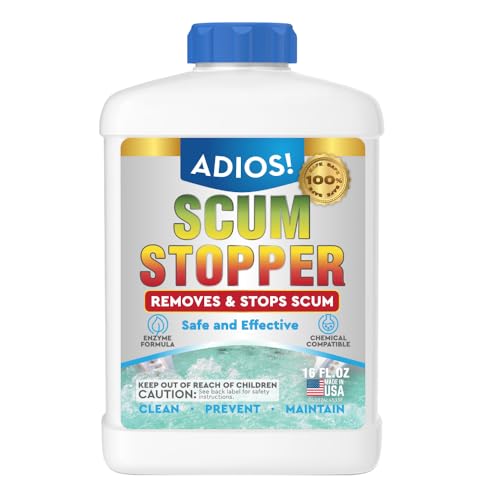
Treating your water regularly with an enzyme product like ADIOS! Spa Scum Remover and Foam Eliminator keeps cartridge filters cleaner and extends their working life. A single 16-ounce bottle provides routine maintenance for up to six months in a standard four-person tub without altering the pH balance. Because it is completely compatible with chlorine and bromine sanitizing programs, it helps reduce the overall chemical shock demand. By eliminating organic food sources, enzymes ensure that surface bubbles dissipate naturally instead of forming stable foam.
Weekly maintenance treatments that blend cleaners and conditioners offer comprehensive protection against recurring water clarity challenges. Applying Oh Yuk 5-in-1 Hot Tub Chemicals, Cleaner helps lift hidden residue and oils from the water and internal plumbing manifolds without requiring a drain cycle. On the first application, heavily soiled spas may push released scum up to the waterline where it can be wiped away easily. Consistent weekly dosing keeps water feeling soft, prevents cloudy hazing, and stops foam from accumulating during vigorous jet cycles.
Deep Cleaning Plumbing Lines and Cartridge Filters
Cartridge filters serve as the primary mechanical barrier against foam-causing particles, making regular filter maintenance essential. When filter fabric becomes clogged with bather oils and dried lotions, water cannot pass through freely, reducing circulation and leaving contaminants in suspension. Rinsing filter pleats weekly with a high-pressure hose nozzle removes loose debris and trapped hair. Monthly soaking in a specialized degreasing filter cleaner dissolves stubborn oils that simple water pressure cannot dislodge.
Over months of normal operation, internal plumbing lines can develop a slimy coating known as biofilm that traps dirt and creates persistent foam. Biofilm shields bacteria and organic residue from routine chlorine or bromine sanitizer levels, leading to repeated water problems despite proper test strip readings. Using a dedicated plumbing purge cleaner before your scheduled water change flushes these hidden deposits out into the main footwell. Thoroughly rinsing the shell and jets after a line purge prevents old surfactant residues from foaming up in fresh water.
Maintaining clean filters also protects your pump motors from excessive strain and reduces the likelihood of low-flow error codes. Ensuring that your spa is properly sheltered with an insulating foldable spa cover keeps airborne pollen, leaves, and dust out of the filtration system. When filters operate with clean, unobstructed fabric, they extract surfactant clumps quickly after clarifier treatments. A pristine filtration loop remains the most dependable defense against lingering bubble problems.
When High Total Dissolved Solids Demand a Drain and Refill
Every chemical addition, shock treatment, and bather entry adds minerals and dissolved solids to the spa water over time. Eventually, the water reaches a state of saturation known as high Total Dissolved Solids (TDS), typically when levels exceed 1,500 parts per million above fill water. At this point, the water becomes chemically exhausted and loses its ability to dissolve new chemicals or maintain surface tension. Foam that appears immediately after adding sanitizers or shocks in aged water is a classic symptom of chemical saturation.
A reliable guideline for residential hot tubs is to drain and refill the water every three to four months, depending on frequency of use and bather volume. You can calculate your specific drain interval by dividing the total water gallons by three, then dividing that figure by the average daily bather count. If your spa holds 400 gallons and averages two bathers per day, plan to replace the water approximately every 66 days. Continuing to add defoamers to saturated water provides diminishing returns and wastes money on temporary fixes.
When draining the tub, take the opportunity to wipe down the acrylic shell with an approved non-foaming surface cleaner to remove residual ring lines. Refilling the spa through the filter compartment forces trapped air out of the plumbing manifolds, preventing air locks in the pump wet end upon startup. Once filled, test and balance total alkalinity first to establish a stable pH buffer before adding your primary sanitizer. Fresh, balanced water with minimal dissolved solids will naturally eliminate stubborn foam layers without requiring heavy chemical intervention.
Preventive Water Care and Bather Habits to Keep Water Clear
Adopting thoughtful bather habits is the simplest and most cost-effective way to prevent foam from developing in the first place. Encouraging bathers to take a quick warm shower before entering removes skin lotions, deodorants, perfumes, and natural body oils. Establishing a dedicated policy for swimwear also makes a massive difference in water clarity. Rinsing bathing suits in plain warm water rather than running them through the laundry with soap prevents detergent residue from contaminating the tub.
Pairing bather discipline with environmental protection keeps outside contaminants from degrading water chemistry. Using a protective patio hot tub cover seals the water surface against falling leaves, bird droppings, and rainwater runoff that alter pH balance. Secure tie-downs and heavy-duty vapor barriers maintain heat retention while preventing wind from blowing fine dirt into open skimmers. A well-protected spa requires significantly fewer chemical treatments to maintain clean, non-foaming water throughout the year.
Maintaining a consistent weekly sanitization and oxidation routine ensures organic contaminants are neutralized before they lower water surface tension. Shocking the water weekly with a non-chlorine oxidizer burns off bather waste, chloramines, and spent sanitizer byproducts. Checking free chlorine levels between three and five parts per million, or bromine between three and six parts per million, keeps bacteria under control. Following these straightforward maintenance habits ensures your hydrotherapy jets deliver soothing massage bubbles rather than stubborn, unsightly foam.







Write Your Review
No reviews yet. Be the first to share your experience!