

Planning a backyard spa installation often brings immediate questions about household wiring and circuit capabilities. When mapping out your space, determining whether does a hot tub use 110 or 220 power becomes an essential first step toward safe operation. Entry-level portable tubs typically run directly on standard household circuits, whereas large acrylic models demand dedicated higher-voltage lines. Investing in a durable patio hot tub cover can protect the shell while you decide which electrical setup suits your backyard layout.
The electrical configuration dictates not only your upfront installation steps but also your daily water heating efficiency and jet power. Spas running on standard residential circuits offer quick setup, while hardwired setups deliver faster temperature recovery during cold outdoor sessions. Pairing the right voltage with an insulated foldable hot tub cover helps minimize thermal loss regardless of the system you select. Understanding these power distinctions ensures your spa runs safely without tripping breakers or stalling during chilly evenings.

Pros
- Complete setup includes both an inflatable insulating bladder and a locking thermal outer cover.
- External heater pump simplifies maintenance and keeps mechanical components outside the water chamber.
- Spacious 57-inch by 57-inch interior floor offers ample foot space for small families or couples.
- Includes replacement filter cartridges and setup accessories directly in the box.
Cons
- Inflatable PVC construction requires a flat, debris-free foundation to prevent surface punctures.
- Comfortably fits 4 adults, though seating 6 full-sized adults will feel tight on the 57-inch inner floor.
- External pump unit requires dedicated dry clearance next to the tub footprint.
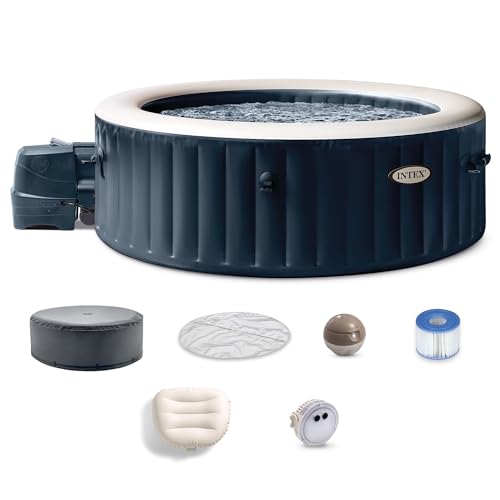
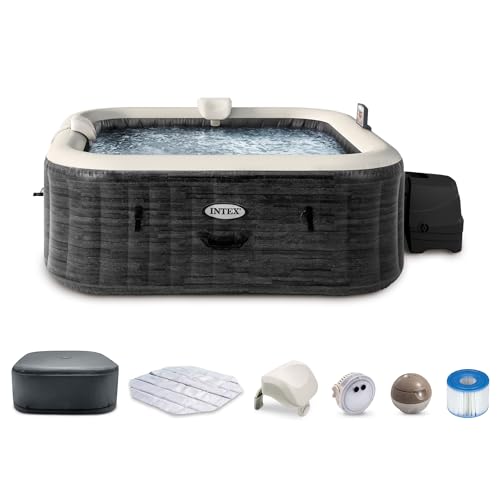
The UHOMEPRO 73-Inch Square Inflatable Hot Tub is a self-contained portable spa designed for homeowners, renters, and families seeking backyard hydrotherapy without the commitment of a hardwired acrylic tub. Built with an exterior footprint measuring approximately 73 inches square by 26 inches tall, this spa incorporates an independent external heater and pump console, 130 air massage jets, and an integrated dual-layer cover. It primarily caters to budget-conscious households and patio owners who desire flexible seasonal soaking, straightforward assembly, and family-friendly relaxation.
Daily operation relies on an external heater pump unit capable of warming spa water up to 104 degrees Fahrenheit via a top-mounted control panel. The 600-watt air blower channels bubbling action through 130 soothing perimeter jets, delivering full-body water agitation for tension relief. Water retention and safety are managed by a dual-layer covering arrangement that pairs an internal inflatable bladder insert with an exterior thermal cover equipped with child safety locks. The inflatable core rests on the water surface to minimize evaporative heat loss, while the locking outer skin prevents wind lift and secures the perimeter against accidental intrusion.
Structural integrity is delivered through multi-layer laminated PVC walls finished with an exterior printed basketweave pattern in a neutral tone. The puncture-resistant material helps resist everyday friction against deck boards or ground cloths when properly situated. Because the pump, heater, and filtration system reside inside an external console rather than an integrated internal wall compartment, servicing access is clear, and the internal floor space remains entirely dedicated to bathers. The set also includes essential maintenance items, including replacement filter cartridges, an inflation hose, a servicing wrench, and repair material.
Setting up the spa requires a flat, level surface capable of supporting water weight alongside access to a standard electrical supply. Inflation is managed directly from the pump assembly using the provided hose, bringing the 26-inch walls to structural rigidity within minutes. Routine ownership involves rinsing or swapping the included cartridge filters regularly to preserve pump circulation and clarity. The dual-cover system requires unbuckling the outer safety straps and setting aside the lightweight inflatable bladder before each soak, a routine that remains manageable for a single person.
Prospective buyers should account for the physical realities of inflatable portable spas before purchasing. While marketed for 4 to 6 people, the 57-inch by 57-inch interior floor provides optimal comfort for 2 to 4 adults, with 6 occupants creating a crowded footwell. In addition, ambient outdoor temperatures significantly dictate heating rates; in colder northern climates, heat loss occurs more rapidly during open soaking despite the dual-layer cover. The PVC exterior also requires conscientious placement away from sharp patio stones, pet claws, and rough ground textures.
For buyers seeking an affordable backyard retreat, the UHOMEPRO Inflatable Hot Tub Set presents a versatile, feature-packed entry point into spa ownership. Its combination of an external modular heater, 130 massage jets, and a dedicated dual-layer locking cover makes it a sensible choice for small families, couples, and seasonal outdoor leisure. Before ordering, verify that your patio or deck provides a minimum 8-foot by 8-foot level clearance to accommodate both the 73-inch tub shell and the external pump console.
Heat retention in the UHOMEPRO Inflatable Hot Tub is handled by a two-stage cover design consisting of an inflatable inner bladder and a fitted outer thermal cover. The inflatable bladder floats directly on the water surface when the spa is idle, creating an insulating air cushion that reduces evaporation and keeps heat trapped within the water column.
The outer thermal cover shields the top rim and fastens securely to the spa walls with integrated child safety buckles. This perimeter locking system prevents wind from lifting the cover during stormy conditions while providing an added level of access control. While these locking straps enhance everyday safety, users must maintain physical supervision around children and pets at all times.
The spa measures 72.83 inches long by 72.83 inches wide with an outer height of 25.59 inches (listed as 73 by 73 by 26 inches). This square exterior footprint provides structured corners that make positioning against deck rails or patio edges straightforward compared to traditional round inflatables.
Inside the spa, the bathing area measures 57 inches by 57 inches across the floor. The 26-inch wall profile makes entering and exiting the tub accessible for most adults while maintaining adequate water depth for seated chest-level submersion. While listed for 4 to 6 bathers, the interior dimension is best suited for 2 to 4 adults seeking spacious legroom, or families with small children.


Understanding Voltage Requirements for Backyard Hot Tubs
Backyard hot tubs can operate on either 110-volt or 220-volt electrical systems, depending on their size, pump design, and heating hardware. In residential settings, people frequently refer to these categories as 110V versus 220V, though nominal electrical service in North America is often designated as 120V and 240V. Portable inflatables and compact entry spas generally rely on 110-volt standard circuits, making them accessible for quick backyard placement. Larger acrylic models require dedicated 220-volt connections to supply sufficient amperage for multiple pumps and heavy-duty heating elements.
Choosing between these two power ratings shapes your soaking experience, installation timeline, and ongoing energy performance. A smaller plug-in tub allows you to avoid immediate electrical contracting work, but it comes with distinct operating boundaries. A hardwired spa requires significant electrical preparation, yet it delivers unmatched hydrotherapy and rapid temperature recovery. Evaluating your climate, personal soaking habits, and existing breaker panel will help you identify which electrical format fits your home best.
How 110-Volt Plug-and-Play Systems Operate in Daily Use
Plug-and-play spas are designed to connect directly into a standard 15-amp or 20-amp household receptacle. These units include a built-in Ground Fault Circuit Interrupter on their power cord to ensure immediate electrical safety. Because standard outlets deliver limited total wattage, these spas typically feature electric heaters rated between 1 kilowatt and 1.5 kilowatts. That power level is adequate for maintaining heat in moderate weather, but it limits overall system flexibility.
The most notable limitation of a 110-volt spa involves component sharing. Because a 15-amp or 20-amp breaker cannot supply enough current for the heater and high-speed water pumps simultaneously, the control board automatically disables the heater whenever you activate the massage jets on high. During a long soak in cool weather, water temperature will gradually drop while the jets run. Once you turn the jets off, the control pack redirects electrical power back to the heating element to slowly rebuild water temperature.
Initial heating on a 110-volt system also demands patience. A typical plug-and-play tub filled with cool tap water warms at a rate of roughly 1 to 2 degrees Fahrenheit per hour. Bringing a fresh fill from 55 degrees up to the maximum operating temperature of 104 degrees Fahrenheit can take well over 24 hours. For seasonal users and renters, however, the convenience of avoiding trenching and electrical subpanel installation often outweighs the slower heating speed.
Heating Performance and Concurrent Jet Operation Under 220V Power
Hardwired 220-volt hot tubs function as robust hydrotherapy appliances with substantial electrical demand. These installations require a dedicated circuit supplied by a 40-amp, 50-amp, or 60-amp double-pole breaker in your electrical panel. With access to 240 volts of electricity, the spa can house a heavy-duty 4-kilowatt to 5.5-kilowatt heating element alongside multiple pump motors. This increased power capacity fundamentally changes how the spa operates during daily soaking sessions.
The primary advantage of a 220-volt system is the ability to run the heater and high-speed hydrotherapy pumps concurrently. High-performance models, such as the Comfort Hot Tubs 6-person luxury spa with its 44 hydrotherapy jets, depend on a 220-volt supply to power intensive water movement without turning off the heating element. You can run all therapeutic massage jets at maximum pressure in freezing ambient temperatures without watching the water cool down. The system continually replaces lost heat in real time, preserving consistent thermal comfort.
Thermal recovery after refilling or heavy use occurs much faster on a 220-volt circuit. A hardwired spa can raise water temperature at a rate of 3 to 6 degrees Fahrenheit per hour under normal conditions. This rapid heat cycle reduces downtime significantly when draining and refilling the tub for routine water maintenance. For households that use their spa several times a week or host multiple guests, this rapid recovery makes a noticeable difference in overall convenience.
Cold Weather Thermodynamic Retention and Recovery Rates
Outdoor ambient temperatures expose the stark physical differences between 110-volt and 220-volt spa engineering. When winter air drops below freezing, water loses thermal energy rapidly through surface evaporation and conductive cabinet losses. A 110-volt heater generating only 1.5 kilowatts struggles to overcome rapid heat dissipation once the insulating cover is removed. If the air blower or massage jets are running, incoming ambient air cools the water even faster while the heater sits idle.
Adding a dense, well-fitted oversized hot tub cover is critical for minimizing passive thermal loss, especially on lower-voltage units. A high-density foam cover creates a thermal barrier that traps heat when the spa is idle, keeping your electric utility costs manageable. However, once the cover comes off for an evening soak, only active heating power can sustain water temperature. In northern winter climates, a 110-volt spa may lose several degrees during a thirty-minute soak, whereas a 220-volt model maintains a steady 104 degrees Fahrenheit.
Freeze protection systems also operate with greater reliability on dedicated 220-volt lines. Portable inflatables and entry tubs often feature automated freeze-prevention programming, such as cycling low-speed circulation when temperatures near 40 degrees Fahrenheit. While these safeguards protect internal pipes from ice formation, extreme prolonged freezes can overwhelm low-wattage elements. Hardwired spas generate enough continuous thermal energy to easily defend plumbing manifolds and pump volutes against freeze damage even during harsh winter storms.
Electrical Safety, GFCI Disconnects, and NEC Article 680 Standards
Water and electricity require rigorous installation standards to protect bathers from shock hazards. The National Electrical Code, specifically Article 680, sets strict guidelines for outdoor spa wiring and safety disconnects. Every permanent 220-volt hot tub must be protected by an external GFCI disconnect switch housed in a weatherproof enclosure. This emergency disconnect must be installed within clear sight of the tub but positioned at least 5 feet away from the water edge to prevent accidental contact from inside the spa.
Proper conductor sizing is another non-negotiable safety element for high-voltage installations. A 50-amp spa circuit typically demands four-wire service consisting of two hot conductors, one neutral, and one insulated equipment grounding conductor. Electricians generally run 6 AWG copper wire inside rigid electrical conduit from the main panel to the outdoor disconnect and tub control pack. Using undersized wiring or aluminum conductors can lead to dangerous voltage drop, excessive heat buildup, and premature component failure.
Plug-and-play 110-volt spas carry their own essential safety protocols despite avoiding hardwired panels. You must plug the factory-equipped GFCI power cord directly into a dedicated outdoor receptacle protected by an in-use weatherproof cover. Never connect a hot tub to an extension cord, power strip, or shared circuit that powers other household appliances. Extension cords produce severe electrical resistance, which can overheat the cord, cause voltage drops, and trip the internal breaker repeatedly.
Evaluating Inflatable Portability Versus Permanent Acrylic Spas
The choice of voltage often correlates directly with the structural category of the hot tub you choose. Inflatable models like the UHOMEPRO Inflatable Spa Set, Coleman SaluSpa, and INTEX SimpleSpa utilize 110-volt powerpacks to maintain simple portability. These units feature lightweight PVC materials, integrated air bubble systems, and external pump assemblies designed for tool-free setup. They deliver a relaxing warm soak without altering your home electrical infrastructure or requiring permanent site alterations.
In contrast, permanent hard-shell acrylic spas deliver an entirely different caliber of hydrotherapy. The Comfort Hot Tubs 6-person luxury spa represents this category, integrating 44 stainless steel water jets powered by dedicated hydrotherapy pumps on a 220-volt line. Acrylic shells offer deep, ergonomic seating, dedicated footwells, and superior multi-layer perimeter insulation. These rigid construction materials retain structural shape and resist long-term environmental wear far better than flexible air-filled vinyl liners.
Massage dynamics also differ dramatically between these structural formats due to electrical capacity. Inflatable tubs rely primarily on perimeter air rings that bubble through the water, creating gentle overall agitation with minimal localized pressure. Acrylic 220-volt spas use high-volume water pumps to force pressurized streams through targeted hydrotherapy nozzles for deep muscle relief. If your primary goal is therapeutic back and joint relief, the higher amperage of a hardwired acrylic tub delivers the hydraulic pressure you need.
Converting Dual-Voltage Spas from 110 Volts to 220 Volts
Many rotomolded and hard-shell entry spas arrive configured as dual-voltage or convertible models. These units ship from the manufacturer with a 110-volt plug-and-play power cord attached for immediate use. However, the internal control pack and heater element are engineered to accept 220-volt wiring if the owner chooses to upgrade down the road. This flexibility allows buyers to start soaking immediately and upgrade their electrical infrastructure later when budget permits.
Converting a dual-voltage spa requires internal adjustments to the circuit board and terminal block. A technician disconnects and removes the original 110-volt power cord from the equipment bay. Next, specific copper jumper pins on the motherboard must be repositioned to switch the heater relay from 120-volt low-wattage operation to 240-volt high-wattage output. The spa is then wired directly to a newly installed 220-volt subpanel using standard four-wire conduit.
Never attempt a voltage conversion without consulting the manufacturer wiring schematic inside the equipment panel door. Misplacing a circuit board jumper or improperly connecting the neutral line can immediately burn out the logic board, transformer, or topside control panel. Due to the high voltages involved and local permitting requirements, hiring a licensed electrical contractor is the safest and most reliable way to complete a spa conversion.
Site Planning, Panel Capacity, and Total Ownership Costs
Before purchasing any hot tub, evaluating your home main service panel is a vital step. Modern homes typically feature 200-amp electrical service, which usually has ample capacity to absorb an additional 50-amp breaker for a hot tub. Older residences with 100-amp or 150-amp service may already be near peak capacity with central air conditioning, electric ranges, and clothes dryers. In those situations, adding a 220-volt spa might necessitate an expensive main service panel upgrade before installation can proceed.
A plug-and-play 110-volt tub bypasses panel upgrades as long as you have an accessible, unshared 15-amp or 20-amp outdoor circuit. However, ongoing energy consumption presents a different financial picture. Because 110-volt heaters operate for longer cycles to overcome ambient cooling, monthly electrical draw can remain steady or even spike during colder months. Pairing your spa with a protective hot tub cover with warranty coverage helps retain heat and protects your investment against environmental degradation.
Foundation requirements also correlate with the size and weight of your chosen system. Lightweight inflatable models holding 200 to 250 gallons exert modest pressure that level patio pavers or reinforced decking can easily bear. Heavy hard-shell spas holding 350 to 500 gallons weigh thousands of pounds when filled with water and occupants. These installations require a minimum 4-inch reinforced poured concrete pad to prevent settling, cracking, and plumbing stress over years of operation.
Choosing the Right Voltage for Your Lifestyle and Climate
Deciding whether to select a 110-volt or 220-volt spa ultimately depends on where you live and how you intend to use the water. If you reside in a rental property, plan to move soon, or live in a warm southern climate, a 110-volt portable model offers tremendous flexibility. You avoid permanent infrastructure investments, setup takes less than an afternoon, and warm ambient temperatures minimize heat loss during use. It provides casual hydrotherapy and social relaxation with minimal logistical commitment.
If you live in a cold northern region or suffer from chronic muscle stiffness, a 220-volt hot tub is well worth the initial electrical investment. The ability to maintain 104 degrees Fahrenheit while running dozens of high-pressure hydrotherapy jets transforms winter backyard soaking into a truly therapeutic experience. Faster temperature recovery also ensures the tub remains ready for daily morning or evening use without long reheating delays between cycles.
Carefully balance your initial budget, site conditions, and hydrotherapy expectations before making a final choice. Check your breaker panel capacity, measure your patio clearance, and review local electrical permitting rules. Whether you choose the plug-and-play ease of 110 volts or the robust heating power of 220 volts, a properly planned electrical setup ensures safe, comfortable, and reliable soaking for years to come.



Write Your Review
No reviews yet. Be the first to share your experience!