

Sunken spas create an elegant, low-profile backyard aesthetic that mimics high-end luxury resorts. Many homeowners contemplate how to bury a hot tub to eliminate the bulky, towering presence of an above-ground acrylic cabinet on their patio. Achieving this sleek profile requires far more engineering than simply digging a hole in the lawn and dropping the cabinet into raw earth.
Direct soil contact can quickly crush exterior side panels, flood sensitive circuit boards, and trap corrosive moisture around structural framing. Proper recessed installations require a dedicated concrete vault, engineered drainage, perimeter equipment clearances, and snug yard patio hot tub covers to protect the investment. Understanding these structural fundamentals ensures your sunken spa provides years of reliable hydrotherapy without turning into an expensive underground drainage nightmare.

Pros
- Multifunctional formula eliminates the need to buy and measure separate clarifiers and line treatments
- No draining required, allowing you to return to soaking after just a two-hour waiting period
- Broad compatibility across acrylic spas, inflatable tubs, swim spas, and all common sanitizer types
- Helps clear internal plumbing buildup before it can form heavy deposits or waterline scum
Cons
- Does not replace your primary sanitizer, so chlorine, bromine, or alternative sanitizers must still be maintained
- The 8-ounce bottle only provides a four-week supply for a standard 500-gallon spa, requiring regular replenishment
- Causes temporary surface foaming for about 15 minutes right after running jets as the formula lifts residue
Bio Ouster Hot Tub Weekly Care is a multi-action chemical additive formulated to clean spa plumbing, clarify cloudy water, and condition bathwater without requiring a water change. Designed specifically for hot tub owners, vacation rental managers, and cold plunge users, this maintenance treatment addresses the hidden buildup that accumulates out of sight inside jet lines. For anyone looking to reduce waterline scum and keep spa water feeling soft between scheduled water changes, this routine additive simplifies weekly care.
Routine hot tub use continuously introduces body oils, cosmetics, sweat, and lotions into the water, which tend to coat internal pipe walls where standard filters cannot reach. Bio Ouster works by circulating through the plumbing lines to break down these deposits and suspend them for filtration, all while polishing water clarity. Because the formula conditions the water simultaneously, bathers often notice a silkier feel that is less drying to the skin during long soaking sessions.
The bleach-free formula is manufactured in the United States to protect spa components from premature wear or chemical degradation. It is safe for application in standard acrylic shells, vinyl-lined spas, portable inflatable hot tubs, swim spas, and even cold plunge units. Unlike harsh industrial line flushes, this gentle blend will not damage delicate jet gaskets, internal seals, or pump impellers when dosed according to manufacturer instructions.
Administering the treatment takes minimal effort and integrates easily into regular weekend spa maintenance. The manufacturer recommends adding 2 ounces per 500 gallons of water, running the jets on high for 30 seconds to distribute the solution, and allowing the spa to rest for two hours before use. A temporary surface foam may appear for roughly 15 minutes as the cleaner lifts residue, which is an expected part of the breakdown process and dissipates on its own.
While Bio Ouster simplifies water conditioning and line maintenance, spa owners must understand that it is not a sanitizer replacement. You must still test and maintain your free chlorine, bromine, or alternative sanitizer levels, as well as balance pH and alkalinity. Additionally, the 8-ounce container represents a starter supply that will only last four weeks in a typical 500-gallon spa, meaning long-term maintenance will require stocking up or purchasing larger refill sizes.
Bio Ouster Hot Tub Weekly Care is a practical investment for spa owners who want to prevent plumbing clogs and murky water without draining their tub every month. It pairs effectively alongside standard sanitizers and occasional deep-purge flushes. Before purchasing, verify your tub volume to ensure the 8-ounce bottle provides sufficient dosing for your planned maintenance schedule.
Bio Ouster 3in1 Weekly Care is designed for broad compatibility with virtually all modern hot tub sanitation setups. It operates safely alongside traditional chlorine, bromine, saltwater generators, mineral cartridges, ozone generators, UV systems, and biguanide programs.
The solution is also safe across diverse spa shells and materials, including acrylic spas, vinyl liners, rotationally molded plastic tubs, and inflatable hot tubs. It can also be used in jetted interior bathtubs and cold plunge systems to maintain clean water lines.

Pros
- Fast-dissolving sodium dichlor formula leaves minimal residue in heated spa water
- Specifically formulated for spa water temperatures and chlorine sanitizing systems
- Five-pound container provides a practical supply for ongoing routine water care
- EPA-approved formulation effectively targets algae growth and organic bather waste
Cons
- Designed strictly for chlorine-based setups and not compatible with non-chlorine or biguanide systems
- Continuous use gradually builds cyanuric acid in hot tub water, requiring standard periodic drain-and-refill cycles
- Requires careful dosing and routine water testing to avoid over-chlorination or chemical vapor buildup
Leisure Time Spa 56 Chlorinating Granules provide a dedicated sanitizing solution designed specifically for residential hot tubs and spas operating on chlorine water-care systems. Unlike standard swimming pool chemicals that may dissolve too slowly or alter chemistry unpredictably in small bodies of heated water, this formula is tailored for the high temperatures and rapid agitation of hot tubs. It suits first-time spa owners, vacation rental hosts, and established hot tub users seeking an EPA-approved sanitizer that maintains clean, clear water without complicated dosing steps.
Daily hot tub maintenance requires dependable control over organic waste introduced by bathers, including perspiration, body oils, and environmental residues. Spa 56 addresses these contaminants using fast-dissolving granules that disperse quickly across the water when circulation jets run. Rapid solubility is a significant advantage in acrylic spas because it minimizes the risk of undissolved chemical particles settling on the bottom shell or bleaching headrests and plastic fittings, helping to protect internal spa surfaces while re-establishing necessary sanitizer residual levels.
The active chemical agent in this formula is Sodium Dichloro-s-Triazinetrione Dihydrate, widely known as sodium dichlor. This stabilized chlorine compound resists degradation from heat and sunlight while providing active sanitizing power to clear cloudy water and inhibit algae growth. Packaged in a sturdy 5-pound bottle with exterior dimensions of 4.75 by 4.75 by 11.5 inches, this size offers an economical supply that minimizes frequent reordering for owners who use their spa regularly throughout the year.
Proper application habits are essential not only for water safety but also for the longevity of your hot tub cover and accessories. Whenever introducing chlorinating granules to the spa, the hot tub cover should remain fully off or folded back with circulation jets active for at least fifteen to twenty minutes. Allowing chemical vapors to off-gas freely prevents corrosive chloramine fumes from becoming trapped underneath the cover, which helps protect the underside vinyl, vapor barrier seals, and foam core from premature degradation.
While sodium dichlor provides reliable sanitizing performance, realistic chemical considerations come with its routine use. Dichlor naturally introduces cyanuric acid (CYA) as a stabilizing agent, meaning CYA levels will gradually rise over months of repeated dosing. Once stabilizer concentrations become elevated, chlorine efficiency drops, making periodic water drain-and-refill intervals necessary every three to four months. In addition, this product must never be mixed directly with alternative sanitizers such as bromine or biguanide systems.
Leisure Time Spa 56 is a reliable, practical choice for any hot tub owner maintaining a chlorine-sanitized spa environment. Before adding this product to your maintenance regimen, verify that your hot tub relies on a chlorine sanitizing routine, and keep a dependable test strip kit on hand to monitor free available chlorine, pH, and total alkalinity levels before dosing.
Consistent water sanitation with Leisure Time Spa 56 plays a key role in protecting the structural integrity of your hot tub accessories and cover. Unbalanced water or neglected sanitizing schedules can lead to organic buildup, scum lines, and mildew along cover skirts and headrests, while excessive chemical buildup can accelerate wear on acrylic surfaces and filtration media.
To ensure optimal water quality while safeguarding your spa components, always test water balance before adding granules and allow the tub to circulate with the cover open during initial dosing. Storing the 5-pound container in a cool, dry area away from direct sunlight will preserve granular potency and maintain reliable performance throughout the lifespan of the bottle.


Pros
- 3D honeycomb woven mesh helps trap oils, lotions, and surface slime effectively
- Machine washable on cold delicate cycle or rinsable in cold water for repeated use
- Can float freely during regular spa filtration cycles or when the spa is covered
- Decorative turtle design makes it easy to spot and remove before soaking
Cons
- Requires periodic manual rinsing or washing after 1 to 2 uses to maintain absorption performance
- Comes as a single sponge pack, meaning you may lack a backup while one is being washed and air dried
- Does not replace chemical sanitizers, water testing, or routine cartridge filter cleanings
The ANSLCA Hot Tub Scum Absorber is a floating, oil-absorbing spa accessory shaped like a turtle, engineered to reduce surface slime, cosmetics, and body oils in residential spas, swim spas, and small pools. Hot tub owners frequently battle oily scum lines along the waterline caused by sunscreens, natural skin oils, and cosmetics. This reusable accessory suits hot tub owners, vacation rental hosts, and busy homeowners seeking an uncomplicated preventive tool to cut down on acrylic shell scrubbing and prolong water clarity between chemical treatments.
Operating on a passive absorption concept, the turtle sponge utilizes a 3D honeycomb woven construction that grabs suspended oils from the water surface. Spa owners can drop the sponge into the water when the tub is idle or leave it floating during scheduled filtration cycles where circulating water directs surface film toward the mesh. By trapping oils early, the sponge helps keep residues from adhering to the acrylic shell or prematurely loading up the pleats of your main spa filter cartridge.
The unit features a textured 3D honeycomb weave structured in a recognizable blue turtle shape. Unlike traditional disposable foam blocks that can break down quickly or flake into pump impellers, this woven design is made to withstand repeated moisture exposure. The exterior fabric design maintains structural shape while floating, allowing oils to permeate the interior while staying intact throughout prolonged soaking periods.
Using the sponge requires virtually no installation or tools. Simply place the turtle into your hot tub or outdoor spa water, where it floats freely and collects unwanted debris and oils. Routine maintenance is straightforward: manufacturer instructions suggest rinsing it with cold tap water after one to two uses or placing it in a washing machine on a delicate cold cycle. It should be air dried thoroughly before reuse, making it practical to keep in regular rotation for everyday water care.
While a scum absorber reduces surface oils, it is not a cure-all for overall water balance or heavy particulate matter. It does not replace chlorine, bromine, mineral sanitizers, or regular filter cleanings. Because this product is sold as a single unit, owners must remove and wash it frequently, which means you will not have an active sponge in the spa while the unit is washing or drying. Additionally, if the sponge becomes saturated with heavy body lotions, its absorption rate slows down until it is thoroughly laundered.
The ANSLCA turtle scum absorber is well-suited for spa owners who want an affordable, reusable solution to limit scum lines without adding harsh clarifying chemicals. Before purchasing, verify that a floating sponge fits your routine and consider whether keeping an extra sponge on hand will be helpful during laundering cycles. When paired with proper sanitizer levels and consistent filter care, this little accessory offers genuine practical value for routine hot tub maintenance.
Proper cleaning intervals help maintain the absorption capacity of the 3D honeycomb weave. According to product guidelines, rinsing the turtle sponge under cold running water after one or two spa sessions removes loose oils and prevents lotion buildup from hardening within the fibers. For deeper cleaning, it can be run through a washing machine on a cold, delicate cycle without harsh detergents or fabric softeners that might introduce unwanted foaming agents into your spa water.
Air drying is recommended after washing to preserve the integrity of the woven structure. Avoid using high heat in a tumble dryer, as extreme temperatures can degrade synthetic fibers over time. Keeping the sponge clean not only ensures effective oil capture during each soak but also prevents the transfer of old residues back into freshly balanced hot tub water.
Integrating the scum absorber into daily hot tub ownership requires minimal effort. Spa owners can leave the turtle floating in the water while the tub is covered between uses or allow it to float freely during automatic filtration cycles. Circulating water from the jets naturally directs floating lotions, body oils, and cosmetic residues into contact with the 3D honeycomb surface.
For safety and comfort, remove the floating turtle and place it on a clean spa-side tray before bathers enter the hot tub. This keeps the sponge from being pushed against high-pressure jet grates or submerged under seat cushions, ensuring it remains intact and ready to drop back into the tub once your soaking session is finished.
Pros
- Passively collects surface oils and cosmetic residues without requiring tools, power, or installation
- Helps reduce waterline scrubbing and keeps spa filter cartridges cleaner between deep rinses
- Simple to maintain by rinsing with fresh tap water and squeezing out trapped residues
- Includes two reusable sponges in a single package for rotation across routine soak cycles
Cons
- Naturally discolors and turns brownish-gray as it traps grime, which can look unsightly over time
- Requires frequent rinsing and manual squeezing during periods of heavy bather usage
- Does not replace fundamental water care, chemical sanitization, or periodic shock treatments
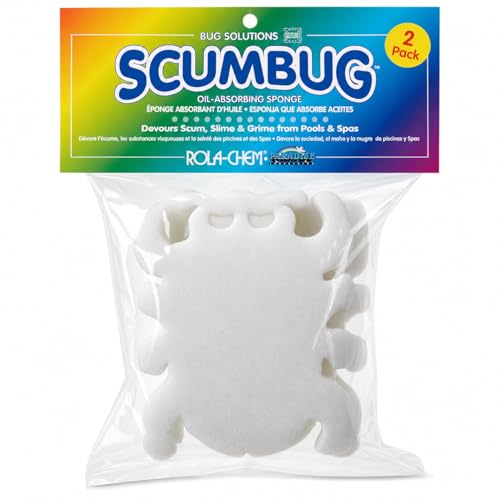
The Rola-Chem Scumbug 2-Pack is a passive surface-cleaning sponge designed to capture floating body oils, lotions, pollen, and environmental residues in residential hot tubs, swim spas, and pools. For spa owners, bather waste such as sunscreens, skin conditioners, and natural body oils quickly rises to the surface, creating an unsightly grime line along the acrylic shell. This floating bug-shaped absorber targets that floating residue immediately, making it a practical tool for families, vacation rental hosts, and daily spa users who want to keep water surfaces clean with minimal manual labor.
In daily hot tub maintenance, floating scum absorbers help protect both water clarity and filtration components. When oils collect on the surface, they eventually coat the cartridge pleats of your spa filter or bake onto the tub shell at the waterline, requiring abrasive scrub pads or specialized cleaning sprays. By floating freely on the water or sitting inside the skimmer well, the Scumbug collects these contaminants continuously. The manufacturer highlights that the absorber can hold up to 40 times its weight in oils and scum without obstructing water flow or restricting filtration plumbing.
The construction relies on a porous, oil-attracting sponge material fabricated in an identifiable bug silhouette. Weighing less than an ounce, the lightweight white sponge floats easily on top of turbulent or still water. Its open-cell matrix is engineered specifically to draw in oily hydrophobic substances while allowing water to pass through. While the listed shipping dimensions are approximately 8 x 8 x 8 inches for the two-pack packaging, the sponges themselves are sized to float unobtrusively in the corner of a spa without interfering with bathers during routine soaking sessions.
Day-to-day operation is straightforward and requires virtually no installation. Owners simply toss one Scumbug into the hot tub water or place it inside the skimmer weir where water flow naturally directs floating film. Routine maintenance involves pulling the sponge out periodically, rinsing it thoroughly with fresh tap water, squeezing out the trapped grime, and tossing it back into the spa. Because this package includes two absorbers, owners can easily keep one active in the water while the other is being cleaned and dried.
Hot tub owners should keep in mind that a scum absorber is a supplementary cleaning tool rather than a substitute for chemical sanitization. The Scumbug will not balance pH, sanitize bacteria, or eliminate heavy organic loads that require oxidizing shock treatments. Additionally, as the white sponge absorbs heavy cosmetics, tanning oils, and pollen, it will visibly discolor and turn dark, which is normal but may look unappealing if left floating during social gatherings. In tubs with strong surface suction, the sponge may occasionally drift over the drain grate if not kept inside a skimmer basket.
For spa owners seeking a simple way to minimize waterline scrubbing and keep filter cartridges cleaner between deep rinses, the Rola-Chem Scumbug two-pack offers excellent practical utility. It provides a low-cost, reusable defense against cosmetic film and scum rings in acrylic spas, cedar hot tubs, and inflatable models alike. Before purchasing, verify your preferred placement strategy, whether floating free in the bathing area or tucked safely inside your filter compartment for out-of-sight oil collection.
Maintaining the Rola-Chem Scumbug requires only a few minutes of attention during weekly hot tub water checks. When the sponge becomes discolored or feels slick with accumulated body oils, remove it from the spa and rinse it under warm running tap water. Squeeze the sponge firmly between your hands to release the trapped oils and grime, repeating the rinse cycle until the runoff runs clear.
Avoid washing the Scumbug with harsh laundry detergents, bleach, or automated washing machines, as household soaps can introduce residual foam into your hot tub water. Once thoroughly rinsed and gently squeezed dry, the sponge can be returned directly to the water. Rotating between the two sponges provided in the pack extends the functional life of each unit across an entire soaking season.
Using an oil-absorbing sponge works alongside your existing sanitizer routine to reduce the demand on chemical treatments. By passively removing organic oils, lotions, and environmental pollen from the surface, the Scumbug prevents these contaminants from reacting with chlorine or bromine sanitizers. This reduction in organic load can help keep your water clearer and reduce the formation of surface foam caused by cosmetic residues.
To get the best performance without interfering with bathers, place the Scumbug inside the skimmer basket or filter bay where water naturally circulates. If left floating free in the main tub, consider removing it temporarily while entertaining guests to prevent it from tangling in jet streams or drifting into bather seating areas.

Pros
- 10-piece set offers multiple sign styles so owners can mix and match or spread them across different areas around the spa
- Compact 11 x 1.7-inch size fits easily on fence posts, pergola beams, spa cabinet panels, or narrow bathroom walls
- Rope hangers included for each sign - no extra hardware or drilling required for basic hanging
- Lighthearted hot tub rules theme adds personality to a spa area and can be a conversation starter for guests
- Listed as using UV printing intended to resist fading in wet or humid environments
Cons
- These are decorative wall signs, not functional hot tub accessories - they do not provide any cover, insulation, filtration, or maintenance value for a spa
- Outdoor durability over multiple seasons of direct rain, snow, or intense UV exposure is not guaranteed by the product listing, so sheltered placement may be advisable
- Individual sign dimensions of 11 x 1.7 inches are quite narrow, which may make text harder to read from a distance in a large backyard setting
The Tatuo Hot Tub Rules Wood Sign Set is a decorative accessory rather than a functional spa maintenance product. It includes 10 individual wood signs, each with a different humorous hot tub or bathroom-themed phrase, printed with bathtub-related imagery like soap, foam, and sponges. Each sign comes with a rope for hanging. This set is best suited for hot tub owners who want to add a playful, welcoming atmosphere around their spa area, as well as vacation-rental operators or property managers looking to set a fun tone for guests using an outdoor or indoor hot tub.
Each sign measures approximately 11 x 1.7 inches, making them narrow plank-style pieces that can line up along a fence, hang from a pergola, or decorate a wall near the hot tub. The compact size means they won't dominate a space, but buyers should be aware that the narrow profile and relatively small text area may limit readability from more than a few feet away. For a backyard hot tub setup, placing these signs closer to the spa - on the cabinet, a nearby railing, or a privacy screen - will make the most of their size.
The signs are described as made from wood with UV-printed text and images. The listing notes that the printing is intended to produce bright colors suitable for wet environments and designed to resist fading. However, the product listing does not specify a waterproof coating, sealed finish, or specific outdoor-rated treatment. Hot tub owners who plan to hang these signs in a fully exposed outdoor location - especially in regions with heavy rain, snow, or intense sun - may want to consider placing them under a covered patio or pergola to help preserve the print quality over time.
Installation is straightforward since each sign includes a rope for hanging. There's no drilling, mounting hardware, or complex setup required. Owners can simply loop the rope over a nail, hook, fence post, or beam. This makes rearranging or relocating the signs easy, which is convenient for seasonal changes or if you want to refresh the look of your spa area. The total weight of the set is listed at roughly 0.66 pounds, so each individual sign is very light and unlikely to stress any hanging point.
The main limitation is that this is purely a decorative product. It provides no functional benefit for hot tub maintenance, cover protection, water care, filtration, or insulation. Buyers searching for practical spa accessories should look elsewhere. Additionally, while the listing mentions suitability for wet environments, there is no explicit claim of waterproofing or long-term outdoor weather resistance, so managing expectations about longevity in harsh conditions is reasonable.
The Tatuo Hot Tub Rules Wood Sign Set is a solid pick for hot tub owners, couples, or families who want affordable, lighthearted decor to personalize their spa space. It also works well as a housewarming or birthday gift for someone who recently installed a hot tub. Vacation-rental hosts may find the set especially useful for adding character to a guest-facing spa area. Before purchasing, consider where you plan to hang the signs and whether the location offers any protection from direct weather exposure to help the prints last longer.
The Tatuo hot tub signs are constructed from wood with UV-printed graphics. The listing describes the material as lightweight but sturdy enough for decorative use. UV printing is generally known for producing vivid, detailed images, and the manufacturer states the colors are bright and not easy to fade, particularly in wet or humid conditions like a bathroom or covered patio near a hot tub.
Each sign is approximately 11 x 1.7 x 0.4 inches, so these are thin, narrow planks. The included ropes appear to be simple hanging cords attached to each piece. While the listing mentions suitability for wet environments, no specific waterproof seal, lacquer, or outdoor-rated finish is described. Owners planning to use these in a fully exposed outdoor hot tub setting may want to apply a clear protective spray or sealant to extend the life of the print and wood in rain, humidity, or direct sunlight.
The Tatuo Hot Tub Rules Wood Sign Set includes 10 individual wood signs, each featuring a different design and humorous phrase. Each sign comes with a rope for hanging, so no additional hardware is required for basic installation on hooks, nails, fence posts, or beams.
No mounting screws, adhesive strips, or wall anchors are included. If you plan to hang these on a hard surface like a brick wall or concrete patio column, you'll need to supply your own hooks or fasteners. For most hot tub setups with a wooden fence, pergola, or spa cabinet, the included ropes should be sufficient.

Pros
- Contains all four foundational water-balancing chemicals plus 50 test strips in one package
- Compatible with acrylic, inflatable, and wooden spas across chlorine, bromine, and salt systems
- Helps prevent cloudy water, foaming, mineral scale, and heater corrosion caused by imbalanced water
- Manufactured in the USA with reliable, fast-dissolving water-care formulas
Cons
- Does not include primary sanitizers such as chlorine or bromine granules, which must be purchased separately
- Source water with extreme hardness or alkalinity may deplete specific individual bottles faster than the rest of the kit
- Requires careful incremental dosing and testing rather than one-size-fits-all application
The Bio Ouster Hot Tub Water Balancing Kit is an all-in-one water adjustment bundle designed for acrylic, inflatable, and wooden hot tubs. Proper water balance is critical for preventing mineral scale, heater corrosion, and bather discomfort, making this starter collection well suited for new spa owners, seasonal refills, and vacation rental hosts who need foundational water-care essentials in a single convenient package.
Maintaining balanced water chemistry requires managing several interconnected parameters, which this kit addresses through dedicated pH Up, pH Down, Alkalinity Increaser, and Calcium Hardness Increaser formulas. By adjusting total alkalinity first to buffer pH fluctuations, and raising calcium levels to protect internal spa plumbing and heating elements, hot tub owners can maintain clear water and protect their equipment investments.
Routine monitoring is supported by the 50 included test strips, which allow quick checks of pH, total alkalinity, and calcium hardness levels before adding any adjustment chemicals. The formulas are designed to work alongside standard sanitizing systems, including chlorine, bromine, ozone, and salt water configurations, without interfering with filtration systems or causing unwanted cloudy precipitation when added properly.
Integrating this kit into a routine hot tub maintenance schedule requires testing freshly filled or top-off water before adding chemicals in gradual increments. Because chemical demand varies depending on municipal tap water characteristics, tub volume, and bather load, spa owners should add adjustments incrementally with the water jets running to ensure thorough circulation and avoid overshooting targets.
A practical limitation to keep in mind is that this bundle is strictly a water-balancing kit and does not contain primary sanitizers such as chlorine or bromine. Additionally, owners with particularly hard or soft source water may find that one specific chemical depletes faster than the others, eventually requiring individual bottle replacements down the road.
Hot tub owners seeking a straightforward, Made-in-USA foundational chemistry package will find practical everyday value in the Bio Ouster water balancing starter kit. Before purchasing, ensure you have your preferred sanitizer on hand and plan to test your tap water before initial dosing to establish an accurate chemical baseline for your spa volume.
Proper water balancing begins with testing total alkalinity, which serves as the chemical buffer that stabilizes pH levels in your spa water. Using the included test strips, hot tub owners should adjust total alkalinity into the recommended range before fine-tuning pH with either pH Up or pH Down to prevent rapid chemical bounce.
Calcium Hardness Increaser is included to ensure water does not become aggressive or corrosive toward spa heating elements, pump seals, and plumbing fixtures. This is particularly relevant for owners in soft-water areas or those filling spas using whole-house water-softener systems where low calcium levels can accelerate metallic component wear.
The formulas are chemically neutral relative to sanitizers, meaning they can be used safely in spas treated with standard chlorine granules, bromine tablets, saltwater chlorination systems, or ozone generators. Always allow chemicals to circulate for at least twenty to thirty minutes before re-testing water or adding secondary treatment products.
Engineering and Building a Recessed Inground Hot Tub Vault
Recessing an acrylic hot tub into the ground transforms your outdoor living area, but the process demands strict adherence to building physics, electrical safety, and plumbing accessibility. A portable spa is engineered as a self-contained unit that expects dry ambient air around its cabinet rather than wet, compacting soil. Homeowners who plan a recessed installation must design an underground vault that acts as a dry, ventilated, and fully serviceable bunker for the hot tub.
Why You Cannot Bury a Portable Spa Directly in Dirt
Acrylic spas feature wooden or composite frame skeletons covered by decorative plastic, faux-wood, or vinyl siding. Direct contact with backfill pushes thousands of pounds of lateral earth pressure against exterior panels that were never designed to hold back soil. Wet dirt immediately transfers moisture to the internal wooden structural framing, initiating rapid rot and fungal decay.
Plumbing unions, vinyl flex hose, and electronic control packs reside just inside those lightweight cabinet walls. Burying those components in soil guarantees that rodents, burrowing insects, and ground moisture will destroy wire harnesses and plumbing insulation. Major spa manufacturers explicitly void shell and equipment warranties if an above-ground unit is buried without a self-supporting structural retaining pit.
Structural Excavation Sizing and Soil Bearing Capacity
Every successful vault build begins with an accurate excavation footprint that accounts for both the tub dimensions and essential technician elbow room. Standard installations require digging out a perimeter at least two to three feet wider than the hot tub on all four sides. This perimeter gap gives masonry crews room to erect reinforced retaining walls and allows future access for plumbing repairs.
Excavation depth must account for the height of the hot tub, the thickness of the reinforced concrete pad, and a compacted gravel sub-base. Contractors must evaluate native soil conditions, as expansive clay or loose sandy loam can shift beneath heavy structures. Digging several inches beneath the planned concrete slab allows for a four to six inch layer of compacted crushed stone, which stabilizes the subgrade and facilitates sub-slab drainage.
Foundation Slab Engineering and PSF Weight Distribution
A fully filled hot tub represents an immense concentrated structural load that will crack unreinforced soil or thin patio pavers. Total operating weight combines the dry weight of the shell, the water capacity calculated at 8.34 pounds per gallon, and the anticipated bather capacity at roughly 175 pounds per person. Dividing this total operating load by the square footage of the spa footprint yields the structural pounds per square foot (PSF) rating, which regularly exceeds 100 to 150 PSF.
The floor of the excavated vault must consist of a minimum four-inch thick, steel-reinforced poured concrete slab rated for at least 3,500 to 4,000 PSI. Adding number four rebar on twelve-inch centers or heavy-gauge welded wire mesh prevents the pad from cracking or settling unevenly under thousands of pounds of water weight. An unlevel pad places torsional stress across the acrylic shell, leading to cracked footwells, surface delamination, and permanent shell failure.
Retaining Wall Construction and Waterproofing
The walls of your inground vault must function as heavy-duty retaining barriers against outside earth and hydrostatic pressure. Most builders construct vault walls using concrete masonry units (CMU) filled with reinforcing rebar and solid concrete grout, or they pour monolithic reinforced concrete walls. Wood retaining walls, even when built from pressure-treated lumber, will inevitably rot, warp, and fail over extended periods underground.
Applying an exterior elastomeric waterproofing membrane or bituminous damp-proofing coating to the outside of the retaining walls keeps groundwater from seeping into the pit. Installing perforated French drain piping surrounded by washed gravel around the exterior perimeter diverts surface runoff away from the subterranean structure. These exterior precautions ensure that the vault interior remains dry during intense seasonal rainstorms.
Sump Pit Drainage and Groundwater Management
Water management inside the vault is the single most critical factor in preventing catastrophic spa equipment destruction. Even with exterior waterproofing, rainwater will enter the pit through decking gaps, and routine spa splash-out will accumulate around the base. If water pools higher than the bottom framing of the hot tub, it will submerge the circulation pump, heater tube, and digital control pack, causing instant electrical failure.
Every subterranean spa vault must feature a dedicated sump pit recessed into the concrete slab equipped with a reliable automatic submersible sump pump. Sump pumps should feature a vertical float switch and connect to a dedicated discharge pipe that carries water safely away to a daylight slope or storm drain. Homeowners in storm-prone regions often install a dual-pump system with a battery backup to safeguard the expensive spa pack during sudden grid power failures.
National Electrical Code Clearances and Subpanel Wiring
Electrical installation for a sunken spa requires strict compliance with National Electrical Code Article 680 to prevent lethal shock hazards. The hot tub requires a dedicated 230-volt, 40-amp to 60-amp circuit protected by a Class A ground fault circuit interrupter (GFCI) breaker. Conduit running from the main home panel into the vault must consist of rigid metal or schedule 80 PVC conduit rated for wet underground conditions.
NEC guidelines dictate that the external GFCI disconnect switch must remain visible and accessible, mounted at least five feet away from the inside water edge of the spa. Placing the emergency disconnect switch inside the underground pit violates electrical code because a bather or technician cannot safely reach it in an emergency. Licensed electricians must also bond all metal parts, rebar grids, and nearby conductive equipment to an eight-gauge solid copper bonding grid.
Equipment Bay Access and Removable Decking Hatches
Cabinet-mounted portable hot tubs house their pumps, heaters, circuit boards, slice valves, and ozonators behind one primary front service panel. If a vault is built tightly against this panel, simple routine tasks like replacing a heater element or swapping a pump seal become impossible without a crane. Builders must preserve a minimum clearance of thirty to thirty-six inches directly in front of the equipment access panel.
Surrounding the sunken tub with removable wooden or composite deck sections provides seamless aesthetic integration while retaining rapid service access. Modular hatch panels can easily lift off using recessed handles, allowing technicians to step down into the vault without disassembling permanent deck framing. Planning these removable sections during initial framing avoids the nightmare of cutting apart expensive deck boards during an emergency plumbing leak.
Ambient Air Circulation and Cabinet Heat Dissipation
Hot tub jet pumps and circulation pumps produce substantial mechanical heat that normally radiates into open patio air. Inside a tight subterranean vault, heat generated by multi-horsepower pump motors can become trapped, causing ambient pit temperatures to skyrocket. When ambient vault temperatures exceed safe operating thresholds, motor thermal overloads will trip, shutting down filtration cycles and leaving water uncirculated.
Vault designs must incorporate passive ventilation grates or active exhaust blowers to ensure constant fresh air exchange. Installing low-level intake vents and high-level exhaust grilles in surrounding decking encourages natural convective airflow through the bunker. Proper ventilation also prevents humid air from condensing on metal pump frames, junction boxes, and heater union barrels.
Rim Height Strategy and Thermal Cover Management
While installing a spa completely flush with the surrounding patio looks sleek, dropping the rim entirely flush creates significant safety and operational hazards. A flush-mounted spa acts as an open pit into which children, pets, or distracted guests can easily stumble. Flush installations also allow lawn debris, dirt, and heavy rainwater runoff to wash directly over the acrylic lip and contaminate your treated water.
Leaving twelve to eighteen inches of the hot tub rim protruding above the finished deck or patio surface creates an ideal ergonomic bench height for safe entry and exit. This raised lip also provides crucial clearance for locking down dense insulating hot tub covers using standard perimeter tie-down clips. Spas paired with heavy-duty outdoor spa covers rely on adequate vertical lip clearance so fold-down lifters and thermal skirt seals can close tightly without binding against deck boards.
Preventive Water Chemistry to Protect Recessed Plumbing
Maintaining balanced water chemistry becomes even more crucial when hot tub plumbing is recessed beneath ground level. Leaks caused by acidic water corrosion or calcium scaling require working in tight vault spaces, making preventive water maintenance the smartest protection. Keeping pH between 7.2 and 7.8 and total alkalinity between 80 and 120 ppm prevents scale accumulation that could strain recessed pump impellers.
Using proven sanitizers, such as Leisure Time Spa 56 chlorinating granules or Hot Tub Things starter maintenance packs, ensures biocide levels remain steady. Specialized clarifiers and plumbing cleaners, like Bio Ouster 3in1 Weekly Care, break down body oils and biofilm inside buried flex lines where visual inspection is difficult. Floating oil-absorbing tools, such as Scumbug sponges or turtle absorbers, capture lotions and surface scum before they foul cartridge filters, reducing maintenance frequency inside tight underground equipment pits.
Construction Timeline and Initial Commissioning Checks
Executing a subterranean spa project generally takes several weeks from initial excavation through concrete curing, masonry, and electrical rough-in. Never rush the concrete curing phase, as a four-inch structural slab requires adequate time to achieve its full compressive design strength before bearing water weight. Once the spa shell is lowered into position using a crane or specialized spa dolly, perform a complete dry-fit check of all conduit and plumbing connections.
Fill the spa through the filter well to prevent air locks in the circulation pump, and run all therapy jets on high before closing up the vault. Inspect every union fitting, gate valve, and heater barrel connection inside the pit with a flashlight for minor seepage before reinstalling decking hatches. Establishing this rigorous commissioning baseline ensures your recessed spa operates reliably, quietly, and safely for years to come.



Write Your Review
No reviews yet. Be the first to share your experience!