


Heat Loss and Debris Don’t Stand a Chance
Leaving a portable spa uncovered for even a few hours can tank your water temperature, spike your energy bill, and invite leaves, bugs, and dust into the water. That’s the exact headache a good hot tub cover inflatable is built to solve. These lightweight, air-filled lids sit right on or over your spa’s water surface, creating an insulating air pocket that slows heat escape and keeps debris out. They’re especially popular with owners of inflatable and portable hot tubs from brands like Intex, SaluSpa, and Coleman, where the original factory lid may wear out or lose its seal over time.
We spent considerable time analyzing the product specifications, materials, sizing, and listed features of 6 options currently available. The picks below range from simple PVC bladder lids to a full-coverage 420D Oxford cloth thermal cap with adjustable straps. Round and square shapes are both represented, with diameters and widths spanning roughly 4.2 feet up to 73 inches. If you’re also exploring rigid or semi-rigid alternatives, our guide to improved model hot tub covers covers those options. And for owners who want a greener material choice, the roundup of eco-friendly hot tub covers is worth a look too. Below you’ll find the full list, followed by answers to the questions buyers ask most before pulling the trigger.

Pros
- Lightweight and easy to handle at roughly 6 pounds, which is a significant advantage for older users, solo spa owners, or anyone tired of wrestling with heavy waterlogged foam covers
- Multi-layer construction with 420D Oxford cloth, cotton insulation, and aluminum foil lining offers a reasonable combination of weather resistance and thermal retention for the price point
- Zippered door is a practical feature that allows heat pump connections or quick water checks without fully removing the cover
- Adjustable strap at the base helps secure the cover in windy conditions, reducing the chance of the cover blowing off or shifting overnight
- Full-coverage design that extends 28 inches down the sides provides more protection from wind-driven rain and debris than a flat top-only cover
Cons
- A soft fabric cover cap like this does not provide the structural rigidity or load-bearing capability of a hard foam spa cover, so it should not be expected to support snow accumulation, and snow should be cleared regularly
- Thermal insulation from fabric and cotton layers is supplemental rather than equivalent to a tapered foam core cover, so owners in very cold climates may still see notable heat loss compared to a rigid insulated cover
- Fit depends on accurate measurement of the hot tub's outer diameter and height; round tubs that exceed 73 inches in diameter or have irregular shapes may not be properly covered
The Fantang insulated inflatable hot tub cover cap is a full-enclosure soft cover designed specifically for round hot tubs with a diameter smaller than 73 inches. Unlike rigid foam replacement covers that sit on top of the spa shell, this cover cap drapes over the entire tub, extending 28 inches down the sides to create a tent-like thermal barrier. That makes it a natural fit for owners of inflatable or portable round spas who want affordable protection from debris, weather, and heat loss without the weight and expense of a traditional hard cover. It may also serve as a supplemental outer protector layered over an existing flat cover for added insulation in cold months.
The listed construction uses 420D Oxford cloth as the outer shell, which is a commonly used fabric weight for outdoor equipment covers. Inside, the manufacturer describes a thickened cotton insulation layer paired with an aluminum foil reflective layer. This multi-layer approach is intended to slow heat transfer and reflect warmth back toward the water surface. While this type of fabric-based insulation won't match the R-value performance of a 4-inch tapered foam core cover, many inflatable hot tub owners find that a well-fitting cover cap noticeably reduces how often the heater cycles, especially compared to leaving the tub exposed or relying solely on a thin inflatable lid. Owners in cold or snowy climates should understand that this is a supplemental thermal barrier rather than a primary insulation solution.
One of the most practical design features is the zippered door, which allows owners to route heat pump hoses, power cords, or other connections without removing the entire cover. This is especially useful for inflatable hot tubs where the pump unit connects externally. The adjustable windproof strap at the base cinches the cover snugly around the tub's lower perimeter, which helps prevent wind from catching the fabric and pulling it off. For owners in exposed backyards or windy locations, this strap is an important retention feature. At approximately 6.17 pounds, the cover is light enough for one person to install and remove easily, which is a real advantage over foam covers that can weigh 50 pounds or more when new and significantly more when waterlogged.
Before purchasing, buyers should carefully measure their round hot tub's outer diameter and the height from the ground or base to the top rim. The manufacturer recommends that the hot tub be slightly smaller than the 73-inch diameter of the cover for easy installation and removal. If the tub measures exactly 73 inches or slightly larger, the cover may not fit properly or may sit too tightly to cinch at the base. Owners with oval, square, or rectangular tubs should note that this cover is designed specifically for round shapes and won't conform well to angular corners.
Realistic limitations include the fact that soft fabric covers do not provide structural support. Snow, heavy rain, or fallen branches should not be allowed to accumulate on top, as the fabric will sag and could pool water or direct weight onto the tub. The Oxford cloth is listed as waterproof and UV resistant, but long-term exposure to intense sun, standing water, or freeze-thaw cycles will eventually degrade any fabric cover. Owners in high-UV climates like the Southwest may see faster material wear. Periodic cleaning and proper storage when not in use can help extend the cover's useful life.
The Fantang cover cap is a solid budget option for owners of round inflatable or portable hot tubs who need an all-season debris shield and supplemental heat retention without the bulk and cost of a rigid foam cover. It's especially well-suited for first-time spa owners, renters, or seasonal hot tub users who want quick-on, quick-off convenience. Before ordering, measure your tub's diameter and height carefully, confirm it's a round shape, and verify that any external hose or cord routing aligns with the zippered door placement.
The Fantang cover cap has listed dimensions of 73 inches in diameter and 28 inches in height. The manufacturer states it is suitable for round hot tubs with a diameter less than 73 inches. For the best fit, the hot tub's outer diameter should be slightly smaller than 73 inches so the cover drapes loosely enough to cinch at the base with the adjustable strap. Measure your tub at its widest point across the top, and measure the height from the ground or platform surface to the top rim.
This cover is designed exclusively for round tubs. Square, rectangular, octagonal, or oval spas will not be properly covered, as the circular shape will leave gaps or bunch awkwardly at corners. If your inflatable tub has a slightly tapered profile where the top is wider than the base, the 28-inch side drop should still accommodate most standard portable spa heights, but verify your specific tub's dimensions before purchasing.
For owners in cold or snowy climates, the Fantang cover cap's cotton insulation and aluminum foil reflective layer may help reduce heat loss compared to leaving an inflatable hot tub uncovered or using only a thin vinyl lid. However, this is a soft fabric cover, not a rigid foam-core insulated cover, so it should be considered a supplemental thermal layer rather than a primary insulation barrier. In sub-freezing temperatures, pairing this cover cap over an existing flat inflatable cover can create an air gap that adds some insulating value.
Snow should not be allowed to accumulate on top of this cover, as the fabric has no structural rigidity and will sag under weight. After snowfall, brush off accumulation promptly. The adjustable base strap helps seal the bottom edge against cold drafts, which can be a meaningful benefit in windy winter conditions. Owners who rely on their hot tub year-round in harsh winters may want to consider a rigid foam cover as the primary barrier and use this cover cap as an additional protective layer.
The adjustable windproof strap at the base of the Fantang cover cap is designed to cinch the cover tightly around the lower perimeter of the hot tub, reducing the risk of wind catching the fabric and pulling it off. This is a practical feature for owners in exposed locations, open backyards, or elevated decks where wind gusts are common. Tightening the strap snugly against the tub body creates a more secure fit than simply draping a loose cover over the top.
That said, extremely high winds or storm conditions may still displace a fabric cover, especially if the strap loosens over time or the tub surface is smooth and doesn't provide much friction for the strap to grip against. Checking strap tension periodically and ensuring the cover is properly seated before windy weather is a good maintenance habit. The zippered door should also be fully closed during wind events to prevent the cover from catching air like a sail.

Pros
- Inflates quickly and can be ready to use within minutes, with no tools or complex assembly required
- Compact when deflated, so it's easy to store in a closet, garage, or travel bag when not in use
- Black color may passively absorb some solar energy, contributing to slightly warmer water temperatures on sunny days
- Handle design makes it easier to lift and reposition the cover during daily use
- Affordable entry point for inflatable spa owners who need basic heat retention and debris protection
Cons
- Manufacturer notes the cover must be inflated to at least 95% capacity or the dimensions may run small - underinflation could result in a poor fit
- An inflatable PVC cover does not provide the same level of insulation or structural rigidity as a traditional foam-core hard spa cover, so heat retention will be limited compared to rigid alternatives
- Durability of PVC material when exposed to prolonged UV, chlorine, bromine, or other spa chemicals over time is not specified - buyers in high-UV climates should monitor for material degradation
The Tlswshsy 4.2 Ft Inflatable Hot Tub Cover is a lightweight, air-filled spa lid made from black PVC, designed specifically for square inflatable hot tubs measuring approximately 4.2 feet on each side. This type of cover serves as a budget-friendly alternative to traditional rigid foam covers, and it's best suited for owners of smaller inflatable spas who need a simple solution to keep debris out and reduce some heat loss between soaks. It won't replace a heavy-duty hard cover for a permanent built-in spa, but for the inflatable tub market, it fills a practical niche.
From a real-world usefulness standpoint, the Tlswshsy inflatable cover addresses two everyday concerns for inflatable hot tub owners: keeping leaves, bugs, and dust out of the water, and slowing down heat loss from the surface. The black color is listed as being designed to absorb heat better than lighter colors, which could provide a modest passive warming benefit on sunny days. The manufacturer also notes that the cover may help reduce condensation and freezing around the tub's edges in cooler conditions, though buyers in genuinely cold or snowy climates should understand that an air-filled PVC cover won't match the insulation performance of a multi-inch foam-core spa cover. For mild climates or three-season use, it may be a reasonable solution.
The PVC material is described as waterproof, stretchy, and offering some sealing capability. Since there are no listed specifications for material thickness, UV stabilizers, or chemical resistance ratings, buyers should be aware that prolonged exposure to direct sunlight, spa sanitizers, and weather could affect the cover's longevity over time. The inflatable construction does offer a clear advantage in handling and storage - when deflated, this cover takes up very little space, making it a strong option for seasonal users, renters, or anyone who needs to pack their spa setup away periodically.
Setup is straightforward. The cover inflates without any special tools or pumps mentioned, though an air pump would likely speed up the process. One critical detail from the manufacturer is that the cover must be inflated to at least 95% of its full capacity, or the final dimensions may come up short and not properly cover the tub. This is an important step to get right - underinflation is a common user mistake with products like this, and it can lead to gaps that allow debris in and heat to escape. The integrated handle makes it easier to place and remove the cover once inflated, which is a practical touch for daily use.
Realistic limitations are worth considering. This is not a locking cover, so it won't provide security or act as a safety barrier. It does not include straps, tie-downs, or any wind-resistant fastening system, so in windy locations the cover could shift or blow off. Buyers should verify their inflatable tub's exact dimensions before purchasing, since a 4.2 ft listed size needs to match the tub opening closely for effective coverage. The product listing does not specify which inflatable spa brands or models are compatible, so measuring your tub is the only reliable way to confirm fit.
The Tlswshsy inflatable hot tub cover is a sensible pick for owners of small square inflatable spas who want an affordable, easy-to-store cover for basic debris protection and modest heat retention. It's particularly well-suited for warm-climate users, seasonal spa owners, and anyone who finds traditional rigid covers too heavy or cumbersome. Before purchasing, measure your inflatable tub's opening carefully and compare it to the listed 4.2 ft square dimensions to confirm a proper fit.
The Tlswshsy inflatable cover is listed as a 4.2 ft x 4.2 ft square. This dimension appears to represent the cover's size when fully inflated to at least 95% capacity. The manufacturer explicitly warns that underinflation can cause the cover to measure smaller than listed, which could result in incomplete coverage of your tub's opening.
Before ordering, measure the top opening of your inflatable hot tub carefully. Measure both the length and width at the widest points. For a square tub, both measurements should be close to 4.2 feet (approximately 50.4 inches) for this cover to sit properly. The listing does not specify how much overhang or lip the cover provides, so buyers with tubs slightly larger or smaller than 4.2 feet should consider whether a snug or loose fit is acceptable for their needs.
No specific inflatable spa brands or models are listed as compatible. Fit verification is entirely the buyer's responsibility, and measuring your tub is the most reliable way to avoid a size mismatch.
The black PVC material is described as waterproof and is intended to help with heat retention. In mild or moderate climates, this cover may perform adequately for keeping debris out and reducing some surface heat loss. The black color could absorb solar energy on sunny days, potentially offering a small passive heating benefit.
However, buyers in cold or snowy climates should recognize that an air-filled inflatable cover provides far less insulation than a rigid foam-core spa cover. Snow accumulation, freezing temperatures, and ice formation could stress the PVC material and reduce its effectiveness. The listing does not include any UV stabilizer information, so prolonged direct sun exposure in high-UV regions like the Southwest U.S. may accelerate material wear over time.
For windy locations, note that no straps, clips, or tie-down mechanisms are mentioned. An inflatable cover sitting on top of a spa without any fastening system could be displaced by strong gusts. Buyers in consistently windy areas may want to consider adding aftermarket straps or weights to secure the cover.
The PVC surface should be relatively easy to wipe down or rinse off with a garden hose. Since the cover sits directly over spa water, it may come into contact with sanitizer chemicals like chlorine or bromine. The listing does not specify chemical resistance, so rinsing the cover after each use and allowing it to dry periodically may help extend its lifespan.
When storing the cover, fully deflate it and let it dry completely before folding or rolling to prevent mold or mildew from developing on the PVC surface. The compact deflated size makes storage convenient in a closet, storage bin, or garage shelf. Inspect the cover periodically for punctures, slow leaks, or material degradation, especially if it's been exposed to direct sunlight or chemical contact for extended periods.
Pros
- Extremely lightweight at under 3.5 pounds, eliminating the heavy lifting of traditional foam hard covers
- Creates an insulating air cushion that limits surface evaporation and underside cover moisture
- Flexible PVC surface is simple to wipe clean and rinse during routine hot tub maintenance
- Deflates flat for compact storage when the spa is drained or winterized
Cons
- Requires inflation to at least 95 percent to achieve its full 4.5-foot diameter and prevent edge gaps
- Non-structural inflatable design cannot support the weight of pets, children, or heavy snow accumulation
- Not suitable for square, rectangular, or larger round spas exceeding 54 inches in diameter
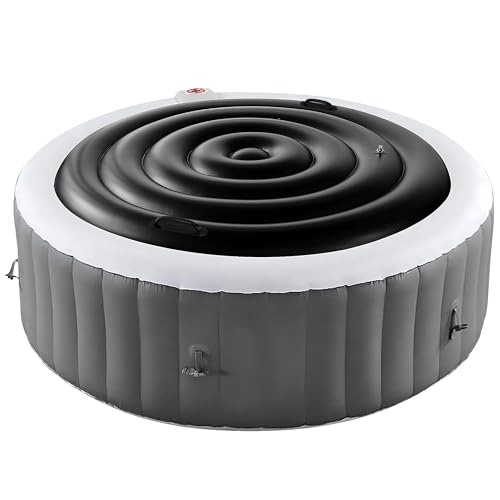
The Tlswshsy 4.5 Ft Inflatable Hot Tub Cover is a specialized PVC thermal bladder lid designed primarily for round spas, inflatable hot tubs, and circular soaking tubs. This floating air lid suits hot tub owners looking for an accessible, low-cost solution to combat heat loss and reduce water vapor condensation. By creating a physical buffer directly above the water line, it helps maintain comfortable soaking temperatures between uses while acting as a barrier against routine outdoor debris.
Thermal retention and condensation management are everyday concerns for round spa owners, particularly with thin-walled or inflatable tubs. Placing an inflated bladder over the water surface traps warmth within the water column and substantially slows evaporation. The black PVC material is designed to capture ambient warmth when exposed to sunlight, while the dome-like inflated shape assists in shedding dust, leaves, and small yard debris that would otherwise settle directly into the tub water.
Constructed from flexible, waterproof PVC, this inflatable lid weighs approximately 3.42 pounds, ensuring that handling is effortless compared to dense, waterlogged foam core covers. The material provides balanced elasticity, holding internal air pressure steadily to retain its circular form over the water. Because it contains no rigid framing, the cover can be deflated quickly and rolled or folded into a compact package, making it convenient for seasonal spa users or secondary vacation properties where storage space is limited.
Setup and day-to-day operation are remarkably simple, though achieving a proper fit requires careful attention during inflation. The manufacturer notes that the bladder must be inflated to at least 95 percent capacity; under-inflating the unit will result in a smaller diameter that leaves wide gaps around the perimeter. Once properly filled with air, placing or removing the lid is a simple one-person task that requires no mechanical lifters, specialized hardware, or cabinet mounting clearance.
Buyers should understand the practical limitations of an inflatable bladder lid before relying on it for complete spa protection. This product is not a rigid safety cover and possesses zero load-bearing capability, meaning it cannot support children, pets, or significant snow accumulation. In windy outdoor environments, it should be paired with a secured outer weather cap or buckled spa cover to prevent strong gusts from lifting the lightweight bladder out of the tub.
For owners of 4.5-foot circular hot tubs seeking an easy-to-handle thermal insert to minimize heat loss and debris intrusion, this Tlswshsy inflatable cover provides practical everyday value. Prior to purchasing, confirm the interior waterline diameter of your round tub to ensure that a 54-inch circular profile matches your spa dimensions without buckling against the walls or leaving excessive open space.
Accurate measurement is critical when selecting an inflatable spa cover because the bladder must seat cleanly against the inner rim or waterline to perform effectively. The Tlswshsy cover features a nominal diameter of 4.5 feet (54 inches), making it compatible exclusively with round spas and circular inflatable tubs of matching internal dimensions.
Achieving the stated 4.5-foot diameter requires inflating the PVC chamber to at least 95 percent capacity. If the cover is under-inflated, the material will not stretch to its full operational size, leading to loose positioning and diminished thermal retention along the tub perimeter. Hot tub owners should measure their spa's interior diameter across the widest central point before ordering to verify dimensional compatibility.
Surface evaporation is the single largest contributor to hot tub heat loss, and floating an inflatable bladder directly over the water creates an insulating dead-air space that slows heat escape. This barrier helps maintain consistent water temperatures between soak cycles, which may reduce the workload placed on the spa heater.
In addition to retaining heat, the bladder lid significantly reduces moisture buildup on the underside of secondary outer covers. By containing rising steam, it limits condensation drip and helps prevent water from freezing along the upper acrylic or vinyl edges in chilly weather conditions. The black PVC surface also aids in absorbing solar heat when open to direct sunlight during daytime hours.

Pros
- Extremely lightweight at under 3 pounds, which is a major advantage for older users, solo spa owners, or anyone tired of wrestling with heavy waterlogged covers
- Compact deflated storage makes it practical for seasonal use, travel with portable spas, or vacation-rental operators storing covers between guests
- Grooved drainage design addresses a common inflatable cover complaint by helping prevent rainwater pooling and sagging
- Easy wipe-clean surface simplifies routine maintenance compared to traditional vinyl covers that can develop mildew in seams
- Budget-friendly entry point for owners who need a functional cover without the cost of a custom rigid replacement
Cons
- An inflatable cover does not provide the same level of heat retention or structural insulation as a traditional foam-core hard spa cover, so energy costs may be higher in cold climates
- The 57x57-inch listed fit dimension refers to internal spa diameter, so buyers need to carefully measure their spa shell opening rather than the outer cabinet to confirm compatibility
- Inflatable covers generally cannot support snow loads, heavy rain accumulation, or the weight of pets or children, which limits their suitability as a safety barrier or in snowy climates
The Ketofa inflatable hot tub cover is a lightweight alternative to traditional rigid foam-core spa covers, specifically designed for square hot tubs and spas with an internal opening up to 57x57 inches. This type of cover suits owners of inflatable or portable square spas who find conventional covers too heavy, too expensive, or too bulky to store. It's also a practical option for vacation-rental operators, seasonal spa users, or anyone who simply needs basic protection between soaks without the hassle of lifting a 40- to 60-pound rigid cover.
The cover uses a two-part construction: an inflatable bladder that sits inside a leatheroid outer shell. Once inflated, the bladder creates an air-insulation layer intended to help retain heat in the spa water. The product description highlights energy savings through reduced heat loss, though buyers should understand that an air-filled inflatable cover will not match the insulation performance of a traditional tapered foam-core cover with a sealed vapor barrier. For owners in mild climates or those using their spa frequently throughout the day, the insulation may be adequate. In cold or snowy regions, heat loss and energy costs could be noticeably higher compared to a rigid cover.
At just 2.86 pounds, the Ketofa cover addresses one of the biggest frustrations in hot tub ownership: cover weight. Traditional covers absorb moisture over time, sometimes doubling or tripling in weight, making daily removal a chore that discourages spa use. This inflatable design stays consistently light and can be placed or removed by a single person without a cover lifter. The grooved top surface is a thoughtful detail - it's designed to channel rainwater toward the edges rather than letting it pool in the center, which is a common failure point for flat inflatable covers that sag under standing water.
Setup is straightforward. The inflatable bladder is inflated manually, inserted into the outer cover, and placed over the spa opening. No tools, mounting hardware, or permanent installation is required. When the cover isn't needed, it deflates quickly and folds down to a compact size for storage - a significant advantage over rigid covers that require dedicated standing storage space. The smooth PVC surface cleans up with a simple wipe, and the listed UV resistance should help the material hold up under sun exposure, though the specific UV rating or expected service life is not provided by the manufacturer.
There are some practical limitations to consider. This cover is not a structural barrier. It cannot support the weight of snow accumulation, pets, or children, and it should not be relied upon as a safety cover to prevent unauthorized access to the spa. Owners in areas with heavy snowfall or high winds may find this cover insufficient as a primary year-round solution. Additionally, the 57x57-inch dimension refers to the maximum internal spa diameter the cover can accommodate - buyers should measure the inside of their spa shell carefully rather than relying on the outer cabinet dimensions, which are typically larger.
The Ketofa inflatable spa cover is a smart pick for owners of square inflatable or portable hot tubs who want an affordable, easy-to-handle cover for debris protection and basic heat retention. It's especially appealing for anyone who has struggled with heavy, waterlogged traditional covers or who needs compact storage. Before purchasing, measure your spa's internal square opening to confirm it falls within the 57-inch maximum, and consider whether your climate and usage pattern call for stronger insulation or structural snow-load capacity than an inflatable design can provide.
The Ketofa inflatable cover is listed for square hot tubs and spas with an internal dimension of up to 57x57 inches. This measurement refers to the spa's internal opening, not the outer cabinet or frame dimensions. Many inflatable and portable square spas fall within this size range, but buyers should measure the actual inside width and length of their spa shell before ordering. If your spa's internal opening exceeds 57 inches in either direction, this cover may not provide adequate coverage or a proper seal.
Because this is an inflatable cover rather than a rigid panel, there is no listed corner radius, hinge orientation, or skirt length. The cover sits on top of the spa opening rather than overlapping the cabinet like a traditional hard cover. This means it may not create the same tight seal against wind or heat loss that a skirted rigid cover provides. Buyers with recessed or uniquely shaped square spas should verify that a flat-top inflatable design will sit securely on their specific spa rim.
The Ketofa cover is constructed from PVC material that the manufacturer lists as UV-resistant and windproof. For typical outdoor exposure in moderate climates, this construction should provide reasonable protection against sun degradation and light wind. However, no specific UV rating, wind-speed tolerance, or waterproofing certification is provided, so performance in extreme conditions is difficult to predict.
The grooved top design is intended to prevent rainwater from pooling on the cover surface, which is a practical feature for rainy climates. Standing water on a flat inflatable cover can cause sagging, accelerate material wear, and make removal messy. The drainage grooves help channel water off the edges. In snowy regions, however, an inflatable cover cannot support the weight of accumulated snow, and owners would need to clear snow promptly or consider a rigid cover rated for snow loads. In high-wind areas, the lightweight design - while great for handling - means the cover could shift or blow off without additional securing measures such as straps or tie-downs.
Daily handling is where this inflatable cover truly stands out. At 2.86 pounds, it can be lifted on and off the spa with one hand by virtually any user, including older adults or those with back or shoulder issues. There's no need for a cover lifter, no awkward folding of a heavy hinged panel, and no risk of the cover becoming waterlogged and increasingly difficult to manage over time. For spa owners who've avoided using their hot tub because the cover was too heavy to deal with, this lightweight approach can genuinely change the daily experience.
The cover does not require any permanent mounting or hardware. It simply sits on top of the spa. This makes it easy to move aside completely when the spa is in use, and it won't take up standing-storage space beside the tub the way a rigid cover on a lifter does. For smaller patios, decks, or balconies where space around the spa is limited, the compact footprint is a meaningful advantage.

Pros
- Fits a wide range of round inflatable hot tubs from 48 to 72 inches, offering broad compatibility with popular Intex SaluSpa and Coleman spa models
- Lightweight and deflatable for easy storage in the included bag, unlike bulky rigid covers that require permanent storage space
- Double handles simplify daily placement and removal, reducing the hassle of covering and uncovering the spa
- Included repair patches provide a practical solution for minor punctures without needing to buy a replacement immediately
- Manufacturer's extended support policy may provide added peace of mind for valve or leak-related defects
Cons
- Inflatable covers do not provide the same level of insulation or structural rigidity as traditional foam-core hard covers, so heat retention in cold or snowy climates may be limited
- Must avoid contact with water exceeding 50 degrees Celsius (122 degrees Fahrenheit) and direct high-temperature exposure, which limits placement flexibility
- Buyers should carefully measure their spa's actual diameter before ordering, since a poor size match can leave gaps that allow heat loss and debris entry
The Puzau inflatable hot tub cover is a lightweight, air-filled replacement cover designed specifically for round inflatable spas from brands like Intex SaluSpa and Coleman. Unlike traditional rigid foam-core covers, this inflatable option deflates for compact storage and inflates for use, making it a practical choice for owners of portable or seasonal inflatable hot tubs who don't want to deal with the bulk and weight of a hard cover. It's listed as fitting round spas from 48 to 72 inches in diameter, which covers most 4-6 person inflatable models, though buyers should always measure their specific spa before purchasing.
For daily use, the Puzau cover's double handles are a welcome feature that makes positioning and removing the cover straightforward. Because it's inflatable, it weighs far less than a standard foam cover, which can be a real advantage for older users, solo spa owners, or anyone tired of wrestling with a waterlogged hard cover. The manufacturer lists the cover material as flame-retardant and notes that it helps lock in heat and reduce water evaporation, though it's worth noting that an air-filled cover will not match the insulating performance of a dense foam-core spa cover. For owners in mild climates or those using an inflatable spa seasonally, this tradeoff may be perfectly acceptable.
The cover features double-layer inflation nozzles that the manufacturer says allow for quick inflation and deflation while locking in air to maintain shape. The recommended inflation process involves filling the first layer, sealing it, placing the cover on the spa, and then inflating the second layer for a snug fit. This two-step process may take a bit of practice, but it's intended to help the cover conform more closely to the spa's shape. A storage bag is included, and the manufacturer recommends wiping the cover down with a towel and water after each use before storing it to help extend its life.
Durability is a realistic concern with any inflatable product used outdoors. The 2025 version of this cover is listed as having upgraded, thickened material to reduce leakage, and four repair patches with instructions are included to address accidental punctures or scratches. This is a practical inclusion, since outdoor use exposes the cover to branches, pet claws, and general wear. However, buyers should understand that an inflatable cover is inherently more vulnerable to puncture damage than a vinyl-wrapped foam cover. The manufacturer also warns against exposing the cover to water temperatures above 50 degrees Celsius or direct high heat, which is an important limitation to keep in mind.
For weather protection, the manufacturer states the cover can withstand wind, rain, and snow, helping keep the spa clean. That said, an inflatable cover does not offer the structural load-bearing capacity of a hard cover, so heavy snow accumulation or strong sustained winds could present challenges. There are no listed straps, locks, or tie-downs mentioned in the product data, so buyers in windy locations should consider how they'll secure the cover. This cover is not a substitute for required safety barriers or locking mechanisms for child safety around a hot tub.
The Puzau inflatable hot tub cover is best suited for owners of round inflatable spas from Intex, SaluSpa, or Coleman who want a lightweight, easy-to-store cover at a budget-friendly price point. It's a solid option for seasonal spa users, apartment or rental setups, or anyone who finds traditional hard covers too heavy or cumbersome. Before purchasing, measure your spa's actual outer diameter to confirm it falls within the 48-to-72-inch range, and keep in mind that this cover's insulation and weather resistance will not match a rigid foam-core alternative.
The Puzau inflatable hot tub cover is listed as fitting round inflatable hot tubs with diameters ranging from 48 to 72 inches (4 to 6 feet). The product dimensions are listed at approximately 69 x 69 inches. This range is intended to cover most 4-6 person round inflatable spas from Intex, SaluSpa, and Coleman. However, inflatable spas can vary in exact outer diameter depending on the model and inflation level, so measuring your specific spa before ordering is essential.
To get the best fit, measure the widest point across the top of your inflatable spa from outer wall to outer wall. If your spa's diameter falls outside the 48-to-72-inch range, or if your spa is oval, square, or any non-round shape, this cover will not be a suitable match. A cover that's too small will leave edges exposed, while one that's too large may not sit securely and could be more susceptible to wind displacement.
The manufacturer recommends wiping the Puzau inflatable cover with a towel and water after each use, then storing it in the included storage bag. This routine can help prevent mildew buildup and extend the cover's usable life, especially in humid environments. Avoid using harsh chemical cleaners unless the manufacturer specifically approves them, as aggressive chemicals could degrade the cover material over time.
Inspect the cover regularly for small punctures, especially after windy days or if pets have access to the spa area. The four included repair patches can address minor damage, but larger tears or valve failures may require contacting the manufacturer for a replacement. The manufacturer's listed support policy extends beyond Amazon's standard 30-day return window for valve-related or leakage issues, which may provide additional coverage.
The Puzau inflatable hot tub cover package includes the inflatable cover itself, a storage bag for compact storage when the cover is deflated, and four repair patches with instructions. The repair patches are designed to address accidental scratches or small punctures that can occur during normal outdoor use. Double handles are built into the cover for easier placement and removal.
No inflation pump is specifically mentioned in the product data, so buyers may need to use a manual or electric air pump to inflate the cover. Check whether your existing spa pump or a standard air mattress pump is compatible with the cover's nozzle size before relying on it for inflation.
The manufacturer states that if the cover does not meet expectations due to valve cover issues or valve leakage, they will arrange a replacement. They also note that even after Amazon's 30-day return window, they can offer a refund or exchange for a new cover. This is a manufacturer-stated policy rather than a formal warranty with a defined term, so buyers should contact the seller directly through Amazon if issues arise.
This extended support commitment may be particularly relevant for an inflatable product, where valve integrity is critical to the cover's function. If you experience slow air loss or a valve that won't seal properly, reaching out to the seller promptly is the best course of action.

Pros
- Very lightweight at roughly 3.7 lbs, making it easy for any user to place, remove, and store - a major advantage over traditional heavy covers
- Quick inflate-and-deploy design requires no mounting hardware, lifter, or installation, which suits first-time spa owners and renters
- Helps limit debris entry and heat loss on round inflatable hot tubs, potentially lowering energy costs and reducing filter maintenance
- Compact and easy to deflate for storage or transport, making it practical for seasonal use or vacation-rental operators with inflatable spas
- Affordable entry point for basic spa water protection without the commitment of a rigid replacement cover
Cons
- An inflatable bladder cover does not provide the structural rigidity, insulation thickness, or locking security of a traditional hard foam spa cover, so it should not be expected to match those capabilities
- The manufacturer emphasizes inflating to at least 95% capacity; under-inflation may result in a cover that's too small to properly fit the spa opening, requiring careful attention during setup
- Not designed as a safety barrier and should not be relied upon for child or pet exclusion - it floats on the water surface and does not lock or secure to the spa cabinet
The LFUTARI 4.5 Ft Inflatable Hot Tub Cover is a floating bladder-style lid designed primarily for round inflatable hot tubs. Unlike rigid foam spa covers that sit on top of the spa shell and provide structural support, this cover inflates and rests directly on the water surface. That makes it a fundamentally different product category - it's best understood as a lightweight, portable thermal and debris barrier rather than a traditional spa cover replacement. Buyers looking for a simple, affordable way to keep leaves, bugs, and dust out of their inflatable spa between uses will find this type of cover worth considering.
The listed diameter for this size option is 4.5 ft (with the product dimensions noted as 4'7" round), and the manufacturer states it's compatible with most of their spa hot tub range. A larger 5.4 ft version is also available. One critical detail from the product listing: the cover must be inflated to at least 95% capacity, or the resulting dimensions may be smaller than expected and not properly cover the spa opening. Buyers should measure the interior diameter of their inflatable hot tub carefully before purchasing and compare it against the listed cover size to verify a reasonable fit. Because inflatable spas vary in interior dimensions across brands, don't assume this will fit every 4.5 ft rated tub without checking.
At approximately 3.7 lbs, this cover is dramatically lighter than any rigid foam spa cover, which can weigh 50 lbs or more. That weight advantage is significant for older users, anyone with mobility concerns, or simply hot tub owners who find daily cover removal to be a chore. There's no need for a cover lifter, mounting brackets, or help from a second person. You inflate it, set it on the water, and remove it by hand when you're ready to soak. Deflating and storing it is equally straightforward, which makes it practical for seasonal inflatable spa setups or vacation-rental properties where portability matters.
The manufacturer highlights several functional benefits: debris exclusion, reduced water evaporation, heat retention, and the ability to absorb solar energy to help warm the water. These are reasonable expectations for a floating cover that creates a barrier between the water surface and the open air. However, buyers should keep expectations realistic - an inflatable bladder does not have the foam core, vapor barrier, or insulation construction of a hard cover. Its ability to retain heat overnight or in cold weather will be limited compared to a rigid insulated cover. In mild climates or for short periods between uses, the heat-retention benefit is more meaningful. In cold or snowy climates, this cover alone is unlikely to prevent significant heat loss.
There are some practical limitations to keep in mind. This cover does not lock, strap down, or secure to the spa in any way. It floats on the water and can be displaced by wind, so owners in windy locations may find it unreliable without additional measures. It also provides no structural load-bearing capacity and should never be treated as a safety cover. Families with children or pets should not rely on this product for access prevention. Additionally, as an air-filled bladder, it is more susceptible to punctures than rigid covers, so careful handling around sharp objects is advisable.
For inflatable hot tub owners who want a quick, inexpensive, and lightweight way to keep debris out and reduce some heat loss between soaking sessions, the LFUTARI inflatable cover fills a practical niche. It's especially well-suited for warm-climate users, seasonal spa setups, and anyone who values ease of handling above maximum insulation. Before purchasing, measure your spa's interior water-surface diameter and confirm it aligns with the 4.5 ft listed size. If you need robust insulation, wind resistance, locking capability, or structural support, a traditional rigid spa cover is a better fit for those requirements.
The LFUTARI inflatable cover in this listing is the 4.5 ft diameter option, with the product page noting a 4'7" round dimension. A larger 5.4 ft version is sold separately. Because this is a floating bladder cover, fit depends on the interior water-surface diameter of your hot tub rather than the outer shell dimensions. Measure across the widest point of the water surface inside your inflatable spa and compare it to the listed cover diameter.
The manufacturer specifically warns that inflating the cover to less than 95% capacity may result in dimensions that are too small. This means proper inflation is essential to achieving the listed size. If you have access to a reliable air pump with a pressure gauge, that can help ensure full inflation. Buyers should also note that inflatable hot tubs from different brands may have slightly different interior geometries even when marketed at the same nominal size, so verifying your specific tub's measurements before ordering is a practical step.
As a lightweight inflatable cover, the LFUTARI lid is best suited for mild to moderate weather conditions. In warm, sunny climates, the manufacturer notes it may absorb solar heat and help warm the water, which could be a useful passive benefit. For debris protection in fair weather, it serves its intended purpose well.
In cold climates, heavy rain, snow, or high-wind environments, this type of cover has inherent limitations. It does not have a foam core or rigid structure to provide meaningful insulation in freezing temperatures, and it cannot bear any snow load. Wind can displace a floating cover that isn't secured to the spa. The manufacturer mentions it may help reduce condensation and freezing on the spa edge, but buyers in harsh winter climates should consider whether a rigid insulated cover would better serve their needs. For high-UV environments, there is no specific UV-resistance rating listed, so prolonged direct sun exposure over time may affect the cover material.
Maintaining an inflatable cover is straightforward compared to rigid spa covers. Because it's lightweight and portable, you can easily remove it from the water, rinse it off, and wipe down the surface. There's no heavy foam core to worry about becoming waterlogged over time, which is a common issue with traditional rigid covers.
Owners should inspect the cover periodically for punctures or slow air leaks, especially if it's used frequently or stored in areas where sharp objects could cause damage. Keeping the cover clean and free of chemical buildup from spa water may help extend its useful life. When not in use, deflating and storing the cover in a dry location protects it from unnecessary UV exposure and wear.
FAQs
How do I measure my portable hot tub for an inflatable cover?
Measure the widest internal diameter (for round tubs) or the widest internal side length (for square tubs) at the top rim. The cover should be equal to or slightly larger than that measurement. For example, the Insulated Inflatable Hot Tub Cover Round Full measures 73 inches in diameter and is listed as suitable for round hot tubs with a diameter less than 73 inches. The Inflatable Hot Tub Cover for Square Hot Tub Spa fits square spas with an internal dimension up to 57 inches. Always confirm your tub’s actual dimensions before ordering, because an undersized cover won’t seal properly and an oversized one may sag or shift.
Do inflatable hot tub covers actually help with heat retention?
Yes, they reduce heat loss by trapping an insulating layer of air between the water surface and the cover material. Black-colored PVC options, like the 4.2 Ft Inflatable Hot Tub Cover and the 4.5 Ft Inflatable Hot Tub Cover from Tlswshsy, are designed so the dark surface absorbs solar heat rather than reflecting it. The Fantang full-coverage model goes further with a thickened cotton insulation layer and aluminum foil lining inside 420D Oxford cloth. Keep in mind that no inflatable lid matches the R-value of a rigid foam spa cover, but for portable tubs that already have thin factory lids, the upgrade can noticeably slow temperature drop between uses.
What’s the difference between a bladder-style lid and a full-coverage inflatable cap?
A bladder-style lid is a flat, inflatable disc that sits directly on the water surface inside the tub. Most of the PVC options here, such as the Tlswshsy and LFUTARI models, follow this design. A full-coverage inflatable cap, like the Insulated Inflatable Hot Tub Cover Round Full, wraps around the entire tub from top to bottom (73 inches wide by 28 inches tall) and cinches down with an adjustable windproof strap. The full-coverage style offers better wind resistance and debris protection because it encloses the whole unit, but it’s bulkier to put on and remove. Bladder lids are lighter, faster to place, and easier to store when deflated.
Can I use an inflatable cover with my existing hard or soft spa cover?
Many owners layer a bladder-style hot tub cover inflatable underneath their main hard or soft cover for extra insulation. The inflatable lid floats on the water and adds a secondary air barrier, which can help in cold climates. Just make sure the inflatable piece doesn’t interfere with the hard cover’s hinge or prevent it from closing flat. The Ketofa model specifically notes that its inflatable piece goes inside a leatheroid cover for added insulation, so dual-layer setups are a recognized use case. If you’re looking at lighter daily-use covers, our lightweight hot tub cover picks might help too.
How long do inflatable hot tub covers typically last, and what causes them to fail?
Lifespan depends on material quality, UV exposure, and how the cover is stored. PVC bladder lids can develop slow leaks at the valve or seams over time, especially with heavy sun exposure. The Inflatable Hot Tub Cover Round Replacement All from Puzau addresses this by including four repair patches and using double-layer nozzles to reduce air loss. Manufacturer guidance for that model also warns against direct contact with water exceeding 50 degrees Celsius. Rinsing the cover with a damp towel after each use and storing it in the included bag can extend its useful life. If you notice the cover no longer holds air at 95% inflation, it’s time to replace it, because an under-inflated lid won’t seal or insulate properly.
Will an inflatable cover keep out rain, snow, and wind?
Bladder-style lids block light rain and debris from the water surface, but they sit inside the tub and won’t stop water from collecting around the rim. The Ketofa square model features a grooved top design intended to prevent rainwater pooling and sagging. For serious winter or storm protection, the Fantang full-coverage cap is a stronger option because it wraps the entire tub and uses an adjustable strap to resist wind lift. Still, none of these inflatable covers are rated for heavy snow loads. If you’re in a region with significant snowfall, you may want a rigid hot tub cover as your primary defense and an inflatable lid as a secondary insulator underneath.
Are these covers compatible with Intex, SaluSpa, and Coleman portable hot tubs?
Several models list broad compatibility with popular portable spa brands. The Puzau round replacement cover is described as fitting most Intex, SaluSpa, and Coleman hot tubs for 4 to 6 people, with a size range of 48 to 72 inches. The Tlswshsy and LFUTARI round lids at 4.5 feet diameter are marketed for general portable spa use. But “compatible” here means the dimensions match, not that the cover locks into brand-specific clips or latches. Always measure your tub’s actual internal diameter and compare it to the listed cover size. A cover that’s even a couple of inches too small won’t sit flat or seal the surface.


Write Your Review
No reviews yet. Be the first to share your experience!